On the day you leave for a trip abroad, once you pass through departure immigration, a long line of shops glitters with cosmetics and perfume, liquor and chocolate. For many people, browsing these shops in the short time before boarding is one of the small pleasures of travel. But why are these shops gathered inside the airport, and how can they sell the same goods more cheaply than shops in town? The answer lies in a system called the ‘duty-free shop.’
Put simply, a duty-free shop is ‘a store that sells goods to travelers who will take them out of the country, leaving out taxes such as customs duties and value-added tax.’ Because the goods come with the condition that they will not be used in that country but will leave it, no tax is charged on them.
In this article, we will look in turn at how duty-free shops first came about, the principle that lets them drop taxes, the various forms they take, and some useful things to know when you shop.
Shopping Without Taxes: How Duty-Free Shops Work and the Kinds of Duty-Free Shops
How Did Duty-Free Shops Begin?
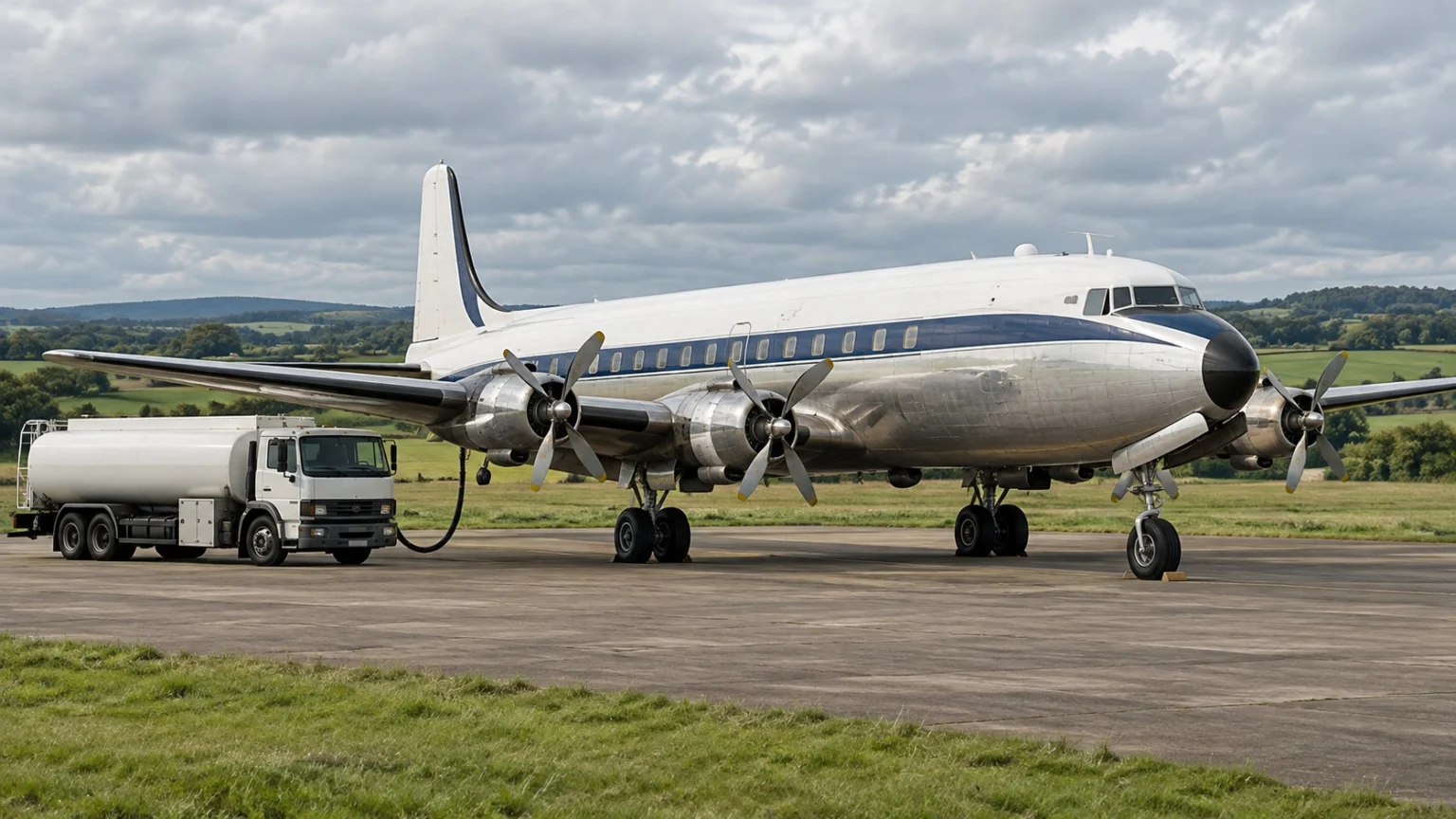
The world’s first duty-free shop opened at a small airport on the far western edge of Ireland.
(1) Passengers waiting for refueling
In the 1940s, airplanes could not cross the Atlantic in a single flight, so airliners flying between Europe and North America landed at Ireland’s Shannon Airport to refuel. Meanwhile, passengers had to pass the time at the airport.
(2) The 1947 experiment at Shannon Airport
Brendan O’Regan, who ran the airport’s restaurant and shops, came up with the idea of selling goods to waiting passengers at prices without tax, and in 1947 he opened the world’s first duty-free shop. It was an immediate success, and the model quickly spread to airports around the world. The shop is still in business today.
(3) Growing into a huge industry
In 1960, American businessmen Charles Feeney and Robert Miller founded Duty Free Shoppers (DFS) in Hong Kong. The company won the duty-free concession at Hawaii’s airport, won over Japanese travelers, expanded into downtown stores outside the airport, and grew into the largest travel retail company in the world.
The Principle That Lets Them Drop Taxes
There is a clear logic behind why duty-free shops do not collect taxes.
- Customs duty (Duty): a tax charged on goods coming in from abroad. Imported goods in a duty-free shop stay in a bonded warehouse under customs control and then leave the country again right away with the traveler, so they are not treated as goods that have entered the country.
- Value-added tax (Value-Added Tax): a tax charged to the people who consume goods. Because many countries follow the principle that tax is collected in the country where goods are actually used, this tax is not added to goods that will leave and be used elsewhere.
- Excise tax (Excise Tax): a separate tax added to particular goods such as liquor, tobacco, and luxury watches. The heavier the tax on an item, the bigger the price difference feels at a duty-free shop.
In the end, the goods in a duty-free shop are closer to ‘goods whose taxing country has not yet been decided’ than to ‘goods on which no tax is paid.’ This is also why travelers must pay that country’s tax if they go over the set allowance in the country they arrive in.
The Many Faces of Duty-Free Shops
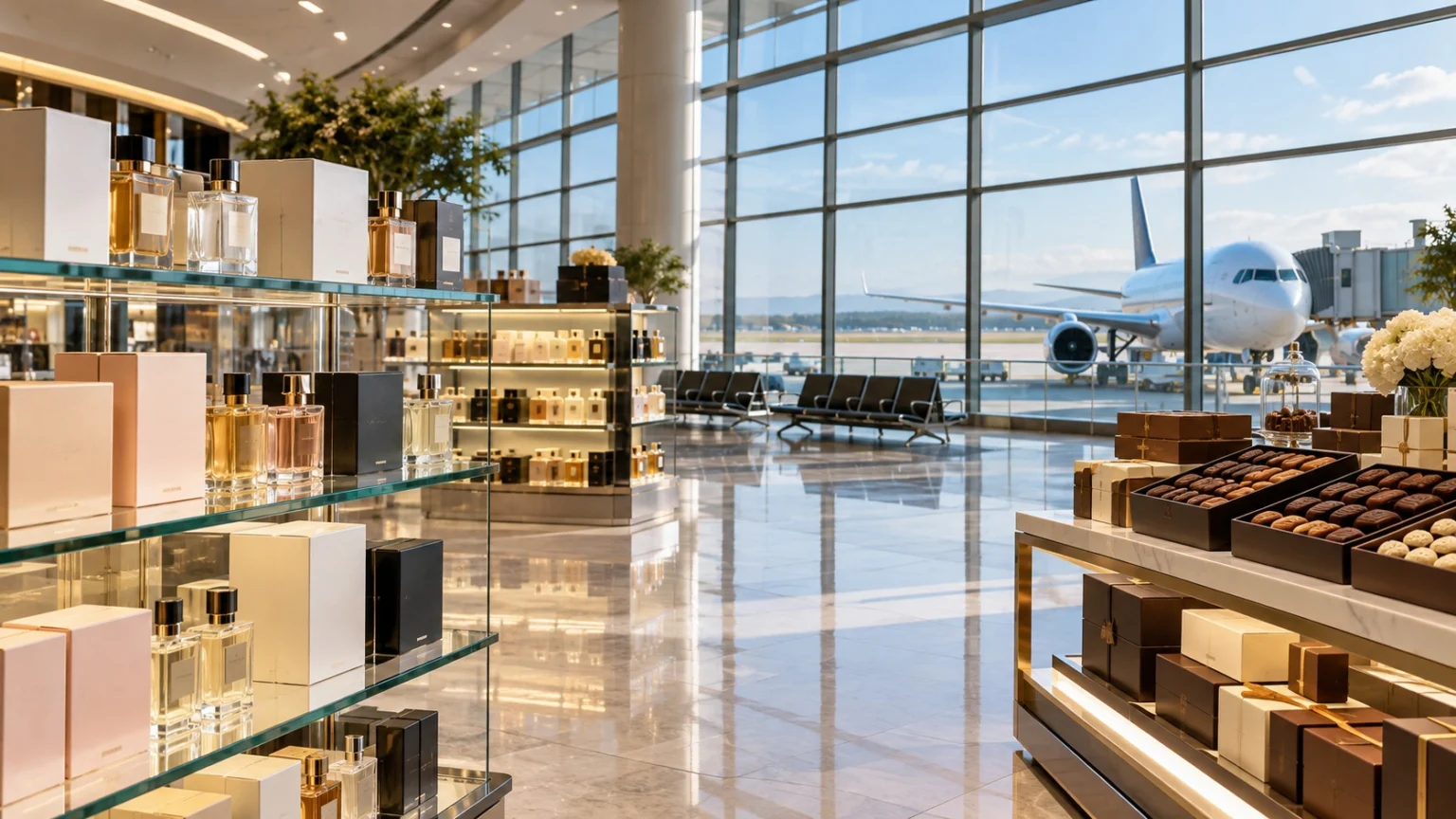
Duty-free shops easily bring airport departure areas to mind, but in reality they come in many more forms.
(1) Departure and in-flight duty-free shops
This is the most common type, located in the international zone of an airport or port after departure immigration. In-flight duty-free sales on airplanes or ferries work on the same principle. In 2016, Incheon International Airport had duty-free sales of about US$1.85 billion, the most of any airport in the world.
(2) Downtown duty-free shops
You buy goods at a store in the city after your passport and departure details are checked, and then you pick them up at the airport’s pickup counter on the day you leave. Because you can choose at leisure, these shops are popular with tour groups.
(3) Arrival duty-free shops
These are duty-free shops you use when entering a country. In Korea, the first one opened at Incheon International Airport in May 2019.
(4) Duty-free shopping destinations
In some places, an entire region becomes a stage for duty-free shopping. Hong Kong, Singapore, and the islands of the Caribbean are typical examples, and Haikou on China’s Hainan Island is home to the world’s largest standalone duty-free shopping complex.
Things to Know Before Duty-Free Shopping
To use duty-free shops wisely, it helps to keep a few things in mind.
(1) Duty-free shops and tax refunds are different
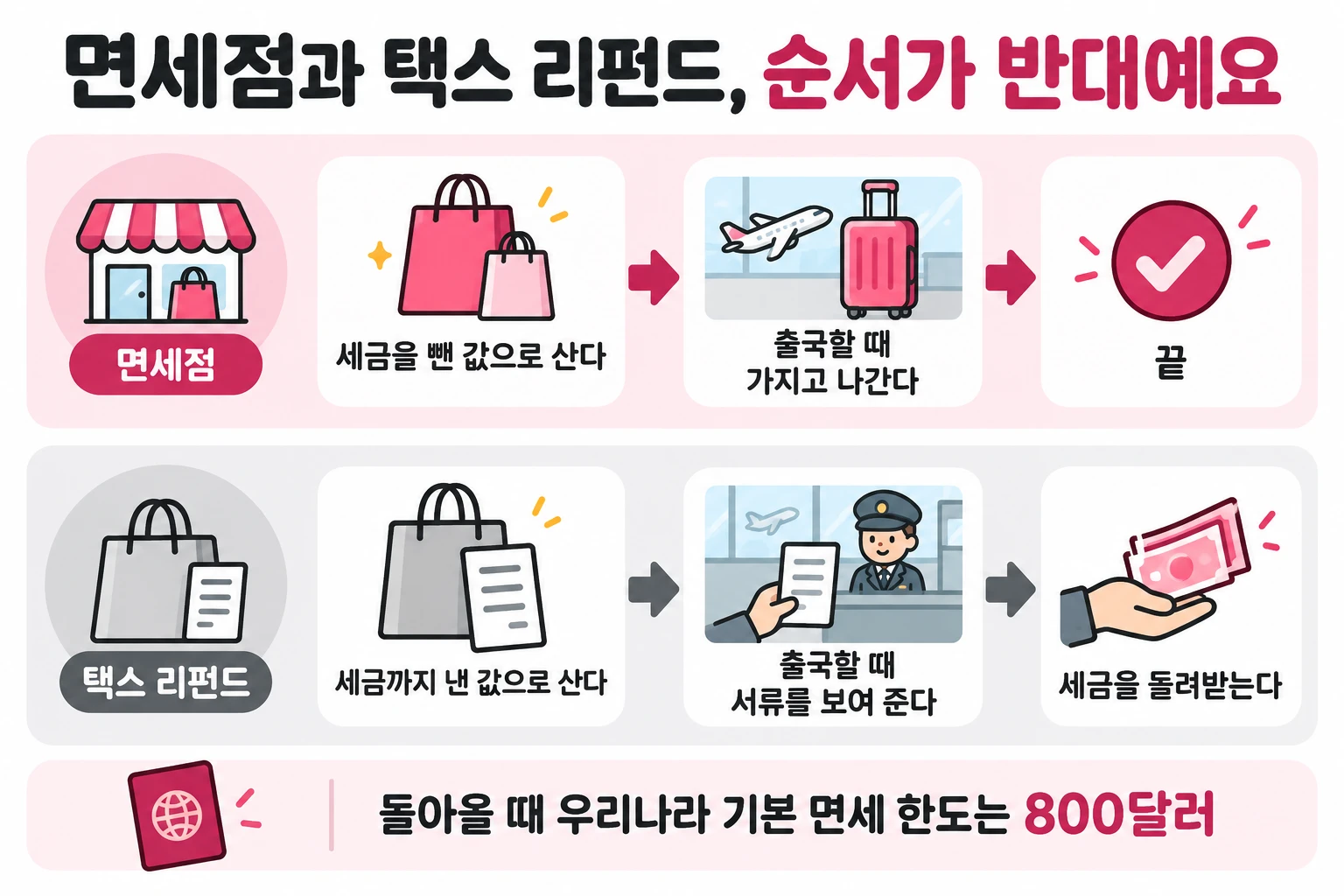
A tax refund (Tax Refund) is a system in which you buy goods at an ordinary store at a price that includes tax, then show documents when you leave the country and get the tax back. The order is the reverse of a duty-free shop, which sells without tax from the start.
(2) There is an allowance when you return
When you bring in goods bought abroad, the duty-free allowance set by each country applies. The basic duty-free allowance for travelers to Korea has been US$800 since September 2022, and anything above it is taxed accordingly.
(3) It is not always the cheapest
Just because taxes are removed does not mean you always buy cheaply. Airport shops pay high rent and face little competition, so prices can be set high, and depending on exchange rates or sales, shops in town are sometimes cheaper.
(4) The rules change too
Once the single market took hold, the European Union abolished duty-free shopping for travelers moving between member states in 1999. In the opposite direction, when the United Kingdom left the European Union in 2021, it reopened duty-free sales of items such as alcohol and tobacco to travelers heading to Europe.
A duty-free shop is not simply a discount store but a unique space created by international rules that tax goods according to the country where they are used. It is also fascinating that a small shop for passengers waiting for refueling has become one pillar of today’s huge travel industry.
Standing in front of the glittering shops in the departure area and pausing to think about how those prices were set — that is the first step in tourism studies, understanding travel and economics together.