As technological advances and innovation accelerate, edge computing is attracting attention as a new approach to data processing. Developed to address the physical limitations of conventional cloud computing and maximize data processing efficiency, edge computing is becoming increasingly important across various industries.
This material will examine the concepts and principles of edge computing in depth and provide a detailed analysis of its applications in different industries based on the benefits it offers and real-world examples.
Edge Computing: Understanding the Core of Future Technology
The Basic Concept of Edge Computing
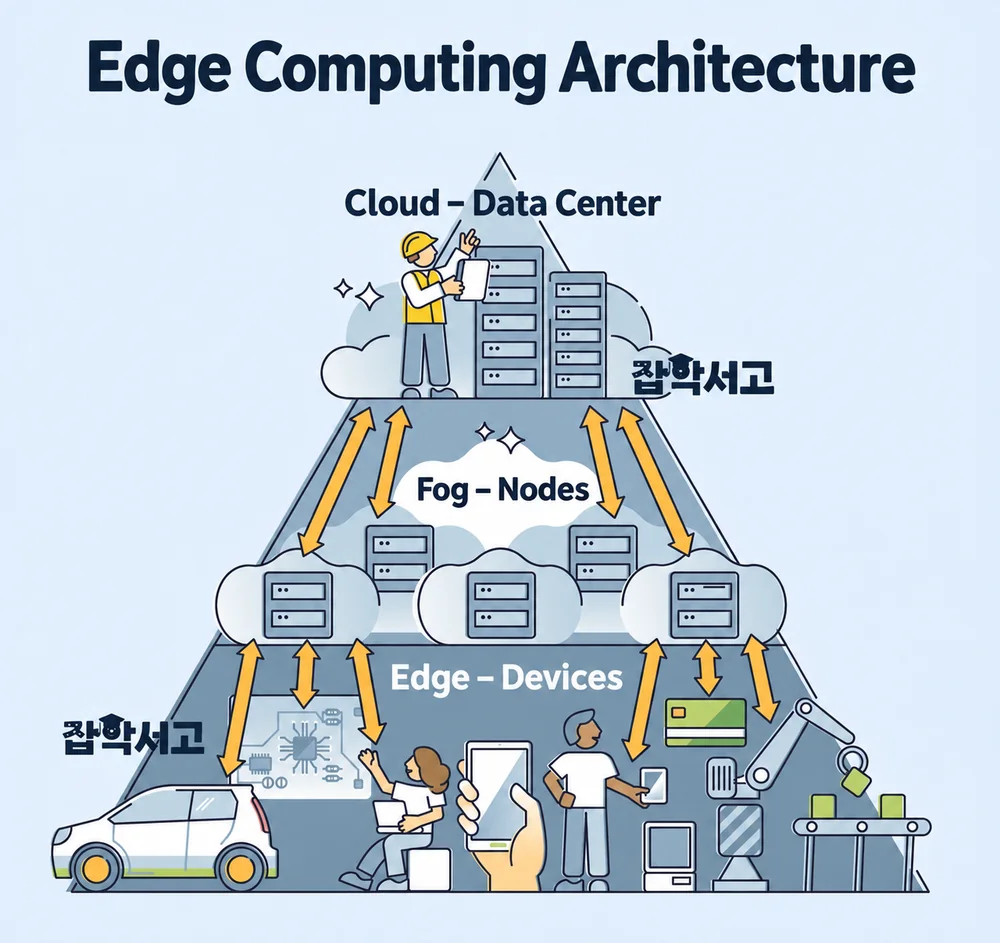
Edge computing is a technology that processes data at a point close to where it is generated, known as the “edge.” Unlike the conventional approach, in which data is transmitted to a central server or the cloud for processing, it dramatically reduces transmission time by processing data near the devices or sensors that generate it. In today's society, where the growing use of IoT devices is causing an explosive increase in the volume of collected data, managing and processing data efficiently is extremely important, and edge computing can address this challenge. Edge computing is particularly useful in situations that require real-time data processing, increasing its potential for use across various industries.
Improvements in Latency and Bandwidth Usage
Edge computing plays a particularly significant role in reducing latency. With traditional cloud computing, data must be transmitted to a cloud server for processing, after which the results must be returned to the device, and this process can take considerable time. By contrast, edge computing processes data directly on the device that generated it, substantially reducing the delays associated with transmission. This improvement in speed is essential for autonomous vehicles, smart cities, and smart factories that need to process data in real time. Processing data at the edge also reduces the bandwidth required for transmission, providing the additional benefit of lower network costs.
Strengthening Security and Data Sovereignty
Edge computing can also have an advantage over cloud computing in terms of data security. This is because it can reduce the risk of hacking or data leaks that may occur while data is being transmitted to the cloud. Edge computing allows data to be processed and stored directly on the device that collected it, minimizing the time sensitive information spends passing through external networks. It is also an effective solution when data must be physically processed and stored within a particular country or region to comply with its data protection laws. This approach plays an important role in fields that require a high level of security, particularly finance, healthcare, and government agencies.
A Collaboration Model for Cloud and Edge Computing
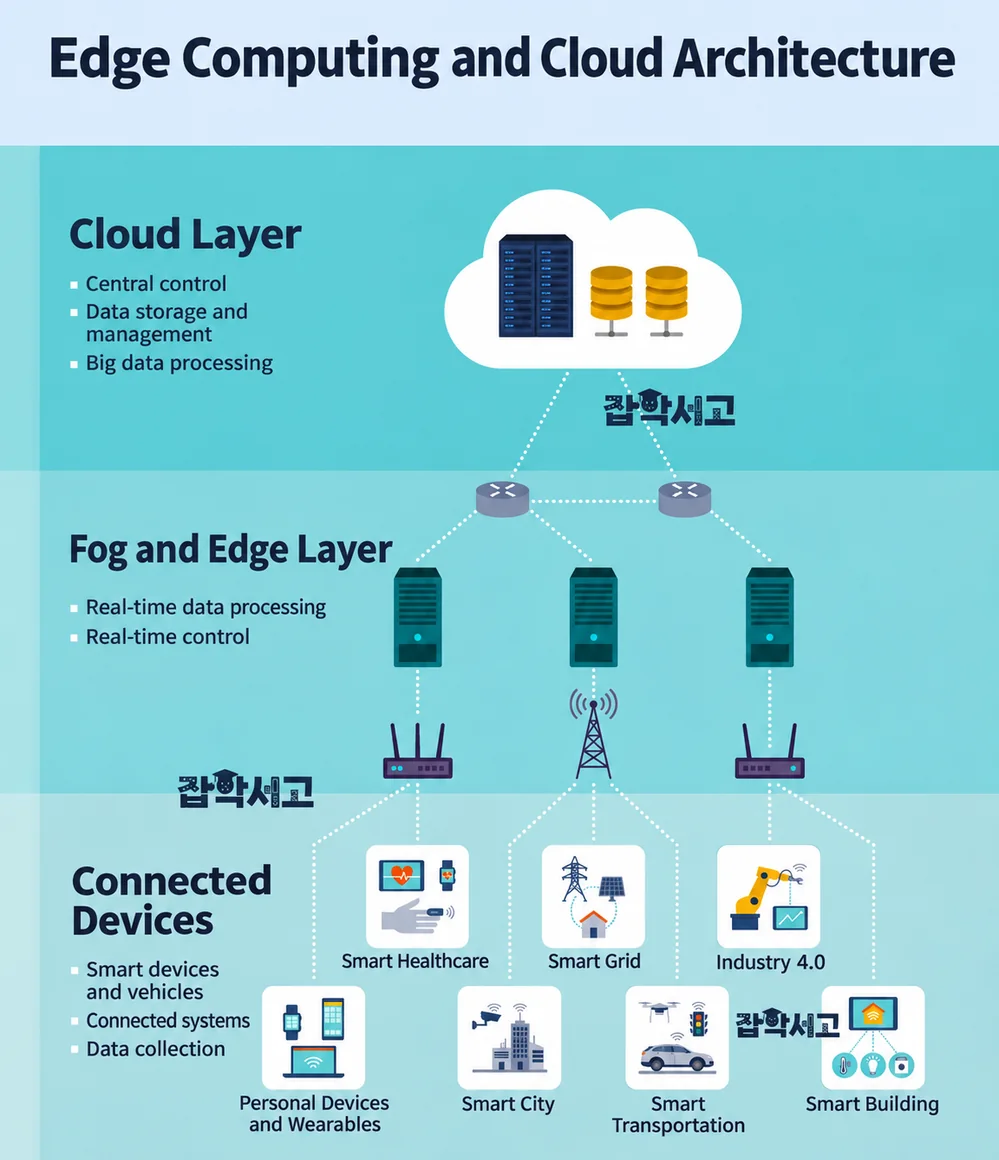
Edge computing is not a technology that completely replaces cloud computing. Instead, it can establish a collaboration model in which the cloud and the edge operate in complementary ways. Once data is processed in real time at the edge, the results are sent to the cloud for long-term storage and analysis. This enables businesses to process data in real time while also acquiring data for large-scale analysis. For example, data processed at the edge can be stored in the cloud and then used for artificial intelligence training or big data analysis to obtain deeper insights. This provides substantial benefits in data-driven industries such as manufacturing, distribution, and healthcare.
The Benefits of System Resilience and Distributed Architecture
Edge computing greatly improves a system's ability to recover (resilience) through a distributed architecture. In conventional centralized cloud systems, a network or server failure creates a risk that the entire system could stop operating. With edge computing, however, each edge device can operate independently and continue processing data locally even if network problems arise. For example, devices installed in remote locations can process and store important data on-site even when their network connection is lost, then synchronize with the central server again once the network is restored. This provides significant advantages, particularly in environments where network connectivity is unstable or limited.
Examples of Edge Computing Applications by Industry
The potential applications of edge computing are expanding across various industries. In manufacturing, data generated on production lines can be analyzed in real time at the edge to monitor machinery and enable immediate responses when problems occur. This can improve production efficiency and minimize downtime. In healthcare, processing data at the edge through wearable devices that monitor patients in real time enables rapid diagnosis and prompt responses to emergencies. In the development of smart cities, real-time analysis of data on traffic flow, energy consumption, and public safety can also be used to improve the efficiency of city operations. Beyond these areas, edge computing enables customized data processing in fields such as distribution, finance, and entertainment, providing solutions optimized for each industry.
The Future Outlook for Edge Computing
Edge computing is expected to develop and expand even more rapidly in the future. As the number of IoT devices grows exponentially and ultrafast network technologies such as 5G are introduced, the need for edge computing will increase further. Through edge computing, businesses can not only maximize data processing speed and efficiency but also experience various benefits such as cost savings and stronger security. Furthermore, combining edge computing with cloud computing could create new business models and accelerate businesses' digital innovation. Ultimately, the ability to gain an advantage in future technological competition will depend on how effectively edge computing is used.
How Edge Computing Works: Innovation in Data Processing
The Concept and Core Principles of Edge Computing
Edge computing is an innovative technology that processes data close to where it is generated, addressing transmission delays and network bandwidth issues. Conventional cloud computing involved sending data to a central server for processing and then receiving the results, but edge computing minimizes the delays in this process to enable real-time data processing. This allows faster and more efficient decision-making and offers significant advantages, particularly in fields that require immediate responses.
The Roles and Diversity of Edge Devices
Edge devices are among the core components of edge computing. They collect and process data and can take various forms. For example, routers, switches, IoT sensors, mobile devices, and local servers can all serve as edge devices. Each device collects data on-site, performs the necessary processing, and can either transmit it to a central server or store and manage it independently, depending on the situation. These devices can connect to one another and improve their performance by exchanging data, while also operating independently in distributed environments. This distributed processing approach greatly increases data processing speed and provides greater flexibility and efficiency by moving away from dependence on the cloud.
Multistage Analysis and Preprocessing in Data Processing
Data processing in edge computing goes beyond simply collecting data. It analyzes data and extracts the necessary information through multiple processing stages. The first stage is data filtering, which simplifies large volumes of data and selects only the important information. By removing unnecessary data, filtering reduces the amount of data that must be transmitted and saves bandwidth. Second, the filtered data is aggregated and converted into more meaningful information. Through this process, the necessary information is analyzed quickly and either stored locally or transmitted to a central cloud server as needed.
The Importance of Data Preprocessing
Another important component of edge computing is data preprocessing. Preprocessing is the process of organizing and preparing data before analysis and is an essential step in improving data quality. It removes noise and converts data into the information needed for analysis, increasing the accuracy of the results. Preprocessing plays an even more important role when real-time data must be processed and analyzed quickly. Through this, edge computing can shorten the time needed to prepare data for machine learning or advanced analytics and support faster decision-making.
Reducing Network Congestion and Improving Efficiency
Another major benefit of edge computing is that it improves overall system efficiency by reducing network congestion. Because data is processed immediately where it is generated, it does not need to be transmitted to a central server, reducing the burden on network bandwidth. This can prevent network bottlenecks and avoid server overload even when large volumes of data are involved. This plays a particularly important role in today's society, where the number of IoT devices is growing explosively. Processing data on-site to prevent excessive traffic from concentrating on central servers can reduce overall network management costs and maximize efficiency.
Integrating Edge Computing with Automation and Artificial Intelligence
Edge computing delivers even more powerful performance when combined with automation and artificial intelligence (AI) technologies. AI algorithms embedded in edge devices analyze data in real time, make automated decisions based on the results, and resolve problems immediately when necessary. This allows systems to maintain optimal conditions automatically without manual intervention, enabling high productivity and rapid responses across various industries. For example, in manufacturing, edge computing can analyze real-time data from production lines and immediately correct problems when they occur, preventing declines in productivity. Edge computing also plays an important role in complex systems such as smart cities and smart factories, where autonomous decisions based on real-time data can improve the efficiency of a city or factory.
The Future and Expansion Potential of Edge Computing
Edge computing is likely to develop and expand even more rapidly in the future. As the number of IoT devices grows exponentially and ultrafast network technologies such as 5G become more widespread, the role of edge computing will become increasingly important. In particular, as the complementary roles of cloud and edge computing strengthen, edge computing will be adopted across a wider range of industries. Businesses can use edge computing not only to maximize data processing speed and efficiency but also to become more competitive through real-time analysis and automation. Alongside the cloud, edge computing will establish itself as an important technology driving future digital innovation.
The Benefits of Edge Computing: Improving Efficiency and Speed

Maximizing Data Processing Speed
The greatest advantage of edge computing is its ability to process data in real time at the point where it is generated. This greatly reduces the delays associated with the conventional approach of transmitting data to a central server for processing. Edge computing plays a particularly important role in fields where real-time responses are essential, such as autonomous vehicles, smart factories, and medical devices. Autonomous vehicles must immediately recognize and assess road conditions, so delays in data transmission can be fatal. Edge computing enables immediate data analysis so that necessary decisions can be made. It performs an equally important function in smart city management and industrial automation systems, contributing to improved service quality through fast processing.
Optimizing Network Bandwidth and Reducing Costs
Edge computing is an effective solution for reducing data transmission costs by optimizing network bandwidth. Cloud computing transmits all data to central servers, which can overload networks and incur substantial costs. With edge computing, however, data is processed on-site, and only the necessary data is selected for transmission to servers. For example, smart factories can process the vast amounts of data generated in real time at the edge, minimizing the volume sent to servers. This reduces network congestion and the cost of managing large-scale data traffic. For businesses, this is efficient because it saves not only data transmission costs but also infrastructure maintenance costs by reducing server load.
Strengthening Security and Protecting Sensitive Data
Edge computing also offers outstanding advantages in data security. Because data is processed and stored locally, it can greatly reduce security threats that may arise during transmission to the cloud. This provides significant benefits, particularly for finance, healthcare, and public institutions that handle sensitive data. For example, when a hospital analyzes patients' medical records in real time, edge computing can process the data locally to minimize the risk of external leaks. This approach is also highly advantageous for complying with data protection regulations in each country or region. Because data is stored locally, it can satisfy legal requirements such as personal information protection laws.
Strengthening System Resilience and Service Continuity
Edge computing greatly strengthens system resilience. Systems that rely solely on central servers face a substantial risk of a complete shutdown if a server goes down or a network failure occurs. Edge computing, however, can process data locally, allowing services to continue even when network connectivity problems arise. For example, telemedicine systems monitor and analyze patient data in real time, and edge devices can continue processing data even when network problems occur, preventing interruptions to medical services. In this way, edge computing plays an important role in increasing customer trust and maintaining the stability of business operations by ensuring service continuity.
Improving Energy Efficiency and Sustainability
Edge computing can contribute to greater energy efficiency. Transmitting all data to central servers for processing can result in large-scale energy consumption, but processing data at the edge reduces the burden on data centers and lowers electricity consumption. For example, reducing the amount of data that data centers must process decreases the energy needed to operate servers, which in turn leads to lower electricity costs. Reducing energy consumption can help businesses save costs while also supporting environmentally sustainable management. Furthermore, because edge computing operates in an energy-efficient manner in distributed environments, it also plays an important role in reducing the environmental impact of network and data center operations worldwide.
Improving User Experience and Increasing Customer Satisfaction
Edge computing can greatly improve user experience through fast data processing and rapid responses. Its ability to analyze and process real-time data enables faster and smoother services for consumers. For example, using edge computing in entertainment services can deliver content immediately without delays in streaming services. Smart home systems can also respond immediately to user commands, maximizing convenience. These rapid processing and response capabilities increase customer satisfaction and can serve as a significant differentiating factor, particularly in highly competitive consumer-focused industries.
Edge Computing Examples: Analyzing Applications by Industry

Using Edge Computing in Manufacturing
Edge computing enables the implementation of smart factories in manufacturing and is establishing itself as a key technology that greatly improves productivity and efficiency. In manufacturing facilities, sensors attached to various types of machinery continuously collect large volumes of data. Edge computing processes this data immediately on-site, allowing machinery to be monitored in real time and potential problems to be detected early.
For example, if abnormal machine temperature or vibration data is detected, edge computing can analyze it immediately and automatically request maintenance when necessary to prevent production line interruptions. This reduces maintenance costs and maximizes production efficiency without unnecessary downtime. Real-time data can also be used during operations to improve quality control, and analyzing data generated in the production process can further increase productivity.
Providing Personalized Services in Retail
The use of edge computing in retail also plays an important role in providing customized shopping experiences. IoT devices installed in stores can collect and analyze customer behavior data in real time to provide personalized product recommendations and discount information tailored to customers' preferences and behavior patterns. For example, when a customer spends a long time in a particular section or shows interest in a specific product, edge computing can identify this immediately and offer promotions for related products to increase purchase conversion rates.
This immediate feedback can give customers a more personalized experience, increasing shopping satisfaction and helping them spend more time in the store. In addition, because data is processed in real time within the store's infrastructure, it can save network bandwidth and minimize delays that may occur when transmitting data to servers.
Real-Time Patient Management in Healthcare
In healthcare, edge computing contributes to patient safety and the quality of medical services by monitoring patients' physiological data in real time and analyzing it quickly. Patients' physiological signals, such as heart rate, blood pressure, and oxygen saturation, collected through wearable devices or smart medical equipment are analyzed immediately through edge computing, and alerts are sent to medical staff as soon as abnormalities are detected.
For example, if an emergency patient's condition deteriorates, edge computing quickly recognizes this and sends an alert to the hospital's systems, enabling an immediate response. This can protect patients' lives and health and help medical staff respond promptly. Edge computing can also be combined with remote patient monitoring systems to track patients' conditions in real time outside the hospital and provide necessary treatment measures. This is particularly useful for long-term treatment such as chronic disease management.
Data Processing in Autonomous Vehicles and Transportation Systems
In transportation, edge computing is an essential technology for data processing and real-time decision-making in autonomous vehicles. While driving, autonomous vehicles must quickly perceive their surroundings, detect road conditions, pedestrians, and obstacles, and make immediate judgments. The vast amounts of data collected by their sensors and cameras during this process are processed immediately inside the vehicle through edge computing. Because this does not involve sending data to a central server and receiving it back, it enables fast decision-making without delays.
Edge computing can also analyze data from the entire transportation system to help optimize traffic flow and reduce congestion. For example, monitoring traffic volumes in real time and adjusting signals at smart intersections can reduce unnecessary waiting times and keep vehicles moving smoothly. These systems help cities operate their transportation networks more efficiently.
Combining 5G and Edge Computing in Telecommunications
The combination of 5G networks and edge computing is attracting considerable attention in telecommunications. 5G enables ultralow latency and high-speed data transmission, and combining it with edge computing can greatly improve the performance of applications that require real-time processing. For example, applications such as augmented reality (AR) and virtual reality (VR) require very short response times, and edge computing can maximize users' immersive experiences by minimizing network delays and processing data in real time.
In addition, when smartphone users need real-time streaming services or high-speed data transmission, edge computing can process data on nearby servers to provide faster and smoother services. This increases data transmission speeds, improves user experience, and allows service providers to reduce network costs.
The Role of Edge Computing in Implementing Smart Cities
Edge computing is establishing itself as an essential technology for building smart cities. The many IoT devices installed in urban infrastructure need to collect and analyze data on transportation, energy, and public safety in real time, and edge computing can use this to maximize the efficiency of city operations. For example, urban traffic signal control systems can use real-time data to optimize traffic flow, reduce congestion, and strengthen public safety.
In energy management, edge computing can also analyze energy consumption data in real time to adjust electricity usage efficiently and save energy. This approach to data processing helps cities manage their resources efficiently and provide citizens with a better living environment.
Edge computing is establishing itself as an essential technology in today's data-driven society. It enables businesses to improve the efficiency and speed of data processing and explore innovative applications across various industries.
Edge computing, which offers a range of benefits including stronger security, lower network costs, and improved system resilience, is expected to expand further in the future. Developing a deep understanding of this technology and putting it to use will be an important key to future digital innovation.