Significance plays an important role in data analysis and the interpretation of results, and it is a concept that directly affects the reliability and validity of research. This article begins with the concept of significance and discusses various testing methods and the importance of interpreting the resulting analysis findings. It also examines in depth the considerations and limitations that require attention during interpretation.
Through this, we will develop a deeper understanding of the nature of significance when conducting analyses and explore ways to improve the accuracy of interpretation.
The Concept and Statistical Meaning of Significance
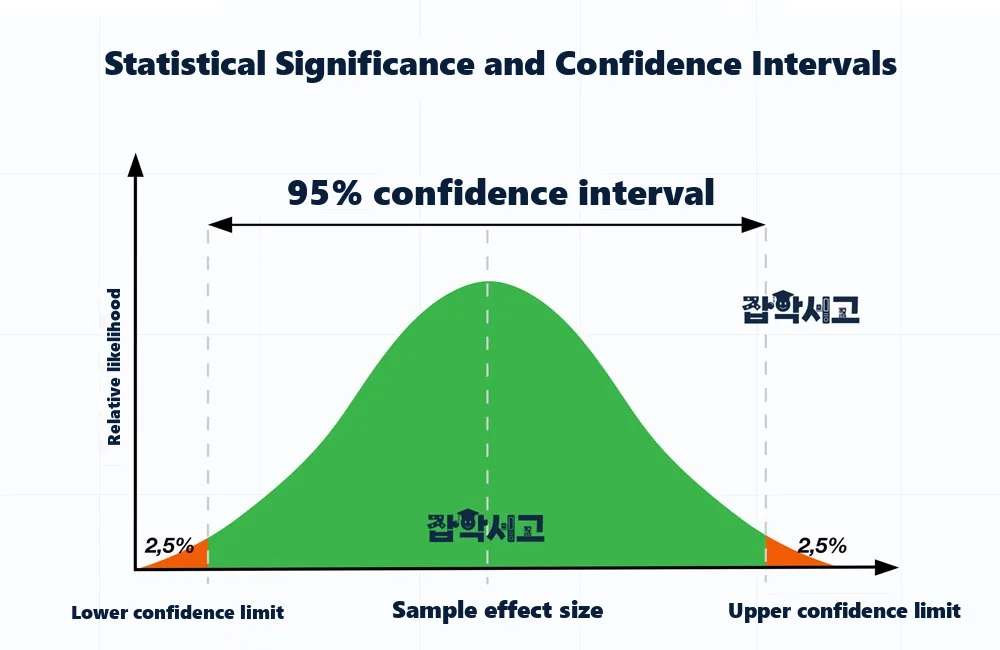
The Concept of Significance
Significance is a concept used in data analysis to assess the likelihood that a particular result is not due to chance. It allows us to determine whether analysis results are reliable and plays an important role in research and experiments. Significance is generally measured using a p-value, and the lower the p-value, the greater the likelihood that the result is not due to chance. In other words, the greater the significance, the greater the reliability of the result.
The Role and Importance of Significance
Significance serves as an important criterion in the data analysis process, and its results greatly influence research conclusions. The significance level set by a researcher is usually 0.05 or 0.01, which means that a result may occur by chance with a probability of 5% or 1%. For example, a significance level of 0.05 indicates that the research findings are 95% reliable, while a level of 0.01 raises that reliability to 99%. These significance levels may be set more strictly depending on the nature of the research.
Significance is a key criterion for evaluating the reliability of experimental results, and it helps research reach accurate conclusions. Significance testing is important in various situations, such as verifying the effects of a drug or assessing the usefulness of a new technology.
The Application and Interpretation of Significance Testing
Significance testing is one of the most fundamental processes in data analysis and plays an important role in helping researchers decide whether to reject the null hypothesis. The null hypothesis is the hypothesis initially established in a study, and significance testing is used to determine whether there is sufficient evidence to reject it. When significance is sufficiently high, the null hypothesis is rejected and the alternative hypothesis is accepted. For example, when testing the hypothesis that a drug is more effective than an existing treatment, significance testing is used to determine whether the result is a product of chance.
However, interpreting significance is not straightforward and requires careful analysis of the results. A low p-value does not always mean that the research conclusions are absolutely reliable, and other factors must also be considered during analysis. Placing excessive emphasis on significance alone carries a risk of reaching incorrect conclusions.
Limitations and Considerations of Significance
Significance is an important criterion for evaluating the reliability of analysis results, but it does not explain everything on its own. Significance testing only indicates whether to reject the null hypothesis; it does not explain the practical meaning or importance of the result. For example, even if the p-value is small, the effect may not actually have practical significance. Therefore, rather than judging results solely through significance testing, we must also consider their meaning and applicability in practice.
In addition, setting the significance level too low makes testing stricter, but also increases the possibility of missing results that are actually important. Conversely, setting the significance level too high increases the risk of mistakenly interpreting a result due to chance as a real effect. It is important to fully recognize these limitations and use appropriate analytical tools and methods alongside significance testing.
The Scope of Application of Significance
Significance is used not only in scientific research but also in various other fields. For example, significance testing plays an important role in evaluating the reliability of results when verifying the effectiveness of a particular marketing strategy in market analysis or analyzing the impact of a new policy in the policymaking process. This enables data-based decision-making, and these conclusions can have practical effects in a variety of situations.
Types of Significance Testing Methods

An Overview of Significance Testing Methods
Significance testing plays an important role in data analysis, and various methods are available. Each method is selected according to the characteristics of the data being analyzed and the purpose of the research, allowing the reliability of research findings to be evaluated. The following explains some representative significance testing methods.
t-Test (t-test)
The t-test is a widely used method for comparing differences in means between two groups. This method is divided into the independent-samples t-test and the paired-samples t-test. The independent-samples t-test compares differences in means between two independent groups, while the paired-samples t-test evaluates changes over time or differences under particular conditions within the same group. For example, when testing the effects of a new drug, a paired-samples t-test is used to compare results before and after the experiment. This allows us to determine whether the differences between groups actually exist rather than being due to chance.
Analysis of Variance (ANOVA)
Analysis of variance (ANOVA) is used to evaluate differences in means among three or more groups. ANOVA is divided into one-way and two-way analysis of variance, which compare differences in means among multiple groups using one or two independent variables, respectively. One-way analysis of variance considers only one factor, while two-way analysis of variance evaluates differences when two or more factors act simultaneously. This method can be effective in studies where various factors act in combination. For example, when comparing the effects of several treatment methods on patients, ANOVA serves as a tool for evaluating the differences between the treatment methods more clearly.
Chi-Square Test (Chi-square test)
The chi-square test is a method used to analyze categorical data and is commonly employed in surveys and observational studies. This method evaluates differences between observed and expected frequencies to determine whether two variables are independent. For example, when analyzing whether the occurrence of a particular disease differs by sex, the chi-square test can be used to evaluate the association. This test is useful when data are categorical rather than numerical, and its results help determine whether variables are independent of one another or related.
Regression Analysis (Regression analysis)
Regression analysis is used to analyze relationships between variables and build predictive models based on those relationships. Simple regression analysis examines the relationship between one independent variable and a dependent variable, while multiple regression analysis considers several independent variables to evaluate their effects on the dependent variable. For example, when analyzing the relationship between economic indicators and consumption patterns, regression analysis can predict how each variable affects consumption. An important aspect of regression analysis is the significance of the regression coefficients, which serves as a criterion for evaluating whether a given variable actually has a meaningful effect on the dependent variable.
Nonparametric Tests (Non-parametric tests)
Nonparametric tests are used to test significance when data do not follow a normal distribution. Representative nonparametric tests include the Mann-Whitney U test and the Wilcoxon signed-rank test. These methods help produce reliable results even when the data cannot be assumed to follow a particular distribution. For example, when experimental data consist of a small number of samples or contain extreme values, nonparametric tests can provide more reliable results.
The Importance of Choosing a Significance Testing Method
Significance testing methods must be selected appropriately according to the characteristics of the research and the form of the data. Each method has its own assumptions and limitations, so it is important to understand them fully before applying it. For example, the t-test is useful for comparing differences between two groups, but analysis of variance is more appropriate when evaluating differences among three or more groups. Choosing an appropriate testing method in this way is essential for improving the reliability of research findings and drawing accurate conclusions.
Significance testing is a core process in research and analysis, and various testing methods are available. Each method must be selected according to its characteristics and scope of application, and using an appropriate method is important. Through this process, researchers can draw reliable conclusions and make more accurate decisions based on their findings.
Interpreting the Significance of Analysis Results and Its Importance

The Importance of Interpreting Significance
Significance serves as a very important criterion when interpreting analysis results. It helps confirm that the results observed by a researcher are not due to chance, allowing the validity of the research hypothesis to be evaluated. The results of significance testing provide a basis for determining whether the hypothesis presented in a study is reliable, making them a key factor in the success or failure of the research.
The Role of Significance Testing
A significant analysis result means that there is sufficient evidence to reject the null hypothesis, which is established when the p-value is lower than the significance level set by the researcher. Based on this result, researchers can support the alternative hypothesis and use it as evidence to substantiate new findings or claims. For example, in a study demonstrating the effects of a new drug, a significant result provides important evidence that the drug actually works. However, such a result is only statistically significant and does not guarantee practical meaning or impact.
The Difference Between Statistical Significance and Practical Importance
Statistical significance does not always imply practical importance. In studies using large samples, results may be statistically significant even when the effect size is very small. In such situations, rather than drawing conclusions solely from statistical significance, we must also consider whether the effect is actually important—that is, whether it has practical meaning. For example, even if a new policy produces a statistically significant change, it is necessary to analyze how much that change actually affects policy decisions.
Practical Applications of Significance Results
Results obtained through significance testing are used as an important tool for decision-making in various fields. Businesses can make careful judgments when deciding whether to launch a product or developing marketing strategies based on significance analysis results. If market analysis yields significant results indicating that a particular strategy has a high likelihood of success, these can serve as a basis for implementing that strategy. In public policy as well, significance testing results serve as a criterion for evaluating policy effectiveness, allowing the direction of a policy to be adjusted or new policies to be established.
Academic Contributions and the Role of Significance
Significance testing also plays an important role in academia. In academic research, significant results are essential for testing new theories or revising and supplementing existing ones. Significant results are regarded as an important criterion for increasing academic contribution, and they directly affect whether research is published and the academic credibility a researcher gains. Therefore, researchers must carefully interpret the results obtained through significance testing and evaluate whether they provide clear answers to the research questions.
The Need for Correct Interpretation
Correctly interpreting significance testing results is essential for improving the reliability of research and drawing valid conclusions. Researchers must consider both statistical significance and practical importance to ensure that the analysis results provide clear answers to the research questions. This allows research to establish its reliability and maximize its academic contribution and practical impact.
Considerations and Limitations When Interpreting Significance

Considerations When Interpreting Significance
The most important consideration when interpreting significance is that drawing conclusions solely on the basis of the p-value can be risky. The p-value indicates statistical significance, but it cannot fully explain the research findings. A low p-value does not mean that the research findings have practical meaning. Researchers must consider effect sizes and confidence intervals as well as p-values. Effect size indicates how important the observed difference actually is, while a confidence interval is an important tool for evaluating uncertainty in the results. Only by considering these factors together can the meaning of the research findings be understood more clearly.
The Multiple Comparisons Problem
The multiple comparisons problem is an important issue that can arise when several hypotheses are tested simultaneously. When researchers test multiple variables or hypotheses, the significance level may be distorted, increasing the likelihood of false-positive results. Adjustment methods are used to prevent this, and one such method is the Bonferroni correction. This method reduces errors that may arise in multiple comparisons, contributing to greater reliability of analysis results. Researchers must use such adjustment methods appropriately to prevent risks that may arise from the multiple comparisons problem.
The Influence of Sample Size
Sample size is a very important factor in interpreting significance. When the sample size is large, results that do not actually represent large differences may still appear statistically significant. Conversely, when the sample size is too small, results may appear nonsignificant even when an important difference actually exists. Therefore, researchers must carefully determine the sample size at the research design stage and also consider it when interpreting results. In large-scale studies in particular, even small effects may produce significant results, making it necessary to closely analyze the actual meaning of those effects.
Limitations in Interpreting the Null Hypothesis
Significance testing is a process of determining whether there is sufficient evidence to reject the null hypothesis, rather than deciding whether the null hypothesis is true or false. Rejection of the null hypothesis through significance testing does not automatically mean that the alternative hypothesis is true. It only means that there are sufficient grounds to reject the null hypothesis, and researchers must interpret this carefully through additional verification instead of accepting it as an absolute truth.
Data Quality and the Suitability of Analytical Methods
The limitations of significance interpretation can also be greatly affected by data quality and the suitability of analytical methods. Bias or errors that may arise during data collection can reduce the reliability of results, and analytical methods that do not match the characteristics of the data carry a high likelihood of producing incorrect conclusions. Researchers must carefully examine whether the quality of the data can be trusted and always verify that the selected analytical methods are suitable for the research purpose and the characteristics of the data.
A Comprehensive Understanding of Significance Interpretation
Interpreting significance goes beyond simply reporting statistical results; it is a process of developing an in-depth understanding of the meaning of research findings and their applicability in practice. Researchers must comprehensively consider effect sizes, confidence intervals, and the multiple comparisons problem as well as p-values, and closely analyze the actual meaning of the research findings rather than focusing only on rejecting the null hypothesis. In addition, the validity and reliability of research can be secured only by interpreting results with the quality of the data and the suitability of analytical methods consistently in mind.
Significance is a fundamental element of data analysis and interpretation, serving as an important criterion that determines the reliability and validity of research findings. The concept of significance, testing methods, and considerations for interpretation discussed in this article are essential elements that help researchers draw reliable conclusions.
The ability to correctly understand and interpret significance will improve the accuracy of decision-making and increase the practical impact and contribution of research. Accordingly, researchers need to continually develop their analytical skills, recognize the limitations of significance interpretation, and make efforts to address them.