Systematically analyzing a company's external environment is very important when developing a business strategy. One widely used tool for analyzing this external environment is PEST analysis. By systematically analyzing the political (Political), economic (Economic), social (Social), and technological (Technological) environments, PEST analysis provides essential information needed to develop business strategies.
This material aims to explain the importance and basic concepts of PEST analysis and present effective analytical methods for each factor.
Understanding the Importance and Basic Concepts of PEST Analysis
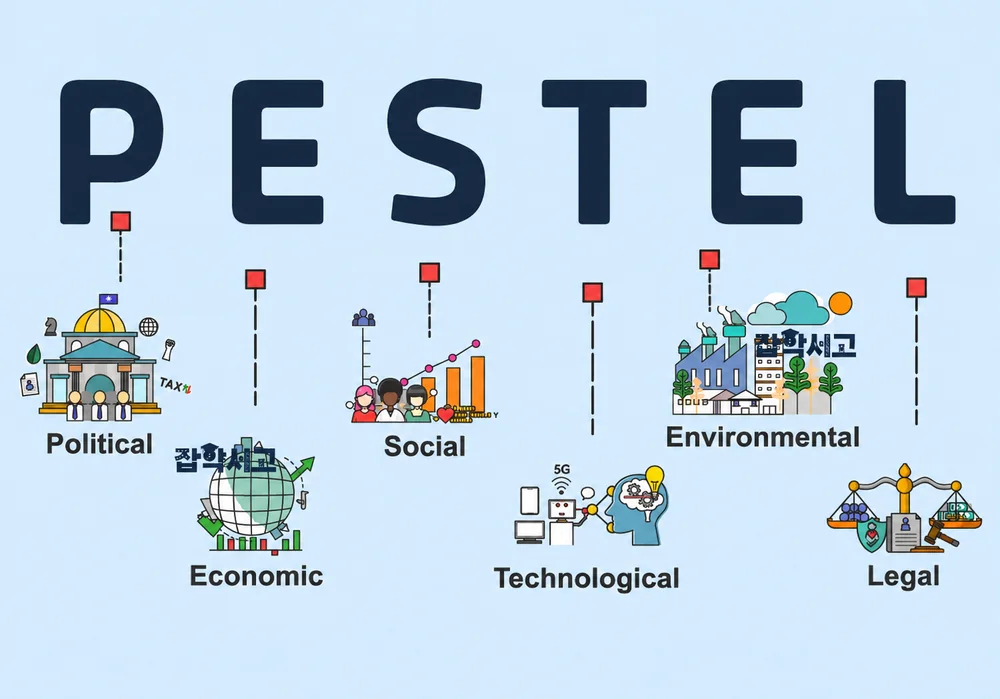
The Importance of PEST Analysis
PEST analysis is a tool for systematically analyzing the external environment a company faces from political, economic, social, and technological perspectives. It enables companies to identify opportunities and threats in the external environment and make strategic decisions effectively. This analysis plays an important role in helping companies develop agile response strategies needed for long-term success.
Political Environment Analysis (Political)
The political environment consists of factors such as laws, regulations, government policies, and tax systems. These directly affect business operations and vary considerably from country to country. Multinational companies must carefully analyze the political environment in each country, as changes in tax policies or political instability significantly affect their cost structures and market access. For example, when a new regulatory bill is introduced, companies must quickly develop strategies that account for it.
Economic Environment Analysis (Economic)
The economic environment is analyzed using macroeconomic indicators such as economic growth rates, inflation, exchange rates, and unemployment rates. These indicators directly and indirectly affect consumer demand, production costs, and financing. In particular, economic downturns bring reduced consumer spending and pressure to cut costs, making response strategies necessary. When economic growth rates are high, companies can seek opportunities to expand their businesses and promote their growth.
Social Environment Analysis (Social)
The social environment involves analyzing demographics, social values, cultural trends, and other factors. It directly affects consumer behavior and plays an important role in identifying market trends. For example, demand for products and services targeting older adults is expected to increase in an aging society, allowing companies to develop business strategies accordingly. Companies can also enhance their image through marketing strategies that reflect changes in social values and trends.
Technological Environment Analysis (Technological)
The technological environment involves analyzing innovative technologies, research and development trends, and technological infrastructure. The adoption of new technologies and innovation strengthen a company's competitiveness and provide opportunities to gain an advantage in the market. Advanced technologies such as artificial intelligence and blockchain drive change across various industries, and companies can develop new business models based on them. Technological environment analysis is therefore an important part of securing a company's future competitiveness.
Environmental Analysis (Environmental)
Environmental factors have recently emerged as important elements that significantly affect business management. These include climate change, resource depletion, and environmental protection regulations, and analyzing them is essential for sustainable management. For example, when carbon emission regulations become stricter, companies need to develop environmentally friendly products and improve their manufacturing processes. Companies must also adopt sustainable production methods to keep pace with environmentally conscious consumption trends. This is an important strategic element for their image and long-term growth.
Legal Environment Analysis (Legal)
The legal environment involves analyzing matters related to legal regulations in the countries or regions where a company operates. Labor laws, consumer protection laws, and intellectual property laws directly affect business operations, and failure to comply with them can lead to substantial costs and reputational damage. For example, if a country's labor laws become stricter, companies may need to improve working conditions or revise their workforce management strategies. They must also analyze that country's legal system and develop appropriate response strategies to protect intellectual property rights.
PEST analysis is an essential tool for companies to effectively analyze their external environment and develop suitable strategies. By systematically analyzing the political, economic, social, and technological environments, companies can respond to change with agility and lay the foundation for long-term success. This can contribute to pursuing sustainable growth and achieving innovation.
PESTEL analysis is a more detailed model that adds environmental (Environmental) and legal (Legal) factors to this framework. PESTEL is used in industries where environmental issues or legal regulations are important. This material focuses on PEST analysis, which is frequently used when major environmental factors need to be identified concisely and quickly.
Methods for Analyzing Political Environment Factors

Analysis of Laws and Regulations
When analyzing political environment factors, the first step is to carefully review the laws and regulations of the relevant country or region. This is essential for identifying changes in laws or the introduction of new regulations that may directly affect the industry to which a company belongs. For example, stronger environmental protection legislation can impose additional costs on manufacturers, requiring strategies to respond to such changes. Companies must therefore continuously monitor relevant laws and regulations and develop corresponding responses.
Government Policy Analysis
Government economic, tax, and trade policies significantly influence a company's strategic decisions. If a country implements policies that promote free trade, companies can seek opportunities to expand into overseas markets. Conversely, if protectionist policies become stronger, companies must reassess their import and export strategies. Such policy changes are important considerations when developing long-term strategies, so companies must continuously analyze and account for the direction of government policy.
Political Stability Analysis
Political stability is an important factor affecting business operations. Political instability increases operational risks, and factors such as changes in government, social unrest, and terrorist threats can make companies more cautious about investment decisions. For example, a conservative approach to business expansion or investment is necessary in regions with high political instability. Companies must therefore continuously observe the political situation in the relevant region and develop strategies to minimize risks.
International Relations Analysis
International relations significantly affect a company's global business operations. Trade agreements or diplomatic conflicts between countries can directly affect import and export activities, requiring corresponding response strategies. For example, trade disputes between countries can disrupt logistics and supply chains, making advance preparations necessary. Changes in international relations must be carefully analyzed because they can determine business opportunities in global markets.
Lobbying Analysis
Lobbying is an important part of political environment factors and is essential for companies to manage their relationships with governments. It can improve the predictability of changes in laws and regulations and help companies create favorable conditions. For example, lobbying on a particular bill can protect a company's interests and create a favorable legal environment. Lobbying also plays an important role in a company's strategic planning.
Using Information Sources
Using a variety of information sources is important when analyzing the political environment. Companies must comprehensively review information such as government reports, news articles, and expert analyses to reach reliable conclusions. This enables them to develop business strategies based on a clear understanding of the political environment. Collecting accurate and extensive information forms the basis for successful strategy development.
Methods for Evaluating Economic Environment Factors

Macroeconomic Indicator Analysis
The first task when evaluating economic environment factors is to analyze macroeconomic indicators. Indicators such as economic growth rates, inflation, exchange rates, and unemployment rates directly affect a company's business environment. For example, a high economic growth rate makes an increase in consumer demand more likely, giving companies opportunities to expand production and strengthen their marketing strategies. By carefully analyzing these indicators, companies can obtain important data for developing business strategies.
Inflation Analysis
The inflation rate significantly affects a company's cost structure and pricing policies. As inflation rises, major costs such as raw materials and labor increase, which can naturally lead to higher product prices. It is therefore important to continuously analyze inflation trends to identify ways to reduce costs or adjust pricing policies. This enables companies to minimize their cost burden and maintain price competitiveness.
Exchange Rate Fluctuation Analysis
Exchange rate fluctuations have a particularly important impact on companies engaged in imports and exports. When exchange rate volatility is high, companies conducting transactions in foreign currencies must bear risks arising from exchange rate differences. For example, if the Korean won continues to strengthen, exporters may experience declining sales as their price competitiveness weakens. To prepare for this, companies must carefully monitor exchange rate volatility and develop risk management strategies such as currency hedging. These measures can help reduce exchange rate risk and protect profitability.
Unemployment Rate Analysis
The unemployment rate is an important indicator directly linked to consumers' purchasing power. When unemployment rises, consumers' purchasing power declines, negatively affecting company sales. Conversely, when unemployment falls, consumers' purchasing power increases, and sales are expected to rise. Companies must therefore monitor changes in unemployment and respond appropriately to changing market conditions through corresponding marketing strategies or product price adjustments.
Interest Rate Change Analysis
Interest rates significantly affect a company's financing costs. When interest rates rise, financing costs increase, potentially having a negative impact on investment decisions. In particular, higher interest rates create a need to reassess the feasibility of new investment projects. Conversely, lower interest rates make financing easier and enable increased investment, so companies must continuously monitor interest rate changes and develop appropriate investment strategies.
Analysis of Economic Policies by Country
Each country's economic policies are also important factors to evaluate. Government fiscal, monetary, and industrial policies significantly affect a company's business environment. For example, if a government plans large-scale infrastructure investment to stimulate the economy, new investment opportunities may arise in related industries. Companies can also seek opportunities to enter a sector or expand their operations if the government eases regulations or offers tax incentives for that industry.
Economic environment analysis is an essential process in developing a company's business strategy. By comprehensively analyzing factors such as macroeconomic indicators, inflation, exchange rates, unemployment rates, and interest rates, companies can respond to changing economic conditions. Strategic thinking is also needed to carefully evaluate economic policies in each country and identify new opportunities. Based on this analysis, companies can drive sustainable growth in the market.
Considerations for the Social and Technological Environments

Demographic Analysis
When analyzing the social environment, the first step is to consider demographic factors. Factors such as population structure, age distribution, and educational attainment play an important role in forecasting market demand. For example, regions with large young populations are more likely to have high demand for innovative and trendy products. This analysis provides useful information for product development and marketing strategies and helps companies plan products suited to the characteristics of the market.
Changes in Cultural Trends and Social Values
Changes in cultural trends and social values are essential to understanding consumer behavior and preferences. For example, when preference for environmentally friendly products is increasing, it is important to develop suitable products and strengthen marketing strategies that take the environment into account. In regions where particular social values are firmly established, companies need to conduct activities that respect those values, positively affecting their image and long-term growth.
Consumer Behavior Analysis
Consumers' purchasing patterns, brand loyalty, and online shopping trends are central components of social environment analysis. For example, companies must strengthen digital marketing and e-commerce strategies in regions where online shopping is widespread. By analyzing consumers' purchasing channels and developing effective sales strategies, companies can maximize their sales. Marketing strategies targeting consumers with high brand loyalty should also be considered.
Analysis of Technological Innovation Trends
When analyzing the technological environment, it is important to carefully examine the latest trends in technological innovation. New technologies determine a company's competitiveness and can create new market opportunities. For example, technologies such as artificial intelligence (AI), blockchain, and the Internet of Things (IoT) drive innovation across various industries and can serve as the basis for developing new business models. Companies must therefore prepare for future changes through continuous analysis of technological trends.
Research and Development (R&D) and Collaboration Strategies
R&D capabilities are an important factor in maintaining a company's continued growth and competitiveness. Promoting innovation requires continuous investment in R&D as well as collaboration with external institutions. Collaborating with research institutions, universities, and startups enables companies to introduce innovative ideas and technologies and thereby secure a competitive advantage in the market. For example, adopting an open innovation (Open Innovation) strategy to use external resources is becoming increasingly important.
Technological Infrastructure Analysis
Technological infrastructure is essential for companies to achieve digital transformation and innovation. The level of internet infrastructure, data centers, cloud computing, and other resources determines how quickly and flexibly a company can implement its digital strategies. For example, in regions with well-developed high-speed internet infrastructure, companies can develop strategies to strengthen online services and maximize their data analysis capabilities using cloud infrastructure. Conversely, regions with inadequate technological infrastructure require investment to address these deficiencies.
Carefully analyzing the social and technological environments plays an important role in a company's strategic decisions. By comprehensively evaluating various factors such as demographics, social values, technological innovation, and R&D capabilities, companies can respond proactively to a changing environment. This analysis enables them to lay the foundation for sustainable growth and competitiveness.
Practical PEST Analysis Methods and Examples

When conducting PEST analysis in practice, it is important to approach each factor systematically in relation to specific cases. First, thoroughly investigate the environment in which the company or industry being analyzed operates, classify the political, economic, social, and technological factors, and evaluate the effects of each.
Methods for Analyzing the Political Environment
When analyzing the political environment, companies must consider government policies and diplomatic relations as well as legal and regulatory factors in the relevant country or region. For example, if the government is strengthening environmentally friendly policies, the industry needs to accelerate the adoption of environmentally friendly technologies or prepare to comply with environmental regulations. Companies can also take advantage of deregulation or government subsidy policies to reduce costs or plan business expansion.
Methods for Analyzing the Economic Environment
The economic environment is primarily analyzed using macroeconomic indicators, which help identify market opportunities and risks. For example, an exporter operating in a country with substantial exchange rate fluctuations can diversify its risks through currency hedging. As another example, consumer purchasing power increases in markets with high economic growth rates, providing opportunities to launch new products or expand services.
Methods for Analyzing the Social Environment
When analyzing the social environment, companies must carefully examine the market's population structure, cultural changes, consumer behavior, and other factors. For example, expanding products and services suited to older adults is strategically important in countries where population aging is progressing rapidly. In addition, as particular social trends grow stronger, marketing campaigns or product designs that reflect those trends can increase points of contact with consumers.
Methods for Analyzing the Technological Environment
Technological environment analysis requires identifying the latest technological trends and finding technologies that can improve a company's competitiveness or efficiency. For example, when artificial intelligence (AI) technology is developing rapidly, companies can gain a technological advantage by introducing automation systems that use it or strengthening personalized customer services. In regions with inadequate technological infrastructure, companies can also identify areas where infrastructure needs improvement and develop investment plans.
Practical Analysis Example 1
Consider a global automobile manufacturer. This company applies PEST analysis as it plans to enter emerging markets.
- Political factors: After reviewing the country's automobile import and export regulations and subsidy policies, the company finds that substantial subsidies are available for environmentally friendly vehicles. Based on this, it strengthens its electric vehicle lineup.
- Economic factors: An analysis showing that the country's economic growth rate is high and its middle class is expanding leads the company to conclude that launching premium models is appropriate.
- Social factors: Demographic analysis reveals a large young population with a preference for trendy consumption, leading the company to create modern and stylish designs.
- Technological factors: Because local 5G technology and autonomous driving infrastructure are well established, the company launches smart cars that actively incorporate autonomous driving technology.
Practical Analysis Example 2
Now consider a global fashion brand. This company uses PEST analysis to develop its strategy as it enters a new Asian market.
- Political factors: After analyzing the country's trade regulations and tariff policies, the company finds that tariffs on clothing imports are relatively low and regulations on foreign companies are being eased. Based on this, it adopts a strategy of importing products from its headquarters for sale rather than producing them locally.
- Economic factors: Analysis shows that the country's economic growth rate is rising steadily and that its middle class, in particular, is growing rapidly. The company therefore determines that it is appropriate to focus on launching an upscale product line rather than a low- to mid-priced fashion line.
- Social factors: Analysis of demographics and consumer trends reveals that the region has a very high level of interest in environmental protection and ethical consumption. Accordingly, the company makes sustainable fashion products and collections using environmentally friendly materials its main marketing points.
- Technological factors: The company identifies that local e-commerce infrastructure is highly developed and mobile shopping is widespread. Based on this, it decides to focus on marketing and sales through online platforms and mobile apps rather than physical stores, and strengthens mobile-exclusive promotions and fast delivery services.
PEST analysis is used as an important tool when companies develop business strategies. By systematically analyzing the political, economic, social, and technological environments, companies can respond with agility to changes in the external environment and lay the foundation for long-term success.
We hope that referring to the analytical methods presented for each factor in this material will help you develop more effective business strategies. We look forward to sustainable growth and innovation based on the insights gained through PEST analysis.