Sometimes two companies open at the same time and put in similar effort, yet one earns comfortable profits while the other always scrapes by. It may come down to a difference in management skill, but in some industries it is unusually hard to make money no matter who is in charge. The airline industry, locked in endless competition over ticket prices, is a classic example.
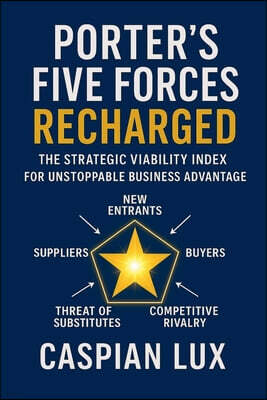
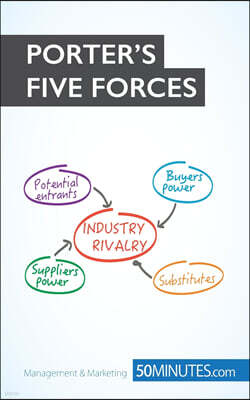
So what determines how good a place an industry is to make money? Michael E. Porter of Harvard Business School answered this question with five forces. A framework that examines the competitive environment around a company by dividing it into pressures from five directions: this is “Porter’s Five Forces.”
In this article, we will look in turn at the background of the Five Forces, what the five forces are, entry barriers and industry examples, and the limits of this tool and how to use it.
The Five Forces That Decide an Industry's Profits
Why Did the Five Forces Emerge?

The Five Forces began with the idea of looking at competition much more broadly than a fight between the rivals right in front of you.
(1) The 1979 Article
Porter first introduced this framework in 1979 with an article in the Harvard Business Review titled “How Competitive Forces Shape Strategy.” Through his book Competitive Strategy, published the following year, it spread widely as a basic tool of business strategy.
(2) Dissatisfaction with SWOT Analysis
At the time, companies commonly used SWOT analysis, which lists strengths and weaknesses, opportunities and threats. Porter felt this method went no further than jotting down items as they came to mind, and lacked analytical rigor.
(3) The Perspective of Industry Structure
The Five Forces is rooted in the view of industrial organization economics that an industry's structure shapes companies' behavior and performance. When all five forces are strong, profits are ground down to nothing; when they are weak, above-average profits can be expected.
What the Five Forces Are

The five forces divide into three horizontal forms of competition that clash within the same market, and two vertical forms of competition against trading partners.
- Competitive Rivalry: The more the companies already in the market fight with price cuts, advertising, and new products, the more everyone's profits shrink.
- Threat of New Entrants: If new companies can enter easily, existing companies cannot freely raise prices.
- Threat of Substitutes: Products that meet the same need in a different way. For cola, tap water is a substitute, but another cola made the same way is not a substitute but a competitor.
- Bargaining Power of Buyers: The more places customers can choose from and the easier it is to switch, the greater the pressure to cut prices.
- Bargaining Power of Suppliers: If only one company sells flour to a snack maker, the snack maker has no choice but to accept whatever price that supplier names.
Entry Barriers and Industry Examples

Among the five forces, what holds back the threat of new entrants is entry barriers. The higher the barriers, the easier it is for existing companies to protect their profits.
(1) What Entry Barriers Are Made Of
Typical examples are economies of scale, where unit costs fall the more you produce; network effects, where value grows the more people use something; and switching costs, like airline mileage programs, that make it hard to move elsewhere. Large initial capital, difficulty securing distribution channels, and government policies such as patents and licenses also act as barriers.
(2) Why the Airline Industry Is Tough
Airlines have large fixed costs for aircraft and airport facilities, while the cost of carrying one more passenger is small. Price-cutting competition to fill empty seats breaks out easily, and passengers buy tickets by comparing prices alone, so the profitability of the industry as a whole is low.
(3) The Trap of Looking Only at Growth Rates
A fast-growing industry looks attractive, but if entry barriers are low, new companies flock in. Blockbuster, which led the video rental market in the 1990s, focused only on its own growth and eventually gave way to a new competitor called Netflix, which appeared in 1998.
The Limits of the Five Forces and How to Use Them

The Five Forces is still widely used today, but treating it as a master key is a mistake.
(1) The Sixth Force: Complements
In the mid-1990s, Adam Brandenburger of Harvard Business School and Barry Nalebuff of Yale argued, based on game theory, that the influence of companies making complements, products whose value grows when used together, should be considered separately. Computers and software, and cars and fuel, are examples of such relationships. Porter regarded complements, government, and technological innovation not as independent forces but as factors that influence the five forces.
(2) Voices of Criticism
The framework is criticized for assuming that buyers, suppliers, and competitors do not join hands with one another and that market uncertainty is low. It also diagnoses when a threat is large, but does not tell you what to do about it.
(3) How to Use It Properly
Porter stressed that the unit of analysis should be not a broad industry group but the specific market where similar products are actually sold. Even within the same industry, profits differ depending on a company's capabilities, so it is best used together with value chain analysis or an analysis of the company's internal resources.
The biggest insight the Five Forces offers is that your competitors are not only the rivals you can see. Customers and suppliers, companies that have not yet entered, and substitutes that look completely different are all vying for a share of your profits.
Reading the forces at work across the whole board: that is the first step in a business strategy that finds a position where you can win.