
Have you ever been on a plane about to land when the sounds around you suddenly faded and your ears felt tightly blocked? The same thing can happen in a high-speed elevator, a long tunnel or on a winding mountain road.
This blocked feeling is commonly called ear fullness. In most cases it happens because the air pressure inside and outside the ear briefly falls out of balance, so once you understand the principle, the ways to relieve it make sense too.
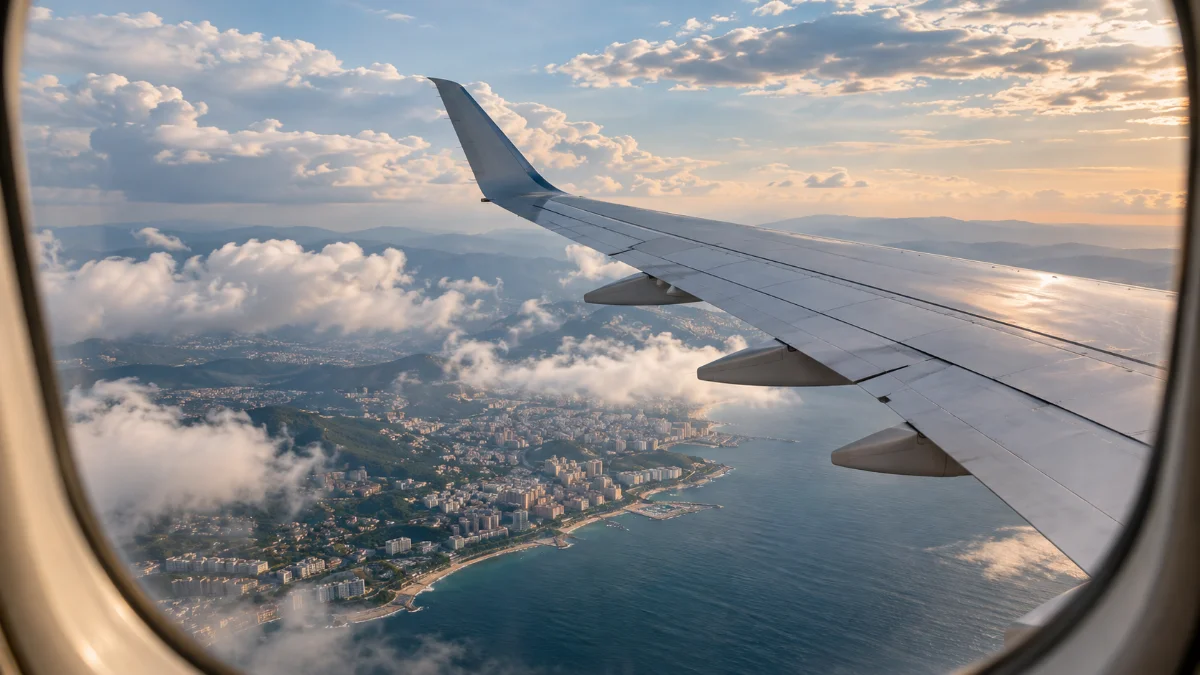
Ear Pressure at a Glance
- When the pressure behind the eardrum differs from the air pressure outside, the eardrum is pushed to one side and sounds become muffled.
- When the Eustachian tube, which connects to the back of the nose, opens and evens out the pressure, the fullness clears with a little "pop."
- Swallowing, yawning or chewing gum can open the tube; if the feeling lasts or hurts, see a doctor.
1. Why Do Ears Feel Blocked?
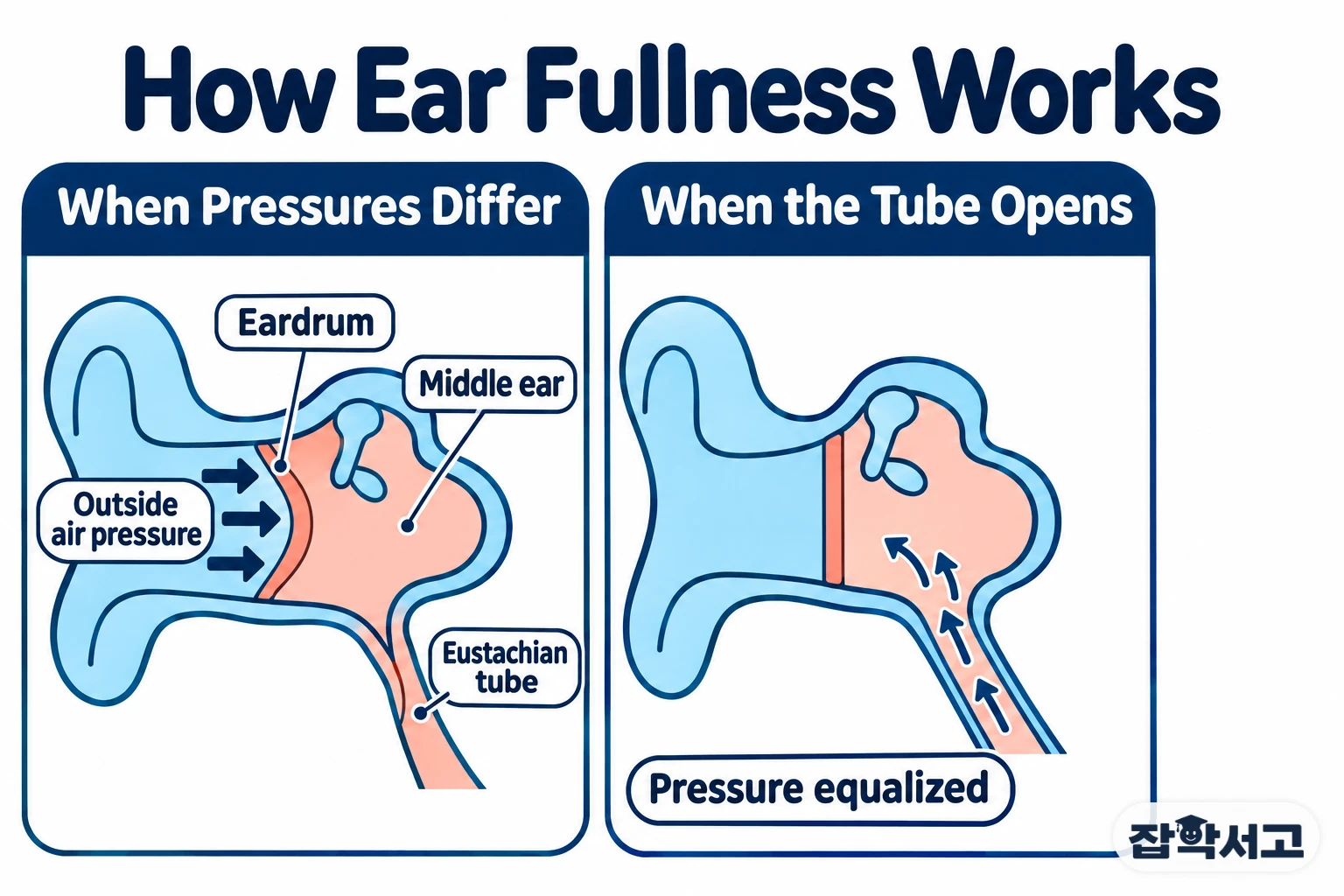
Behind the eardrum is a small air-filled chamber called the middle ear. It is normally sealed, so when the outside air pressure changes quickly, the pressure inside cannot keep up.
If the pressure rises on one side only, the thin eardrum is pushed from the high-pressure side toward the low-pressure side and becomes taut. A taut eardrum cannot vibrate freely with sound, so everything sounds dull, as if you were listening underwater.
Outside air pressure changes more often than you might think. Near the ground it drops by about 1 hectopascal for every 8 to 10 meters you climb, which is why your ears can feel blocked in a high-speed elevator racing up dozens of floors or in a car crossing a mountain road. When a high-speed train enters a narrow tunnel, the air is pushed ahead of it and the pressure changes in an instant for the same reason.
The passage that balances the pressure in this chamber is the Eustachian tube, which connects to the back of the nose. In adults it is around 3.5 cm long and opens only briefly when you swallow or yawn. As air moves through it, the fullness clears with a little "pop."
2. Why Is It Especially Bad on Planes?
Airplane cabins are pressurized above the outside air, but not to ground level. They are usually kept at a pressure similar to that on a mountain 1,800 to 2,400 m above sea level, so a pressure difference builds up across your ears every time the plane takes off and lands. Cabins are not kept at ground-level pressure so that the difference between the inside and outside of the fuselage does not become too large at high altitude.
Many people find landing worse. On the way up, air in the middle ear pushes the tube open and escapes on its own, but on the way down the higher outside pressure squeezes the tube's opening shut, so you have to open it yourself.
If the inside of your nose is swollen from a cold or rhinitis, the tube opens even less easily. Flying in that state can cause more pain or barotitis media, in which fluid collects in the middle ear, so it is a good idea to talk to a doctor before you fly.
3. How Can You Relieve Ear Pressure?

The easiest way is to move the muscles that open the Eustachian tube. Swallow or yawn, and chew gum, suck on a candy or sip water little by little; you will swallow more often, and the pressure will even out more frequently.
If that does not work, you can try closing your mouth, pinching your nose and gently breathing out through it (the Valsalva maneuver). Stop as soon as you feel your ears open, and do it gently, because blowing too hard can injure the ear.
Some earplugs designed for flying slow the flow of air into the ear so that you feel the pressure change more gradually. However, results vary from person to person, so it is best to use them together with basic methods such as swallowing.
When the landing announcement comes on, it helps to wake up and start swallowing in advance. Babies have short, nearly horizontal Eustachian tubes and are not good at balancing pressure, so give them a bottle or pacifier during takeoff and landing to help them swallow.
4. What If the Fullness Does Not Go Away?
Ear fullness after a flight usually disappears within a few hours, but if the Eustachian tube is swollen it can last a day or two. In that case, avoid blowing your nose hard, and if your nose is very congested, ask a pharmacist or doctor about suitable medicine.
While the fullness remains, keep yawning and swallowing now and then to give the tube more chances to open. If you plan to fly or dive again, it is best to wait until the symptoms have completely cleared.
If it has not improved after several days, or if your ear hurts or discharges fluid, there may be another cause such as a middle ear infection. Rather than trying to handle it alone, it is safer to have an ear, nose and throat doctor examine your ear.
5. What If Ringing or Dizziness Comes With It?
If your ear feels blocked without any change in air pressure and you also have ringing (tinnitus) or dizziness, it may not just be a pressure problem. It could mean something is wrong with the inner ear, which handles hearing and balance.
In particular, if one ear suddenly loses hearing and feels blocked, you should see a doctor right away. Sudden hearing loss is known to have a better chance of recovery the sooner treatment begins, so do not wait several days.
Most ear fullness is just a brief signal that a tiny passage is waiting to open. On your next flight, reach for a sip of water when the landing announcement comes on. Knowing these small signals from your ears helps you tell harmless fullness from the kind that needs prompt medical care.
Recommended reading