Units are a concept deeply rooted throughout our everyday lives, and they form the basis of all weighing and measurement. Units play an important role in many fields, such as science, engineering, and commerce, and they are also easy to find in our daily lives.
This article looks at the concept and types of units, and at how they play an important role in our lives and in science.
What Is a Unit? Understanding It in Everyday Terms
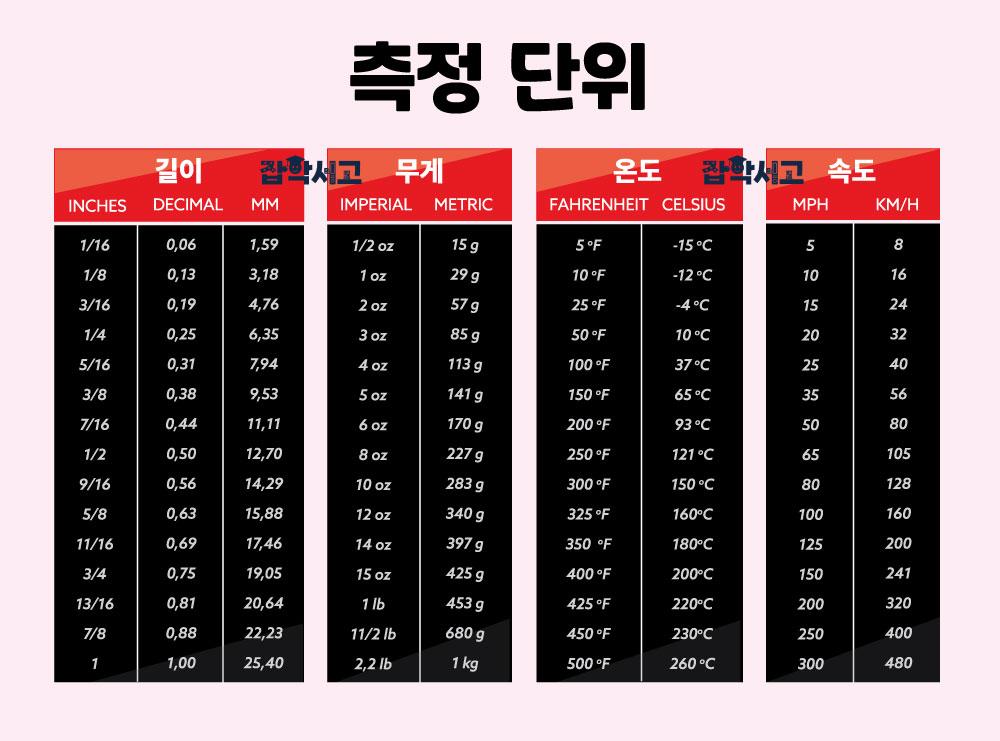 Table of units of measurement
Definition of a Unit
A unit is an agreed standard for measuring a particular quantity. The units we use often in daily life include those for length, weight, and time, and all of them are based on specific standards. For example, the "meter" is a unit for measuring length, and the "kilogram" is a unit for measuring weight. These units make it much easier for people to compare and understand one another's measurements.
The Historical Background of Units
The concept of units has existed since the dawn of civilization. The ancient Egyptians used units of length to record the flooding of the Nile, and in ancient China a variety of units were developed for agriculture and taxation. This historical background laid the foundation for the systems of units we use today.
Units in Everyday Life
Units play a very important role in everyday life. When cooking, for example, units such as "grams" or "liters" given in a recipe make it possible to measure ingredients accurately. Checking the weight or volume of a product when shopping is also done through units. This helps consumers make the right choices.
Units of Time
Units also play an important role in measuring time. Dividing the day into 24 hours and breaking time down into seconds, minutes, and hours is essential for understanding and managing the passage of time. These units of time help us plan schedules, make appointments, and divide up our daily tasks efficiently.
Units of Currency
Another example of a unit is the unit of currency, which plays a very important role in economic activity. Each country's currency unit reflects that country's economic situation, and exchange rates make it possible to compare and exchange different currency units. These currency units are essential in international trade and financial markets.
Why Units Matter
Understanding units helps us understand many aspects of everyday life more clearly and systematically. It helps us carry out tasks accurately and efficiently and makes communication with other people smoother.
The Many Types of Units and Where They Apply
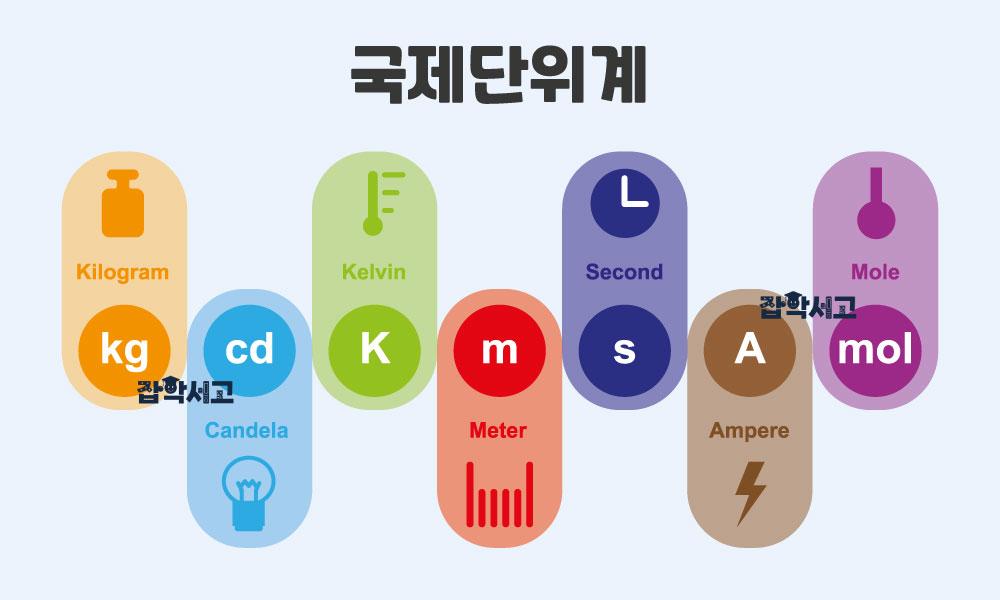 The International System of Units
The base units of the International System of Units (SI)
There are many types of units, and the range of their applications is very broad. The most fundamental system of units is the International System of Units (SI), which consists of seven base units: for length, mass, time, electric current, temperature, amount of substance, and luminous intensity. Because SI units are standardized worldwide, they are widely used in scientific research and international trade.
Units of Length
Units of length are based on the meter (m) and are subdivided into centimeters (cm), millimeters (mm), kilometers (km), and so on. These units are used in many fields, including architecture, civil engineering, and measuring distances in daily life. For example, kilometers are mainly used to measure the length of a road, while centimeters or millimeters are used to measure the size of furniture.
Units of Mass
Units of mass use the kilogram (kg) as the base unit and are subdivided into grams (g), milligrams (mg), and so on. These units are used to measure the weight of objects and are essential in many fields, such as cooking, medicine, and engineering. For example, milligrams are used to measure the dosage of medicine, while grams or kilograms are used to measure the weight of food ingredients.
Units of Time
Units of time use the second (s) as the base unit and are subdivided into minutes (min), hours (h), days (day), weeks (week), months (month), years (year), and so on. Units of time are very important in many fields, including daily life, transportation, communications, and scientific research. For example, weeks or months are used when planning schedules, while seconds may be used when recording experimental results.
Units of Temperature
Units of temperature use the kelvin (K) as the base unit and are converted into degrees Celsius (°C), degrees Fahrenheit (°F), and so on. Units of temperature are used in many fields, such as weather forecasting, cooking, and scientific experiments. For example, weather forecasts mainly use degrees Celsius, while scientific experiments may use kelvins.
Units of Electric Current
Units of electric current use the ampere (A) as the base unit and are subdivided into milliamperes (mA), microamperes (μA), and so on. Units of current are essential in many fields, such as electrical engineering, electronic devices, and telecommunications. For example, milliamperes are used to measure the current drawn by an electronic device, while amperes are used to measure the current in an electrical circuit.
Units of Luminous Intensity
The unit of luminous intensity is the candela (cd), while the lumen (lm), the unit of luminous flux, and the lux (lx), the unit of illuminance, are units derived from the candela. These units of light are used in many fields, such as lighting, photography, and display technology. For example, lumens are used to measure the light output of LED lighting, while lux is used to measure the brightness of indoor lighting.
Units of Amount of Substance
The unit of amount of substance is based on the mole (mol). The mole is a very important unit in chemistry, used to express the amount of a substance in a chemical reaction. For example, in chemistry experiments, moles are used to measure the amounts of reactants accurately.
Units of Pressure
Units of pressure are based on the pascal (Pa), an SI derived unit, and are converted into bars (bar), atmospheres (atm), and so on. These units are used in physics and engineering. For example, atmospheres are used to measure tire pressure, while pascals are used to measure atmospheric pressure.
Units of Energy
Units of energy are based on the joule (J), an SI derived unit, and calories (cal), kilowatt-hours (kWh), and others are also used. One calorie is about 4.184 joules, and the kilowatt-hour is a much larger unit than the joule: 1 kWh equals 3.6 MJ (3.6 million joules). These units are used in physics, chemistry, and the energy industry. For example, calories are used to express the energy content of food, while kilowatt-hours are used to measure electricity consumption.
Units of Power
Units of power are based on the watt (W), an SI derived unit, and larger values are expressed in kilowatts (kW) and so on. These units are used in electrical engineering and the energy industry. For example, watts are used to express the power consumption of home appliances, while kilowatts are used to express the output of power plants.
Units of Electric Charge
The coulomb (C), an SI derived unit, is used as the unit of electric charge. This unit is essential in physics and electrical engineering. For example, coulombs are used to measure the amount of charge in an electrical circuit.
Units of Magnetic Field
The tesla (T), an SI derived unit, is used as the unit of magnetic field, and the gauss (G) of the CGS system is also used. 1 T equals 10,000 G. These units are used in physics and electrical engineering. For example, teslas are used to express the magnetic field strength of an MRI machine.
Why Units Matter in Science: The Foundation of Accurate Measurement
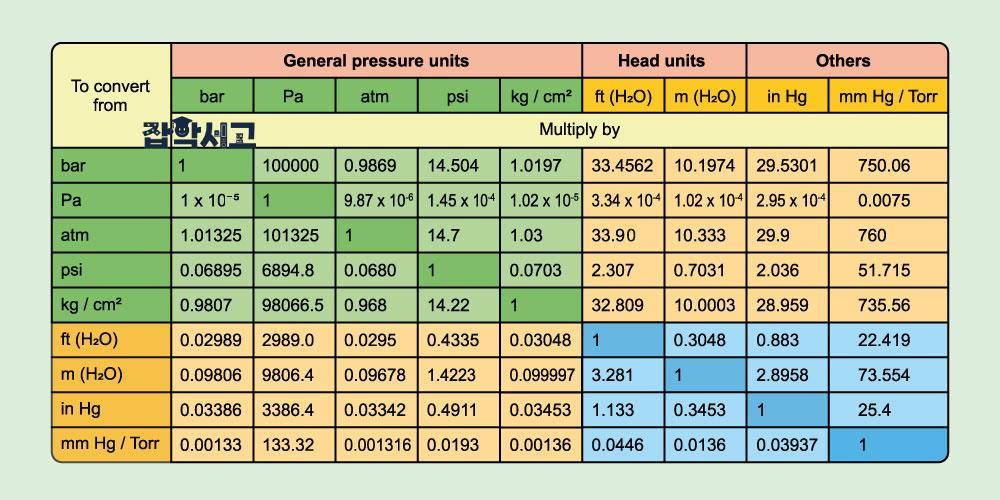 Pressure unit conversion table
Scientific Research and Systems of Units
In science, units play a very important role as the foundation of accurate measurement. Scientific research uses rigorous systems of units to obtain accurate and reproducible results. Because these systems are standardized worldwide, they make it much easier to share and compare research results with other scientists.
Units in Physics
Physics uses base units such as those for length, mass, time, electric current, and temperature to describe a wide range of physical phenomena. Using units correctly is essential for interpreting experimental results, testing theories, and discovering new laws. This makes a major contribution to scientific progress and technological innovation.
Units in Chemistry
Units are also very important in chemistry. The mole (mol), which expresses the amount of a substance, is used to calculate the ratios of reactants and products precisely. This plays an important role in understanding the mechanisms of chemical reactions, synthesizing new substances, and making industrial processes more efficient.
Units in Biology
Biology uses a variety of units to measure phenomena such as cell size, concentration, and gene expression. For example, cell size is measured in micrometers (μm), and protein concentration can be expressed in milligrams per liter (mg/L). These units help analyze biological phenomena quantitatively and understand the complexity of life.
Units in Earth Science
In Earth science, units play an important role in many areas, such as geological structures, climate change, and oceanography. For example, the Richter scale is a scale that expresses the magnitude of an earthquake, that is, the amount of energy it releases, and kelvins are used to understand changes in atmospheric temperature. These units are essential for analyzing the Earth's environment accurately and responding to climate change.
Units in Astronomy
Astronomy uses units such as the light-year (ly) and the parsec (pc) to measure the immense sizes and distances of the universe. A light-year is the distance light travels in one year; despite its name, it is a unit of distance, not of time. These units help us grasp the vast distances in space, and they play an important role in studying the motions of stars and galaxies and explaining the origin and evolution of the universe.
In conclusion, the importance of units in science rests on accurate measurement and data analysis. Units make scientific discovery and technological innovation possible and contribute greatly to expanding human knowledge and understanding.
Examples of Unit Conversion and How to Use It in Real Life
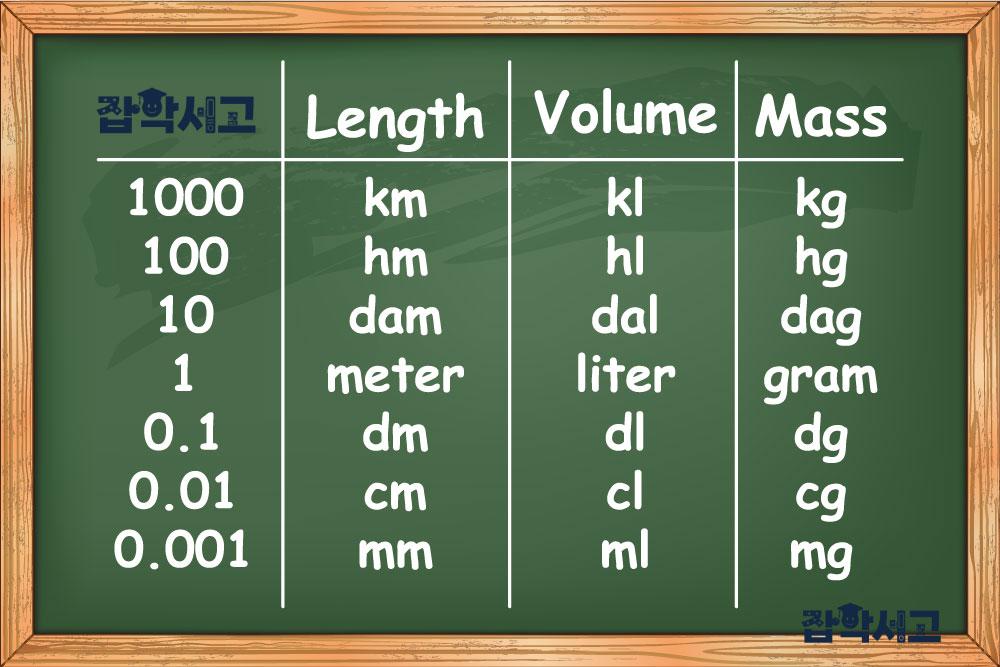 Which units do we use most often in daily life?
Why Unit Conversion Matters
Unit conversion is a very important process in both everyday life and science. Unit conversion makes it possible to compare and calculate across different systems of units, which is useful in many situations. For example, converting kilograms to pounds or Celsius to Fahrenheit is very important in international communication and trade.
Converting Units of Length
As an example of converting units of length, 1 meter is equal to about 3.28084 feet. This lets us convert a length measured in meters into feet. For example, 10 meters is equal to about 32.8084 feet. Conversions like this play an important role in architecture, civil engineering, and similar fields. In addition, 1 kilometer is equal to about 0.621371 miles, and 1 centimeter is equal to about 0.393701 inches.
Converting Units of Weight
As an example of converting units of weight, 1 kilogram is equal to about 2.20462 pounds. This lets us convert a weight measured in kilograms into pounds. For example, 5 kilograms is equal to about 11.0231 pounds. Conversions like this are useful in international trade, cooking, and similar areas. In addition, 1 gram is equal to about 0.035274 ounces, and 1 ton is equal to about 2204.62 pounds.
Converting Units of Time
As an example of converting units of time, 1 hour is equal to 3600 seconds. This lets us convert a time measured in hours into seconds. For example, 2 hours is equal to 7200 seconds. Conversions like this play an important role in scientific experiments, sports competitions, and similar settings. In addition, 1 minute is equal to 60 seconds, and 1 day is equal to 24 hours.
Converting Units of Temperature
As an example of converting units of temperature, the formula for converting between Celsius and Fahrenheit is as follows.
T(°F) = T(°C) × 9/5 + 32
This lets us convert a temperature measured in Celsius into Fahrenheit. For example, 25°C is equal to about 77°F. In addition, the formula for converting Fahrenheit to Celsius is shown below.
T(°C) = (T(°F) - 32) × 5/9
Converting Units of Volume
As an example of converting units of volume, 1 liter is equal to about 0.264172 gallons. This lets us convert a volume measured in liters into gallons. For example, 10 liters is equal to about 2.64172 gallons. Conversions like this play an important role in measuring fuel consumption, manufacturing beverages, and similar tasks. In addition, 1 milliliter is equal to about 0.033814 ounces, and 1 cubic meter is equal to about 35.3147 cubic feet.
Using Unit Conversion Tools
Unit conversion can be done easily with a variety of tools and software. For example, smartphone apps or online converters let you convert units quickly and accurately. This helps us work more efficiently in daily life and at work.
Unit Conversion in Real Life
Unit conversion is very useful in real life. For example, when cooking, you can convert the units given in a recipe to measure the right amounts, and when traveling abroad, you can convert temperature or distance units to understand local information more easily. Unit conversion also helps in international trade, where converting the weight or volume of goods makes it possible to calculate accurate prices.
In conclusion, unit conversion is an essential process in our daily lives and in scientific research, making accurate and efficient work possible. Unit conversion can be done easily with a variety of tools and methods, which makes it useful in many different situations.
Units are an essential concept in our daily lives and in science, allowing us to measure and understand a wide range of phenomena accurately.
There are many types of units with a wide range of applications, and unit conversion makes it easy for us to compare and calculate across different systems of units. Understanding and using units makes our lives more convenient and efficient.