Fake news has emerged as a serious problem in modern society. Amid a flood of information, distinguishing truth from falsehood is becoming increasingly difficult, and this is causing social disorder.
This article will examine in depth the causes of the spread of fake news and the resulting social disorder, examples of fake news, the role of digital media, and measures for prevention and resolution.
The Spread of Fake News Emerges as a Major Cause of Social Disorder
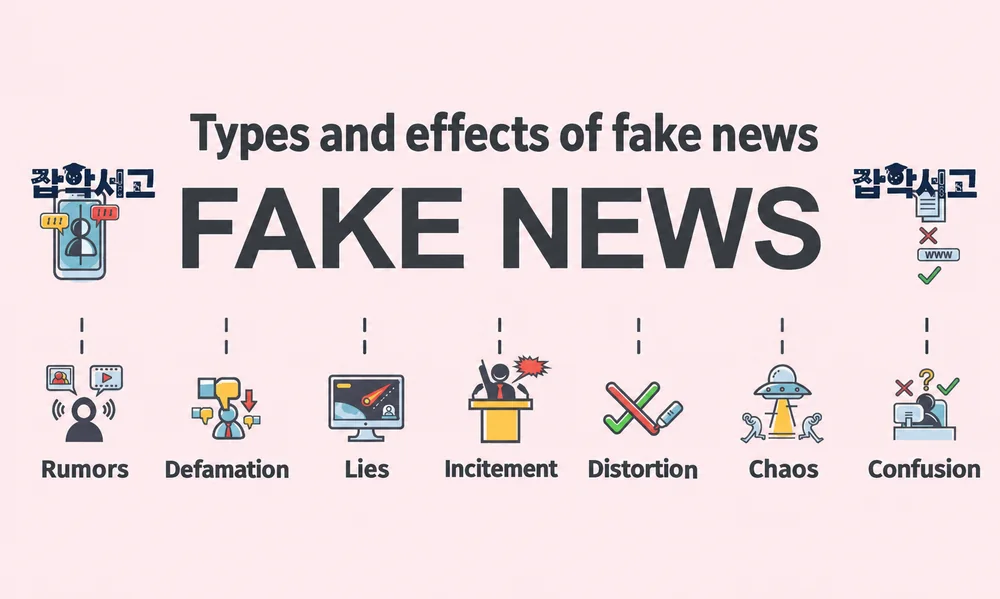 Types of Fake News and Their Effects
The Problem of Fake News
The spread of fake news has been raised as a major problem in modern society. It goes beyond simply conveying incorrect information and causes serious problems throughout society. Fake news creates political, economic, and social disorder, undermining public trust. For example, cases in which false information about particular politicians or public figures distorts public opinion and influences election results are frequent.
Changing Information Consumption Patterns and the Spread of Fake News
One of the main causes of fake news is a change in information consumption patterns. As advances in digital media and social media lead people to consume large amounts of information in a short time, they have less time to verify whether the information is true. As a result, fake news spreads rapidly and sometimes reaches a wider audience than real news.
Reinforcing Preconceptions and Prejudices
Fake news also serves to reinforce people's preconceptions and prejudices. People tend to selectively accept information they want to believe, which further encourages the spread of fake news. This phenomenon is called “confirmation bias,” and it strengthens opinions already formed about particular issues while leading people to exclude opposing views.
The Pursuit of Financial Gain and Fake News
Fake news is also deliberately created by some groups seeking financial gain. In an internet environment where advertising revenue is generated according to the number of clicks, fake news containing sensational and shocking content attracts many clicks, which directly translates into financial gain. For these reasons, the production and dissemination of fake news continue.
Fueling Social Anxiety and Conflict
Fake news used as a tool to fuel social anxiety and conflict is also a problem. There are many cases in which fake news is used to attack particular groups or individuals or to encourage social conflict. This creates social anxiety, deepens conflict between groups, and ultimately causes social disorder.
The Need for a Multifaceted Approach
Ultimately, fake news has become a serious problem throughout society, going beyond the simple distortion of information. Addressing it requires a multifaceted approach and efforts from all sectors of society. To prevent the spread of fake news, measures such as strengthening systems that verify the truthfulness of information, improving media literacy through education, and imposing legal sanctions must be pursued together.
Advances in Digital Media Encourage the Spread of Fake News
 Advances in digital media have made it easier to create and spread fake news.
Information Accessibility and Declining Reliability
Advances in digital media have greatly improved access to information, but they have also become a factor encouraging the dissemination of fake news. The development of the internet and social media has made it easy for anyone to create and share information, resulting in reduced reliability of information. Users can share information immediately without having to verify it, and this is one of the main factors behind the rapid spread of fake news.
The Role of Social Media Algorithms
Social media platforms play an important role in the spread of fake news. Algorithms recommend content that users are likely to find interesting, and this is highly likely to be fake news containing sensational and shocking material. These algorithms are designed to increase views and engagement, which further encourages the dissemination of fake news.
Difficulties in Identifying Information Sources
In a digital media environment, it is difficult to identify the sources of information. Unlike traditional media, the internet and social media allow anyone to become an information producer. As a result, information sources are often unclear, making it difficult to determine whether information is true. This causes fake news to be accepted as real news.
The Rapid Spread of Information
Digital media enables information to spread rapidly. Through the internet and social media, information can spread around the world in real time, further accelerating the spread of fake news. This characteristic increases the likelihood that fake news will cause social disorder.
The Difficulty of Finding the Truth Amid a Flood of Information
Advances in digital media have led to an explosive increase in the amount of information. This has made it difficult to find the truth amid a flood of information. As users consume large amounts of information in a short time, they have insufficient time to verify whether it is true. This is one of the main reasons fake news is mistaken for real news.
Digital Literacy and Platform Responsibility
Ultimately, advances in digital media have become an important factor encouraging the dissemination of fake news. Addressing this requires digital literacy education as well as responsible operation of social media platforms. Users must review information through critical thinking, and platforms must strengthen systems for delivering accurate information.
Notable Cases of Fake News in South Korea
 What are some examples of fake news?
Fake News Related to the Sewol Ferry Disaster
Various forms of fake news spread in connection with the Sewol ferry disaster. These included conspiracy theories surrounding the government's response during the initial rescue efforts, false information about the number of missing people, and fake news intended to obstruct rescue operations. This fake news heightened anxiety and confusion among the public.
False Information Related to COVID-19
Various forms of fake news were disseminated during the COVID-19 pandemic. These included misinformation about vaccines, conspiracy theories about the virus's origin and transmission routes, and unverified claims about treatments. This fake news caused social harm, including confusion in disease-control efforts and hesitation to get vaccinated.
Political Agitation and False Information
During election periods, fake news aimed at attacking particular politicians or political parties frequently appears. For example, there have been cases involving the spread of allegations that particular candidates were involved in crimes, announcements of false campaign pledges, and conspiracy theories about election manipulation. This can cloud voters' judgment and undermine the fairness of elections.
False Advertising for Financial Gain
Some fake news spread through the internet is intended to generate financial gain. For example, there are cases in which people are deceived through exaggerated advertising about particular products or stocks and the provision of fake investment information. Such false information can cause individuals to suffer financial losses.
Fake News That Fuels Social Conflict
Fake news is also frequently used to attack particular groups or individuals or to fuel social conflict. Examples include false information that encourages prejudice against migrants or particular racial groups, as well as fake news that fuels conflict between regions. This undermines social integration and deepens conflict.
As these notable cases of fake news in South Korea illustrate, fake news causes social disorder and distrust and inflicts serious harm on individuals and communities. Preventing this requires ongoing education, legal regulation, and responsible roles for the news media and platforms.
The Key to Preventing Fake News: Education and Legal Regulation
 How should fake news be prevented?
The Importance of Digital Literacy Education
Education is important for preventing fake news. Digital literacy education develops users' ability to analyze information critically and determine whether it is true. This is one of the important ways to prevent the spread of fake news. For example, media literacy education programs can teach students how to check information sources and verify information.
The Need for Legal Regulation
Legal regulation plays an important role in curbing the production and dissemination of fake news. Governments around the world are establishing legal frameworks to regulate fake news and using them to hold its producers and disseminators accountable. For example, the European Union (EU) is preparing legislation to regulate fake news and false information and using it to curb the dissemination of fake news.
Stronger Penalties for Fake News
Strengthening penalties for fake news is also an important preventive measure. People who produce or disseminate fake news must face strong legal penalties. This can be effective in curbing the production and dissemination of fake news. For example, when someone gains financially through fake news, penalties such as confiscating those gains and imposing additional fines are necessary.
The Role of Media Organizations
In addition to education and legal regulation, the role of media organizations is also important. Media organizations can prevent the spread of fake news by providing accurate and reliable information. To do so, they need to strengthen their own verification systems and make efforts to correct false information promptly.
The Responsibility of Social Media Platforms
The role of social media platforms is also important. Social media platforms must adjust their algorithms and establish systems that promptly block false information to prevent the spread of fake news. This can allow fake news to be blocked before it spreads.
The Need for a Multifaceted Approach
Ultimately, preventing fake news requires education, legal regulation, and multifaceted efforts by media organizations and social media platforms. These efforts can prevent the spread of fake news and reduce social disorder. Through a multifaceted approach, we can build a more trustworthy information environment.
The Responsibility of the News Media and Platforms Is Key to Addressing Fake News
 The roles of the news media and platforms are important in addressing fake news.
The Role and Responsibility of the News Media
The role and responsibility of the news media are important in addressing the problem of fake news. The news media must fulfill the role of providing accurate and reliable information. To do so, they must conduct thorough fact-checking and have systems in place to correct false information promptly. For example, when fake news has been reported, they must promptly correct the information and provide readers with accurate information.
The Role and Responsibility of Platforms
Platforms also play an important role in addressing the problem of fake news. Social media platforms must develop and apply algorithms to prevent the dissemination of fake news. This can allow fake news to be blocked before it spreads. For example, Facebook and YouTube are continuously improving algorithms that identify and block fake news.
User Education and Support
Platforms must help users analyze information critically. To do so, they must offer digital literacy education programs and provide tools that users can use to verify information. For example, Google provides fact-checking tools that users can use to verify information.
Cooperation Between the News Media and Platforms
The news media and platforms must cooperate to address the problem of fake news. The news media must provide platforms with reliable information, and platforms must ensure that this information can be widely shared with users. This can allow accurate information to spread instead of fake news.
Ongoing Improvement and Responsibility
The news media and platforms must take responsibility for fake news and continue their efforts to address it. They must establish their own systems for preventing and blocking fake news and continuously improve them. For example, news organizations must strengthen their own verification systems, and platforms must continuously improve algorithms that block fake news.
Efforts to Spread Accurate Information
Ultimately, the responsibility of the news media and platforms is important in addressing the problem of fake news. Through this responsibility, they must prevent the spread of fake news and ensure that accurate and reliable information can spread widely. Ongoing cooperation and improvement are necessary to increase the reliability of information and reduce social disorder.
The problem of fake news is complex and multilayered. Addressing it requires various approaches, including education, legal regulation, and responsibility on the part of the news media and platforms.
Preventing the spread of fake news and reducing social disorder require efforts from all sectors of society. Through these efforts, we can build a more trustworthy information environment and maintain a healthy democratic society.