Early childhood education takes place during the early stages of human development and plays an important role in promoting children's holistic development (the development of a well-rounded personality).
Educational experiences during the first few years of life greatly influence children's intellectual, social, and emotional development, making education during this period very important.
Understanding the concept of early childhood education and applying appropriate teaching methods at each developmental stage are essential for children's healthy growth and development.
This material will explore the concept of early childhood education, teaching methods for each stage of early childhood development, the qualities and roles of early childhood teachers, and early childhood curricula and assessment.
What Is Early Childhood Education?
 What Is the Concept of Early Childhood Education?
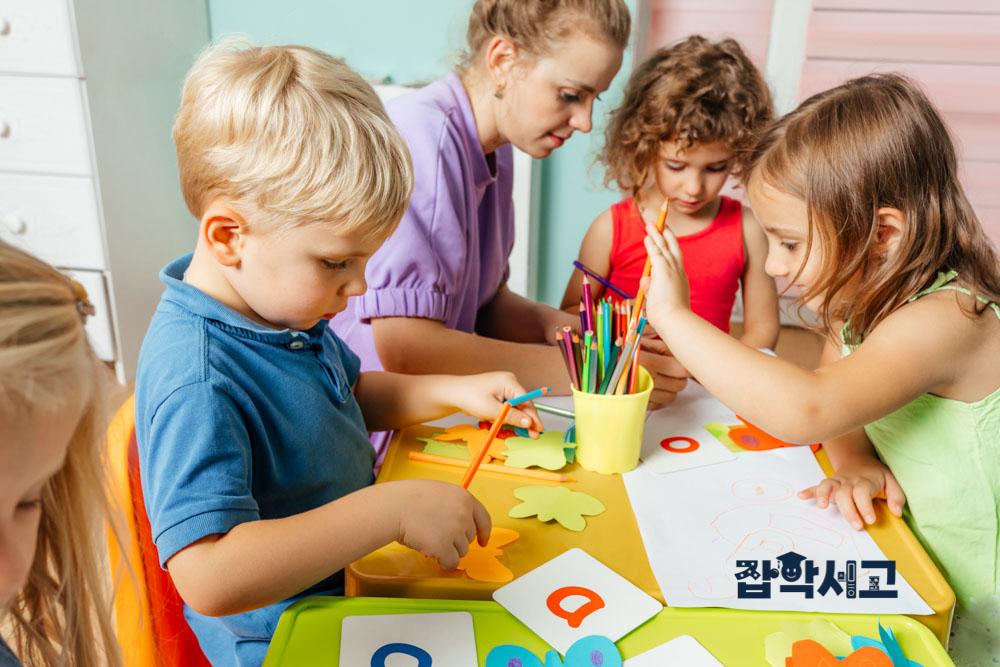
Early childhood education refers to education for young children aged 0 to 5 years. This period is an important early stage of human development, during which children's physical, cognitive, social, and emotional development progresses rapidly.
Early childhood education provides a variety of activities and experiences to support children's holistic development and uses play-based learning methods to help children naturally explore and learn about the world. The main goals of early childhood education are as follows.
1. Promoting Holistic Development: Early childhood education promotes balanced physical, cognitive, social, and emotional development. This helps children grow healthily and develop a well-rounded range of abilities.
2. Improving Social and Communication Skills: Early childhood education focuses on helping children develop social and communication skills through interactions with their peers. Through these experiences, children learn social skills such as cooperation, sharing, and conflict resolution.
3. Encouraging Creativity and a Spirit of Inquiry: A learning environment centered on play and inquiry helps children develop creative thinking and problem-solving skills. Through various forms of play and experimentation, children naturally develop curiosity and a positive attitude toward learning.
4. Building Self-Esteem: Early childhood education helps children form a positive self-image and develop self-esteem. This plays an important role in helping children trust their abilities and confidently take on various challenges.
5. Developing Foundational Learning Skills: Early childhood education also focuses on developing foundational learning skills, such as reading, writing, and numeracy. This prepares children to continue learning smoothly when they enter elementary school.
Early childhood education uses various teaching methods and programs to achieve these goals, and it is important to provide appropriate educational experiences suited to children's developmental stages.
The Qualities and Roles of Early Childhood Teachers
 What Are the Qualities and Roles of Early Childhood Teachers?
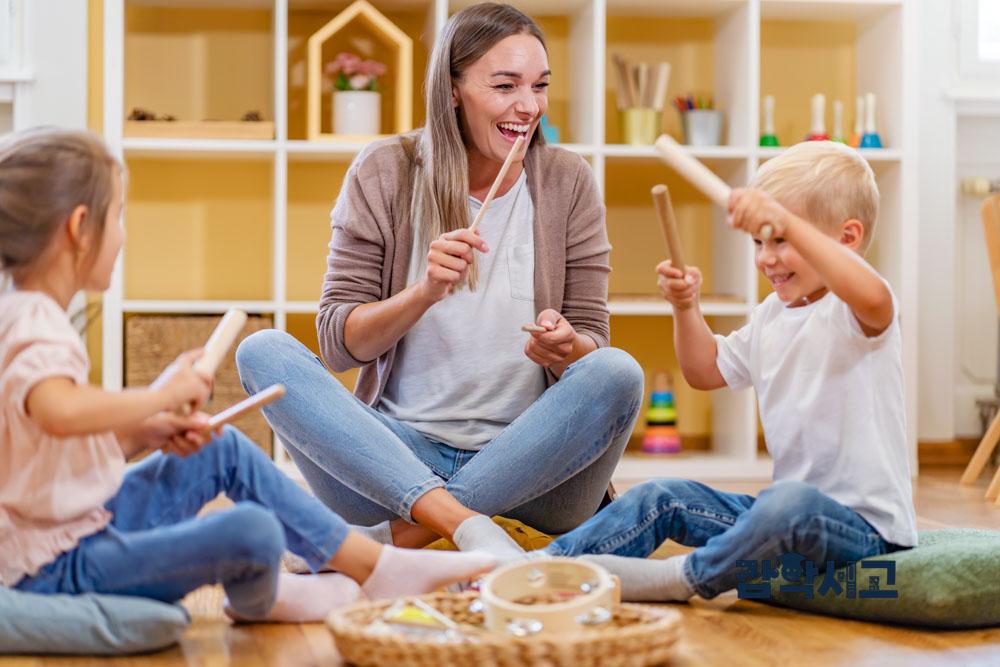
As central figures in early childhood education, early childhood teachers play an important role in helping and supporting young children's holistic development. The qualities they need and the roles they must fulfill are as follows.
The Qualities of Early Childhood Teachers
1. Professional Knowledge and Teaching Ability
- They must have an in-depth understanding and knowledge of early childhood development.
- They need proficiency in various teaching methods and strategies.
- They are required to have systematic knowledge of curricula and educational assessment.
2. The Ability to Build Warm Relationships
- They must maintain a warm and friendly attitude when interacting with children.
- They need the ability to understand and empathize with children's individual needs and emotions.
- They must foster cooperation between the home and kindergarten (childcare center) through effective communication with parents.
3. Creativity and Flexibility
- They must demonstrate creative problem-solving skills in various situations.
- They must be able to flexibly adjust educational activities to suit children's interests and needs.
- They must be able to respond positively and flexibly even in unexpected situations.
4. Patience and Responsibility
- Patience is needed when guiding children.
- They must prioritize children's safety and health and carry out their duties responsibly.
- They must improve their professional expertise as teachers through continuous self-development.
The Roles of Early Childhood Teachers
1. Planning and Implementing Educational Programs
- They plan and implement educational programs suited to children's developmental stages.
- They promote children's holistic development through play and learning activities.
- They provide individualized education tailored to each child's characteristics and needs.
2. Observation and Assessment
- They continuously observe and record children's development.
- They identify children's strengths and needs based on their observations and incorporate them into educational plans.
- They assess children's learning progress and developmental status and share information with parents.
3. Safety and Health Management
- They maintain safe classrooms and play spaces and manage children's health.
- They must be familiar with first aid and safety procedures in preparation for emergencies.
- They teach children proper hygiene habits and healthy lifestyle habits.
4. Cooperation with Families
- They work closely with parents to support children's development.
- Through regular consultations and communication with parents, they identify children's home environments and educational needs.
- Through parent education programs, they help parents support their children effectively at home.
5. Professional Development
- They participate in various training and educational programs for continuous self-development and the improvement of their professional expertise.
- They study the latest educational research and methods and apply them in educational settings.
- They improve the quality of education through cooperation and information sharing with fellow teachers.
Through these various qualities and roles, early childhood teachers support children's healthy and happy growth and contribute to achieving the goals of early childhood education.
Teaching Methods for Each Stage of Early Childhood Development
 What Are the Teaching Methods for Each Stage of Child Development?
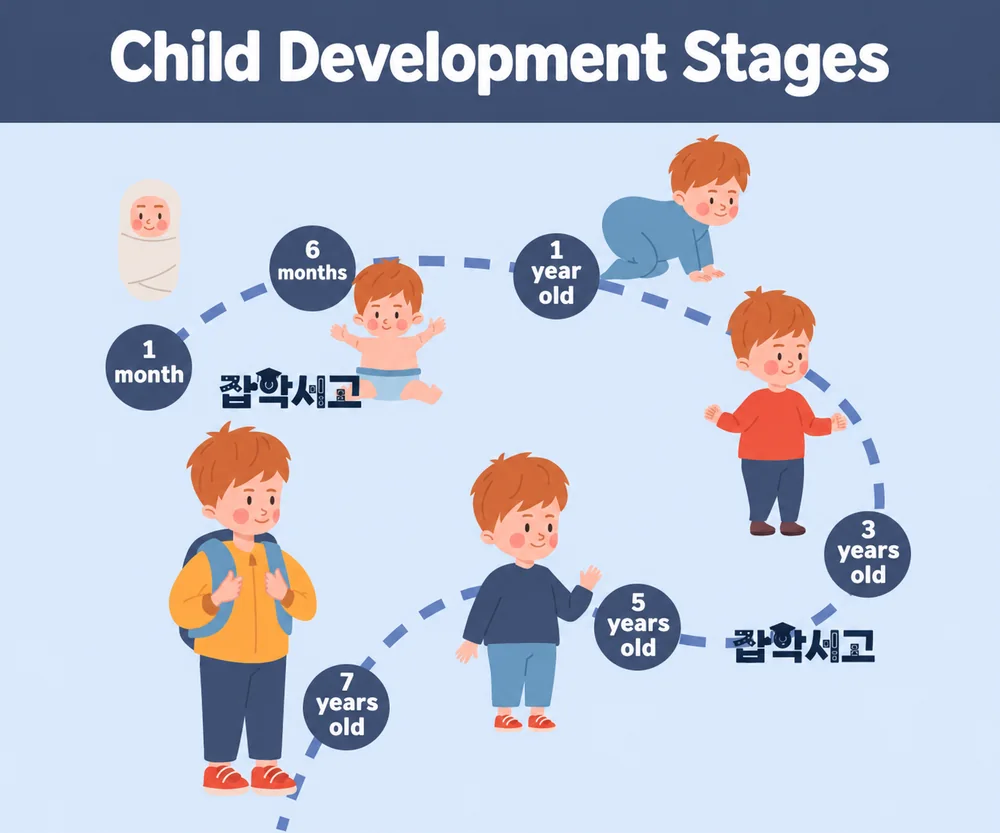
Teaching methods for each stage of early childhood development include educational activities that reflect children's physical, cognitive, social, and emotional needs at each stage.
The goal is to help children achieve optimal development at each stage. The main teaching methods for each developmental stage can be described as follows.
1. Infancy (0–2 Years)
Physical Development
- Sensorimotor play: Provide sensory stimulation through toys with various textures, sounds, and colors.
- Encouraging movement: Let children try various movements in a safe space to develop motor skills such as crawling, sitting, standing, and walking.
Cognitive Development
- Simple play activities: Develop an understanding of cause and effect and problem-solving skills through activities such as stacking and block play.
- Reading aloud: Promote language development and stimulate imagination through picture books.
Social/Emotional Development
- Attachment-building activities: Establish secure attachment relationships through physical contact with parents, eye contact, smiling, and similar interactions.
- Establishing daily routines: Provide a sense of security through regular mealtimes, sleep, and playtimes.
2. The Early Part of Early Childhood (3–4 Years)
Physical Development
- Gross motor activities: Promote gross motor development through running, jumping, ball games, and similar activities.
- Fine motor activities: Develop fine motor skills and hand-eye coordination through completing puzzles, drawing, tearing paper, and similar activities.
Cognitive Development
- Role play: Stimulate imagination and creativity through pretend play and help children learn social roles and rules.
- Inquiry activities: Develop curiosity and a spirit of inquiry through simple science experiments and nature observation activities.
Social/Emotional Development
- Play with peers: Develop social and communication skills through cooperative play.
- Activities for expressing emotions: Use activities that help children recognize and express various emotions, such as emotion cards or role-playing.
3. The Middle Part of Early Childhood (4–5 Years)
Physical Development
- Complex motor activities: Have children practice more refined motor skills, such as jumping rope and riding a bicycle.
- Manipulative activities: Develop manual dexterity through activities such as cutting with scissors and tying laces.
Cognitive Development
- Literacy activities: Help children recognize letters and numbers and try simple reading and writing.
- Problem-solving activities: Develop logical thinking and problem-solving skills through puzzles, mazes, and similar activities.
Social/Emotional Development
- Group activities: Learn cooperation and responsibility through group projects or collaborative work.
- Self-regulation training: Practice activities that develop emotional regulation and self-control, such as deep breathing and mindfulness (mindfulness meditation).
4. The Later Part of Early Childhood (5–6 Years)
Physical Development
- Physical education activities: Improve physical fitness and motor abilities through various sports activities.
- Refined fine motor activities: Further refine fine motor skills through handwriting, playing with construction toys, and similar activities.
Cognitive Development
- Foundational learning activities: Provide foundational learning, such as reading, writing, and simple arithmetic, to prepare children for elementary school.
- Creative expression activities: Develop creative expression through various artistic activities, such as visual arts, music, and drama.
Social/Emotional Development
- Leadership activities: Develop leadership by letting children take leadership roles in role play or assigning them small responsibilities.
- Recognizing and regulating emotions: Learn how to recognize complex emotions and express and regulate them appropriately.
Through appropriate teaching methods tailored to each developmental stage, children can develop holistically. To achieve this, early childhood teachers must understand children's developmental status through continuous observation and assessment and apply appropriate teaching methods.
Early Childhood Curricula and Assessment
 How Should Children Be Taught and Assessed?
Early childhood curricula and assessment are systematically designed and implemented to improve the effectiveness of early childhood education.
This process includes a series of steps: setting educational goals, planning activities to achieve those goals, and assessing the quality of education and children's development after implementation.
The main elements of early childhood curricula and assessment are explained below.
Early Childhood Curricula
1. Setting Educational Goals
- Holistic development goals: The goals of early childhood education encompass children's physical, cognitive, social, and emotional development. Clearly define developmental goals in each area to promote balanced growth.
- Individualized goals: Set individualized goals that consider each child's characteristics and developmental level. This supports all children in realizing their full potential.
2. Developing Educational Plans
- Selecting educational themes: Select educational themes suited to young children's interests and developmental stages. For example, encourage motivation to learn through various themes, such as seasonal changes, animals, and families.
- Designing activities: Plan various activities suited to the theme. These include activities spanning multiple areas, such as play, inquiry, the arts, and physical activity.
- Designing the environment: Create a learning environment suited to the educational goals and activities. Provide a safe and stimulating environment where children can explore and learn freely.
3. Implementation and Guidance
- Play-based learning: Learning through play is a central method of early childhood education. Encourage children to naturally acquire various concepts and skills through play.
- The teacher's role: As a guide and observer, the teacher supports children's self-initiated activities and facilitates learning through appropriate intervention when needed.
- Using various teaching methods: Use various teaching methods, such as individual learning, small-group activities, and large-group activities, so that all children can participate.
Assessment in Early Childhood Education
1. Purposes of Assessment
- Monitoring children's development: Examine children's physical, cognitive, social, and emotional developmental status to understand each child's development.
- Assessing curriculum effectiveness: Assess how effectively educational activities and the environment have contributed to children's development.
- Providing feedback: Use assessment results to provide teachers and parents with feedback on children's developmental status.
2. Assessment Methods
- Observation: Observe children's everyday activities and interactions and record their development. This is an important method for assessing children's behavior in a natural setting.
- Portfolios: Create portfolios by collecting children's work, photographs, videos, and other materials. These provide a visual record of children's developmental progress.
- Checklists and rating scales: Use checklists and rating scales to assess children's developmental status in detail. These are useful for clearly identifying children's achievement of specific developmental goals.
- Standardized tests: When needed, standardized tests can be used to assess children's developmental levels more objectively.
3. Using Assessment Results
- Developing individualized educational plans: Develop educational plans suited to each child based on assessment results. This helps provide individualized education tailored to each child's strengths and needs.
- Cooperation with parents: Share assessment results with parents so that children can receive consistent educational support at home as well. Strengthen cooperative relationships with parents through regular consultations and communication.
- Improving the curriculum: Identify the curriculum's strengths and weaknesses through assessment results and use them to improve educational activities and the environment. This plays an important role in continuously improving the quality of early childhood education.
Early childhood curricula and assessment form a systematic and ongoing process that supports young children's holistic development. This helps children grow healthily and develop a well-rounded range of abilities.
Early childhood education is an important process that supports children's holistic development and establishes an important foundation for future learning and social life.
Early childhood teachers must help children grow healthily by applying appropriate teaching methods suited to their developmental stages.
In addition, designing and assessing a systematic and effective early childhood curriculum is essential for maximizing children's learning outcomes.
When recognition of the importance of early childhood education and efforts to put it into practice continue, children will be able to move toward a bright and healthy future.