Beaches in the summer holiday season have no room to stand, yet visit the same place in late autumn and you find rows of closed shops. Ski resorts in winter are the same. This odd scene, where the same place overflows in some months and sits empty in others, is called tourism seasonality.
Tourism seasonality (Tourism Seasonality) simply means a regular lopsidedness in which visitor numbers or spending are not spread evenly across a year but pile up in particular periods and then drain away. Because many destinations have to earn a large share of their yearly income in the busy months, this lopsidedness is counted among the oldest challenges in tourism management.
In this article, we will go in order through what seasonality is, its two causes, the problems this lopsidedness creates and how it is measured, and the strategies for softening it.
The Forces That Divide Peak and Off-Peak Seasons
What Is Tourism Seasonality?
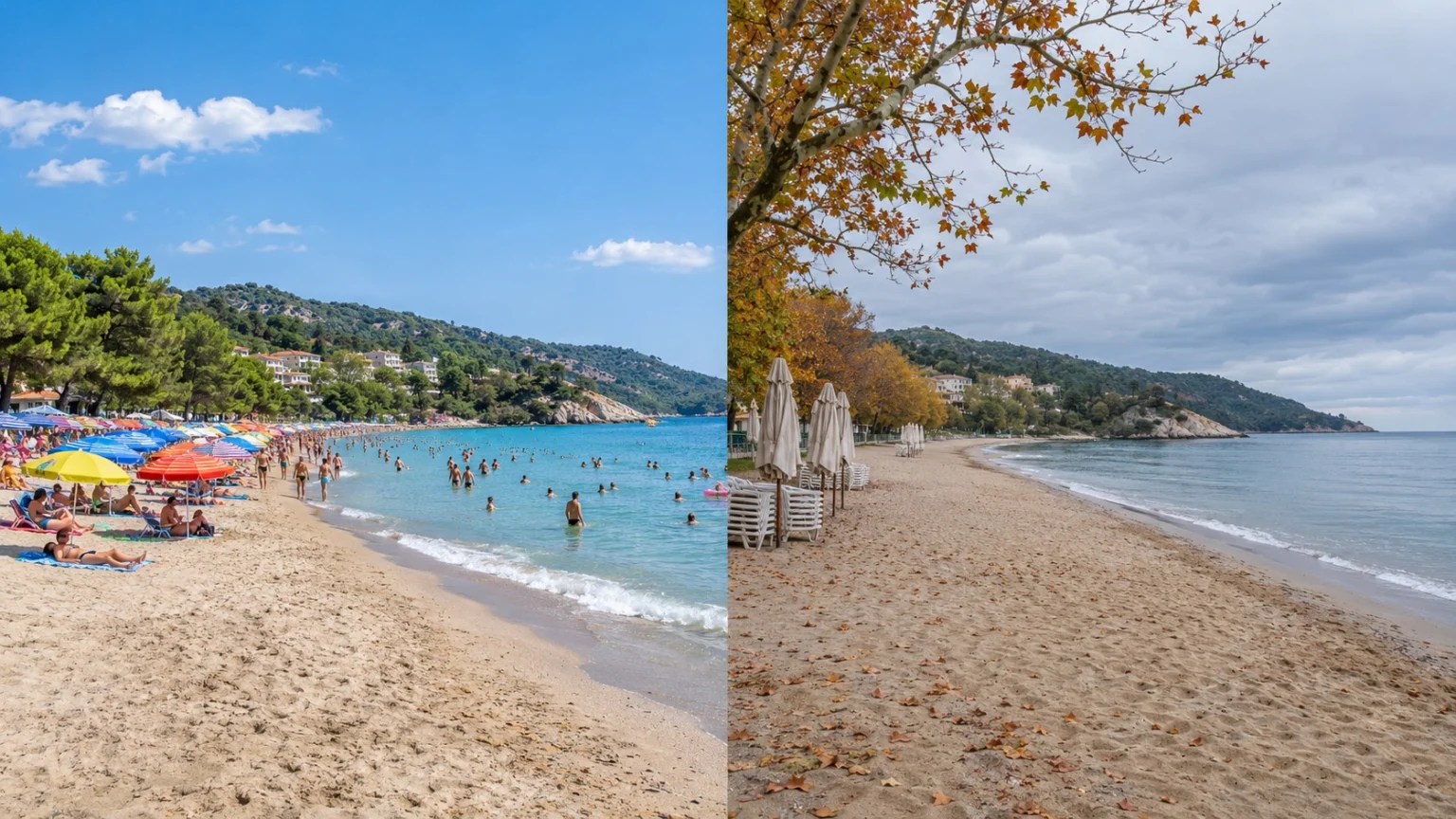
Seasonality is a very universal feature of tourism. The facilities that support tourism, such as hotel rooms, airline seats, and restaurant seats, are usually products that cannot be sold tomorrow if they go unsold today. That is why the busy period is called the peak season and the quiet period the off-peak season, and it is common to set prices, staffing, and operating days differently for each.
Seasonality is not simply a matter of ‘summer is hot.’ Weather plays a big part, but a calendar set by people, such as school holidays and vacation customs, plays a role just as large. In tourism studies, the practice of looking at these two separately has a long history.
One more thing to know is that seasonality wears a different face for each region and product. Seaside resorts peak in summer and ski resorts in winter, but city tourism and business tourism tend to rise and fall with holidays and event schedules rather than with the seasons. So even the same word ‘peak season’ means different things depending on what a place sells.
The Two Forces Behind Seasonality
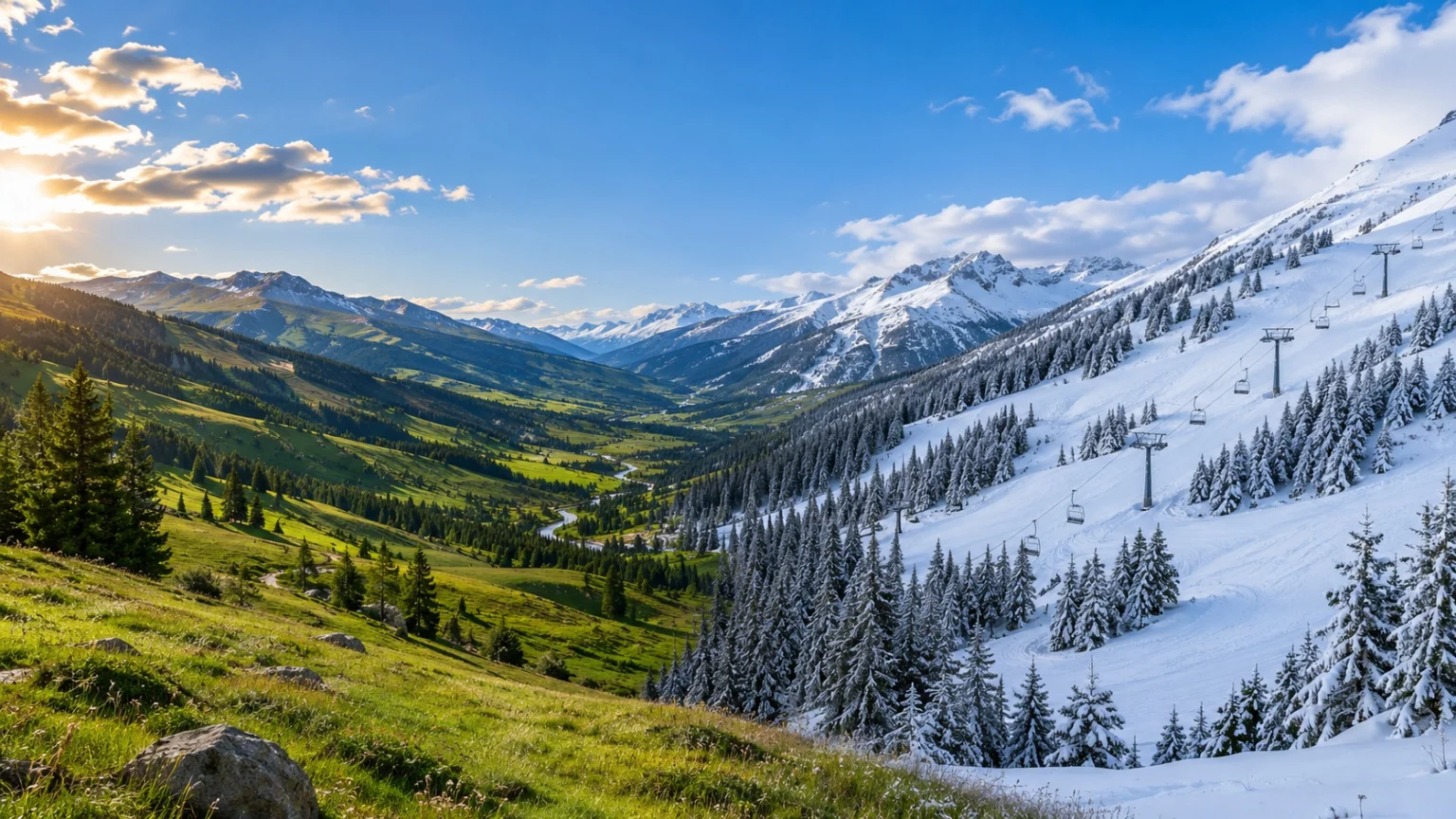
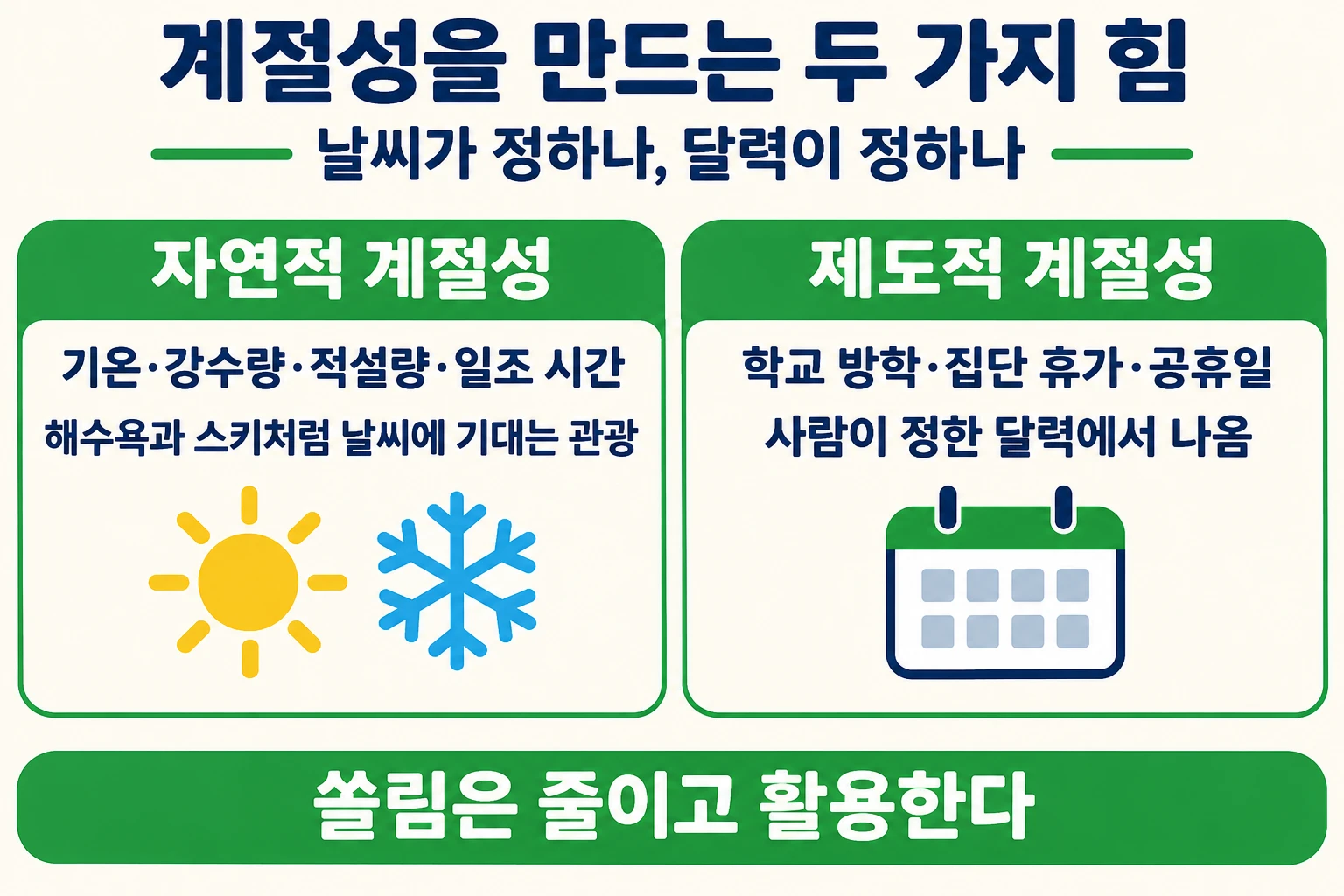
Since the tourism scholar Bar-On explained the causes of seasonality in 1975 by dividing them into natural and institutional ones, this distinction has become the basic framework. Later, the British-born tourism scholar Richard Butler laid it out more broadly in 2001.
(1) Natural seasonality
It comes from the yearly recurring changes in climate, such as temperature, rainfall, snowfall, and hours of sunshine. The more a form of tourism depends on weather, as sea bathing and skiing do, the bigger the effect, and the farther from the equator, the larger the seasonal difference, which is said to make it harder to solve.
(2) Institutional seasonality
It comes from a calendar made by people, such as school holidays, companies' collective vacations, public holidays, religious observances, and sports seasons. This also includes social pressure, fashion, and custom. For example, the school summer vacation is explained as having originated, in many countries, in the tradition of helping with farm work.
- Natural Seasonality: a repetition set by nature, such as weather and sunshine, which climate change is making harder to predict.
- Institutional Seasonality: a repetition set by society, such as holidays and school breaks, whose start and end dates can usually be pinpointed accurately.
The two forces can also become entangled. In 19th-century Europe, the upper classes regarded spending the winter at spas or on the Mediterranean coast as a social necessity, and it is said that this custom set the pattern of seasonal movement.
Problems Caused by Lopsidedness and How to Measure It

This lopsidedness is a burden on both businesses and regions. In the off-season, rooms and seats sit idle, staff are hired only for the busy season so jobs become insecure, and income bunched into a single season shakes cash flow. Conversely, in the peak season, congestion, noise, and damage to nature arrive all at once, and residents and the environment bear the burden. However, some also see the off-season as time for the local community and nature to catch their breath.
How lopsided things are can be measured numerically from monthly visitor counts or overnight stays.
- Seasonality Ratio: the value of the busiest month divided by the monthly average; the larger it is, the more is concentrated in one month.
- Coefficient of Variation: the standard deviation of the monthly values divided by their mean, showing how large the ups and downs from month to month are.
- Gini Coefficient: expresses the inequality of the monthly distribution between 0 and 1; at 0 it is even, and the closer to 1, the more is concentrated in a few months.
No single indicator can capture the whole shape of the lopsidedness, so it is said to be better to look at several together. For example, even with the same Gini coefficient, the response can differ between a place with a huge spike in one month and a place whose peak rises gently over two or three months.
Ways to Ease the Lopsidedness
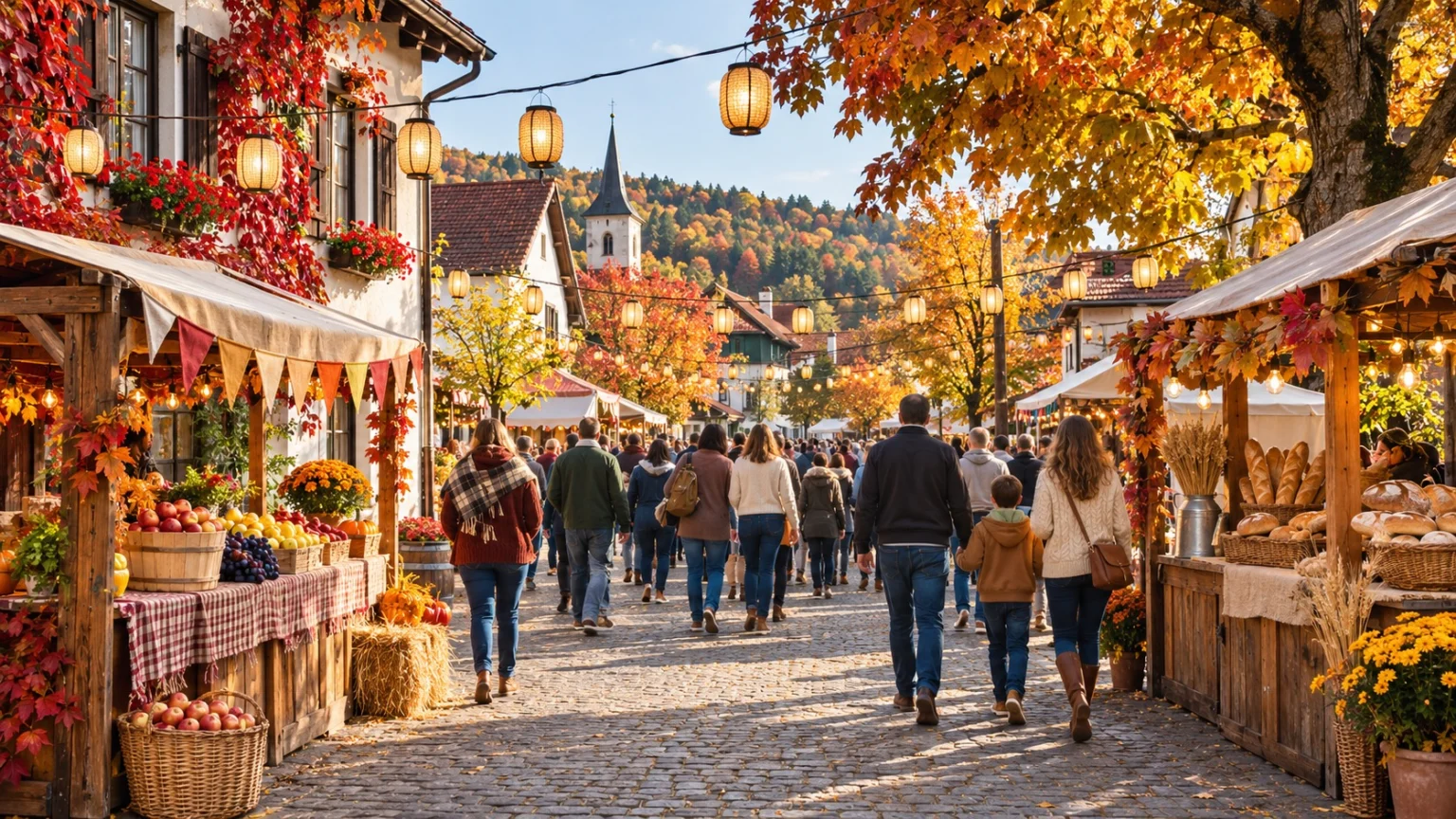
Seasonality is handled by reducing and making use of it rather than eliminating it entirely. The methods often cited in research and in the field are as follows.
(1) Diversifying products
Add festivals, exhibitions, conferences and events, and indoor experiences that can be enjoyed in the off-season, creating reasons to visit all year round.
(2) Diversifying markets
Bring in visitors from countries and regions with different holiday timing, and visitors with flexible timing, such as retirees.
(3) Differential pricing
Lower rates or offer bundle benefits in the off-season to shift demand from one period to another. However, cutting prices alone can make the value look low, so it is better to promote experiences unique to the off-season as well.
(4) Spreading out holidays
This staggers school vacation timing by region, and the staggering of vacations by state in Germany and Austria is introduced as a representative example.
To this is added helping local residents use local facilities more in the off-season. We also need to keep watching that, as climate change blurs the boundaries of the seasons, the old split between peak and off-peak may change. Whichever method is used, it starts from accepting both the peak and the off-peak as parts of the year and designing for them.
Reading a destination's seasonal rhythm begins with understanding when visitors come and go. Looking at the crowded months and the empty months together, and finding the pace a region can bear, is the first step of seasonality management.