
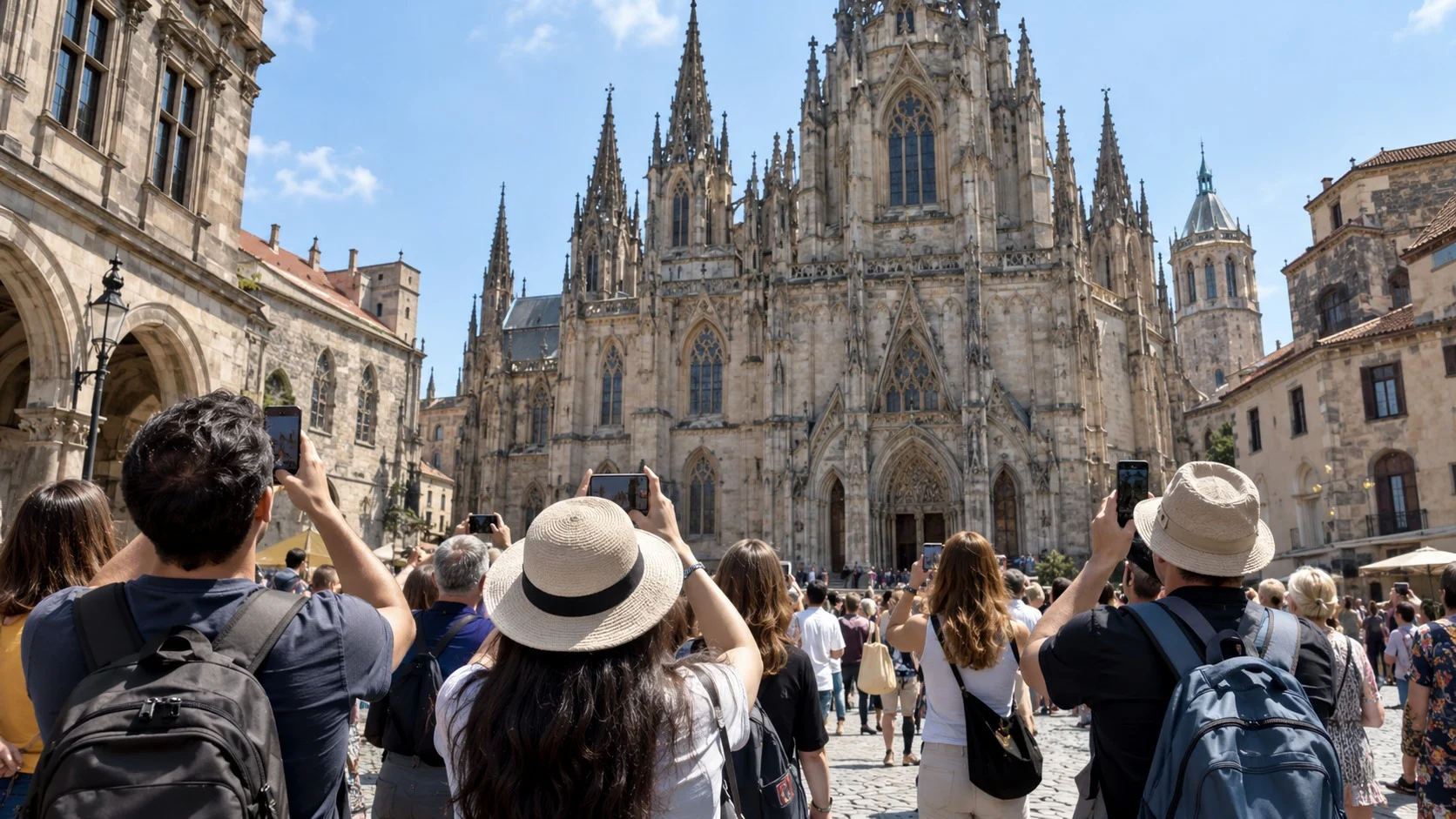
When they arrive at a destination, many people first pull out their phones and look for the very scenes they saw beforehand in guidebooks or on social media, then take pictures of them. We think we are sightseeing freely, but what we look at and how we look at it are often decided to some extent in advance. In tourism studies, this socially constructed way of seeing is called the tourist gaze.
Put simply, the tourist gaze is ‘the attitude of looking at places different from everyday life in ways that society and culture have already trained us to see.’ The concept starts from the idea that tourism is not simply going somewhere but going to see something special.
This article explains, in easy-to-understand terms, what the tourist gaze means and where it came from, how the gaze is formed, its different types, and what it means for today's tourist destinations and travelers.
How the Tourist Gaze Works, with Examples
The Tourist Gaze According to John Urry
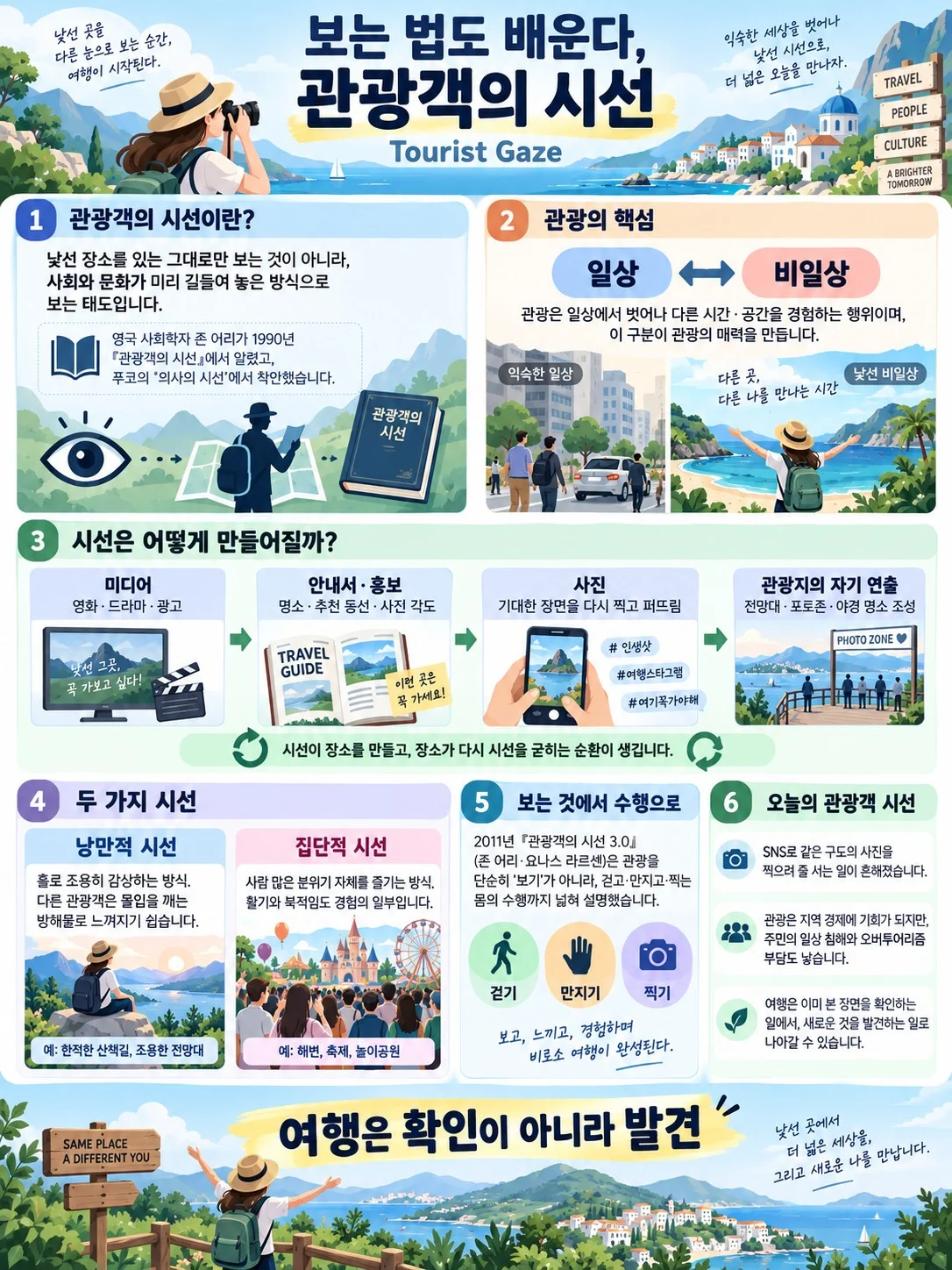
The concept became widely known through The Tourist Gaze, a book published in 1990 by the British sociologist John Urry. Urry was a scholar who spent many years studying tourism and mobility at Lancaster University.
Urry took his cue from the medical gaze that the French philosopher Michel Foucault examined in The Birth of the Clinic. Just as doctors read patients' bodies with trained eyes, tourists read places with eyes that have learned and practiced how to see.
According to Urry, the heart of tourism lies in the distinction between the everyday and the extraordinary. The streets and homes we see every day do not draw our gaze, but unfamiliar scenery, old buildings, and exotic food become ‘things worth seeing.’ So the tourist gaze is always on the move, looking for differences from everyday life.
What matters here is that this gaze does not arise from personal taste alone. Urry held that the criteria for judging whether a place is worth seeing vary with the era and the society, and that these criteria are cultural products that people learn and share together.
How Is the Gaze Formed?
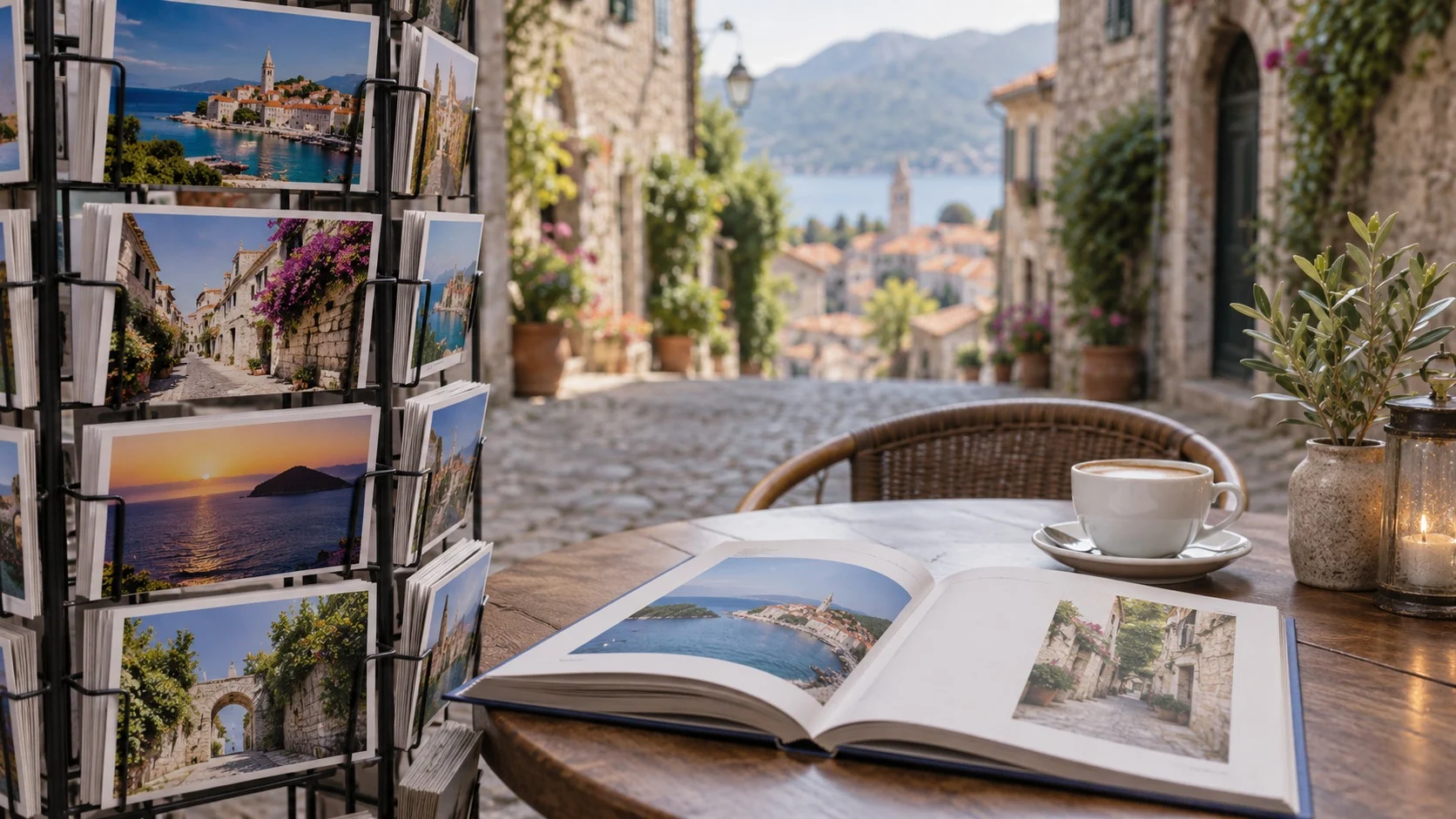
Tourists have already seen many scenes before they set off for a destination. Those scenes pile up and create the expectation that ‘this is what you have to see here.’
- Media: Films, TV dramas, advertisements, and travel programs repeatedly show particular places as stunning scenes.
- Guidebooks and promotion: They tell you in advance which sights you must visit and the best angles for photos.
- Photography: Tourists retake the scenes they expected and spread those images further.
Seen this way, tourism is closer to a process of confirming images. People see in person the Eiffel Tower they saw on a postcard and come home with a photo that looks like that postcard, over and over again. Urry explained that photography and tourism have developed together in this way, each feeding the other.
Tourist destinations, too, dress themselves up to suit this gaze. They build observation decks and photo spots and spruce up streets and buildings to look more like what people expect. In effect, the gaze changes places, and the changed places in turn reinforce the gaze.
The Romantic Gaze and the Collective Gaze
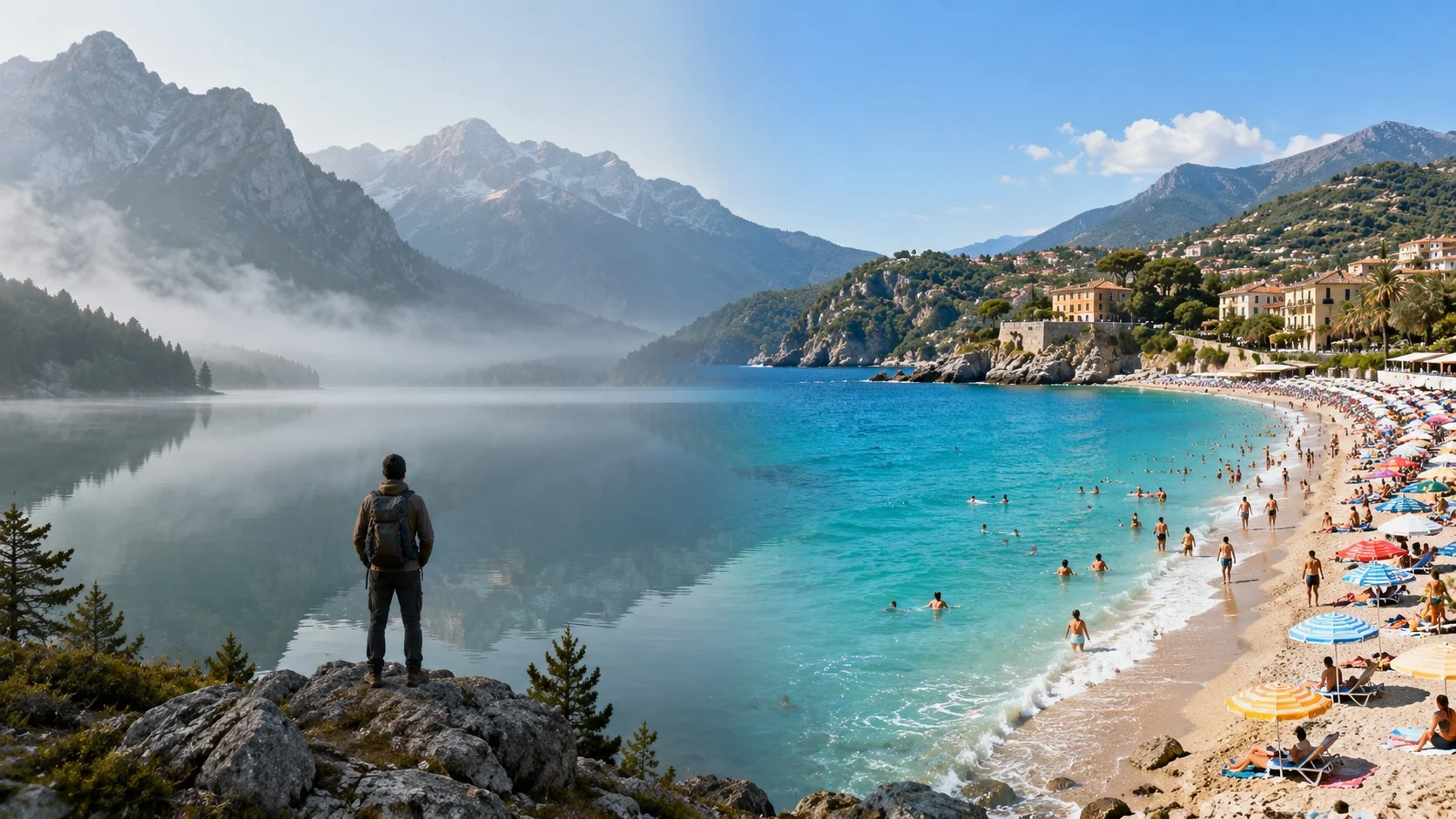
Urry held that the tourist gaze does not appear in just one form, and he described two representative types.
- Romantic gaze: A way of quietly looking at and appreciating unspoiled nature or secluded places alone or with a few others.
- Collective gaze: A way of enjoying the crowded, bustling atmosphere itself with many other people, typified by beach resorts and amusement parks.
To tourists with a romantic gaze, other tourists feel like a nuisance. So they set out in search of more remote places that are not yet well known, and those places soon become crowded too, in a repeating cycle. In the collective gaze, by contrast, the very fact that there are many people becomes part of a place's appeal.
Later, Urry and Jonas Larsen published a revised edition, The Tourist Gaze 3.0, in 2011, placing more emphasis on the idea that the gaze is not just a matter of looking with the eyes but is closer to a performance carried out with the body by walking, touching, and taking pictures.
What the Tourist Gaze Means Today
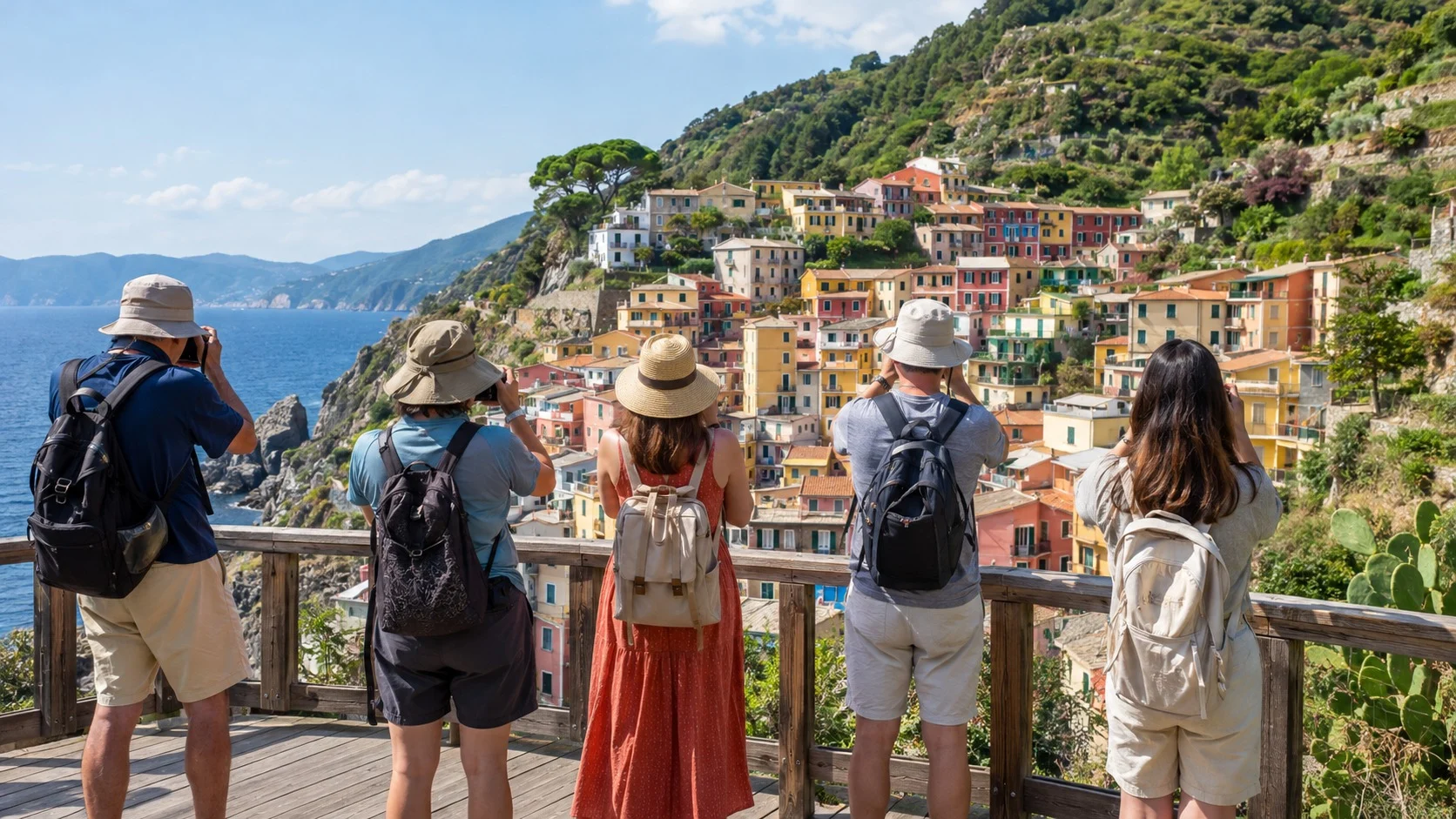
With the spread of smartphones and social media, the tourist gaze moves faster and more forcefully. When a single photo goes viral, crowds of people may line up to take pictures from the same spot with the same composition.
This trend is both an opportunity and a burden for tourist destinations. A little-known village may suddenly become a hot spot and revive the local economy, but problems also arise, such as residents' daily lives becoming a spectacle or people flocking to only certain places.
The tourist gaze also connects with concepts covered earlier, such as staged authenticity and overtourism. Setting the stage to show tourists what they expect, and too many people crowding into one place to see the same scene, both ultimately start from the gaze that decides what is to be seen.
That is why tourism studies uses the concept less as a way of blaming tourists than as a tool for reflecting on what we want to see and why. Instead of merely confirming the scenes others have chosen for us and coming home, if we also look at the lives of the people who live there and the stories of the place, our travels can take on a different depth.
The tourist gaze reminds us that the scenery we see is never simply pure scenery. When we step away from the familiar composition, travel becomes not confirmation but discovery.
Realizing what your eyes have been taught to see: that is the first step toward real travel.