In a museum, the label beside a rock hundreds of millions of years old gives its age with surprising precision. Yet nobody was there to see that era, and a rock has no calendar carved into it. So what did scientists look at to work out the age? The key lies in an atomic clock that runs very slowly and steadily inside the stone.
This method is called radiometric dating. It is a technique that compares the amount of a radioactive isotope in a rock or artifact with the amount of the substance it has turned into, and from that calculates how old the sample is. Today it is the most important tool for finding the absolute ages of the Earth and of fossils.
In this article, we will look in turn at how radiometric dating reads time, how the main methods differ, how the age of the Earth was determined, and what to watch out for if we are to trust this clock.
How to Read the Atomic Clock Inside a Rock
The Steady Clock Made by Half-Life
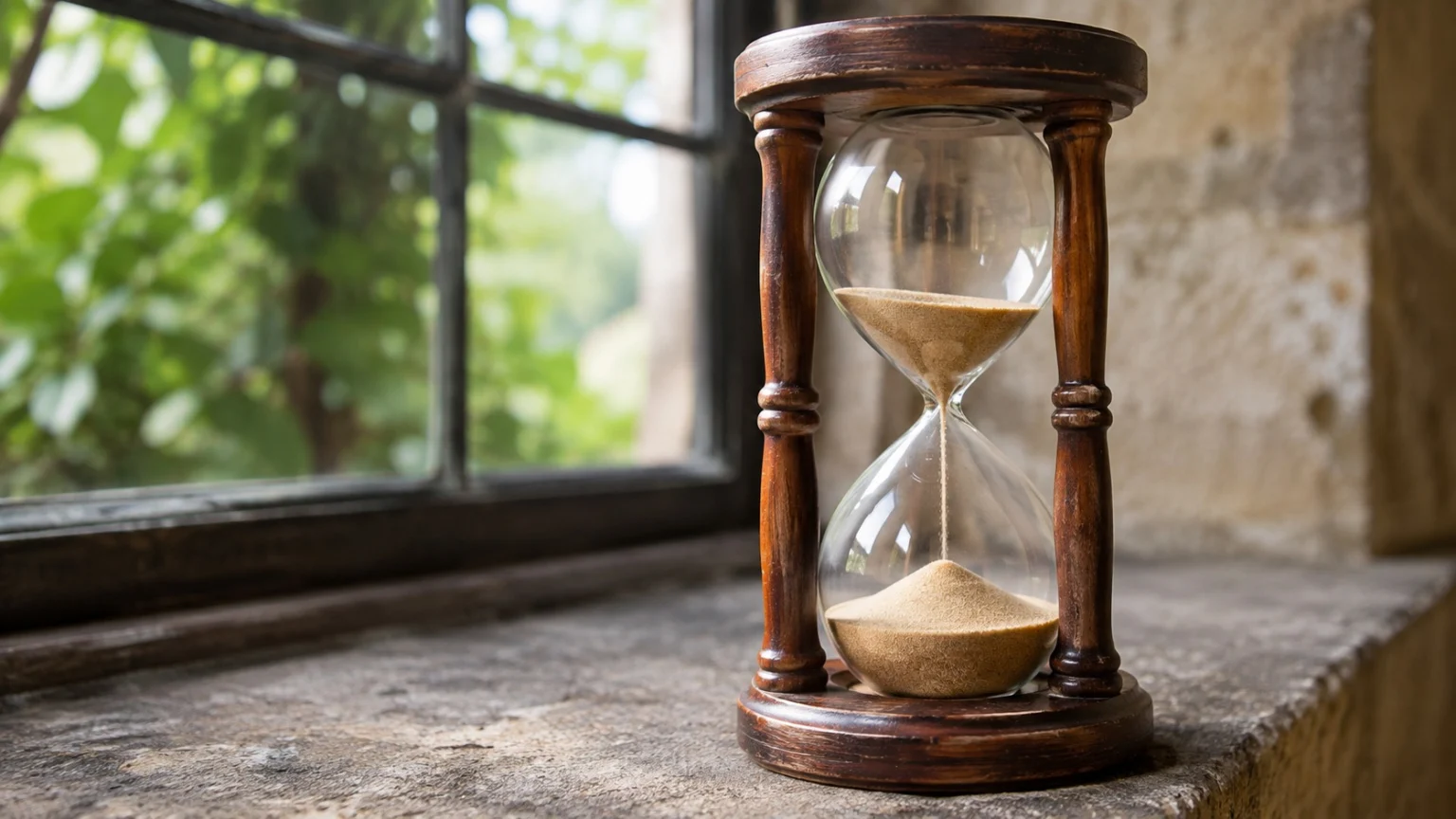
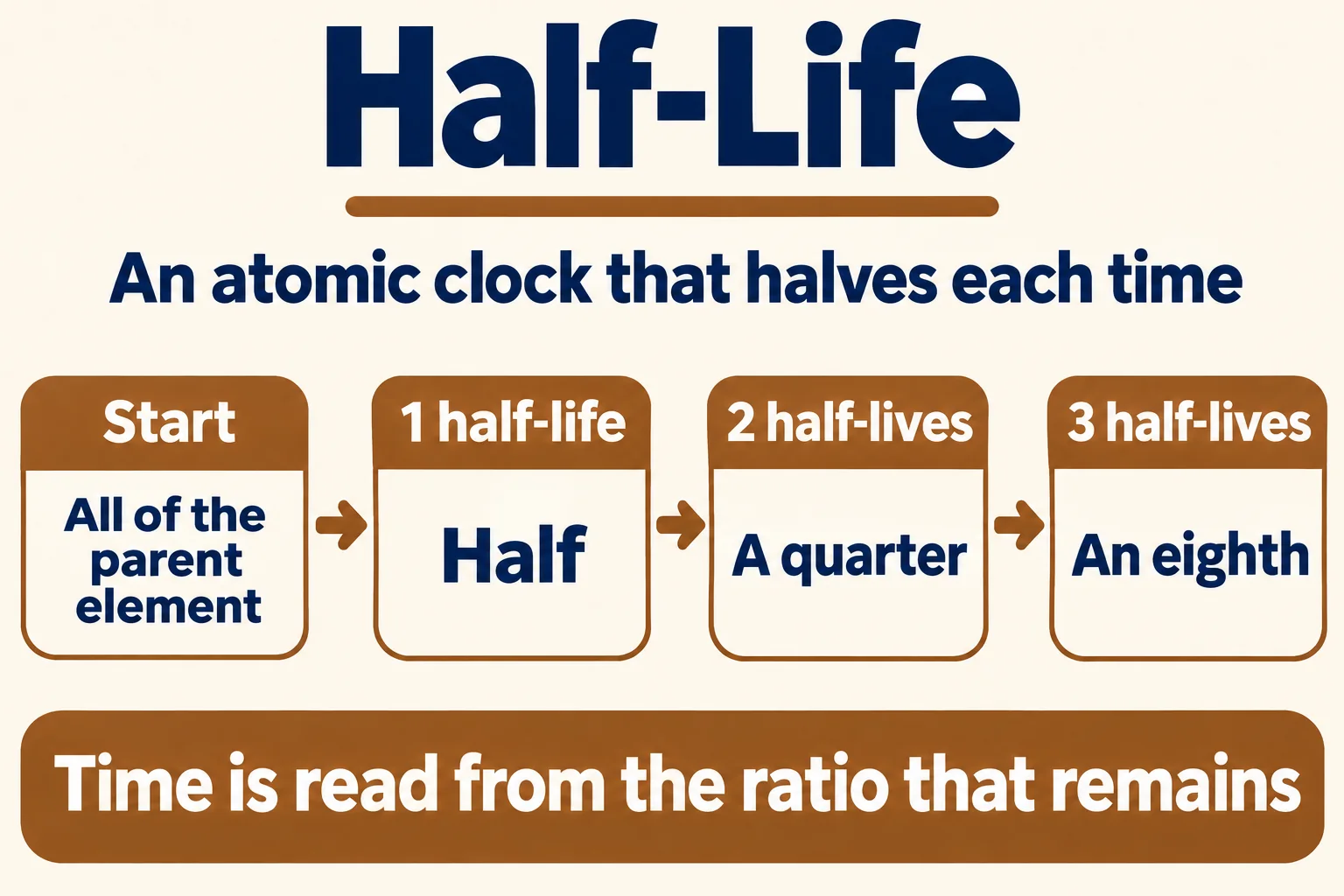
An unstable atomic nucleus changes into a different atom on its own over time, which is called radioactive decay. There is no way to know when any single atom will change, but when a great many atoms are gathered together, the time it takes for half of them to change is fixed. This is the half-life.
(1) Parent and daughter elements
The atom before the change is called the parent, and the atom produced by the change is called the daughter. Measuring the ratio of the two in a sample shows how far the decay has progressed.
(2) A rate unshaken by the environment
Because the half-life is set by a property of the atomic nucleus, it is hardly affected by temperature, pressure, or chemical reactions. This constancy is what lets atoms be used as a clock.
(3) The moment the clock starts
The clock begins running when parent and daughter atoms can no longer move in or out, as when a mineral cools from magma and becomes a crystal. So the age that is measured points to the moment the rock cooled and solidified.
To use the hourglass comparison, it is like reading how much time has passed from the ratio of the sand left in the top to the sand piled up in the bottom. Just remember that after one half-life only half of the parent remains, after two a quarter, and after three an eighth, and you already understand half of the principle.
Choosing the Right Clock for the Sample
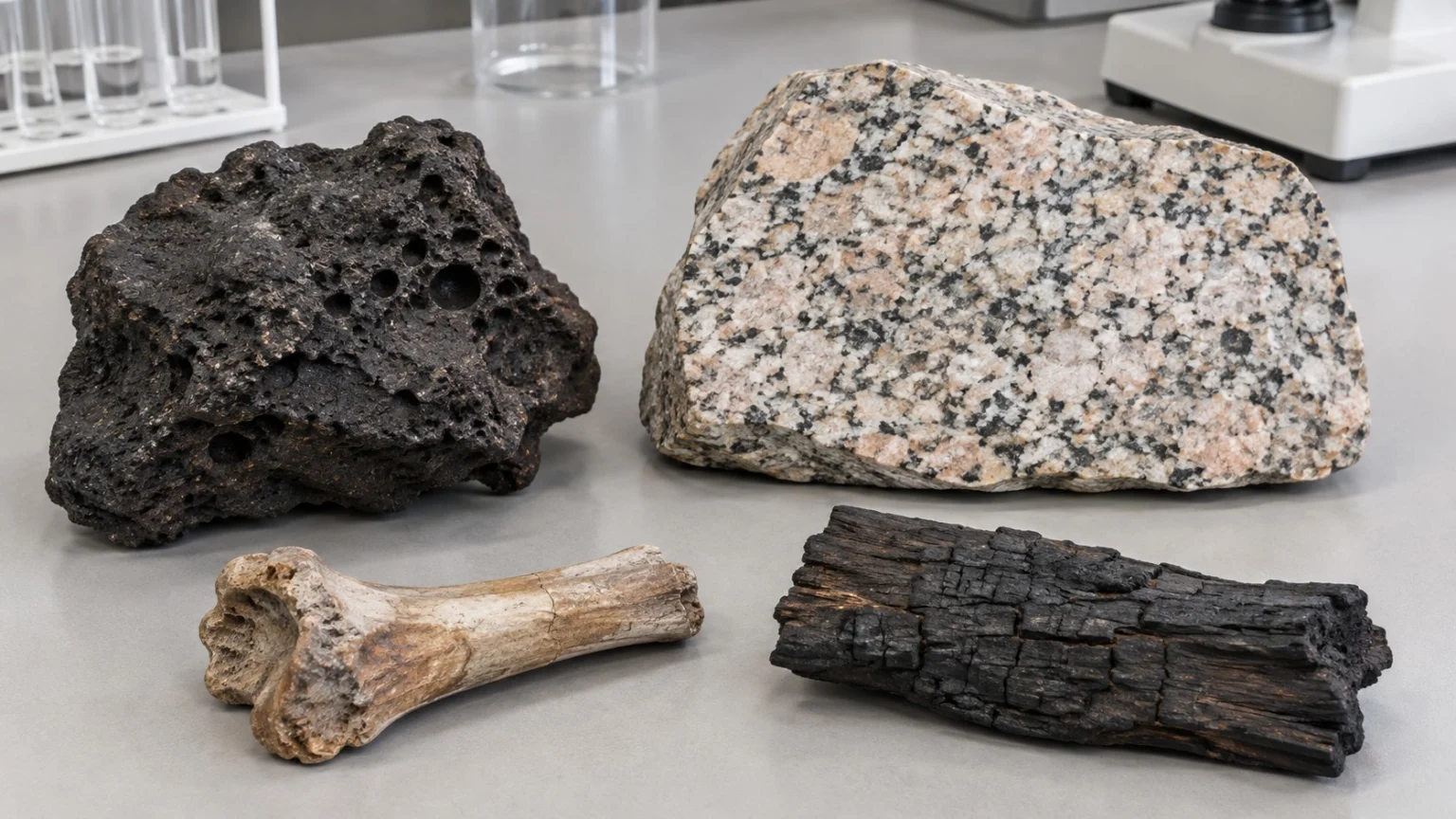
Decay rates differ from one isotope to the next, so each clock reads a different range of time well. Some clocks are precise to within thousands of years, while others can gauge billions of years.
- Carbon-14: Its half-life is about 5,730 years. It enters living things through carbon dioxide in the air, so it is used to date organic materials such as bone and wood, and its measurement limit is roughly 50,000 to 60,000 years.
- Potassium-Argon: Potassium-40 has a half-life of about 1.3 billion years, and the method is used on old rocks such as volcanic rock.
- Uranium-Lead: Uranium-238 turns into lead with a half-life of about 4.5 billion years, and uranium-235 with about 700 million years. Because both clocks sit together in one sample, they can be cross-checked against each other.
- Rubidium-Strontium: Its half-life is about 50 billion years, and it is used on very old rocks and on Moon samples.
Carbon-14 dating was developed by Willard Libby in the late 1940s, and he received the Nobel Prize in Chemistry in 1960 for this work. On the other hand, if you used carbon-14 on a rock hundreds of millions of years old, almost none would be left, so measurement would be impossible. In the end, which clock to use depends on the length of time you want to know and on what material the sample is.
The Secret in Lead That Revealed the Age of the Earth
Radiometric dating was proposed by Ernest Rutherford in 1905 as a way to find the age of the Earth, and it began in earnest in 1907, when Bertram Boltwood worked out the ages of rocks from the amount of lead in uranium minerals.
(1) The role of zircon
When a zircon crystal forms, it accepts uranium but strongly rejects lead. So almost all the lead inside it now came from uranium decaying, which makes it well suited for reading an age. Zircon crystals from Jack Hills in Western Australia have been measured at more than 4.4 billion years old at the least.
(2) The Earth's age found in meteorites
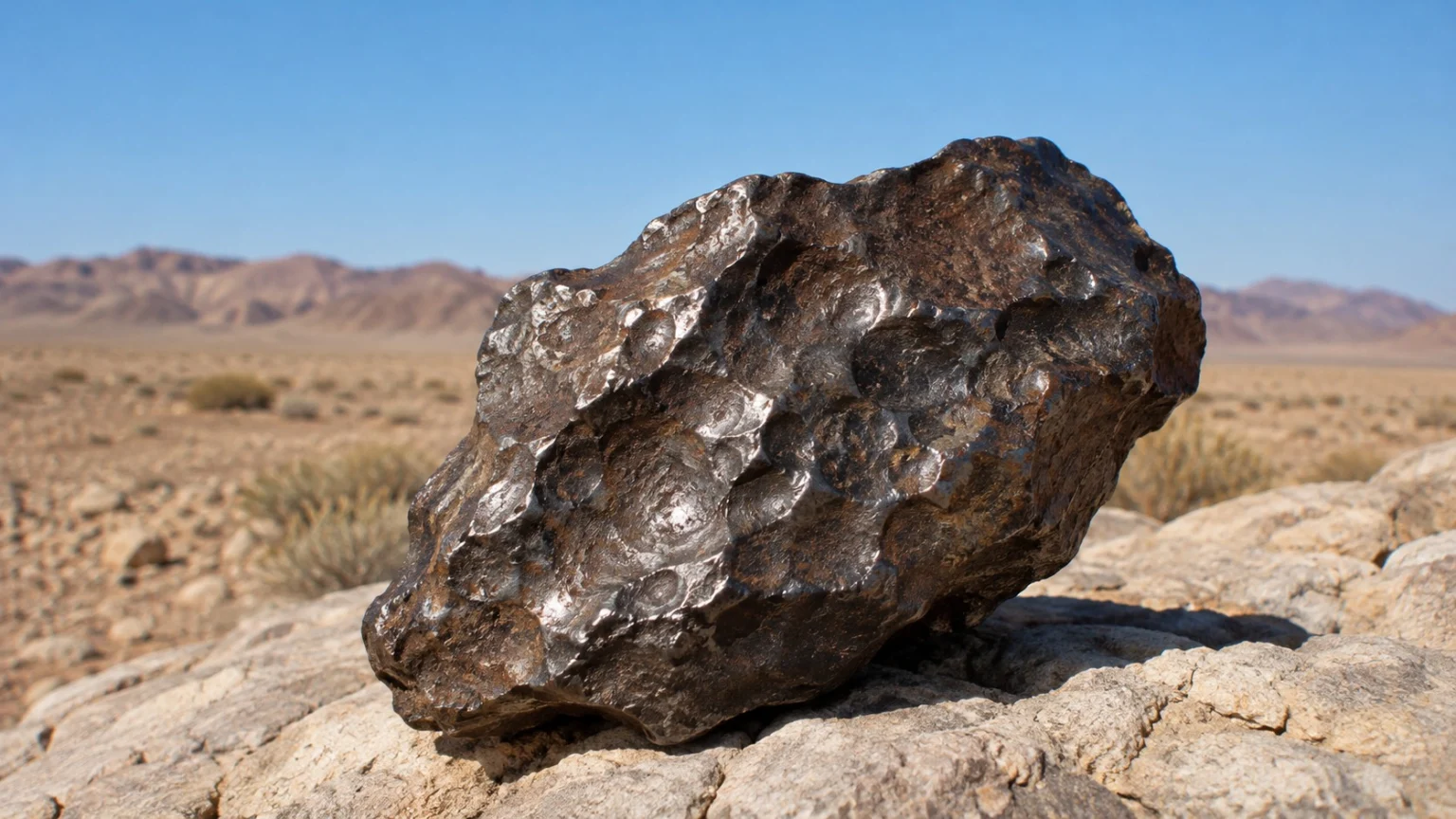
Rocks on Earth keep melting and solidifying again through plate tectonics, which erased their original record. So meteorites formed at the same time became the clue, and in 1956 Clair Patterson analyzed the lead isotopes of the Canyon Diablo meteorite and others and obtained a value of about 4.55 billion years.
(3) The value today
Measurements have since become more precise, and the age of the Earth is now put at about 4.54 billion years, give or take about 50 million. Compared with Patterson's value, the big picture has held steady through nearly 70 years.
Without meteorites, those fossils of space, the Earth's first moment might still be lost in fog.
The Conditions and Checks for Trusting the Clock
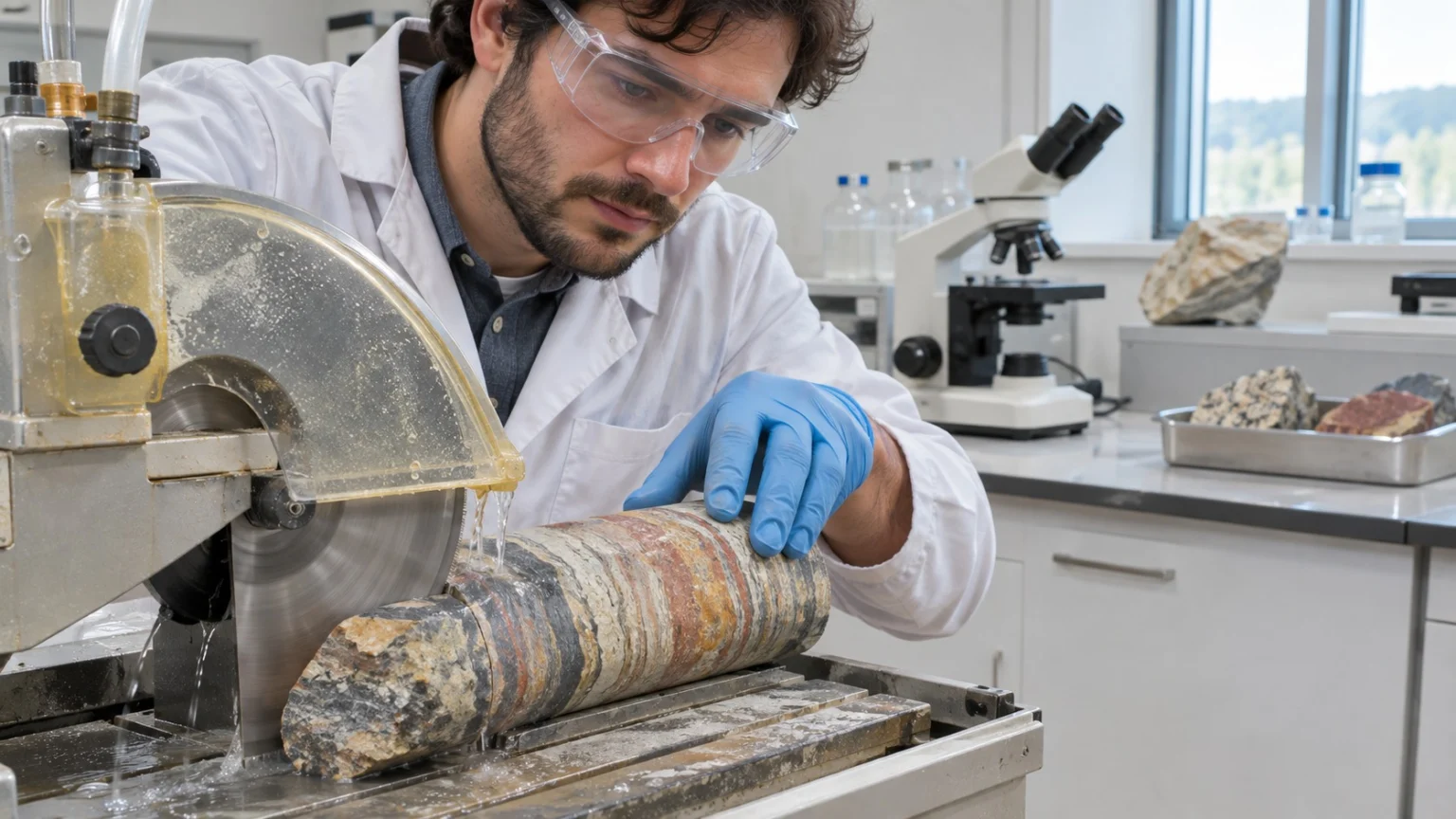
Radiometric dating is not a machine that gives an answer once you plug numbers into a formula. It is a science that requires confirming a few assumptions. The process of checking that those assumptions hold is what builds its reliability.
(1) The closed-system assumption
After the sample forms, neither parent nor daughter atoms may leak out or come in. If a rock is heated again, the daughter atoms can escape and the clock can be reset back to zero.
(2) The isochron method
If you plot the ratios of several minerals in the same rock on one graph and they form a straight line, you can find the age even without knowing how much daughter was there at the start. That the line fits well is itself evidence that the sample is intact.
(3) Cross-checking with different methods
For the Amitsoq gneiss of West Greenland, the uranium-lead method gave about 3.6 billion years and the lead-lead method about 3.56 billion, and the two agreed well.
That independent clocks give the same answer is the strongest reason to trust radiometric dating. The courage to trust the speed of atoms we cannot see and put questions to the distant past is the first step of radiometric dating.