Learning is an essential process for the continuous growth and development of individuals and society. Improving the efficiency and effectiveness of learning requires a deep understanding of learning styles and learning strategies, which can help provide personalized learning experiences for each individual.
This article will explore what learning styles are, the various types of learning styles and their importance, and how to develop individual learning strategies.
What Are Learning Styles?
 What Is an Individual's Learning Style?
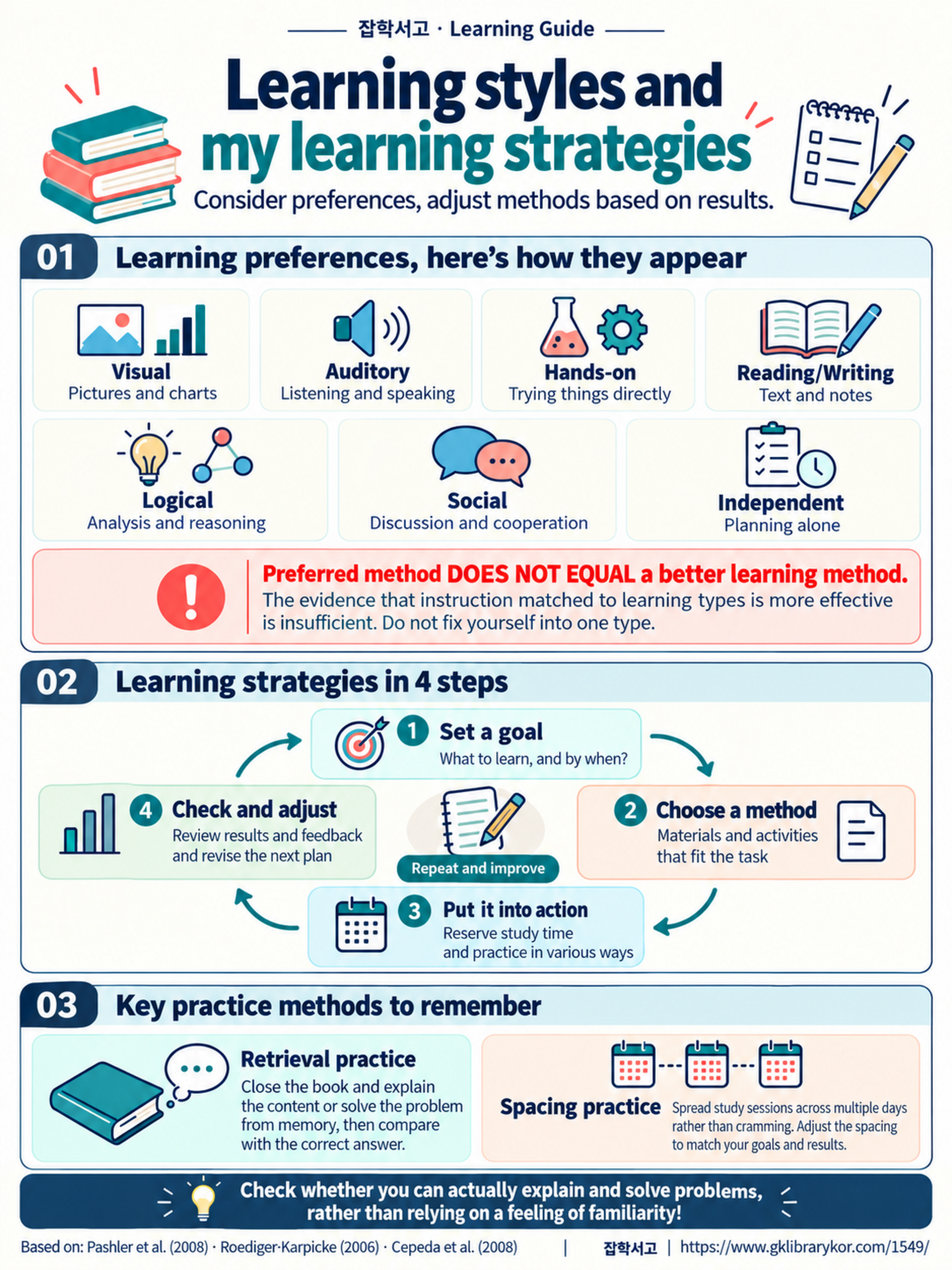
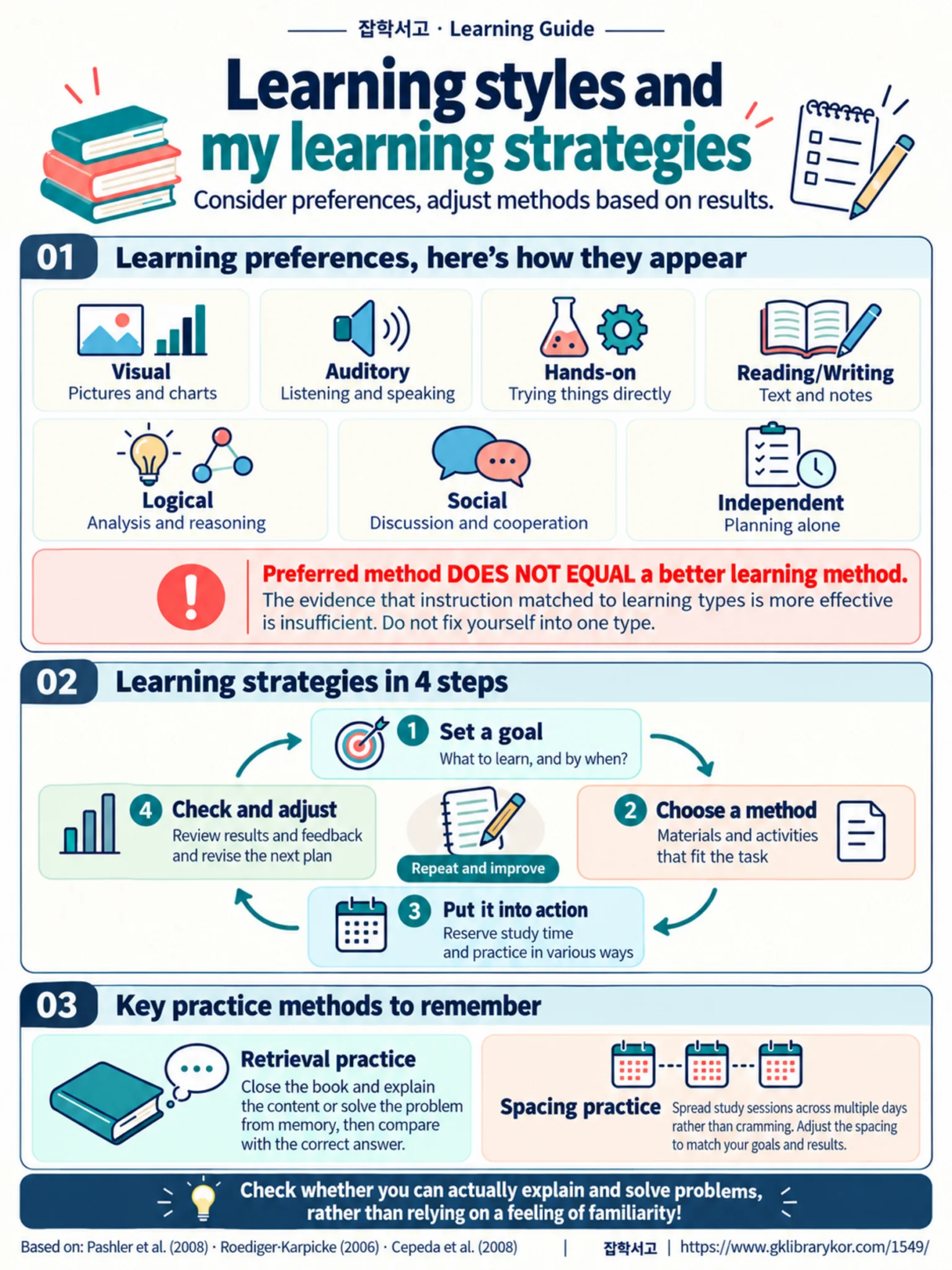
A learning style refers to the particular way an individual prefers to process information, acquire new knowledge, and solve problems.
Simply put, learning styles represent our preferences and tendencies in how we learn and understand.
Learning styles play an important role in understanding how individuals learn and developing more effective learning strategies based on that understanding.
Learners can identify their learning styles and use them to optimize their learning environments and develop learning strategies that suit them.
Various Types of Learning Styles
 Which Type Does Each Individual Fall Into?
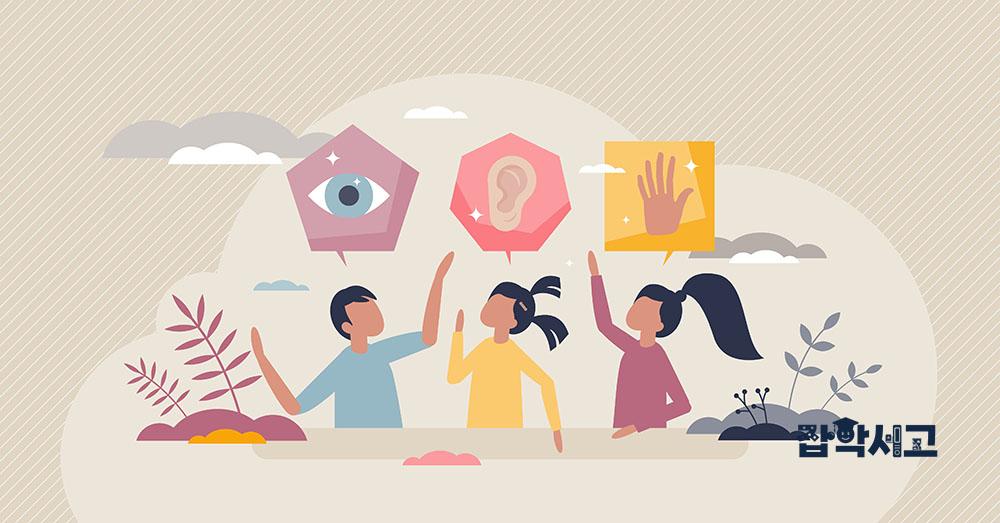
Learning styles differ from person to person, and each style involves a particular way of processing and understanding information.
The following is an overview of learning styles classified according to individual characteristics.
Visual Learning Style
Visual learners understand and remember information better through visual materials such as pictures, charts, maps, and diagrams. They find it easier to learn about countries and their capitals by looking at maps or to understand data through charts.
Auditory Learning Style
Auditory learners understand and remember information better by listening to lectures or using audio materials. They find it easier to understand content by listening to lectures or listening to books in audiobook form.
Kinesthetic/Tactile Learning Style
Kinesthetic learners understand and remember information better by performing actions or engaging in physical activities. They find it easier to conduct physics experiments themselves or learn about the importance of teamwork through sports.
Reading/Writing Learning Style
These learners learn through text-based materials and understand information by recording it in their own words. They find it easier to learn by reading books or taking notes.
Logical/Mathematical Learning Style
Logical learners analyze and understand information using logic and reasoning. They find it easier to learn logical thinking by solving mathematical problems or to use logical analysis to understand new concepts.
Social Learning Style
Social learners understand and remember information better through interactions and discussions with others. They find it easier to learn by sharing and discussing information in study groups and listening to other people's explanations.
Independent Learning Style
Independent learners prefer to study alone and set and pursue their own learning goals and plans. They find it easier to create personal study plans and learn independently through reading or online lectures.
These learning styles vary according to individual preferences and abilities, and learners can learn more effectively by understanding and using their own learning styles.
The Importance of Individual Learning Strategies
 Why Are Learning Strategies Important?
Individual learning strategies refer to the methods or techniques that learners select and apply to achieve their learning goals. The following points explain why individual learning strategies are important.
Personalized Learning Experiences
Every learner has their own learning style, pace, and preferences. Individual learning strategies allow learners to adjust their learning environments to suit their characteristics and needs.
Efficient Learning
Through individual learning strategies, learners can identify the learning methods that are most effective for them and improve their learning efficiency and outcomes.
Developing Self-Regulated Learning Skills
Learners can develop the ability to plan, monitor, and regulate their own learning processes.
Motivation
Having their own learning strategies helps learners feel a greater sense of responsibility for their learning processes and makes it easier to stay motivated to learn.
Continuous Learning
It helps learners recognize the importance of lifelong learning and establishes the foundation they need to continue acquiring new knowledge and skills.
Improving Problem-Solving Skills
It helps learners identify, analyze, and effectively solve problems.
Building Confidence
This helps learners understand their own learning abilities and progress, which increases their confidence.
Individual learning strategies greatly help learners improve their learning experiences and achieve their learning goals. Through these strategies, learners can have more effective and meaningful learning experiences.
How to Develop Learning Strategies
 What Learning Strategies Lead to Successful Learning Outcomes?
Developing learning strategies is an important step in improving an individual's learning efficiency and outcomes. We will examine the various steps and methods for developing learning strategies, with examples based on the assumption that the learner is studying English.
Self-Assessment
Understand and assess your learning style, preferences, strengths, and weaknesses. Among the learning styles described earlier, determine whether you are a visual or auditory learner and identify the subjects or skills in which you have strengths.
Setting Learning Goals
Clearly define the learning goals you want to achieve and the time frame for achieving them. Set a daily vocabulary learning goal to improve your English conversation skills within 3 months.
Selecting Resources and Tools
Select and use the resources, tools, and technologies needed for learning. Use an online English learning platform or participate in an English conversation club or group.
Time Management
Set aside time for learning and manage your schedule to use your time effectively. Memorize English vocabulary for 30 minutes every morning and attend English club meetings on weekends.
Structuring Learning Activities
Organize a variety of learning activities to maintain variety and interest in learning. Practice listening, speaking, reading, and writing alongside one another, and watch movies or listen to music in English.
Feedback and Assessment
Regularly assess your learning progress and receive feedback to adjust your learning strategies. Review your learning progress weekly or monthly and revise your learning strategies if necessary.
Repetition and Improvement
Repeatedly put your learning strategies into practice and improve them as needed to enhance learning effectiveness. Check your progress toward daily learning goals and adjust your learning methods or study time as needed.
By developing and implementing individual learning strategies through these methods, learners can effectively achieve their learning goals and improve their learning outcomes.
Understanding learning styles and learning strategies plays an important role in improving an individual's learning efficiency and achievement.
Understanding various learning styles and developing individual learning strategies based on them greatly helps learners achieve their learning goals, grow continuously, and adapt to a changing world.
Because learning contributes not only to individuals' lives but also to the development and innovation of society as a whole, the study and development of learning styles and learning strategies will continue to be treated as important topics.