Ecotourism is an important form of tourism that protects the natural environment and ecosystems while revitalizing local economies. The role and importance of ecotourism in building a sustainable future are growing every day.
This article examines in detail the role of ecotourism, its synergies with local economic revitalization, representative examples of ecotourism in Korea, and the prospects for ecotourism and ways to achieve sustainability.
The Role of Ecotourism in a Sustainable Future
 Scenery of Seopjikoji on the Jeju Olle Trail
Environmental Protection and Maintaining Biodiversity
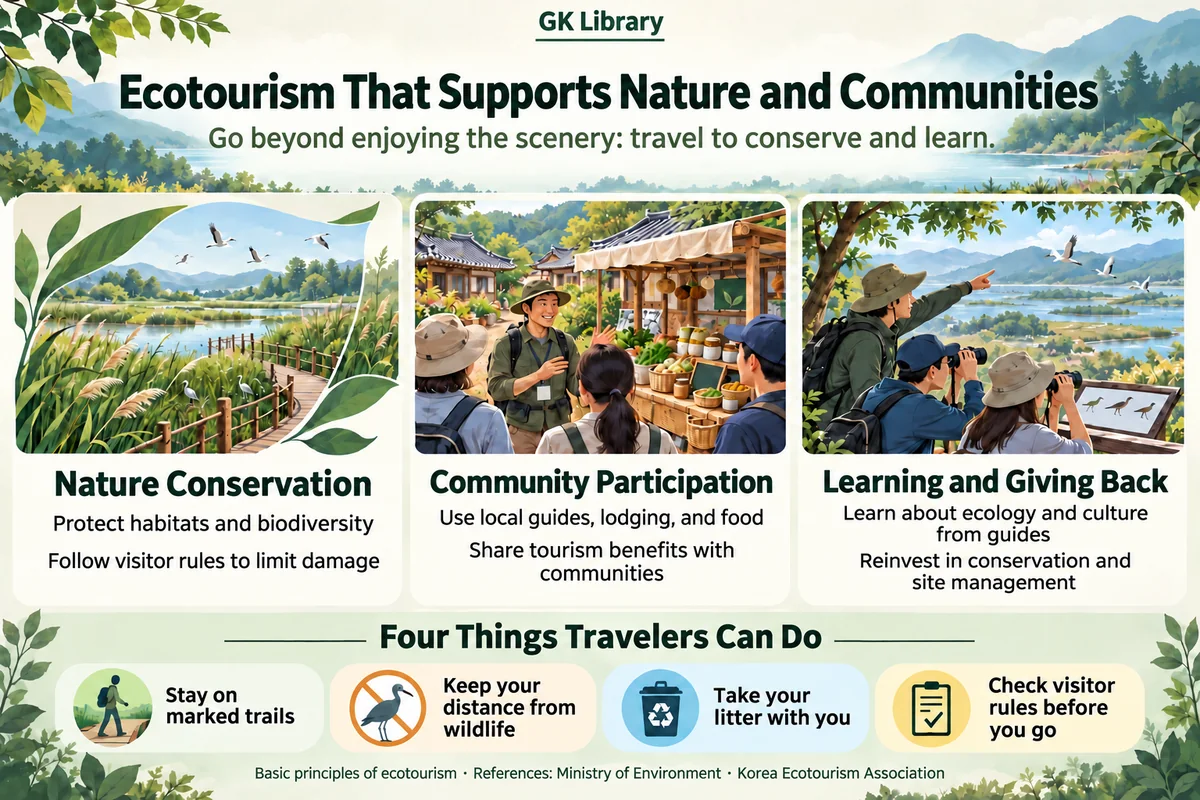
Ecotourism has become an important tool for promoting environmental protection and sustainable development. In particular, it plays a major role in protecting natural resources and maintaining biodiversity. By providing opportunities to experience and learn about the natural environment, ecotourism helps tourists recognize the need for environmental protection and motivates them to participate in environmental conservation.
Cooperation with Local Communities
Ecotourism plays an important role in working with local communities to carry out environmental protection activities and related projects. Through ecotourism, local residents gain economic benefits while recognizing the importance of protecting natural resources. This makes an important contribution to conserving the natural environment over the long term.
Providing a Sustainable Tourism Model
Unlike conventional mass tourism, ecotourism minimizes negative impacts on the natural environment and provides a sustainable tourism model. This enables efficient management of natural resources and ensures that future generations can enjoy the natural environment. Such sustainable tourism models are gradually spreading around the world.
Responding to Climate Change
Ecotourism also plays an important role in responding to climate change. It includes efforts to minimize the effects of climate change through various activities that protect the natural environment and reduce carbon emissions. This is one of the important strategies for addressing climate change on a global scale.
Economic Self-Reliance and a Sustainable Economic Model
Ecotourism promotes the economic self-reliance of local communities and contributes to building a sustainable economic model. It plays an important role in providing local residents with stable incomes while helping them recognize the importance of protecting natural resources.
Establishing and Managing Nature Reserves
Ecotourism contributes to environmental protection by establishing nature reserves and strictly managing tourism activities within them. This allows tourists to enjoy nature without damaging it, thereby achieving environmental protection.
Wildlife Protection
Ecotourism plays an important role in protecting wildlife. Ecotourism activities include various programs that protect wildlife habitats and prevent illegal hunting and poaching. This helps ensure the survival of wildlife and maintain healthy ecosystems.
Improving the Efficiency of Natural Resource Management
Ecotourism contributes to improving the efficiency of natural resource management. By reinvesting part of tourism revenues in natural resource management and protection activities, it establishes a sustainable management system. This prevents the depletion of natural resources over the long term and enables their sustainable use.
Raising Local Residents’ Awareness of Environmental Protection
Ecotourism plays an important role in raising local residents’ awareness of environmental protection. Through interactions with tourists, local residents recognize the importance of environmental protection and learn various ways to put it into practice in their daily lives. This greatly helps improve environmental protection throughout the local community.
Environmental Education Programs
Ecotourism teaches tourists the importance of environmental protection through various environmental education programs. This enables tourists to apply the experiences and knowledge gained through travel in their daily lives, promoting sustainable environmental protection. Such educational programs can have a particularly significant influence on children and adolescents.
Supporting Environmental Protection Research and Development
Ecotourism supports research and development activities related to environmental protection. Based on data and information obtained through ecotourism, various environmental protection strategies are developed, and ways to implement them are explored. This makes an important contribution to solving environmental problems worldwide.
Synergies Between Local Economic Revitalization and Ecotourism
 Scenery at Suncheon Bay Natural Ecological Park
Using Local Resources and Revitalizing the Economy
Ecotourism makes a major contribution to both environmental protection and local economic revitalization. Ecotourism uses local resources to attract tourists, thereby bringing new vitality to local economies. In particular, it greatly helps revitalize economies in rural areas and near nature reserves.
Job Creation and Economic Stability
Ecotourism provides local residents with a variety of jobs. Jobs are created in various fields, including guiding, operating accommodation facilities, and running restaurants, increasing local residents’ incomes and promoting economic stability. This plays an important role in the sustainable development of local economies.
Preserving Culture and Traditions
Ecotourism also contributes to preserving and developing a region’s unique culture and traditions. Tourists experience local traditional culture, thereby increasing local residents’ pride while participating in various activities to preserve that culture. This plays an important role in enhancing the sustainability of local culture.
Revitalizing Traditional Industries
Ecotourism also contributes to revitalizing traditional industries such as local agriculture and fisheries. Tourists purchase local agricultural products and seafood, directly helping the local economy. This increases the value of local products and promotes the diversification of the local economy.
Developing Infrastructure and Improving Quality of Life
Ecotourism also contributes to the development of local community infrastructure. Various types of infrastructure, including roads, accommodation facilities, and communications networks, are improved to attract tourists, greatly helping improve local residents’ quality of life. Such infrastructure development is an important factor in promoting the development of the entire region.
Strengthening Community Solidarity and Cooperation
Finally, ecotourism plays an important role in strengthening solidarity and cooperation within local communities. Local residents work together to ensure the success of ecotourism, thereby strengthening community cohesion. This becomes an important foundation for promoting the development of the entire local community.
Representative Examples of Ecotourism in Korea
 Scenery at Daegwallyeong Sheep Farm
Jeju Olle Trail
The Jeju Olle Trail is one of Korea’s leading ecotourism destinations, offering walking routes where visitors can experience beautiful natural scenery and diverse ecosystems. The Olle Trail is managed along designated sections to protect nature and is operated in cooperation with local residents. These routes are regarded as a successful example of achieving local economic revitalization and environmental protection simultaneously.
Suncheon Bay Natural Ecological Park
Suncheon Bay Natural Ecological Park is an ecotourism destination with diverse ecological environments, including tidal flats and reed beds. It is a major habitat for migratory birds, and ecotourism programs for observing these birds are offered. Suncheon Bay makes a major contribution to the local economy by conserving the natural environment and attracting tourists, while raising awareness of environmental protection through ecological education programs.
DMZ Peace Ecological Park
DMZ Peace Ecological Park preserves the ecological value of the Demilitarized Zone (DMZ) while providing tourists with opportunities to experience nature and history. The park is a habitat for rare wild plants and animals and conveys messages of nature conservation and peace through ecotourism. It also shares economic benefits through cooperation with local residents.
Taean Coast National Park
Taean Coast National Park is a place that protects marine ecosystems and allows visitors to experience the beauty of nature. Programs are offered for observing diverse marine organisms and ecosystems, and sustainable fishing and tourism are pursued together in cooperation with local fishers. This is an example of advancing the local economy and environmental protection in a balanced way.
Jirisan Dulle-gil Trail
The Jirisan Dulle-gil Trail is a walking route where visitors can experience the beautiful natural scenery and ecology of Jirisan. The route is strictly managed to protect Jirisan’s ecology and is operated in cooperation with local residents. Tourists find relaxation and rejuvenation in nature while learning the importance of environmental protection.
Daegwallyeong Sheep Farm
Daegwallyeong Sheep Farm is an ecotourism destination where nature and people coexist, allowing visitors to enjoy both the sheep farm and the natural scenery. It is a model that combines sustainable agriculture and tourism, contributing to environmental protection and local economic revitalization. Tourists learn the value of nature through farm experiences.
Ulleungdo
Ulleungdo is a tourist destination with distinctive geology and ecology, offering various ecological exploration programs. It has a positive impact on the local economy through nature conservation and attracting tourists, while raising awareness of environmental protection through ecological education programs.
Prospects for Ecotourism and Ways to Achieve Sustainability
 Scenery at Namseo Sunset Observatory on Ulleungdo
Bright Prospects
The prospects for ecotourism are very bright. As interest in environmental protection and sustainable development grows, the importance of ecotourism is also increasing. This promotes the growth of the ecotourism industry worldwide and provides an impetus for developing various ecotourism programs.
Systematic Management and Operational Planning
Several important measures are needed to achieve sustainability in ecotourism. First, systematic planning is needed for the management and operation of ecotourism. This is essential for the efficient management and protection of natural resources. Cooperation with local communities is also an important factor.
Improving Infrastructure
Infrastructure related to ecotourism needs to be improved. By building infrastructure that allows tourists to access and enjoy destinations conveniently, the appeal of ecotourism can be increased and sustainable tourism can be achieved. This also has a positive impact on local economic revitalization.
Education and Promotion
Education and promotion about ecotourism are important. Tourists and local residents need to be informed about the importance and necessity of ecotourism, thereby raising their awareness of environmental protection. This is an important factor in enhancing the sustainability of ecotourism.
Monitoring and Evaluation
Effective monitoring and evaluation of ecotourism are needed. These make it possible to identify the positive and negative impacts of ecotourism and develop improvements for sustainable development. This is an essential process for improving the quality of ecotourism.
Reinvesting in Local Communities and Environmental Protection
It is important to reinvest ecotourism revenues in local communities and environmental protection. This is an important measure for enhancing the sustainability of ecotourism and promoting mutually beneficial relationships with local communities. It also plays an important role in encouraging local residents’ participation and cooperation.
Building a Global Network
A global network for ecotourism needs to be established. Various countries and regions can cooperate to share best practices in ecotourism, thereby achieving sustainable ecotourism worldwide. This is an important strategy for promoting the development of ecotourism on a global scale.
Developing Sustainable Ecotourism Policies
Each country and region must develop and implement sustainable ecotourism policies. Establishing legal and institutional mechanisms is essential for improving the quality of ecotourism and balancing environmental protection with economic development.
Introducing an Ecotourism Certification System
Finally, an ecotourism certification system needs to be introduced. This encourages ecotourism operators to meet certain standards and ensures that tourists receive reliable ecotourism services. Through this, the credibility and quality of ecotourism can be improved.
Ecotourism is an important tool for a sustainable future. The importance of ecotourism, which can achieve environmental protection and local economic revitalization simultaneously, is growing every day.
To achieve this, systematic management and operation, infrastructure improvements, education and promotion, effective monitoring and evaluation, reinvestment of revenues, and the establishment of global networks, among other measures, are needed.
If these efforts continue, ecotourism will play an important role in moving toward a sustainable future.