Programming (coding) is a language used to give instructions to a computer, and it requires following specific syntax. To this end, this material will cover various syntax elements
Tourism is an activity in which individuals or groups visit other regions or countries for various purposes, such as relaxation, exploration, and education. These activities are la
Video editing has become an essential part of digital content production today. In an era when people consume content through various platforms such as YouTube, Instagram, and TikT
Tourism carrying capacity is the maximum number of visitors a place can receive without seriously harming its environment, residents, or the visitor experience. This piece covers i
Texture has become an essential element in contemporary visual design and user experience (UX). Beyond being a visual element, texture brings physical qualities that we can actuall
You have probably tried to tap a small close button on your phone screen and ended up tapping an unintended ad. By contrast, the large payment button at the bottom of the screen is
Certain solids build up electric charge on their surfaces the moment they are pressed or stretched. This article covers how the piezoelectric effect works, the meaning behind its n
An eddy current is a swirling electric current induced inside a conductor such as metal by a changing magnetic field. This article covers how eddy currents arise, Lenz's law, why t
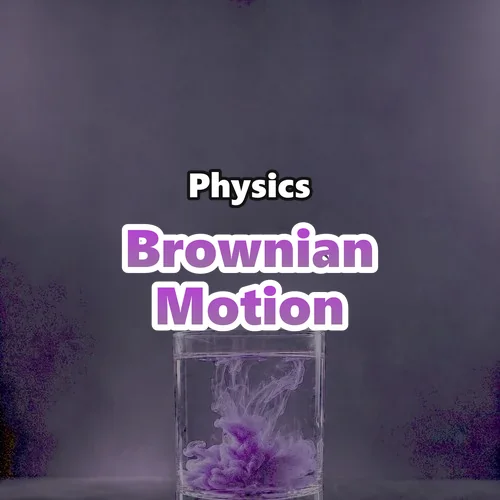
Why do tiny particles in water never stop jiggling? This article explains Brownian motion, first observed by Robert Brown, the principle Einstein uncovered behind it, Perrin's expe
The inverted pyramid is a way of writing news that puts the conclusion and key facts first and places less important information further back. This piece covers how it is structure
The coupon collector’s problem asks how many random draws it takes, on average, to collect every type at least once. Learn how the average is calculated, what the numbers look like
An overview of 12 defense mechanisms from Freud's psychoanalysis, grouped into avoidance, anxiety-relief, and satisfaction types, with a short explanation of each.