An initial public offering (IPO, Initial Public Offering) is an important process in which a company publicly sells its shares to outside investors for the first time. It is a key strategic decision that enables a company to raise capital, maximize its value, and build trust in the market.
An IPO goes beyond simply raising funds; it is understood as a process of strengthening a company's public image and demonstrating its potential for future growth to investors. An IPO therefore also provides an opportunity to assess both the company's financial stability and management's ability to make strategic judgments.
This material will examine in depth the main stages of the IPO process and the essential considerations for a successful IPO.
An Overview of an Initial Public Offering (IPO) and Why It Is Needed: Why Is It Important?

The Definition and Necessity of an Initial Public Offering (IPO)
An initial public offering (IPO, Initial Public Offering) refers to the process in which a company raises funds by selling its shares to the general public for the first time. Beyond simply securing funds, it is an important management strategy that establishes a foundation for growth, ensures transparency in management, and increases global recognition. Funds raised through an IPO can create various opportunities for growth, including research and development, mergers and acquisitions, and facility expansion.
The Main Objectives of an IPO
The main reasons a company pursues an IPO fall into three broad categories. The first is securing capital. Through an IPO, a company can raise substantial funds by selling publicly offered shares, providing an important source of financing for research and development, new product launches, and facility expansion. Startups and technology-based companies in particular can grow rapidly by securing the capital they need through an IPO.
The second is increasing recognition. Listed companies naturally attract attention from the media, investors, and financial analysts, which helps increase their brand value and credibility. An IPO is particularly effective in raising international recognition for companies seeking to enter global markets.
The third is improving transparency in management. Listed companies must regularly disclose their financial statements, strengthening communication with shareholders. This transparency increases a company's credibility and also has a positive effect on attracting long-term investment.
The Advantages and Disadvantages of an IPO
An IPO offers a company several benefits, but it also brings burdens. Raising funds and increasing public recognition through an IPO are advantages, but after listing, the company must comply with stricter regulations and disclosure obligations. This can place a significant burden on management and requires greater care in corporate decision-making.
A listed company is also subject to the influence of outside shareholders, which may somewhat limit its autonomy in management. Outside shareholders may demand short-term returns, potentially hindering the realization of the company's long-term vision. A company should therefore carefully analyze the advantages and disadvantages of an IPO and decide whether to list only after sufficient preparation.
The Main Stages of the IPO Process
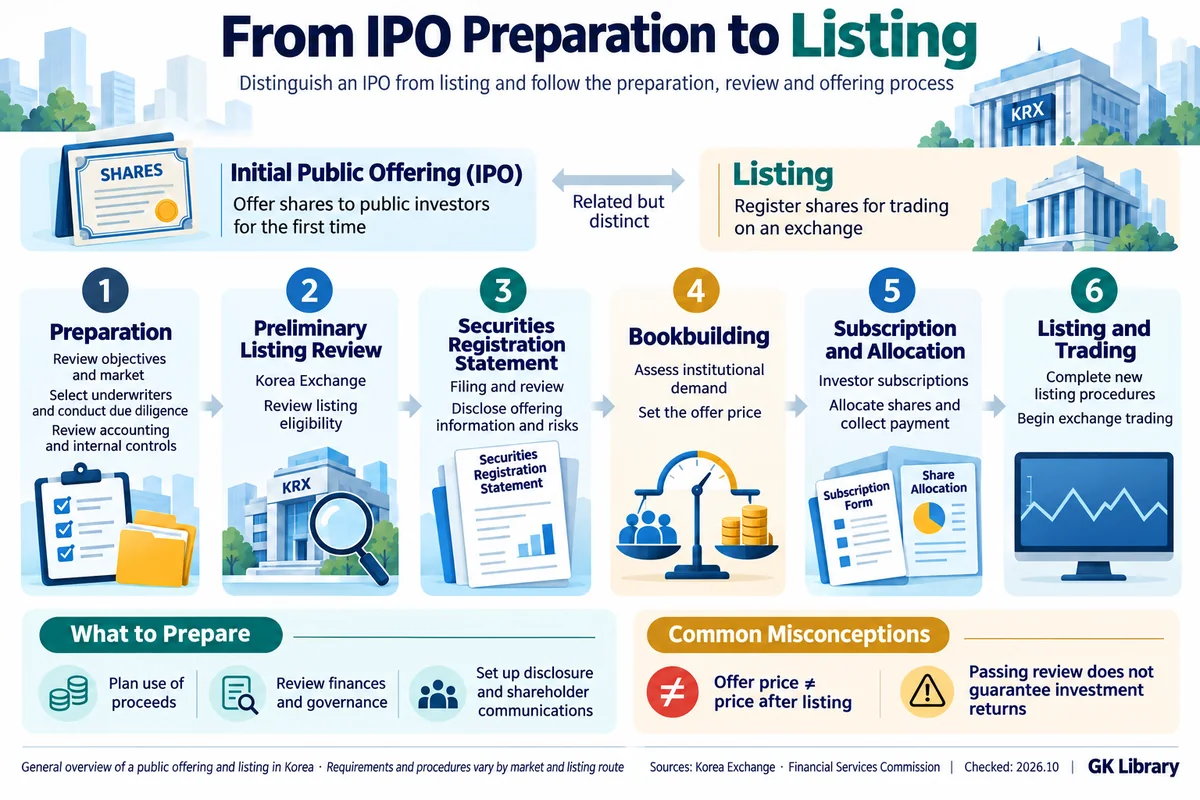
An IPO involves several complex procedures rather than simply issuing shares. The first stage is internal preparation: after deciding to pursue an IPO, a company must thoroughly carry out preliminary work such as improving its financial structure, reorganizing its organization, and analyzing the market. This enables the company to demonstrate that it is an attractive investment opportunity.
The second stage involves preparing for listing in cooperation with securities firms, accounting firms, and other partners. This process includes valuing the shares, setting the offering price, and deciding when to take the company public.
The third stage is the IPO procedure itself, in which investors purchase shares through subscriptions. Once the listing procedures are completed, the company begins trading on the stock market.
Strategies for a Successful IPO
The success of an IPO depends on the company's readiness and strategic judgment. Thorough analysis of its financial structure and an understanding of market conditions are essential, and care is required when setting the offering price. The strategy for managing shareholder relations after the IPO is also important. To maintain the company's value and continue growing after listing, ongoing transparency in management and effective communication with investors are essential.
An initial public offering (IPO) is an important strategic choice through which a company pursues growth and development. A successful IPO requires advance preparation and careful analysis, as well as thorough strategic judgment at every stage. Through an IPO, a company can raise capital, increase recognition, and ensure transparency in management. However, it must fully consider the accompanying regulations and obligations, analyze the advantages and disadvantages, and make a careful decision.
The IPO Preparation Stage: Advance Planning and Internal Review

The Importance of the IPO Preparation Stage
Thorough advance planning and internal review are essential to completing an IPO successfully. This is an important starting point for a company to raise capital and establish its competitiveness in the market, and it is the time to clearly define the objectives it seeks to achieve through the IPO. This enables the company to carefully assess whether an IPO fits its long-term growth strategy.
Advance Planning: Setting Clear Objectives
The first step in preparing for an IPO is setting clear objectives. Beyond simply raising funds, the company must clearly identify the specific objectives it seeks to achieve through the IPO. These may include entering global markets, increasing brand value, and investing capital in research and development. Clarifying these objectives in advance enables the company to develop an effective management strategy for the period after the IPO.
Analyzing the market environment is also essential. Carefully examining the current state of the company's industry, IPO examples from competing companies, and investors' market expectations helps determine the timing and strategy of the IPO. Choosing the wrong timing for an IPO can adversely affect the company's valuation, making careful planning necessary.
Internal Review: Examining Financial Condition and Legal Requirements
Internal review is an essential part of IPO preparation. First, the company must examine its financial condition and be prepared to disclose it transparently. To earn investors' trust through an IPO, the company must provide accurate and transparent financial statements, and it is common to have these reviewed by an external auditor. Such a review helps the company ensure financial transparency and resolve potential legal issues in advance.
The management structure also needs to be adjusted to suit an IPO. The company must strengthen the internal systems needed to communicate with new shareholders and maintain transparency in management after listing. This helps ensure effective communication with shareholders after the IPO and increases trust in management's decisions.
Management's Capabilities and Leadership
Management's capabilities play a very important role in the IPO process. After an IPO, the company faces various challenges, including pressure from outside shareholders, increased disclosure obligations, and the need to ensure transparency in management. Management must therefore have the ability to respond flexibly to these changes. Leadership and experience in particular directly affect business performance after the IPO and are important factors in maintaining good relationships with shareholders.
Because management's strategic decisions during the IPO process can affect the value of the company's shares and its credibility, their judgment and leadership determine the success of the company's IPO.
Strengthening the Internal Control System
By strengthening its internal control system, a company can ensure transparency in management and compliance with legal regulations after listing. This plays an important role in continuously managing its financial condition and minimizing risk factors. A company with effective internal controls can maintain stable management even after an IPO, giving shareholders and investors a reason to trust it.
Communication with Shareholders: Building Trust
Communication with shareholders is essential for a successful IPO. An IPO can succeed only when shareholders understand and support the company's vision and strategy. This requires regular provision of information and transparent communication, and management must make various efforts to earn shareholders' trust.
Continuing to communicate effectively with shareholders after an IPO and incorporating their views into management is one of the important factors in achieving sustainable success in the stock market.
Thorough advance planning and internal review during IPO preparation are essential processes for a successful listing. It is important to ensure transparency in the company's financial condition and management structure and to exercise management's leadership, using these as a foundation for building relationships of trust with shareholders. Strengthening the internal control system and maintaining ongoing communication with shareholders are key factors in achieving a successful IPO.
Selecting a Lead Underwriter and Setting the Offering Price: The Importance of Strategic Judgment

The Importance of Selecting a Lead Underwriter
The lead underwriter is a key partner that manages and supports the entire IPO process and plays a very important role in a successful listing. The lead underwriter develops the company's IPO strategy, acts as an intermediary between investors and the company, and provides important advice throughout the process, from setting the offering price to attracting investors. It is therefore essential to carefully assess the lead underwriter's experience and expertise when making a selection.
Factors to consider when selecting a lead underwriter include its past successful IPOs, reputation in the market, and network and relationships. The stronger the lead underwriter's network, the more investors it can introduce the company to, positively affecting the success of fundraising. The strength of the lead underwriter's investor network also plays a significant role in stabilizing the share price after listing.
Setting the Offering Price: The Key to IPO Success
The offering price is the price set when a company first brings its shares to the market, and it is an important factor in determining the success of an IPO. If the offering price is set too high, attracting investors' interest may be difficult, potentially leading to unsuccessful subscriptions. If it is too low, the company may raise less capital than expected and be unable to fully capitalize on growth opportunities.
The offering price is determined by comprehensively considering the company's financial condition, market conditions, analysis of competitors, and other factors. Based on this analysis, the lead underwriter proposes an appropriate offering price, which the company uses to make its final decision. Effective communication between the lead underwriter and the company is particularly important in this process. This is because the offering price must accurately reflect the company's value while remaining attractive to investors.
The Lead Underwriter's Role in Promotion and Attracting Investors
The lead underwriter also plays a significant role in promoting the company and attracting investors during the IPO process. A company preparing for an IPO must develop various marketing strategies with its lead underwriter to earn investors' trust. The lead underwriter effectively communicates the company's value to the market and carries out various promotional activities to build investors' confidence in the company's potential for long-term growth.
To this end, the lead underwriter plans investor events such as roadshows, through which it effectively communicates the company's vision. These activities play an important role in increasing investors' interest and encouraging a positive response to IPO subscriptions.
The Importance of Incorporating Shareholders' Views
Because an IPO is a decision that also has a significant impact on a company's shareholders, close communication with shareholders is essential when setting the offering price and selecting the lead underwriter. Shareholders are important stakeholders in the company, and their trust and support are very important factors in IPO success.
The company must carefully determine the offering price while incorporating shareholders' views and communicate regularly to ease any concerns they may experience during the IPO process. By helping shareholders understand and support its strategic decisions through transparent communication, the company can successfully complete its IPO.
Selecting a lead underwriter and setting the offering price are important stages that determine the success of an IPO. The lead underwriter's expertise and network play a significant role in the IPO process, while the offering price must be set with consideration for both the company's growth potential and investors' interest. Close communication with shareholders and incorporation of their views can also help lead the IPO to success. Strategic judgment and cooperation with the lead underwriter are important throughout the IPO process, enabling the company to achieve a successful listing.
Listing Review and Approval: Essential Procedures for Regulatory Compliance

The Importance of the Listing Review
The listing review is an important procedure in the IPO process that closely examines whether a company meets the listing requirements. At this stage, the company's financial condition, management structure, legal compliance, and other aspects undergo thorough evaluation. Stock exchanges and regulatory authorities in each country conduct this review to determine whether the company is eligible for listing. Because the listing review is central to IPO success, the company must prepare for it thoroughly.
Documents Required for the Listing Review
During the listing review process, the company must submit various documents and materials. The main documents include financial reports, a business plan, and legal documents, and all materials must be prepared accurately and transparently. Stock exchanges and regulatory authorities use these documents to closely examine the company's financial stability, transparency in management, legal issues, and other aspects. A company can pass the listing review only if the materials it submits are sufficiently transparent and accurate to be reliable.
The Importance of Meeting Listing Requirements
The most important aspect of the listing review is compliance with listing requirements. Stock exchanges in each country clearly specify the standards required for listing, and a listing may be rejected if these standards are not met. Such a rejection has a serious impact on the company's IPO plans and may result in the listing being postponed or canceled. The company must therefore fully understand the relevant stock exchange's listing requirements and prepare thoroughly to meet them before the listing review.
Transparency in Management and Communication with Shareholders
Transparency in management is a very important evaluation factor in the listing review. The company must maintain transparency in management by periodically disclosing financial reports and strengthening communication with shareholders. This builds investors' trust and also has a positive effect during the listing review process. Maintaining transparency in management after listing also plays an important role in the company's sustainable growth.
Strengthening the Internal Control System
Strengthening the internal control system is essential to passing the listing review. Internal controls play an important role in maintaining the company's financial transparency and ensuring compliance with legal regulations. A systematic internal control system facilitates processes such as preparing financial reports and managing risks, contributing to a positive evaluation in the listing review. A company with a well-established internal control system is also more likely to maintain stable management after listing.
Listing Approval: Completing a Successful IPO
Once the listing review is successfully completed and approval is obtained, the company formally lists its shares. This process is a major turning point in the company's growth and development and an important stage in forming relationships with new shareholders. After listing is completed, the company can raise funds from a broader range of investors, which can contribute to its long-term growth and expansion.
Listing review and approval are important procedures that must be passed during the IPO process. Throughout this process, the company must strictly comply with listing requirements and strengthen financial transparency, transparency in management, and internal controls. With proper preparation, the company can pass the listing review smoothly, and a successful listing can further accelerate its growth.
An initial public offering (IPO) is an important management strategy for promoting a company's growth and pursuing long-term development. The IPO process is highly complex, and careful preparation and prudent judgment at every stage are the keys to success.
This material has provided in-depth insight into IPO procedures and key considerations. A successful IPO will serve as an important stepping stone for a company to move beyond short-term capital raising and achieve sustainable growth over the long term.