Social exclusion is emerging as an important issue in modern society. Social exclusion refers to a situation in which particular groups or individuals are unable to participate in
You have probably tried to tap a small close button on your phone screen and ended up tapping an unintended ad. By contrast, the large payment button at the bottom of the screen is
Nuclear physics is a branch of physics that studies the structure and properties of atoms and atomic nuclei, playing an important role throughout modern science and technology. Thi
When you step into a logistics warehouse, the first thing that catches your eye is not the countless stacks of boxes. It is the rectangular platform firmly supporting those boxes,
Six Sigma is a management improvement method that uses data and statistics to find and remove the causes of defects and reduce variation in work processes. This article covers the
Writing reports is a big part of college life, but it can be hard for first-year students. This guide covers report structure, research, the cover page and table of contents, and h
The Bauhaus was an art school in Germany from 1919 to 1933 that united crafts and fine arts and laid the foundations of modern design through an education focused on mass productio
Soft robotics builds robots from flexible materials such as rubber and silicone, taking inspiration from creatures like the octopus and the elephant's trunk. This article covers ho
Order picking is the work of retrieving the items a customer ordered, in the right quantities, from where they are stored. We look at why it can account for up to 55% of warehouse
Tourism carrying capacity is the maximum number of visitors a place can receive without seriously harming its environment, residents, or the visitor experience. This piece covers i
This time, I would like to introduce brainstorming, a technique used especially often in situations that call for ideas. Although it is already a well-known technique, some people
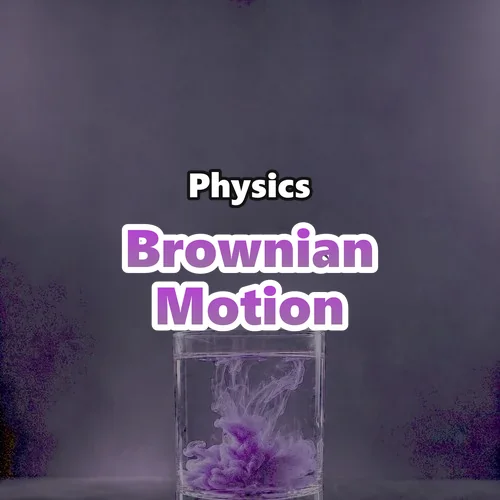
Why do tiny particles in water never stop jiggling? This article explains Brownian motion, first observed by Robert Brown, the principle Einstein uncovered behind it, Perrin's expe