Social exclusion is emerging as an important issue in modern society. Social exclusion refers to a situation in which particular groups or individuals are unable to participate in society's major activities or are excluded from opportunities and resources. It threatens social cohesion and fairness and contributes to deepening social inequality.
This article will examine in depth the definition and current state of social exclusion, the concept and importance of social justice, an analysis of the causes of exclusion, and policy proposals for an inclusive society.
The Definition and Current State of Social Exclusion
 What Is Social Exclusion?
The Definition of Social Exclusion
Social exclusion can be defined from various perspectives, but it generally means being excluded from social, economic, political, and cultural participation. It can occur in areas such as income, education, employment, housing, and health, and includes structural problems that keep particular groups in disadvantaged positions. For example, people with low incomes, people with disabilities, immigrants, and sexual minorities can be among the main groups affected by social exclusion.
Social Exclusion in Modern Society
The problem of social exclusion is becoming increasingly complex in modern society. Globalization and technological development are deepening economic inequality, which further aggravates social exclusion. In particular, the digital divide is further marginalizing people who cannot access information and technology, widening gaps in economic opportunities and social participation.
Patterns of Multiple Forms of Exclusion
Social exclusion is also not limited to economic factors alone. Various social factors, such as race, gender, age, and sexual orientation, combine to produce multiple forms of exclusion. These multiple forms of exclusion cause particular groups to experience disadvantages in multiple, overlapping ways.
The Current State of Social Exclusion
An examination of the current situation shows that social exclusion is emerging as a serious problem in many countries. For example, in the European Union (EU), the proportion of the population at risk of social exclusion and poverty continues to increase. Various policies are being implemented in response, but their ability to achieve meaningful results is limited.
Social Exclusion in South Korea
Social exclusion is also recognized as an important issue in South Korea. In particular, various groups, including young people, older adults, women, and migrant workers, are marginalized in different ways, contributing to deeper social conflict and inequality. Addressing this requires a more comprehensive and integrated approach.
In conclusion, social exclusion is an important indicator that reflects the complex problems of modern society. Addressing it requires approaches and efforts across various dimensions, and this is closely linked to achieving social justice.
The Concept and Importance of Social Justice
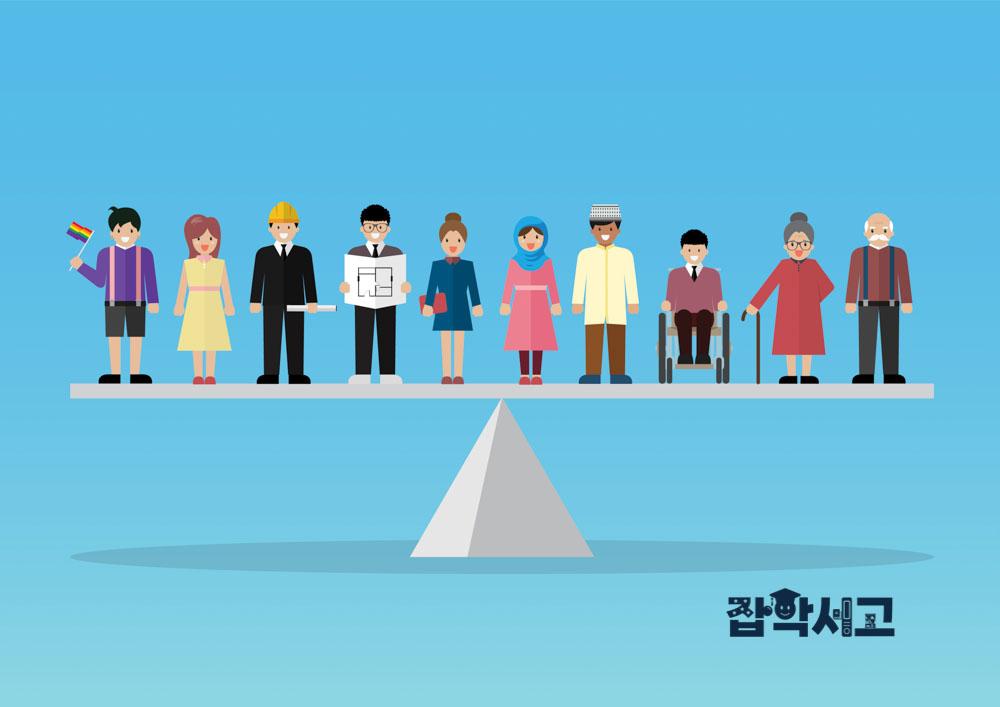 What Is Social Justice for Overcoming Social Exclusion?
The Concept of Social Justice
Social justice aims to achieve a fair and just society by guaranteeing equal opportunities and rights for everyone. It includes equality across legal, economic, social, and cultural dimensions and focuses on protecting individual dignity and rights. Social justice is an essential element in overcoming social exclusion.
Promoting Social Integration
The importance of social justice can be emphasized from various perspectives. First, it promotes social integration. Helping groups marginalized by social exclusion participate in society again contributes to greater social stability and sustainability.
Increasing Economic Efficiency
Second, social justice increases economic efficiency. When everyone has equal opportunities, the use of human resources is maximized, positively influencing economic growth and development.
Respecting Human Dignity and Fundamental Rights
Third, social justice is essential to respecting human dignity and fundamental rights. It is one of the core values pursued by the international community and also occupies an important place in the United Nations' Sustainable Development Goals (SDGs).
Reducing Social Conflict and Inequality
Fourth, social justice helps reduce social conflict and inequality. Fair distribution and the provision of opportunities reduce social discontent and conflict and contribute to maintaining peace throughout society.
Its Importance in the Legal Dimension
Fifth, social justice is also important in the legal dimension. It guarantees equality before the law and the right to a fair trial, thereby realizing the rule of law. Social justice can also be achieved by ensuring fair access and distribution within social policies and institutions.
Its Importance in Education and Culture
Finally, social justice is also important in education and culture. Ensuring that everyone can enjoy high-quality education and cultural benefits is an important foundation for an inclusive society. From this perspective, social justice must extend beyond a mere ideological concept and be deeply reflected in actual social structures and policies.
In conclusion, social justice is an essential element in achieving an inclusive society. It ensures that everyone can enjoy equal opportunities and rights and contributes to greater social cohesion and sustainability. Achieving social justice requires a comprehensive approach across various dimensions.
Analyzing the Causes of Social Exclusion
 Why Does Social Exclusion Occur?
The Complexity of Social Exclusion
Analyzing the causes of social exclusion is the first step toward addressing the problem. Social exclusion is a complex problem arising from a combination of structural and individual factors. Structural factors originate in society's institutions and structures themselves, while individual factors arise from each person's characteristics and circumstances. These two types of factors tend to interact and deepen social exclusion.
Structural Factors: Economic Inequality
First, economic inequality is a structural factor. Unequal income distribution is a major reason why particular social groups are excluded from economic opportunities. It leads to inequality in areas such as education, housing, and health and contributes to deepening social exclusion. For example, children from families facing difficult economic circumstances may struggle to access sufficient educational opportunities, potentially creating a vicious cycle in which economic inequality is passed down through generations over the long term.
Structural Factors: Institutional Discrimination and Inequality
Second, institutional discrimination and inequality account for an important part of structural factors. Discrimination within legal and policy institutions causes particular groups to remain in disadvantaged positions. For example, legal restrictions on immigrants or refugees prevent them from integrating into society, resulting in social exclusion.
Structural Factors: Social Prejudice and Stereotypes
Third, social prejudice and stereotypes are also important structural factors. Negative perceptions and stereotypes about particular groups exclude them from social participation, creating psychological and social barriers. For example, prejudice against sexual minorities is one of the main reasons they experience discrimination in workplaces or educational institutions.
Structural Factors: Technological Development and the Digital Divide
Fourth, technological development and the digital divide also serve as important structural factors in modern society. People who cannot access digital technology are excluded from information and opportunities, further widening economic and social gaps.
Individual Factors: Educational Attainment and Individual Abilities
Fifth, individual factors include educational attainment and individual abilities. Low educational attainment and a lack of skills are major reasons for exclusion from economic opportunities, contributing to deeper social exclusion for individuals. For example, people who have not received sufficient education may struggle to compete in the labor market and are more likely to remain in low-paid, insecure jobs.
Individual Factors: Health Status and Disability
Finally, health status and disability also account for an important part of individual factors. People in poor health or with disabilities are more likely to be excluded from economic opportunities and social participation. This contributes to deeper social exclusion for individuals, and addressing it requires social support and improvements to institutions.
In conclusion, social exclusion is a complex problem arising from a combination of structural and individual factors. Addressing it requires a comprehensive approach that improves structural problems and provides individuals with the support they need.
How Can Social Justice Be Achieved?
 What Measures Are Needed to Achieve Social Justice in Various Areas?
The Need for Comprehensive Policy Approaches
Achieving an inclusive society requires various policy approaches. It calls for comprehensive efforts across economic, social, legal, and cultural dimensions, as well as specific policy proposals in each area.
Policy Proposals in the Economic Dimension
First, policy proposals in the economic dimension include income redistribution and strengthening the social safety net. Progressive tax reform and stronger welfare systems are needed to reduce income inequality. Through these measures, it is important to help people with low incomes gain access to more economic opportunities. Policies such as a basic income system or increases in the minimum wage can also play a major role in reducing social exclusion.
Policy Proposals in Education
Second, providing equal educational opportunities is an important policy proposal in education. The quality of public education must be improved, and various forms of support are needed to improve access to education so that everyone can receive a high-quality education. For example, scholarship systems should be expanded or programs supporting educational expenses provided to ensure that students facing difficult economic circumstances can also fully benefit from educational opportunities.
Policy Proposals in Employment
Third, policies that provide fair employment opportunities are needed in the employment sector. This involves creating an employment environment free from discrimination and helping people from diverse backgrounds access equal opportunities. Achieving this requires policies that strengthen anti-discrimination legislation and increase corporate social responsibility.
Policy Proposals in the Legal Dimension
Fourth, protecting human rights and strengthening legal support are important in the legal dimension. This involves helping people facing social exclusion obtain legal assistance and strengthening legal institutions that protect human rights. For example, it is necessary to strengthen legal support for immigrants or refugees and strengthen legislation prohibiting discrimination against sexual minorities or people with disabilities.
Policy Proposals in the Social Dimension
Fifth, community participation and solidarity are important in the social dimension. This involves helping people facing social exclusion participate in their communities and strengthening social solidarity. Achieving this requires promoting community programs or volunteer programs in local communities.
Policy Proposals in the Cultural Dimension
Finally, fostering a culture that respects diversity and inclusiveness is important in the cultural dimension. This involves helping people from diverse backgrounds receive equal recognition and participate in society. For example, it is necessary to conduct campaigns emphasizing diversity and inclusiveness through the media and education and to promote cultural exchange programs.
In conclusion, achieving an inclusive society requires comprehensive policy efforts across various dimensions. This can be accomplished through specific policy proposals in economic, educational, employment, legal, social, and cultural dimensions. Such comprehensive approaches and efforts are essential to overcoming social exclusion and achieving social justice.
Social exclusion and social justice are among the major challenges facing modern society. Overcoming social exclusion and achieving an inclusive society require comprehensive efforts across various dimensions.
It is important to address the causes of social exclusion and achieve social justice through policy proposals in economic, educational, legal, social, and cultural dimensions.
Through these efforts, we must build a society in which everyone can enjoy equal opportunities and rights. This contributes to greater social cohesion and sustainability and will ultimately form a foundation for a better future.