Nuclear physics is a branch of physics that studies the structure and properties of atoms and atomic nuclei, playing an important role throughout modern science and technology. This discipline explores the fundamental principles of the universe and contributes to the development of advanced technologies and groundbreaking progress in medicine.
This material covers a range of topics, from the basic concepts of nuclear physics to its modern applications, and aims to explain in detail how this scientific field has developed and what possibilities it offers for the future.
Basic Concepts of Nuclear Physics: The First Step Toward Understanding
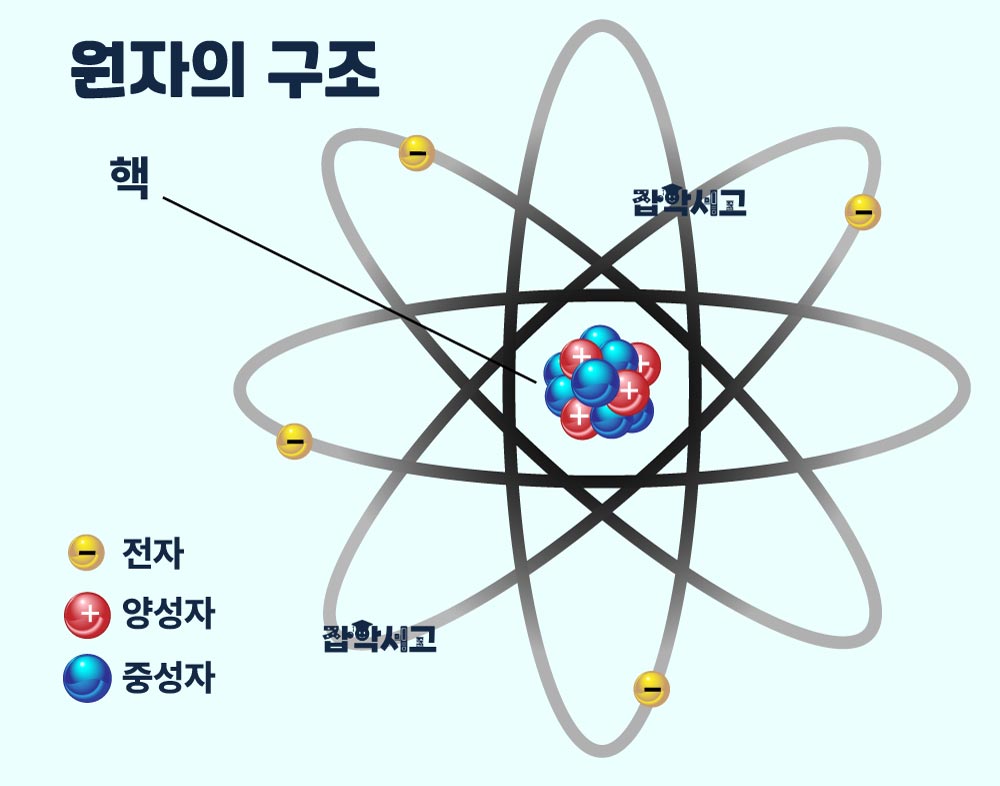
The Basic Structure of Atoms and Atomic Nuclei
The first step in nuclear physics begins with understanding the structure of atoms and atomic nuclei. An atom consists of a nucleus at its center and electrons that orbit around it, while the nucleus consists of protons and neutrons. Protons carry a positive charge, while neutrons carry no charge, so the nucleus has a positive charge. These protons and neutrons are bound together by the strong nuclear force, which is a key factor in maintaining nuclear stability.
Quarks and Gluons: Smaller Particles
Protons and neutrons consist of smaller particles called quarks. Quarks are among the smallest particles discovered to date, and the interactions between them are mediated by particles called gluons. Gluons transmit the strong nuclear force between quarks, helping keep atomic nuclei stable. The interactions between quarks and gluons play an important role in understanding the structure and properties of atomic nuclei.
Energy and Mass: The Role of Binding Energy
The mass of an atomic nucleus is made up of the sum of the masses of its protons and neutrons, but its actual mass is smaller than its theoretical mass. This is explained by Einstein's equation E=mc^2 and is linked to the concept of binding energy. Binding energy is the energy released when an atomic nucleus binds together, and it is an important concept in nuclear physics. Technologies such as nuclear power generation are prominent examples of the use of this binding energy.
Symmetry and Conservation Laws
Symmetry and conservation laws play a very important role in nuclear physics. The laws of conservation of energy, momentum, and charge serve as essential foundations for explaining nuclear reactions. These laws are indispensable for explaining the complex phenomena of nuclear physics and make it possible to predict and analyze various nuclear reactions.
The Wave–Particle Duality of Particles
Nuclear physics adopts the principle of wave–particle duality. This is the phenomenon in which particles simultaneously possess the properties of waves and particles, requiring a quantum mechanical explanation. Wave functions and probability density functions can be used to predict the positions and momenta of particles, and these principles are very important tools for analyzing nuclear reactions.
Experimental Data and Theoretical Modeling
Nuclear physics is a field in which experiments and theory complement each other. Theoretical modeling is carried out on the basis of experimental data, making it possible to precisely analyze and predict the structure and properties of atoms and atomic nuclei. In the process of discovering new phenomena or revising existing theories, theory and experiments each play an essential role for the other, gradually broadening scientific understanding.
Nuclear Forces and Nuclear Structure: An In-Depth Exploration of Atoms
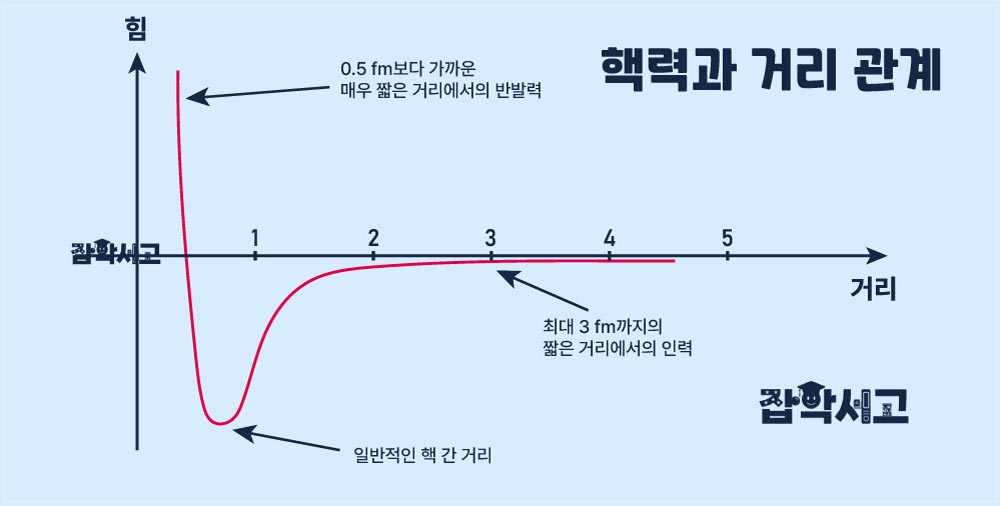
Nuclear Force: The Force That Binds Protons and Neutrons
The nuclear force is a powerful interaction that binds protons and neutrons together to form atomic nuclei. This force is much stronger than the electromagnetic force, but it acts only over very short distances. The nuclear force is primarily mediated by particles called gluons, which bind quarks together to form protons and neutrons. These interactions allow atomic nuclei to exist stably, and the strength and range of the nuclear force are important factors in determining the size and properties of atomic nuclei.
The Asymmetry of Nuclear Forces and Nuclear Stability
The nuclear force has asymmetric properties. This means that it acts differently between protons and neutrons. For example, electromagnetic repulsion between protons pushes them apart, while the binding force between neutrons acts more strongly. This asymmetry greatly influences the stability and structure of atomic nuclei. The proportion of neutrons is an important factor in increasing nuclear stability, allowing certain atomic nuclei to remain stable for long periods without decaying.
Nuclear Structure and the Shell Model
The structure of an atomic nucleus is determined by the arrangement of its protons and neutrons and the way they bind together. Nuclear physicists use various theories and models to explain this structure. A prominent example is the shell model. According to the shell model, an atomic nucleus consists of multiple layers of shells, with a specific number of protons and neutrons arranged in each shell. This model is useful for explaining nuclear energy levels and stability, and it makes it possible to predict various phenomena that occur within atomic nuclei. Through this, we can better understand the properties of atomic nuclei.
Binding Energy and Nuclear Stability
Interactions involving the nuclear force have an important influence on the energy states and decay modes of atomic nuclei. In particular, the binding energy between protons and neutrons is a key factor in determining nuclear stability. Nuclei with high binding energy are more stable and undergo relatively less decay in phenomena such as radioactive decay. Conversely, nuclei with low binding energy are more unstable and more likely to undergo radioactive decay readily. These differences in binding energy play an important role in determining the decay patterns and lifetimes of atomic nuclei.
Baryons and Leptons: The Core of Nuclear Structure Research
One important concept in nuclear structure research is the interaction between baryons and leptons. Baryons are particles that undergo strong interactions, such as protons and neutrons, and are the core constituents of atomic nuclei. Their interactions and characteristics play an important role in elucidating the structure and properties of atomic nuclei. By studying these interactions between baryons and leptons, nuclear physicists understand the complex structure of atomic nuclei and thereby contribute to the discovery of new physical phenomena.
Radioactive Decay and Reactions: How Atoms Change
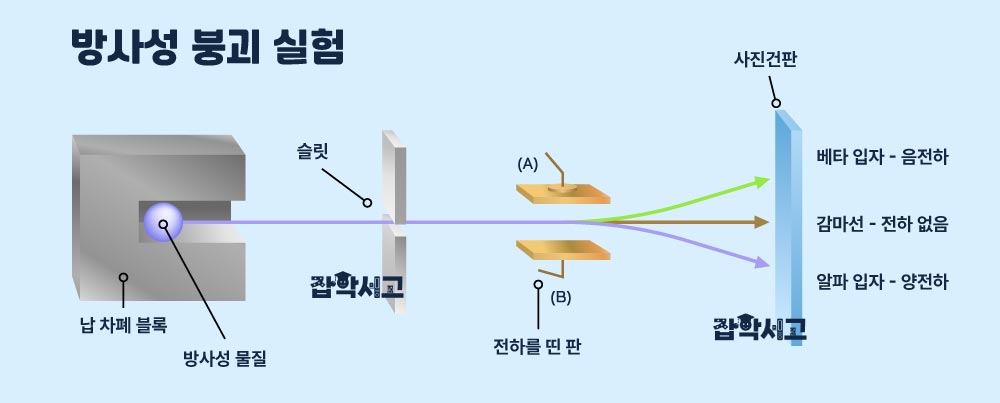
Radioactive Decay: Natural Changes in Atomic Nuclei
Radioactive decay is a natural process in which an unstable atomic nucleus releases energy as it changes to a more stable state. This process changes the structure of the nucleus and is divided into various types accordingly. The main types of radioactive decay include alpha decay, beta decay, and gamma decay.
Alpha decay is the phenomenon in which an alpha particle, consisting of two protons and two neutrons, is emitted from an atomic nucleus. It occurs mainly in heavy elements, and the atomic number decreases by 2 after decay. This is an important process that increases nuclear stability, adjusting the ratio of neutrons to protons to form a more stable nucleus.
Beta Decay: Conversion Between Neutrons and Protons
Beta decay occurs when a neutron changes into a proton or, conversely, when a proton changes into a neutron. During this process, particles such as electrons or positrons and neutrinos are emitted. Beta decay occurs mainly in unstable nuclei with an unsuitable neutron-to-proton ratio, allowing the nucleus to change to a more stable state. Beta decay is an important phenomenon in nuclear physics, changing the internal structure of an atomic nucleus to adjust its energy state.
Gamma Decay: Adjusting Energy States
Gamma decay is the phenomenon in which an atomic nucleus emits gamma rays as it transitions from a high-energy state to a lower-energy state after alpha or beta decay. Gamma rays are high-energy electromagnetic waves, and gamma decay plays an important role in adjusting the energy state of an atomic nucleus. Unlike other forms of radioactive decay, gamma decay does not affect the atomic number or mass number, but it causes the nucleus to transition to a more stable state.
Nuclear Reactions: Collisions Between Nuclei and the Formation of New Particles
A nuclear reaction is a process in which two or more atomic nuclei or particles collide to form new nuclei or particles. These reactions can occur naturally, but they can also be induced artificially. Nuclear fusion and nuclear fission are prominent examples of nuclear reactions.
Nuclear fusion is a process in which two light atomic nuclei combine to form a heavier nucleus, releasing an enormous amount of energy. This reaction occurs naturally in celestial bodies such as the Sun and is attracting attention as a future energy source. In contrast, nuclear fission is the phenomenon in which a heavy atomic nucleus splits into two light nuclei, also releasing a large amount of energy. This is the basic principle of nuclear power generation and is one of the major energy sources used by humanity.
Energy Conversion in Nuclear Reactions and Its Applications
Nuclear reactions can release or absorb energy, and enormous amounts of energy are converted in the process. Nuclear fusion generally releases energy, while nuclear fission also produces large amounts of energy. These energy conversions play an important role in applications such as nuclear power generation and are used as a key technology for humanity to obtain sustainable energy.
Practical Applications of Radioactive Decay and Nuclear Reactions
Radioactive decay and nuclear reactions have a very significant impact on human life. Radioactive isotopes are used in various fields, including medicine, agriculture, and industry, and are particularly useful in radiation therapy and agricultural research. Nuclear reactions also provide us with various practical benefits, such as producing energy through nuclear power generation and synthesizing new materials. Research into radioactive decay and nuclear reactions plays an important role in advancing these technologies and enriching our lives.
Modern Applications of Nuclear Physics

Nuclear Power Generation: A Key to Sustainable Energy
One of the most prominent applications of nuclear physics is nuclear power generation. Nuclear power generation produces large amounts of energy through nuclear fission reactions, and this energy is used to generate electricity. Nuclear fission releases energy as a heavy atomic nucleus splits into two light nuclei, and the energy density produced in this process is incomparably higher than that of conventional fossil fuels. Nuclear power generation also produces almost no carbon emissions, attracting attention as an important alternative for addressing climate change.
Nuclear power generation is used as a stable and economical source of electricity, particularly in regions with high electricity consumption. France, South Korea, and Japan are among the countries with a high share of nuclear power generation, and these countries actively use nuclear technology to protect the environment while ensuring energy security. However, radioactive waste disposal and the risk of nuclear power plant accidents remain challenges to be addressed.
Nuclear Physics in Medicine: Innovations in Diagnosis and Treatment
Nuclear physics has also brought major changes to medicine. In particular, the use of radiation and radioactive isotopes is essential in cancer treatment and diagnosis. Radiation therapy is a method of destroying cancer cells using radiation, and high-precision radiation therapy is used to effectively eliminate cancer while minimizing damage to surrounding tissues. Diagnostic techniques using radioactive isotopes also play an important role in detecting diseases early and establishing precise treatment plans.
PET (positron emission tomography) scans are a technique in which radioactive isotopes are injected into the body and then tracked to precisely determine the location and size of disease, making them highly effective for diagnosing cancer and neurological disorders. Other techniques, such as thyroid treatment using radioactive iodine and SPECT (single-photon emission computed tomography), also demonstrate how advances in nuclear physics are transforming medicine.
Nondestructive Testing (NDT): A Key Tool for Industrial Safety
Nuclear physics plays an important role in industrial settings through nondestructive testing (NDT). Nondestructive testing is a technique for detecting defects without destroying the internal structure of an object, and it is particularly essential for ensuring the safety of aircraft, buildings, and pipelines. Testing using radiation provides high accuracy and reliability, making it possible to precisely identify even minute defects within materials.
This method is used in industrial settings to ensure material quality and predict product lifetimes. For example, nondestructive testing of aircraft components is essential for preventing accidents and ensuring passenger safety. Nondestructive testing of nuclear power plant equipment and oil pipelines also plays an important role in preventing major accidents and ensuring the continued stability of facilities.
Nuclear Fusion: The Potential of Future Energy
Nuclear fusion is a process in which two light atomic nuclei combine to form a heavier nucleus, releasing energy. This reaction occurs naturally in the Sun, and active research is underway to reproduce it on Earth. The greatest advantages of nuclear fusion are its potential for almost limitless energy production and its low generation of radioactive waste. The International Thermonuclear Experimental Reactor (ITER) project is a prominent current example, and successful commercialization is expected to fundamentally resolve humanity's energy problems.
Fusion energy could be an important alternative for addressing fossil fuel depletion and climate change. Because nuclear fusion uses light hydrogen isotopes as fuel, resources are abundant, and the radiation produced during the reaction is also relatively low. If this technology is commercialized, humanity could secure a nearly limitless supply of clean energy.
Nuclear Physics in Space Exploration
Nuclear physics also makes important contributions to space exploration. Understanding the radiation environment in space is essential for protecting astronauts' health and the durability of exploration equipment. Because spacecraft are directly exposed to space radiation without the protection provided by Earth's atmosphere and magnetic field, radiation shielding technology is very important for long-duration spaceflight.
Radioisotope thermoelectric generators (RTGs) are also widely used as power sources for space probes. These devices convert the decay energy of radioactive isotopes into electricity and are essential energy sources for exploring the outer planets, where solar energy is scarce. For example, the Voyager probes and the Mars explorer Curiosity were able to sustain long-term exploration activities using RTGs.
Contributions to Basic Science and Technological Advancement
Nuclear physics also plays an important role in basic scientific research aimed at understanding the fundamental structure of matter. By studying the structure and properties of atoms and atomic nuclei, we have come to understand the fundamental laws of the material world, and this research has a major influence on the development of new materials and technologies. In particular, experiments using particle accelerators are integrated with various disciplines, including physics, chemistry, and biology, contributing to the expansion of human knowledge and technology.
Research in nuclear physics has also played an important role in discovering new particles and forces. For example, experiments at CERN's Large Hadron Collider (LHC) demonstrated the existence of new particles such as the Higgs boson, contributing to our understanding of the fundamental forces that constitute the universe and the origins of matter. Such research goes beyond expanding scientific knowledge, revealing possibilities for future technologies and contributing to human progress.
Nuclear physics extends beyond research into the structure of atoms and atomic nuclei to encompass various applications that directly and indirectly affect our daily lives. Beginning with basic science and now standing at the center of advanced technology and medical innovation, this field contributes to making our society safer and more convenient.
Nuclear physics will continue to play an important role in opening up humanity's future through ongoing research and technological advancement. We hope this material broadens your understanding of the basic principles of nuclear physics and its applications in everyday life.