In modern society, food plays an indispensable role in our daily lives. Various food additives that help maintain the taste and quality of food and allow it to be stored longer hav
Psychological shock is an issue that significantly affects an individual's mental health and is a factor that cannot be ignored in everyday life. It usually occurs in situations in
The coupon collector’s problem asks how many random draws it takes, on average, to collect every type at least once. Learn how the average is calculated, what the numbers look like
Transfer of learning is the way earlier knowledge or skills affect learning and problem solving in new situations. This piece covers the concept and its origins, the main types of
Bloom’s Taxonomy is a framework that arranges the thinking skills a lesson aims to develop in order, from the easiest level to the hardest. This article covers what it is, the orig
Dennard scaling is the semiconductor scaling rule that if transistors are made smaller while voltage is lowered by the same ratio, the power used by a given area of a chip stays th
Pasteurization heats food below boiling to cut pathogens and spoilage microbes while keeping flavor and nutrition. This piece covers Pasteur’s wine experiments in 1864, Soxhlet’s m
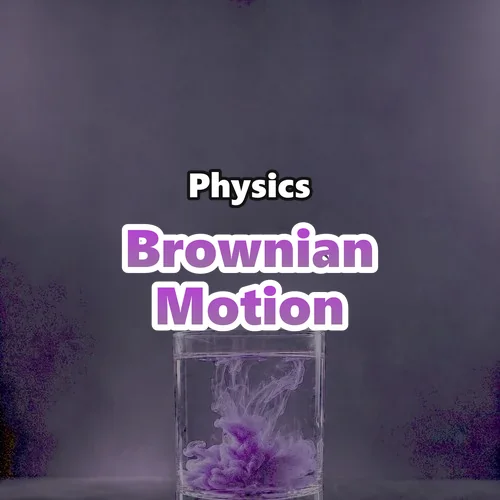
Why do tiny particles in water never stop jiggling? This article explains Brownian motion, first observed by Robert Brown, the principle Einstein uncovered behind it, Perrin's expe
Rotoscoping is a technique in which live-action footage is projected one frame at a time and traced over to create realistic movement. We look at how it was invented, how it works,
The rule of thirds is a composition principle that divides the frame into nine equal parts and places key subjects on the lines or where they meet. This article covers its basic pr
References are an important element in academic research and paper writing, clearly indicating sources so that other researchers can verify and use our work. This article covers wh
Cats are independent and charming animals loved by many people. To gain a deeper understanding of their behavior and characteristics, we need to examine their physiological traits,