Logistics
Handing Over Logistics Entirely: Third-Party Logistics
Third-party logistics (3PL) means entrusting part or all of a company's logistics to an unaffiliated outside specialist under a long-term contract. This article covers what 3PL mea
You are browsing the English interface. Articles without a published translation are clearly marked and open in Korean.
810 articles found
Logistics
Third-party logistics (3PL) means entrusting part or all of a company's logistics to an unaffiliated outside specialist under a long-term contract. This article covers what 3PL mea
Psychology
The Barnum effect is our tendency to accept vague personality descriptions that fit almost anyone as accurate analyses of ourselves. This piece covers where the name came from, P.
Business administration
Efficient problem solving is one of the challenges commonly faced by many organizations and businesses. To address such problems, many organizations have recently been using specia
Film & media
What is a jump cut, the kind of edit in which time seems to leap forward within the same shot? This article explains its relationship to the 30-degree rule, Godard's Breathless, ho
Information technology
Why doesn’t doubling your cores double your speed? Amdahl’s Law shows that the serial portion you cannot parallelize caps the overall speedup at 1/s. This piece covers the formula,
Logistics
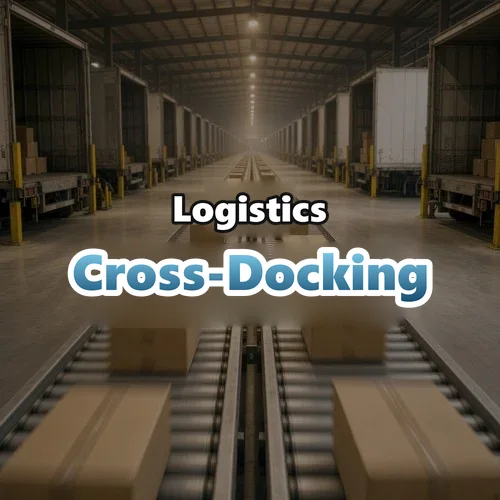
Cross-docking is a logistics operation in which incoming freight is not stored long-term but is sorted, transshipped, and shipped out right away. This article covers its definition
Physics
Polarization of light is the state in which light’s vibrations are lined up in one direction. This article covers how polarization works, including Malus’s law, the three ways ligh
Statistics
A scale assigns numbers to the attributes of people or objects so they can be expressed statistically. This article explains the four types of scales widely used in sociology, psyc
Statistics
Deduction and induction are key concepts in research, but they can feel unfamiliar and confusing at first. This article explains each method in the simplest possible terms with eas
Film & media
This time, I will review the roles of MPEG standard families related to video, then explore the difference between codecs and file containers. MPEG emerged when the need to distrib
Statistics
In many naturally occurring sets of numbers, smaller leading digits appear far more often: about 30.1% start with 1, and only about 4.6% with 9. This article explains the definitio
Psychology
In everyday life, we face countless tasks and challenges that require concentration. Concentration plays a very important role in learning, work, and achieving personal goals. In m