The owner who has just opened an online shop soon finds the living room filling up with boxes. As orders grow, the whole day disappears into packing, attaching shipping labels, and calling couriers. At this point, many companies choose to hand everything from storage to shipping over to a specialist company. This is ‘third-party logistics.’
Simply put, third-party logistics means ‘entrusting part or all of a company's logistics work, over the long term, to an outside logistics specialist with which it has no special relationship.’ It is commonly called 3PL after its English abbreviation, and the name reflects a company that stands in the third position between the seller and the buyer.
In this article, we will go through the meaning of 3PL, the distinction from 1PL to 4PL, the work a 3PL handles, the benefits and risks of outsourcing, and how to choose a good partner.
The Art of Outsourcing Logistics: How Third-Party Logistics Works in Practice
What Is Third-Party Logistics?

In logistics, a company that makes or sells goods is called the ‘shipper.’ In third-party logistics, the shipper does not run its own logistics but signs a long-term contract with an unaffiliated specialist company and entrusts it with work such as transportation, storage, and cargo handling. Unlike a simple transaction of sending a single parcel, the key point is that the provider takes responsibility for the shipper's logistics and runs it together with the shipper for the duration of the contract.
To make this easier to understand, think of moving house. If calling friends over to carry your belongings yourself is in-house logistics, then hiring a full-service moving company to handle everything from packing to transport and unpacking is close to third-party logistics. The difference is that 3PL is not a one-off transaction but a partnership that lasts for years.
This approach took hold in earnest in the United States in the 1980s as freight transportation was deregulated, and it grew rapidly in the 1990s as information technology advanced. Once shippers and logistics companies could share inventory and order information in real time, it became possible to know where your goods were even when someone else was handling them.
From 1PL to 4PL: Classification by Degree of Outsourcing

South Korea's Ministry of Land, Infrastructure and Transport divides logistics into four types according to the relationship between the shipper and the logistics company. It is easy to understand if you think of it this way: the larger the number, the wider and deeper the scope of outsourcing.
- First-Party Logistics: The shipper handles logistics directly with its own staff, vehicles, and warehouses.
- Second-Party Logistics: The shipper entrusts logistics to a subsidiary or affiliate.
- Third-Party Logistics: The shipper entrusts part or all of its logistics to an outside logistics company with no special relationship.
- Fourth-Party Logistics: An advanced form of third-party logistics that adds information technology and consulting to offer integrated solutions for the entire supply chain.
Some textbooks abroad describe 2PL as companies that sell set services on demand, such as carriers or parcel delivery companies. Even in this case, the difference from 3PL is the same. A 3PL is connected to the customer's systems, knows in advance the volume that will come in, and provides services tailored to the customer under a long-term contract.
What a 3PL Does and the Benefits of Outsourcing
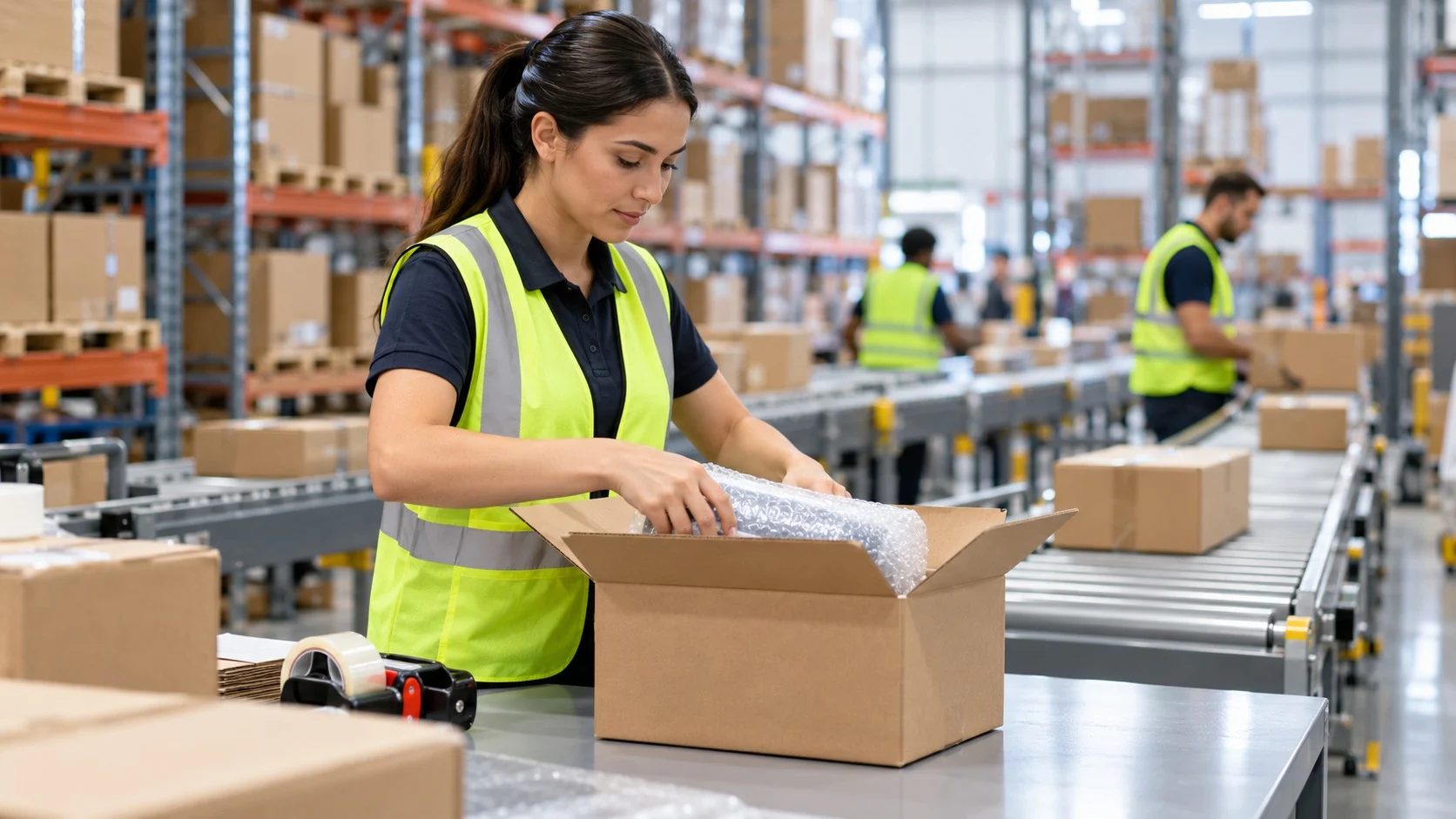
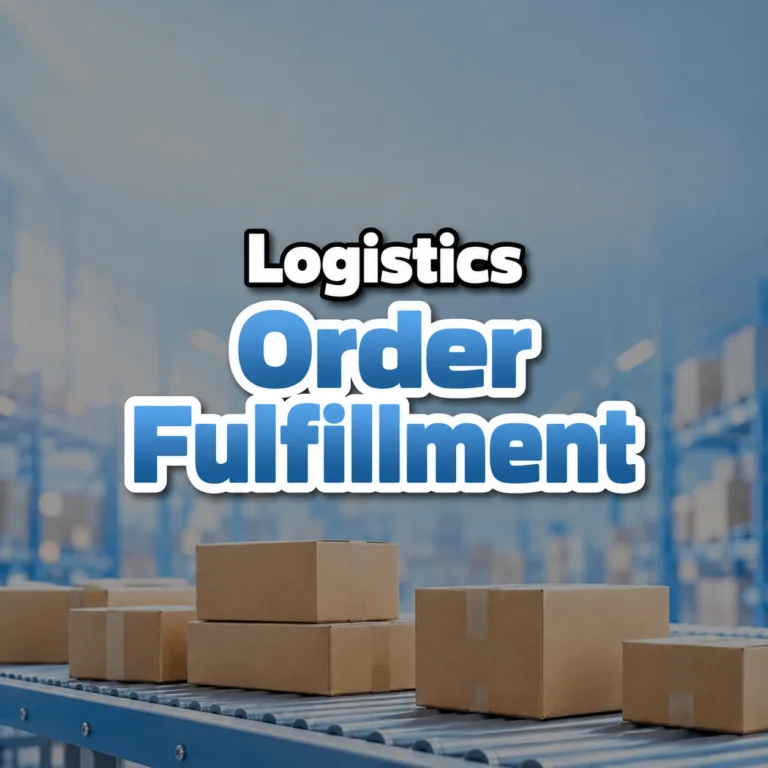
3PL companies handle storage and transportation as a baseline, along with a wide range of tasks including picking and packing items to fill orders, shipping, inventory management, and returns processing. They may also add value-added services such as labeling, simple assembly, and shipment tracking.
(1) Turning Fixed Costs into Variable Costs
Because you don't have to buy warehouses and trucks yourself, you can start a business without a large investment and pay only for what you use. The bigger the gap between peak and off-peak volumes, the greater this advantage.
(2) Focusing on Core Business
By leaving logistics to experts, a company can pour its people and money into what it does best, such as product development and sales.
(3) Expertise and Networks
Because a 3PL handles the combined volumes of many customers, it gains economies of scale, and the shipper effectively borrows a nationwide and international transport network and the latest equipment. Shipping from a warehouse close to customers to shorten delivery distances is one example.
(4) Flexible Expansion
Even when entering a new region or facing a sudden surge in orders, a company can respond by scaling up the space and staff a 3PL already has, rather than building a new warehouse itself.
Risks to Weigh When Outsourcing

It is not all advantages. When you hand logistics to someone else, everything up to the final moment of contact with the customer passes into another company's hands, making it harder for the company to oversee delivery quality directly. You should also remember that a problem on the 3PL's side translates directly into delays and complaints for your own company. Logistics know-how may also fail to build up inside the company, which can make it difficult to bring logistics back in-house later.
Points to Check Before Signing
- Hidden Costs: Write down in the contract in advance any additional fees charged when volumes change or special requests are made.
- Electronic Data Interchange: Check that order and inventory information flows smoothly between the two companies' systems.
- Key Performance Indicator: Agree together on standards for measuring performance, such as shipping accuracy and delivery time.
South Korea launched its Certified Integrated Logistics Company program in 2006, certifying companies that offer transportation, facility operation, and logistics services together and meet requirements such as the share of revenue from third-party logistics. The aim was to shift a market skewed toward in-house and subsidiary logistics toward third-party logistics, and in its first year, 10 companies received certification in the first round.
Third-party logistics is not about giving up on logistics, but about working with someone who does it better. Only when you clearly define the scope and responsibilities of what you outsource, share information transparently, and review performance consistently can you manage both cost and quality.
Distinguishing precisely what to do yourself and what to entrust to others is the first step toward a smart logistics strategy.