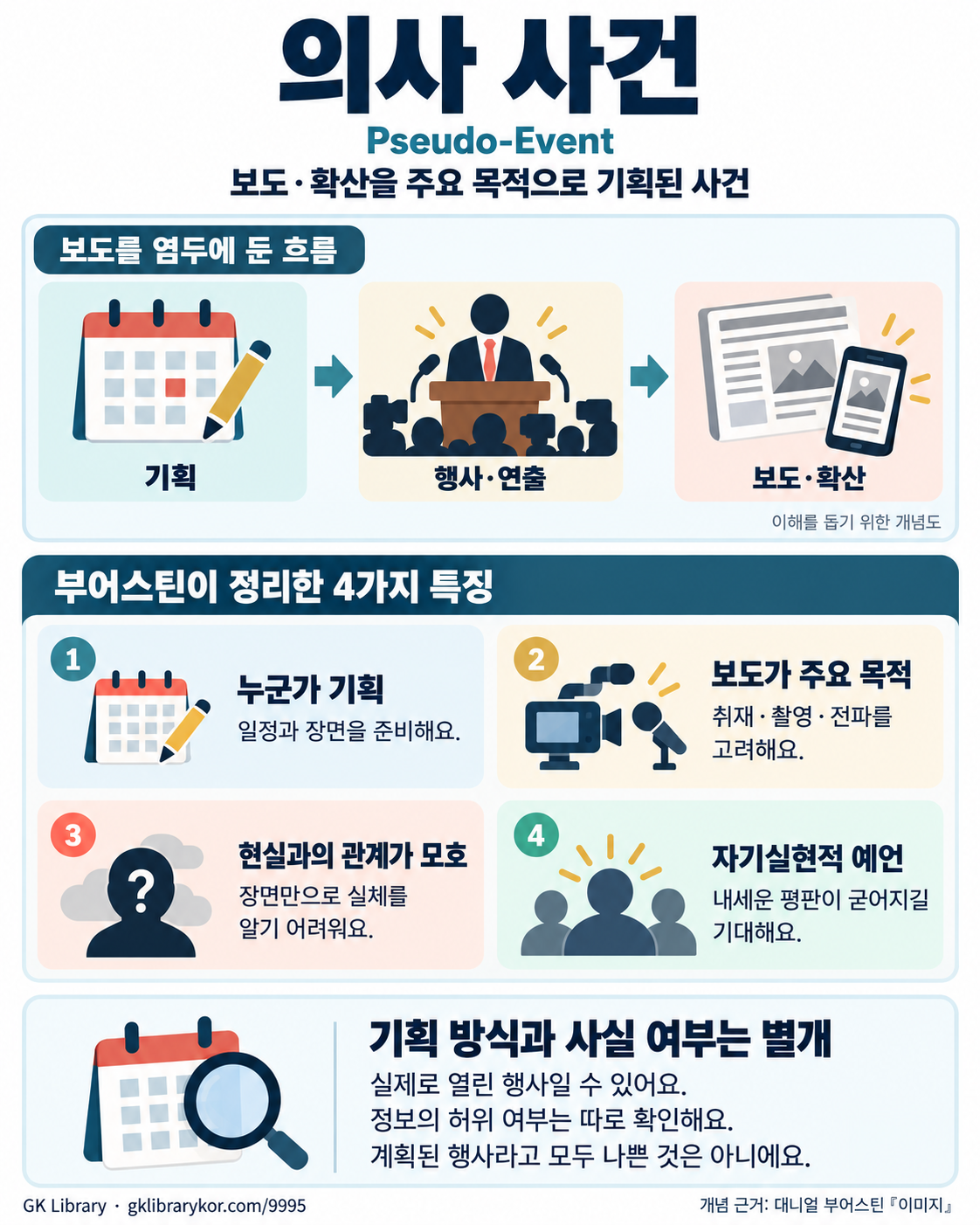
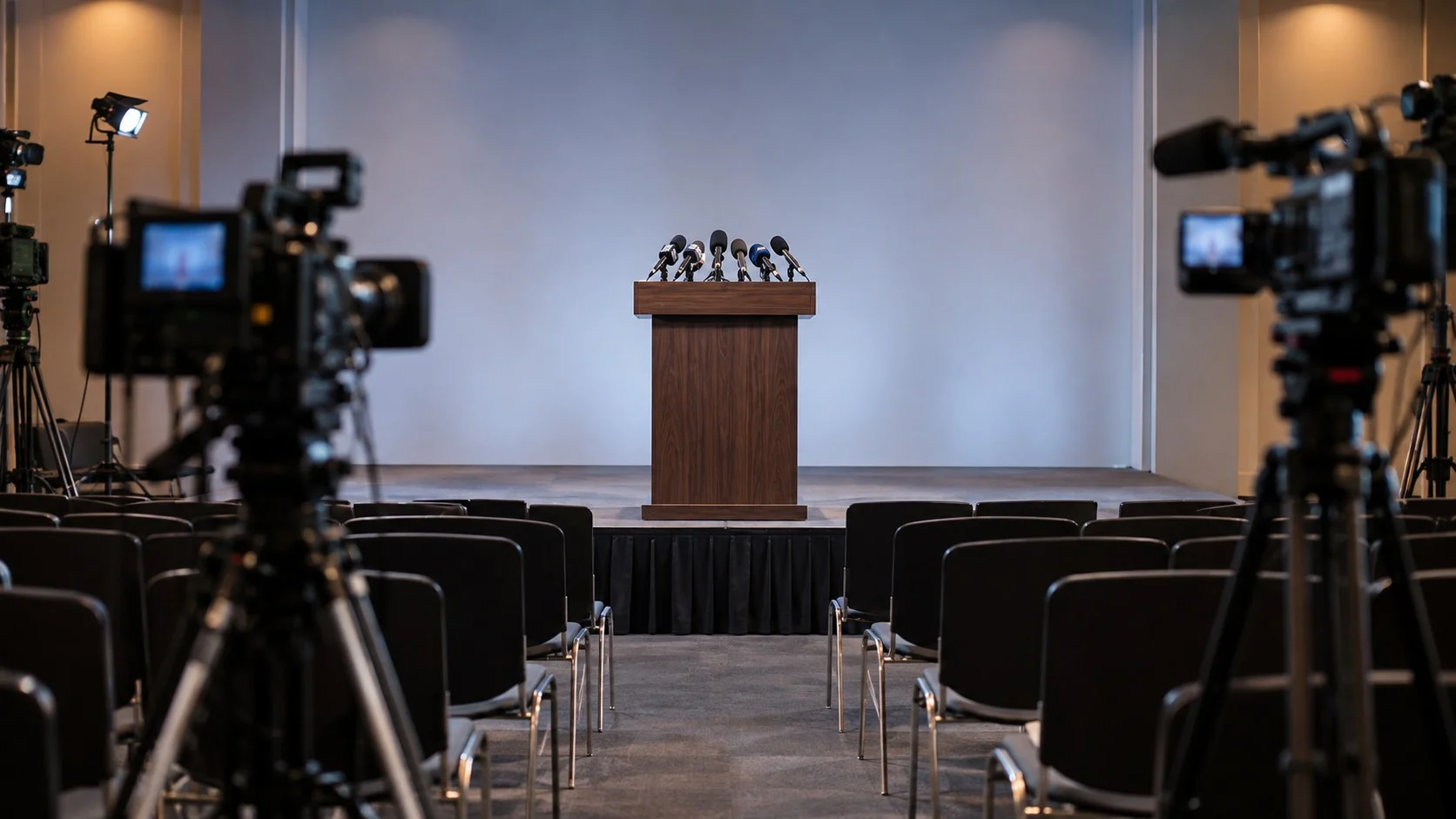
Watching the evening news, you may notice an unusually large number of stories whose date and place were set in advance, such as press conferences, product launches, commemorations, and award ceremonies. These are not things that suddenly happened, like an earthquake or a fire, but events prepared from the start to stand in front of the camera. The term for an event created for the purpose of being reported is the ‘pseudo-event.’
Put simply, a pseudo-event means ‘an event that did not happen on its own but was planned and staged by someone so that it would be reported by the media and widely publicized.’ The concept was first introduced by American historian Daniel J. Boorstin in his 1961 book The Image: A Guide to Pseudo-Events in America, and it is still often used today to analyze public relations, politics, and news production.
In this article, we will look in turn at what a pseudo-event is and how the idea came about, the four characteristics Boorstin identified, typical examples around us, and the effects this phenomenon has on news and public opinion.
Reality Staged for Coverage: The Characteristics and Effects of Pseudo-Events
What Is a Pseudo-Event?
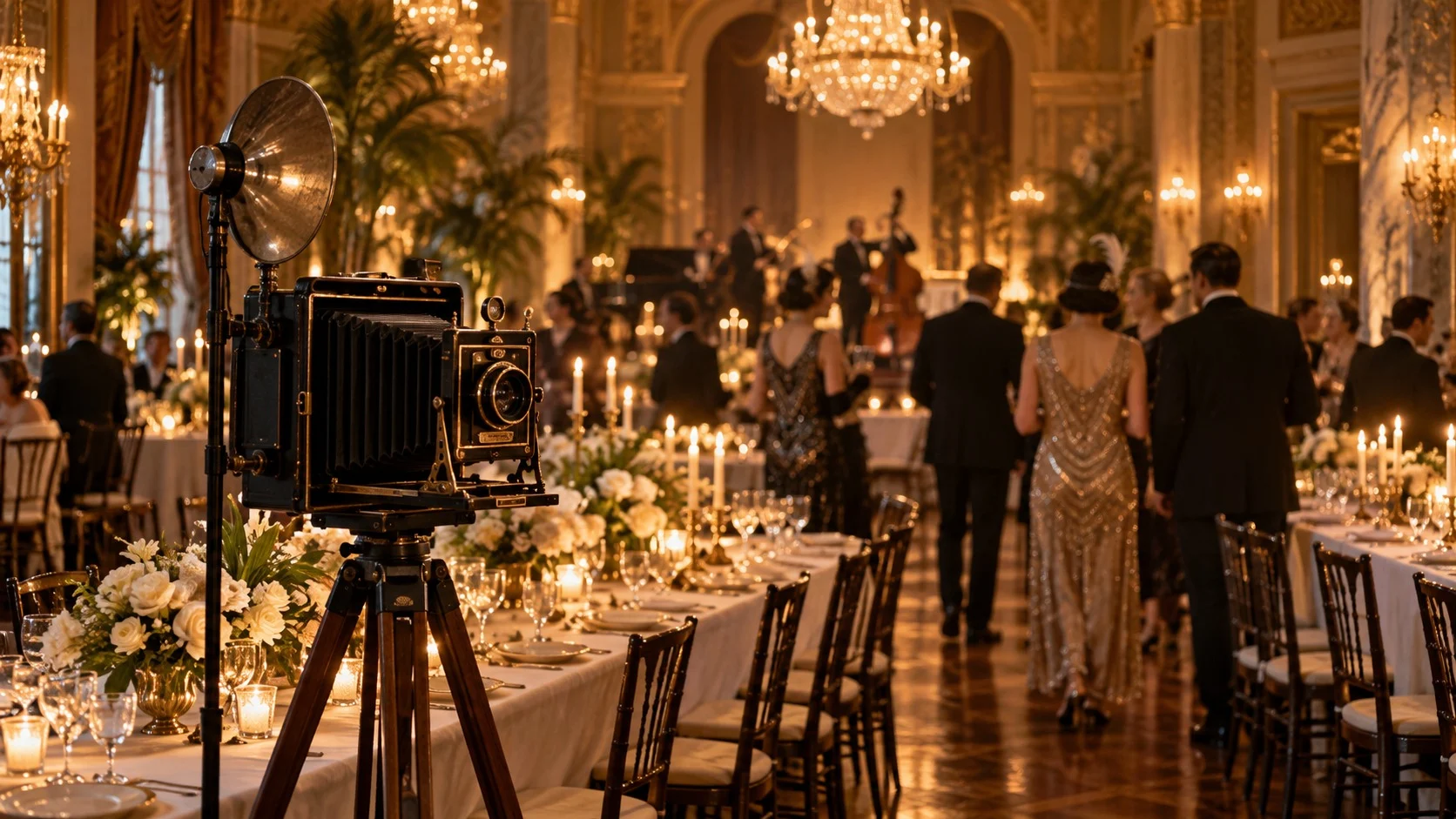
In explaining the pseudo-event, Boorstin used as an example a hotel story introduced in a 1923 book by Edward Bernays, known as ‘the father of public relations.’
(1) The Hotel That Turned Thirty
A hotel owner who wants to raise his hotel’s prestige goes to a public relations expert. In the past, he might have thought of hiring a new chef or redecorating the rooms, but the PR expert proposes holding a celebration of the hotel’s 30th anniversary. A committee of bankers, lawyers, and local notables is formed and a lavish banquet is held; photographs are taken and the story appears in the newspapers. The event itself becomes proof that ‘this hotel is the pride of the community,’ and the hotel actually gains that reputation.
(2) From an Age of Finding News to an Age of Making News
Boorstin argued that as newspapers and broadcasting multiplied and there was more page space and airtime to fill every day, making news instead of discovering it became common. He criticized that, as such events proliferated, people came to experience staged images more vividly than the real world.
The 4 Characteristics That Define a Pseudo-Event
Boorstin summarized the pseudo-event as having the following four characteristics.
- Planned (Not Spontaneous): It does not happen on its own like a train wreck or an earthquake, but comes about because someone planned, planted, or incited it. A typical example is the interview.
- Purpose of being reported (Planted for Reporting): It is arranged primarily to be reported and spread, with its time and place set to suit media coverage. Its success is judged by how widely it is reported. This is also why press releases are distributed in advance ‘for future release’ yet written as if the events had already happened.
- Ambiguous reality (Ambiguous Relation to Reality): Its relation to actual reality is unclear, and people are more interested in ‘what is the real intention?’ than in ‘what happened?’
- Self-fulfilling prophecy (Self-Fulfilling Prophecy): As with the hotel’s anniversary celebration, the act of announcing that something is important makes it actually important.
He added that such events are dramatic, repeatable, and spawn other pseudo-events. One press conference leading to a rebuttal press conference and commentary articles is an example.
Pseudo-Events Through Easy Examples
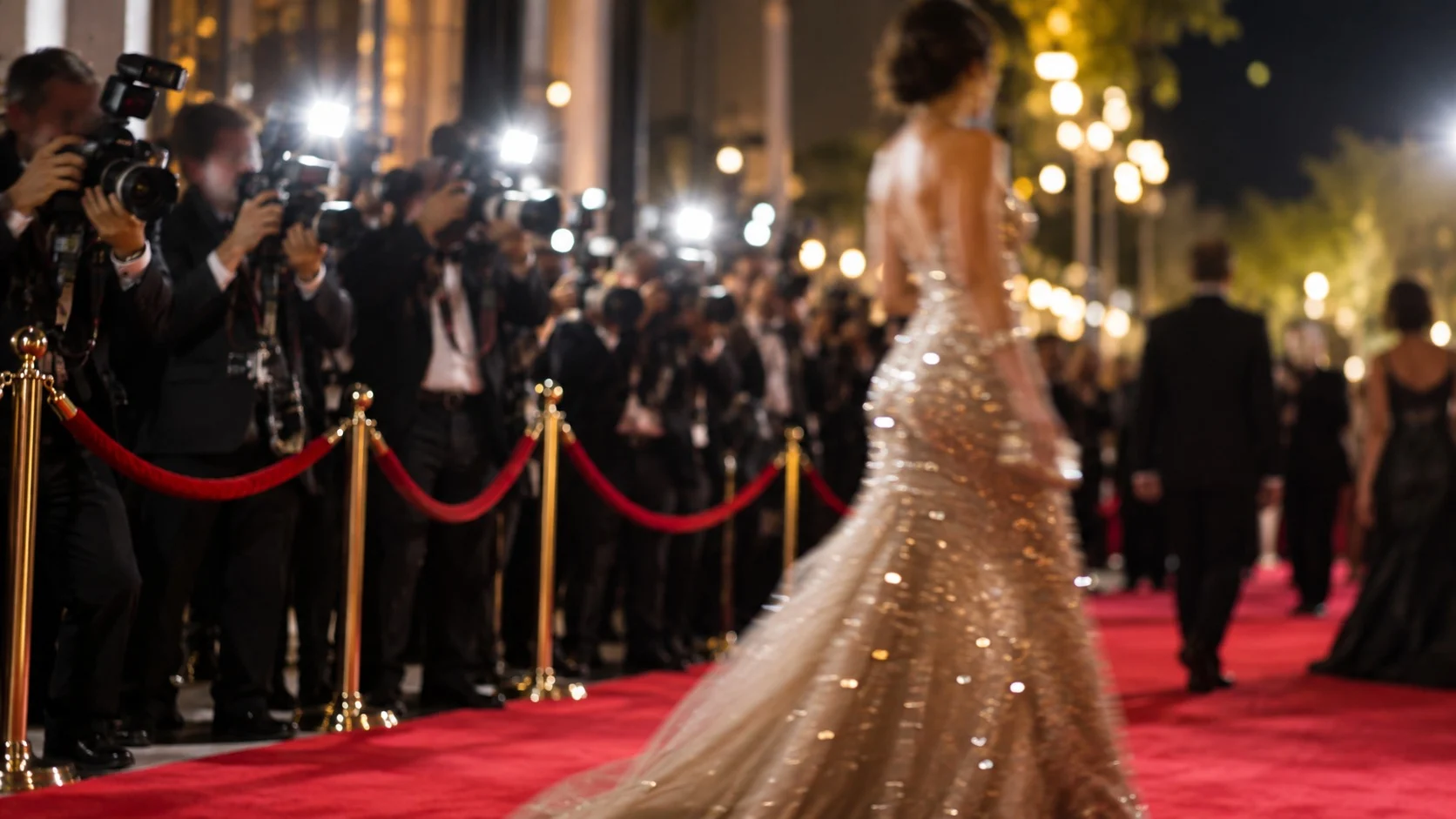
Pseudo-events are much closer to us than you might think.
(1) The Torches of Freedom March
In 1929, commissioned by a tobacco company, Bernays had women walk while smoking cigarettes in the New York Easter Parade. He called the cigarettes ‘Torches of Freedom’ and even positioned photographers in advance so that the scene would be reported as a symbol of women’s liberation. It looked like a spontaneous demonstration by citizens, but it was actually an event planned to increase sales.
(2) Pseudo-Events Today
Product unveiling events, red carpets at award ceremonies, photos of politicians’ site visits, and corporate donation ceremonies are typical examples. Attention-seeking demonstrations, charity events, and information disclosures that seem to have been leaked on purpose can be seen in the same light. In the age of social media, ‘for-show’ scenes designed from the start to spread as short videos are becoming a new kind of pseudo-event.
The Shadow Pseudo-Events Cast on News and Public Opinion

Not all pseudo-events are bad. A press conference is an efficient way to deliver the same information to many media outlets at once, and campaign events can draw attention to social problems that had been buried.
(1) Staging That Takes Up Space
The problem is that prepared events are easy to cover. Because time and materials are provided in advance, the media can write stories easily, but by the same token, important realities that happen without warning or issues that require long investigation can be pushed aside. Boorstin described the celebrity as ‘a person who is known for his well-knownness,’ warning against images overtaking substance.
(2) An Eye for Reading the Staging
When watching the news, asking yourself at least once, ‘Who prepared this to be reported, why, and when?’ helps you separate an event’s outward appearance from its underlying meaning. It also helps to make a habit of checking separately what actually changed, rather than focusing on how glamorous the event was.
Pseudo-events arise where the media, public relations, and politics need one another, and they remind us that a considerable part of the news we see is filled with scenes planned in this way. Staging itself cannot be eliminated, but we can certainly examine what that staging shows and what it hides.
Looking together at the intentions hidden behind the scenes on the screen and at the real changes: that is the first step toward the wisdom of telling real news apart in a staged world.