The same news feels different when you read it as a newspaper article, watch it on a television screen, or receive it as a smartphone notification. We usually pay attention only to what the content is, but the vessel that carries that content may be changing our thoughts and lives far more.
The phrase that sums up this idea in a single sentence is "The Medium Is the Message." It is the title of the first chapter of Understanding Media: The Extensions of Man, published in 1964 by the Canadian communication theorist Marshall McLuhan, and it argues that we should examine the medium itself before the content it delivers.
This article looks in turn at what the phrase means, the classic examples McLuhan gave, related concepts worth knowing, and the debates that have continued into the age of television and the internet.
Look at the Vessel, Not the Content: McLuhan's Media Theory
What Does "The Medium Is the Message" Mean?
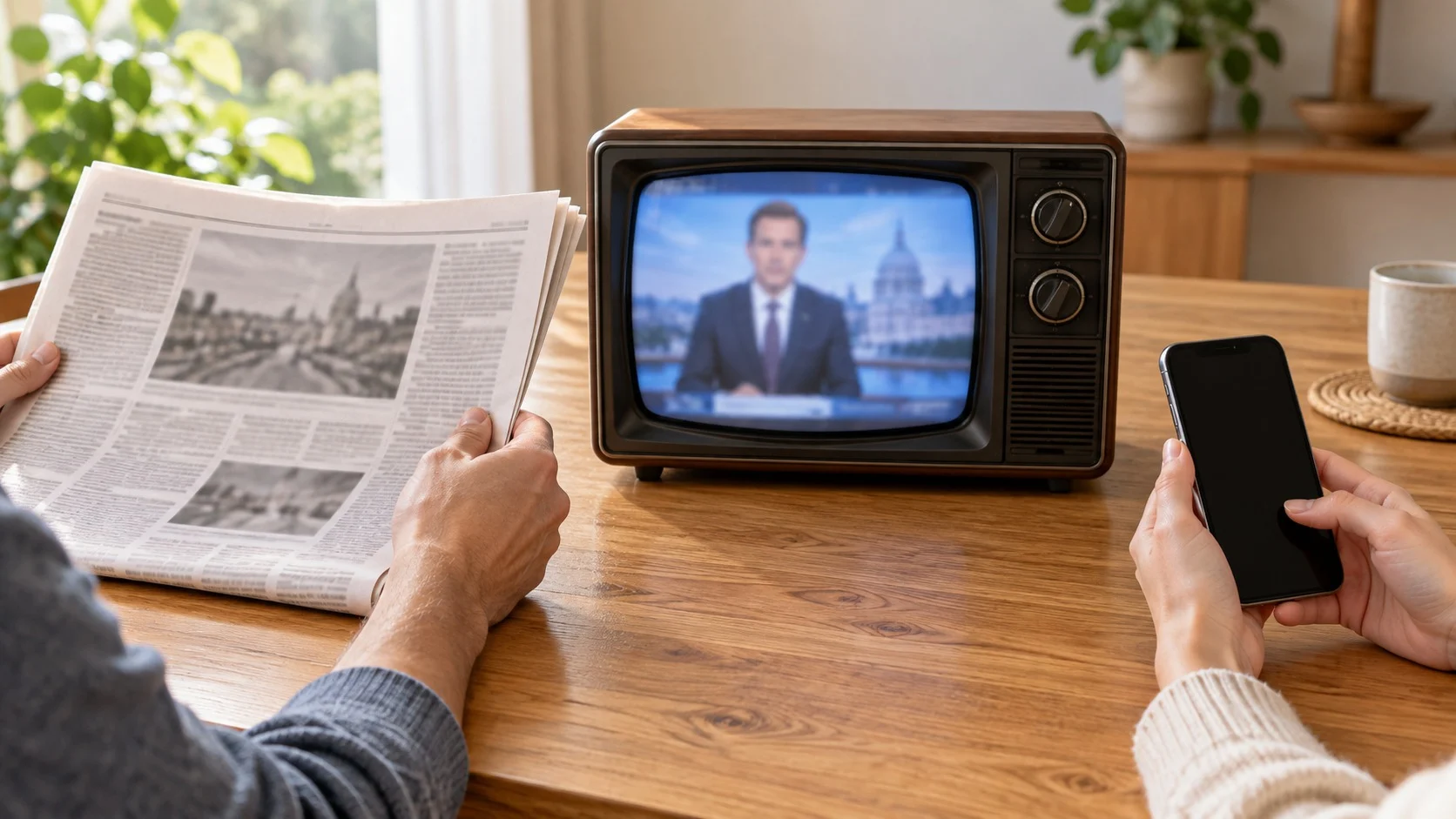
McLuhan used the word "message" in two layers. One is the content, which is easy to notice; the other is the character of the medium, which is easy to miss.
(1) Content hides the character of the medium
McLuhan said that the "content" of any medium blinds us to the character of the medium. While people concentrate on articles or programs, they fail to notice that the medium is changing the scale and form of human association and action.
(2) The real message is change
By message, he meant the change in scale, pace, or pattern that a new invention brings into human life. The real message of the railway, for example, was not the cargo it carried but the way it reshaped cities, work, and leisure.
(3) The content of a medium is another medium
McLuhan held that the content of any medium is always another medium. Speech becomes the content of writing, writing becomes the content of print, and print in turn becomes the content of the telegraph.
The Electric Light: A Medium Without Content

McLuhan offered electric light as the best example of this concept.
(1) It changes the world without any content
Newspapers have articles and television has programs, but a light bulb has no content to speak of. Even so, electric light created spaces where people could work, gather, and study during nights once buried in darkness. McLuhan described the light bulb as creating an environment simply by its presence.
(2) The real effect of the news
The same goes for television news about a terrible crime. What stays with viewers may be less the storyline of one incident than a change in their attitude toward crime, shaped by the experience of such events entering their living rooms at every dinnertime.
(3) The piece of meat thrown by a burglar
McLuhan compared the content of a medium to the juicy piece of meat a burglar throws to distract the watchdog of the mind. While we are absorbed in the content, the structural changes brought by the medium seep in quietly and over a long period.
Other McLuhan Concepts Worth Knowing

Besides this phrase, McLuhan left several concepts that are still frequently quoted today.
- Extensions of Man: The idea that every medium is an extension of human senses and the body, just as the wheel extends the foot, the book the eye, and clothing the skin.
- Hot and Cool Media: He called media such as radio and film, which are dense with information and leave little for the receiver to fill in, "hot," and media such as the telephone and cartoons, which are sparse in information and require the receiver to fill in actively, "cool."
- Global Village: An expression for how electric media bind distant people together as if in one village, popularized through his 1962 book The Gutenberg Galaxy.
In 1967, he published The Medium Is the Massage with the designer Quentin Fiore. According to a popular story, the title, originally meant to read "Message," was changed by a printing error, and McLuhan liked it better because it carried the sense that media massage and shake people up.
Debates in the Age of Television and the Internet

McLuhan's argument has been called up again every time a new medium appears.
(1) A warning about television
In his 1985 book Amusing Ourselves to Death, the American media critic Neil Postman worried that if McLuhan was right, television could ruin public discourse by putting form ahead of content.
(2) Algorithms and social media
Today, some journalists and scholars point to social media and recommendation algorithms as good examples of this theory. Rather than what gets posted, they argue, the very format of short videos and endless scrolling is changing how we focus and how quickly public opinion spreads.
(3) Criticism of its limits
On the other hand, some critics say the idea overstates the power of media and downplays the fact that the same technology can lead to different outcomes depending on how people use it. So the phrase is best read not as a final answer but as a starting point that changes the way we look at media.
The phrase "the medium is the message" reminds us that the newspapers, screens, and smartphones we use every day are not mere channels but environments that shape the rhythm of our lives and the frameworks of our thinking.
Asking not only what we are watching but also what we are watching it through: that is the first step toward reading media wisely.