When you come back from a trip and think back on it, strangely, not every day comes to mind equally. The moment you held your breath before a sunset and the feeling on the way to the airport on the last day stand out vividly, while the long hours spent getting lost or waiting in line are blurry. And people usually judge the whole thing as “a great trip” or “not so great” based on just those few scenes.
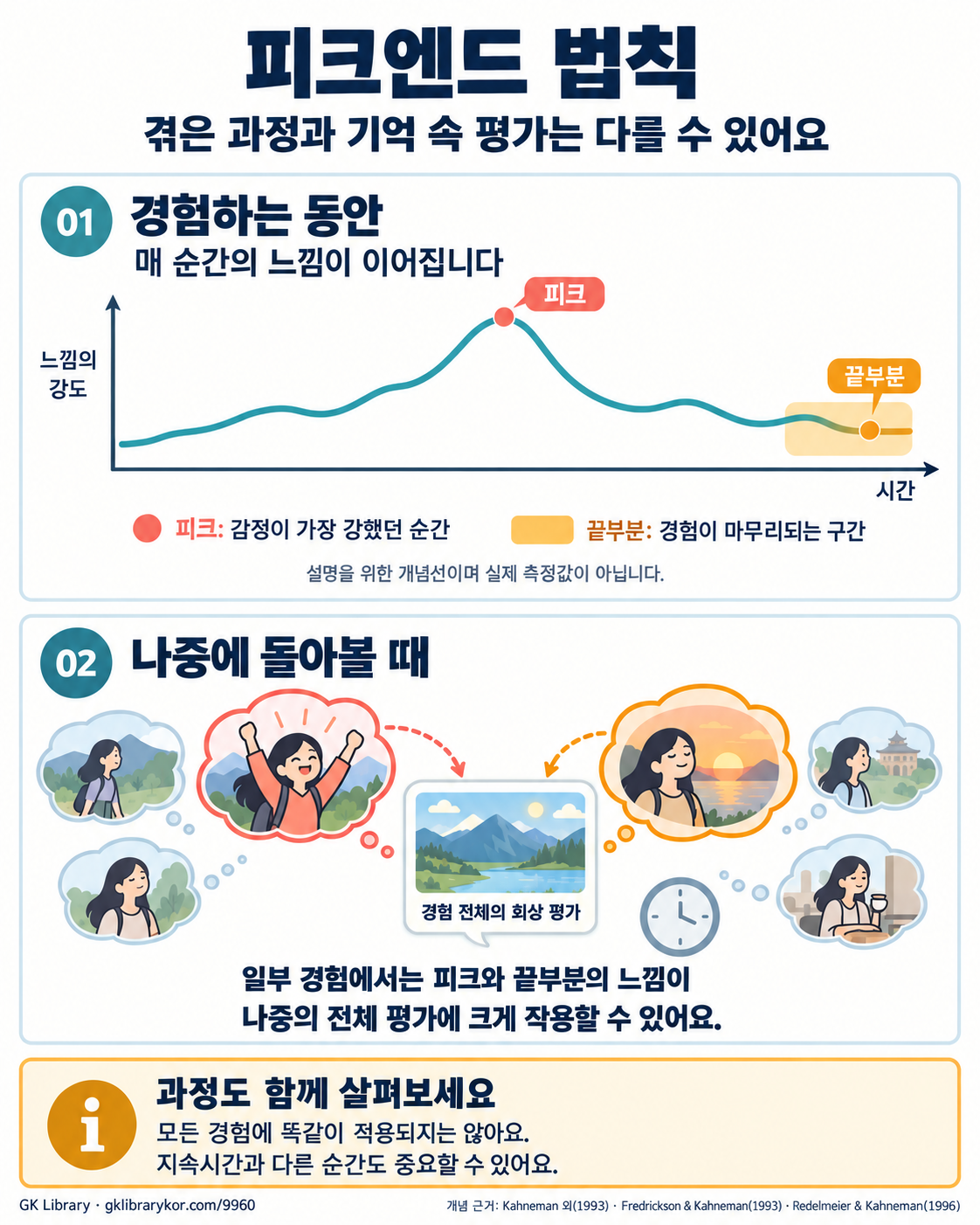
Put simply, the peak-end rule refers to ‘the tendency, when recalling and evaluating an experience, to judge it mainly by the moment of strongest emotion (the peak) and the final moment (the end), rather than by the sum or average of the whole.’ It appears for pleasant and painful experiences alike, and it became widely known through research by psychologist and Nobel laureate in economics Daniel Kahneman and his colleagues.
In this article, we will look in turn at the classic experiments that demonstrated the peak-end rule, why it happens, how it is used in daily life and in services, and the limits worth keeping in mind.
Experiences Remembered by Their Peak and End: How the Peak-End Rule Works and How It Is Used
The Cold-Water Experiment and the Colonoscopy Study
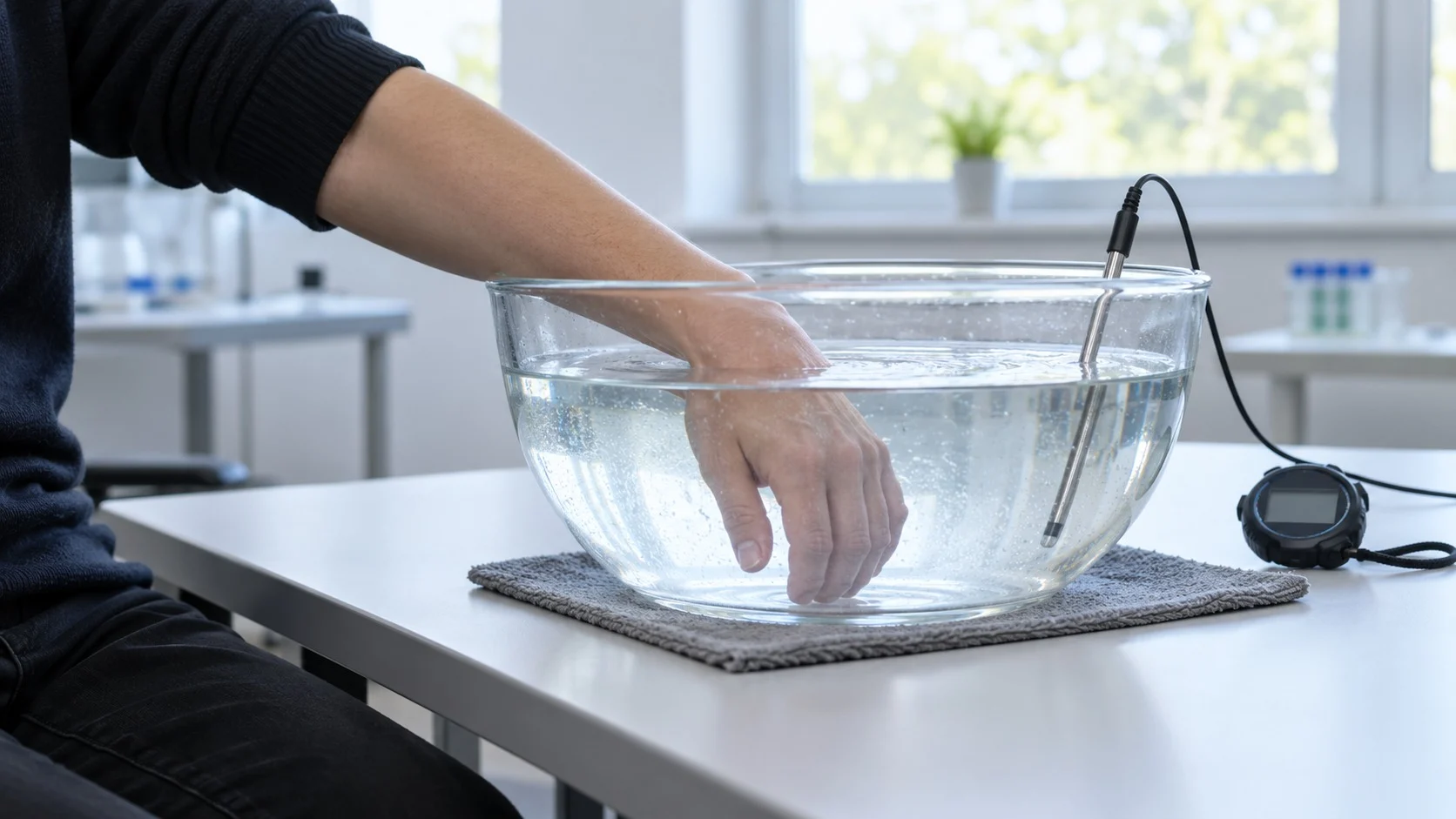
The first clear demonstration of the peak-end rule was an experiment published in 1993 by Kahneman, Barbara Fredrickson, and others.
(1) Hands in Cold Water
In one trial, participants held one hand in cold water at 14 degrees Celsius for 60 seconds. In the other, they held the opposite hand in the same water for 60 seconds and then endured another 30 seconds while the water was warmed slightly to 15 degrees. Because the second trial meant more time in cold water, the total amount of discomfort was greater. Yet when asked which of the two they would choose to repeat, most chose the longer second trial. The final 30 seconds were a little less painful, so the experience was remembered as less bad.
(2) The Same Effect Confirmed in the Hospital
In 1996, Kahneman and physician Donald Redelmeier asked patients undergoing procedures such as colonoscopy to rate their pain every minute during the procedure. The discomfort patients recalled afterward was explained not by the length of the procedure or the total amount of pain, but well by the pain at the worst moment and at the final moment. In a later study, patients whose procedure ended with a few extra minutes that were not very painful remembered the whole procedure as less unpleasant and were more willing to come back for the next one.
Why Do Only the Peak and the End Remain?

Our memory is not a device that records an experience from beginning to end. It picks out a few representative scenes to store, and later uses those scenes to estimate the whole.
- The moment of strong emotion (Peak): The moment of greatest joy or pain is firmly etched into memory, in proportion to how strongly our emotions were moved.
- The final moment (End): The feeling at the end is vivid because it is the most recent memory, and it is taken as a kind of conclusion that tells us how the whole experience turned out.
- Duration neglect (Duration Neglect): How long an experience lasted has almost no effect on how we evaluate it later.
Kahneman explained this in terms of two selves: the ‘experiencing self,’ which actually lives through each moment, and the ‘remembering self,’ which looks back and organizes what happened into a story. Because it is mainly the remembering self that chooses what to do next, we sometimes pick the option that is remembered as less painful over the one that actually was less painful.
The Peak-End Rule in Everyday Life and Services

People who design experiences make deliberate use of this rule.
(1) Services and Travel
A restaurant handing out a small dessert or candy with the bill, or an amusement park placing parades and souvenir shops near the exit, can be seen as ways to leave a good final impression. There is also research showing that when a long queue moves faster than expected near the end, people remember the whole experience as fairly satisfying even if they were bored the entire time they waited.
(2) Classes, Exercise, and Relationships
A class or presentation designed around one key moment and a clean ending stays with the audience longer. Ending a workout with a light cool-down instead of the hardest exercise makes it easier to want to do it again the next day. Even after an argument, ending the conversation with kind words leaves the memory of the whole relationship less damaged.
Limits of the Peak-End Rule and Points of Caution

The peak-end rule is powerful, but it is not a universal formula that explains every experience.
(1) It Does Not Always Apply
The rule shows up clearly in experiences with a distinct beginning and end, and it may work differently for things that trail off without a clear ending or when evaluating a whole life over a very long period. Some studies show that the first moments and periods of steady emotion also affect our evaluations, so information other than the peak and the end does not disappear entirely.
(2) Memory Can Be Fooled
If it is used to dress up only the ending and hide an unpleasant process, it can mislead others. Conversely, in our own judgments, we may underestimate a hard process just because it ended well, and repeat the same mistakes. Before an important decision, it is wise to calmly look back not only on the scenes that stuck in memory but on the entire process we actually went through.
The peak-end rule shows that we remember experiences not as a sum of time but as a few vivid scenes. Knowing this, we can give others good experiences, and we can also take a step back from the illusions our own memory creates.
Carefully preparing the brightest moment and a warm ending: that is the first step toward an experience that will be remembered for a long time.