A sweet treat sits right in front of you. Eat it now and that is the end of it, but hold out for a few minutes and you get a second one. To an adult it may seem like an easy calculation, but to a four-year-old it can be the longest wait in the world.
The study that used this simple scene to look into human self-control is the “Stanford Marshmallow Experiment.” It was a delay of gratification study conducted in the early 1970s by psychologist Walter Mischel and his colleagues at Stanford University in the United States, with children from the university’s affiliated preschool, and today it is the first experiment that comes to mind when people talk about self-control.
This article looks in turn at how the Marshmallow Experiment was carried out, the waiting techniques the children discovered, the famous follow-up studies and the challenges that came after them, and the lessons we can apply in everyday life.
The Psychology of Waiting: The Findings and Reinterpretation of the Marshmallow Experiment
How the Marshmallow Experiment Was Conducted
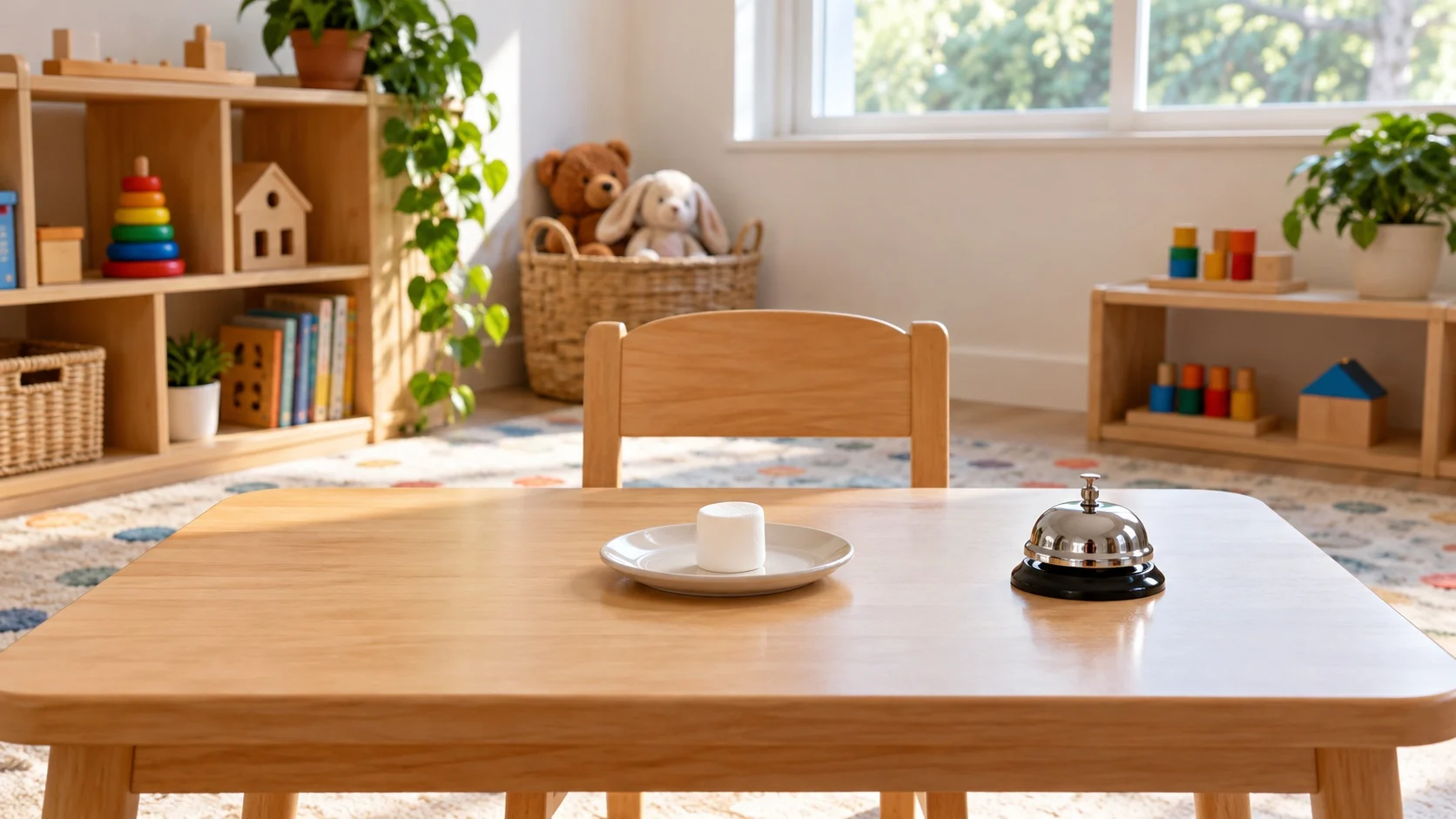
The setup of the experiment was remarkably simple. Yet carefully designed details were hidden inside it.
(1) Two Choices
The researcher had the child pick a favorite treat, such as a marshmallow or a pretzel, and then said: “If you wait until I come back, you can have two. If you don’t want to wait, ring the bell. I’ll come right back, but you can only have one.” The researcher then left the room and waited for up to about 15 minutes.
(2) Practice to Build Trust First
Before the actual experiment, the children practiced in advance to see that the researcher really did come back when they rang the bell. Waiting only makes sense if you believe the promise will be kept.
(3) The Participating Children
The participants were children between about three and a half and five and a half years old who attended Bing Nursery School on the Stanford University campus. The fact that many of them were the children of university staff and graduate students later became an important point of debate.
The Waiting Techniques the Children Discovered
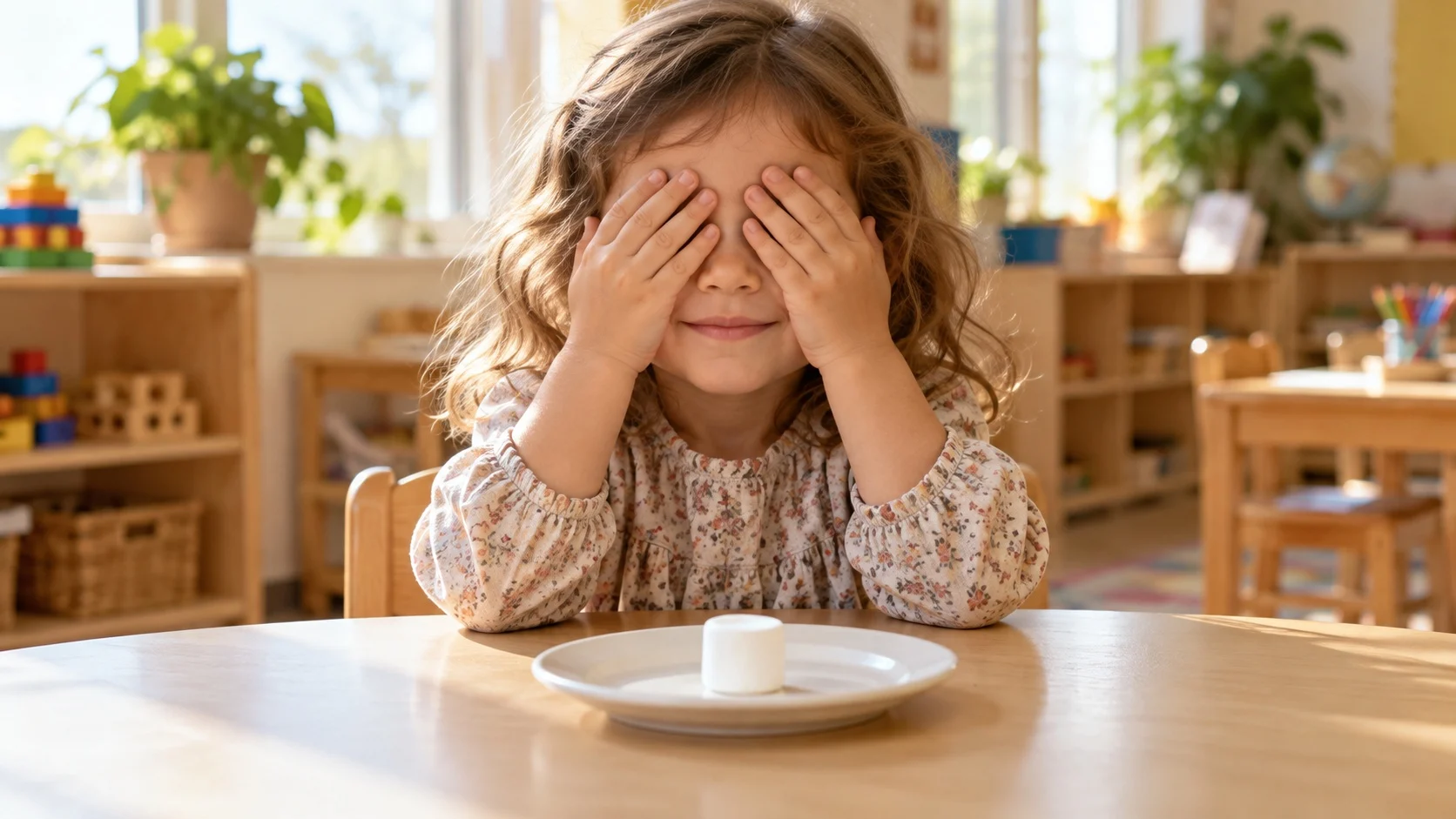
What Mischel really wanted to know was not who could wait but how they managed to wait. The researchers first expected that keeping the reward in sight would make the goal clearer and help children wait longer, but the results were the exact opposite. So they varied the conditions and closely observed the children’s behavior.
- Covering the Reward: Children waited much longer when the treat was hidden under a cover than when it sat in plain view.
- Distraction: Children who covered their eyes with their hands, talked to themselves, sang songs, or made up games with their feet held out better. Some children even fell asleep while waiting.
- Reframing: When children were prompted to imagine the marshmallow not as a tasty treat but as something like a cloud or a cotton ball, they waited longer.
These results show that self-control is less a matter of gritting your teeth and enduring than a skill of cleverly shifting your attention away from temptation. Mischel later explained this difference with the metaphor of an impulsive “hot system” and a calm, thoughtful “cool system.”
The Hopes and Challenges Left by the Follow-Up Studies

The Marshmallow Experiment became famous less because of the experiment itself than because of the follow-up studies that came after it.
(1) The Futures of the Children Who Waited Longer
In follow-up studies in 1988 and 1990, children who had waited longer tended to be rated as more competent by their parents in adolescence and to have higher scores on the SAT, the US college admissions test. In 2011, a study that scanned the brains of former participants in middle age also found that those who had waited longer as children showed more activity in the prefrontal cortex, which handles planning and judgment, when suppressing temptation. These results spread widely as the message that “patience leads to success.”
(2) The Environment Changes Waiting
In 2012, researchers at the University of Rochester in the US kept their promises to one group of children before the experiment and broke their promises to another group. The children in the group whose promises were kept waited about 12 minutes on average, holding out roughly four times longer than the group whose promises were broken. This means that in an unreliable environment, eating right away can actually be the rational choice.
(3) Waiting Differs by Culture
In a study published in 2022 in the journal Psychological Science, Japanese children waited longer for food, a marshmallow, while American children waited longer for a wrapped gift. The researchers interpreted this as the influence of cultural differences, such as the habit of waiting before meals and the habit of opening gifts on set days like birthdays.
(4) A Larger-Scale Replication
In 2018, Tyler Watts and his colleagues reanalyzed existing large-scale longitudinal data (NICHD) covering more than ten times as many children as the original study, from more diverse backgrounds. The association was only about half as strong as in the original, and it weakened further once family economic circumstances and early cognitive abilities were taken into account. A 2024 study likewise concluded that the results of this experiment alone cannot reliably predict life in adulthood.

Everyday Lessons from the Marshmallow Experiment

That does not mean the Marshmallow Experiment has become useless. Its findings on how to help people wait are still valid today.
(1) Remove Temptation from Sight
Just as the children held out longer when the treat was covered, keeping your smartphone in another room and putting snacks out of sight is more effective than relying on willpower alone.
(2) Create an Environment Where Promises Are Kept
If you want to teach children to wait, adults must first keep the promises they make. Children learn to wait only after they have built up experience that waiting really does bring a reward.
(3) Don’t Judge from a Single Result
Fifteen minutes at age four does not decide a person’s life. Self-control should be seen not as an inborn report card but as an ability that grows through environment and practice.
With nothing more than a small treat, the Marshmallow Experiment revealed how the mind works when it waits, and the challenges that followed reminded us that waiting is a matter not only of individual character but also of environment and trust.
Rather than blaming a child who could not wait, working together to create an environment worth waiting in is the first step toward healthy self-control.