In a corner of a large supermarket's warehouse, food often piles up that never makes it onto the shelves because its outer packaging is slightly dented or its expiry date is only a few days away. It is perfectly fine to eat, but hard to sell. Somewhere in the same neighborhood, there are neighbors worried about their next meal. The bridge that connects surplus food and tables in need is the ‘food bank.’
Simply put, a food bank means ‘an organization and system that receives donations of food that is still edible but has become hard to sell, stores it, and distributes it to people who struggle to get enough to eat and to welfare organizations.’ It got its name from the idea of a bank where you deposit and withdraw food instead of money.
In this article, we will look in turn at how food banks first began, how they operate, Korea's system, and the concerns that come with them.
Turning Surplus Food into Meals for Those in Need: How Food Banks Work and the Challenges They Face
How Did Food Banks Begin?
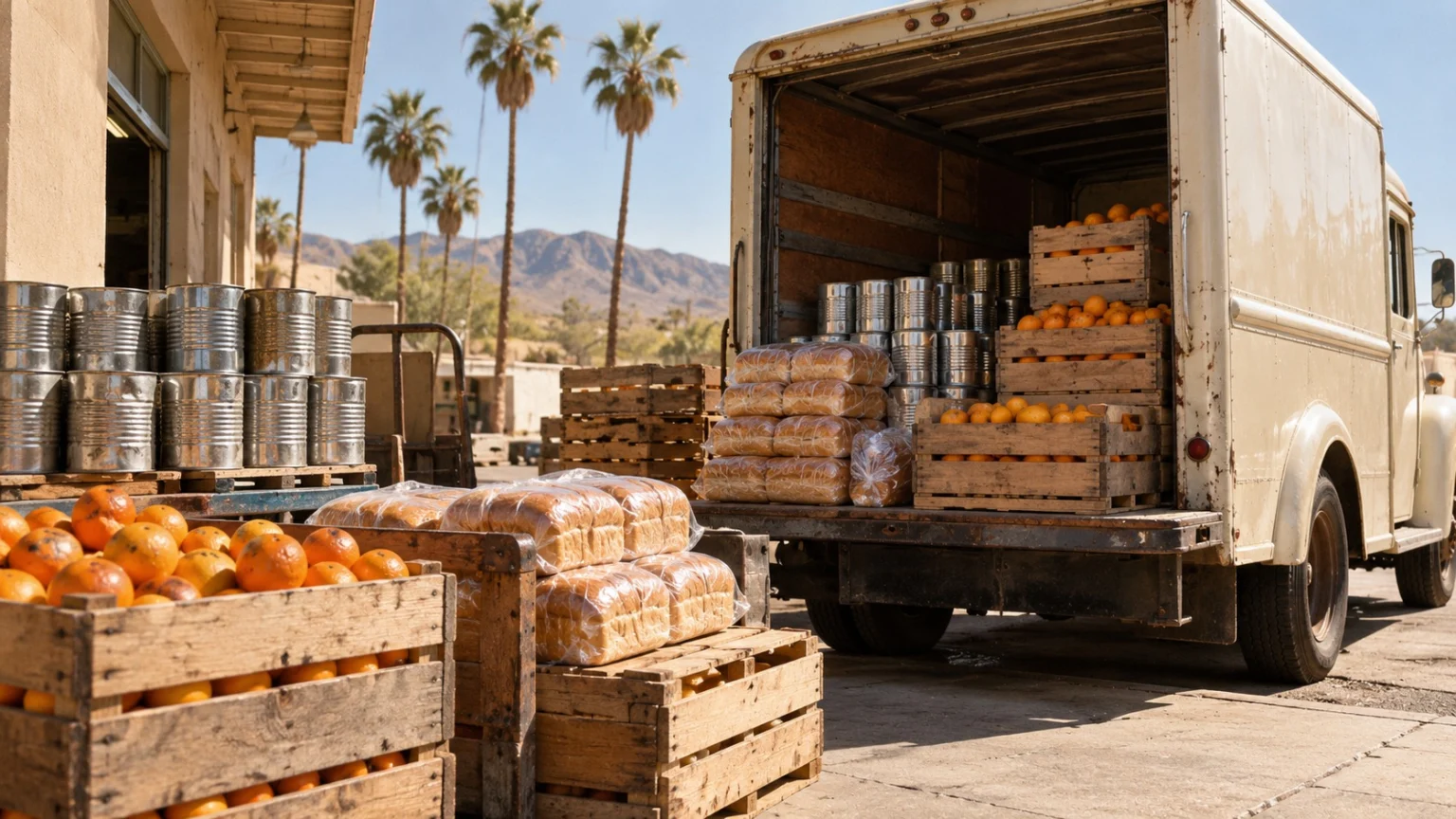
The world's first food bank is St. Mary's Food Bank, which opened in Phoenix, Arizona, in the United States in 1967. John van Hengel, who was volunteering at a soup kitchen, heard an unexpected story from a mother raising ten children. She said that the food thrown away behind grocery stores alone was enough to feed her children. The phrase ‘food bank’ that she used to describe those piles of food is said to have later become the basis for the name.
Van Hengel went to grocery stores and persuaded them to donate food they would otherwise throw away, and he used an old building lent by a church as a warehouse. He named it St. Mary's Food Bank after the church, and in the first year alone it distributed about 250,000 pounds of food, more than 110 tonnes, to 36 charities. For the first 10 years he worked without a salary, living in a donated room. In 1975 he helped set up 18 food banks across the United States with a federal grant, and in 1979 he founded the national organization Second Harvest, which is today's Feeding America. Food banks later spread to Europe, South America, and Asia, beginning with France in 1984.
The Path Food Travels: How Food Banks Operate
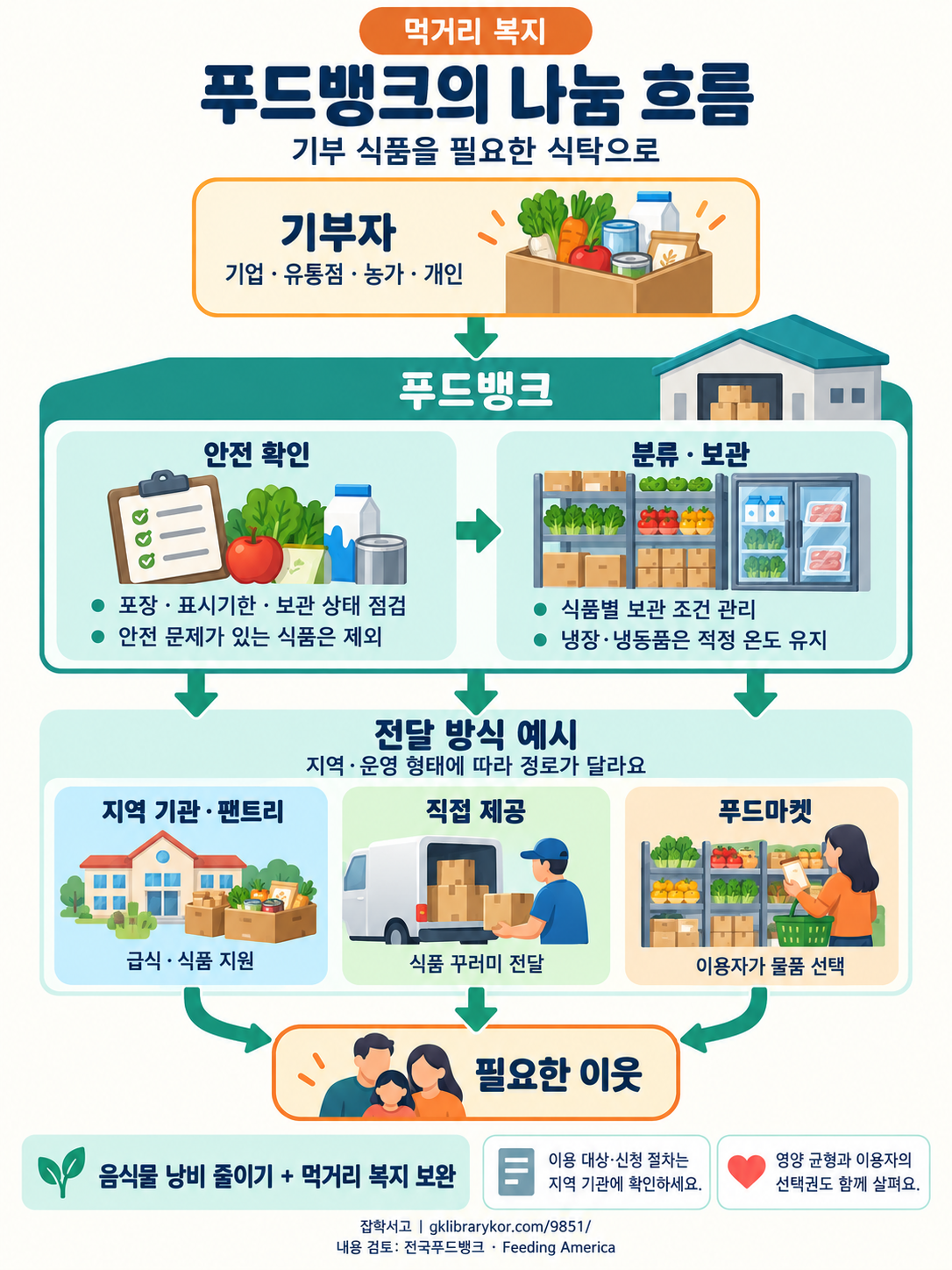
Standing between donors and recipients, food banks collect food, store it safely, and distribute it where it is needed.
- Donors: Food manufacturers, wholesalers, supermarkets, farms, and individuals give their surplus food.
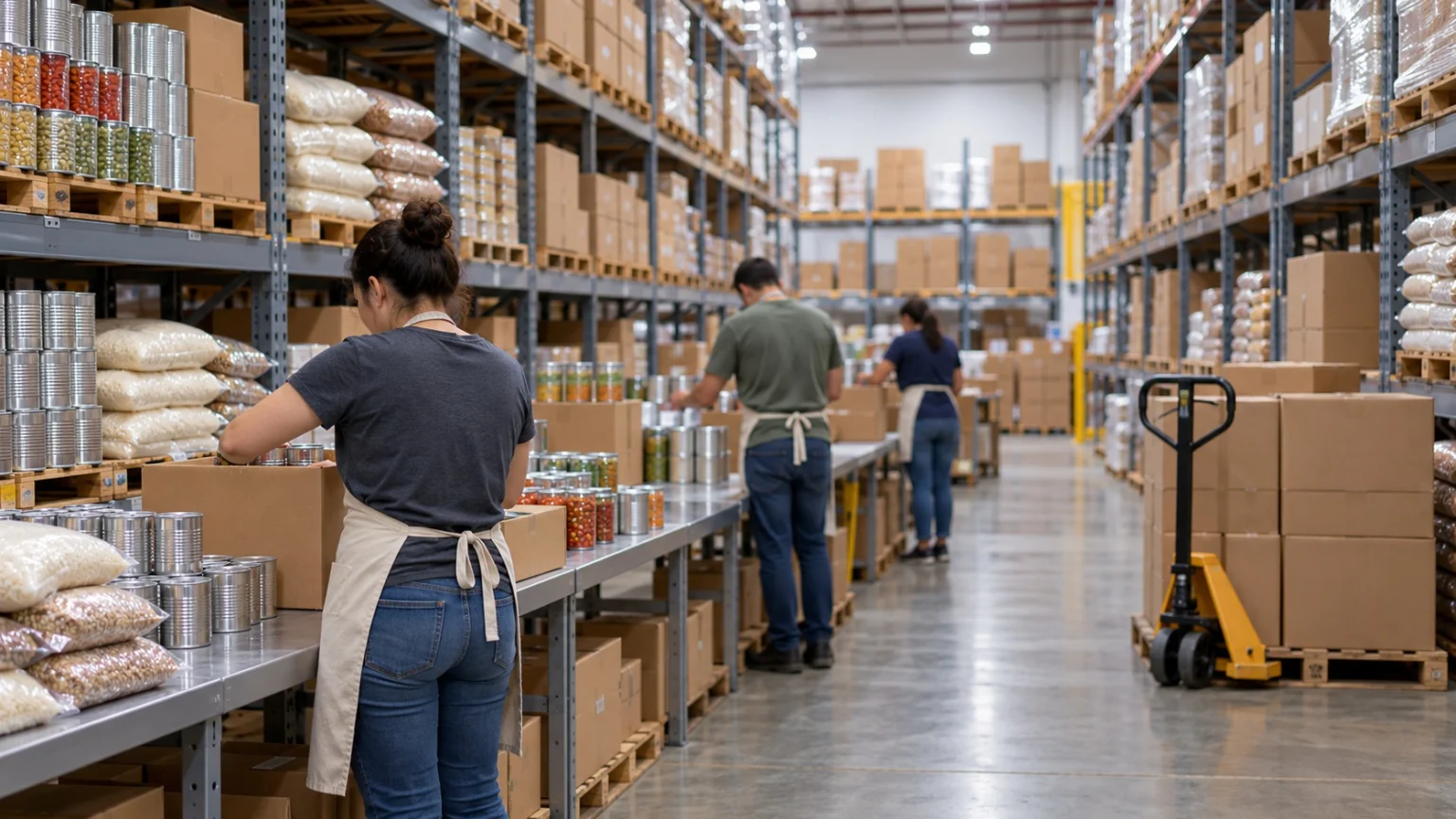
- Warehouse Model: Food is gathered in a large warehouse and distributed to front-line organizations such as soup kitchens and welfare agencies.
- Front-line Model: Food parcels are handed directly to households in need.
- Food Pantry: A small local outlet that receives food from a warehouse-model food bank and distributes it directly to residents in the neighborhood.
In the United States and Australia, it is common for a city's food bank to act like a huge logistics warehouse, supplying food to hundreds of front-line organizations. The structure is similar to a blood bank, which collects and stores blood and then sends it to hospitals. In many other countries, by contrast, food banks hand food directly to recipients.
Whichever model is used, the most important thing is safety. Food banks check the packaging, storage temperature, and labeled dates of donated food, and they do not distribute food that is past its date or has quality problems. To handle chilled and frozen food, they also need cold storage warehouses and refrigerated vehicles.
Food Banks and Food Markets in Korea
Korea's food banks began as a pilot program in Seoul, Busan, Daegu, and Gwacheon in January 1998, when unemployment and missed meals were rising due to the Asian financial crisis. In 2000 the Korea National Council on Social Welfare was designated as the National Food Bank and took on the role of connecting operating sites across the country. In 2009 a central logistics center that collects donated food and sends it to each region opened in Daejeon, and in 2018 the center moved to Sejong City.
(1) Backing Donations with Law
In 2006 the Act on the Promotion of Food Donation was enacted. As long as the food was safe at the time of donation, donors are not held liable for accidents that occur later unless there is intent or gross negligence, so companies can donate food with peace of mind. Manufacturers and distributors who donate food also receive a tax benefit that recognizes the full book value as an expense. The United States also passed the Good Samaritan Food Donation Act, with a similar purpose, in 1996. With a 2016 amendment, the law was renamed the Act on the Promotion of Donation of Food, Etc., and daily necessities such as detergent, toilet paper, and diapers could also be donated.
(2) Food Markets That Offer the Joy of Choosing
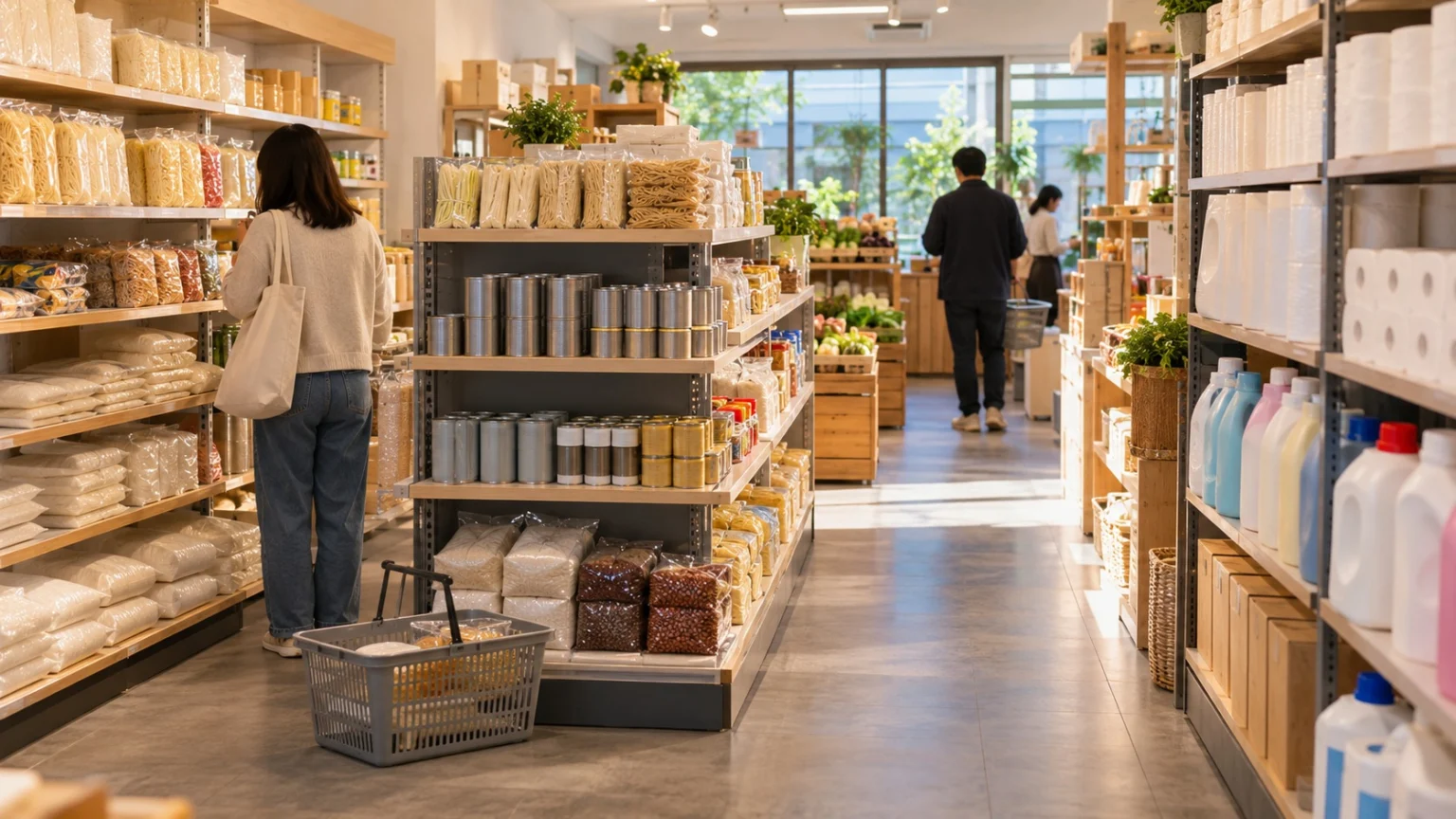
At a food market, recipients visit a store laid out like a convenience store and choose the items they need themselves. Compared with simply receiving a fixed parcel, this widens their choices and also eases the burden of receiving help. When the risk of going hungry grew due to the global financial crisis at the end of 2008, the government greatly expanded food markets and logistics centers.
The Concerns Food Banks Face
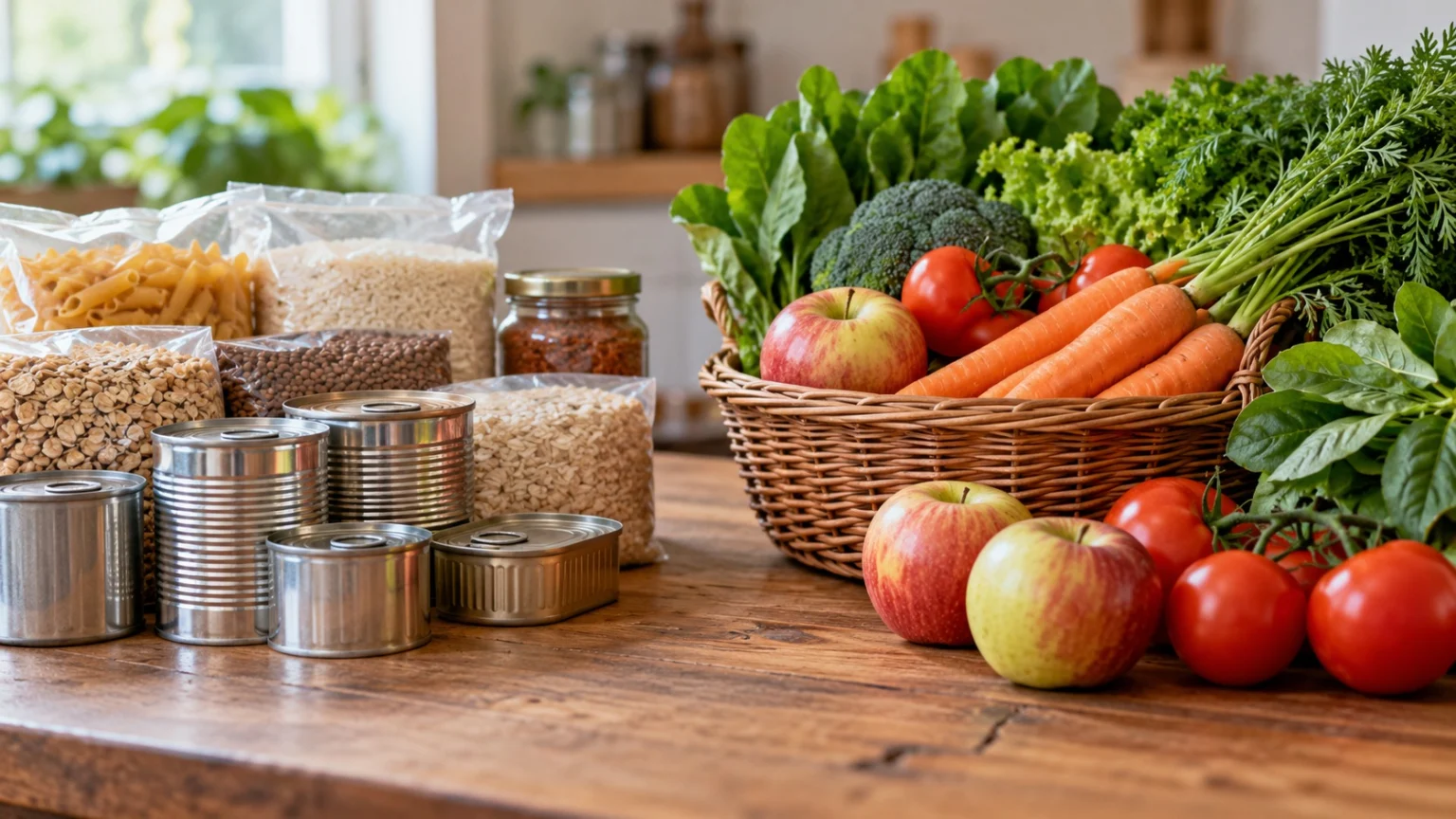
Food banks are counted as a system that kills two birds with one stone by reducing food waste and helping neighbors, but there are also points to weigh.
(1) Nutritional Balance
Donated food tends to lean toward processed foods that do not spoil even when kept for a long time. Fresh vegetables and fruit are harder to store, so fewer of them come in. For this reason, efforts to collect and distribute food based on nutrition rather than donation volume have been growing recently.
(2) The Gap Left by State Responsibility
Olivier De Schutter, former UN Special Rapporteur on the right to food, warned that food banks must not become a permanent mechanism that replaces the welfare system. His point is that the primary responsibility for preventing hunger lies with the state, and that charity should be a supplementary means of filling the gaps.
Food banks are an everyday welfare mechanism that finds new uses for food that would otherwise have been thrown away and brings together sharing within a community. To make the most of them, we also need to look at nutrition, dignity, and the balance with public welfare.
Before throwing away what is left over, first think of the tables that need it. That is the first step toward welfare protected by sharing.