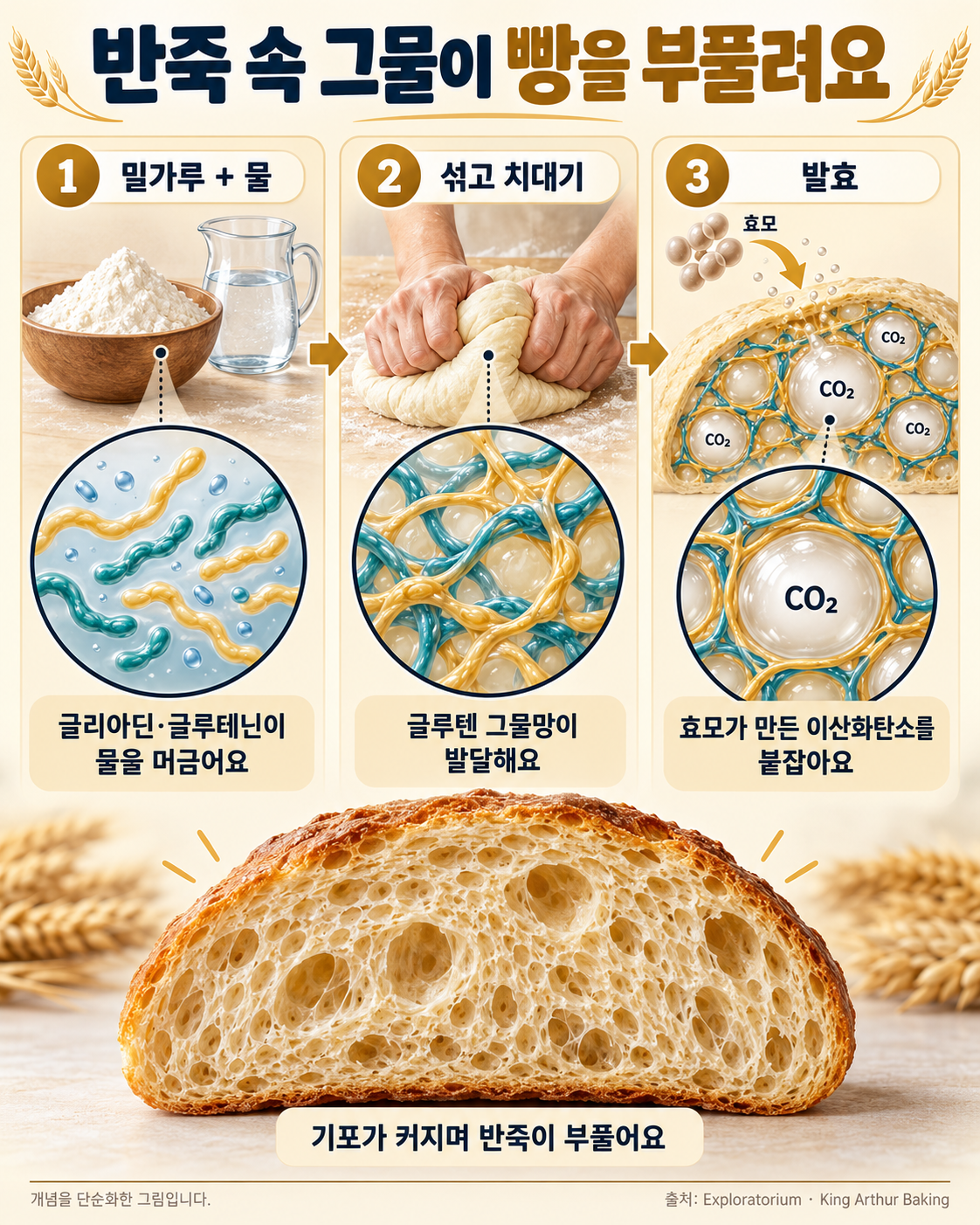
When you pour water into flour and knead it, the powder that first sticks to your hands at some point turns into a smooth, springy dough. It is hard to make a well-risen loaf of sandwich bread from rice flour, but wheat dough holds the gas released by yeast and swells like a balloon. The chewiness of kalguksu (Korean knife-cut noodles) and the tough bite of a baguette come from the same root. That secret is “gluten.”
Put simply, gluten means “a net-shaped mass of protein formed when two proteins in wheat flour meet water and become entangled with each other.” The key point is that gluten is not already present in finished form in the flour itself; it only forms during the process of adding water and kneading.
In this article, we will look in turn at how gluten forms, the types of flour and their uses, the cooking secrets that make gluten stronger or weaker, and the stories of people whose bodies do not tolerate gluten.
The Science of Gluten That Makes Dough Chewy
Two Proteins Meet and Become a Net
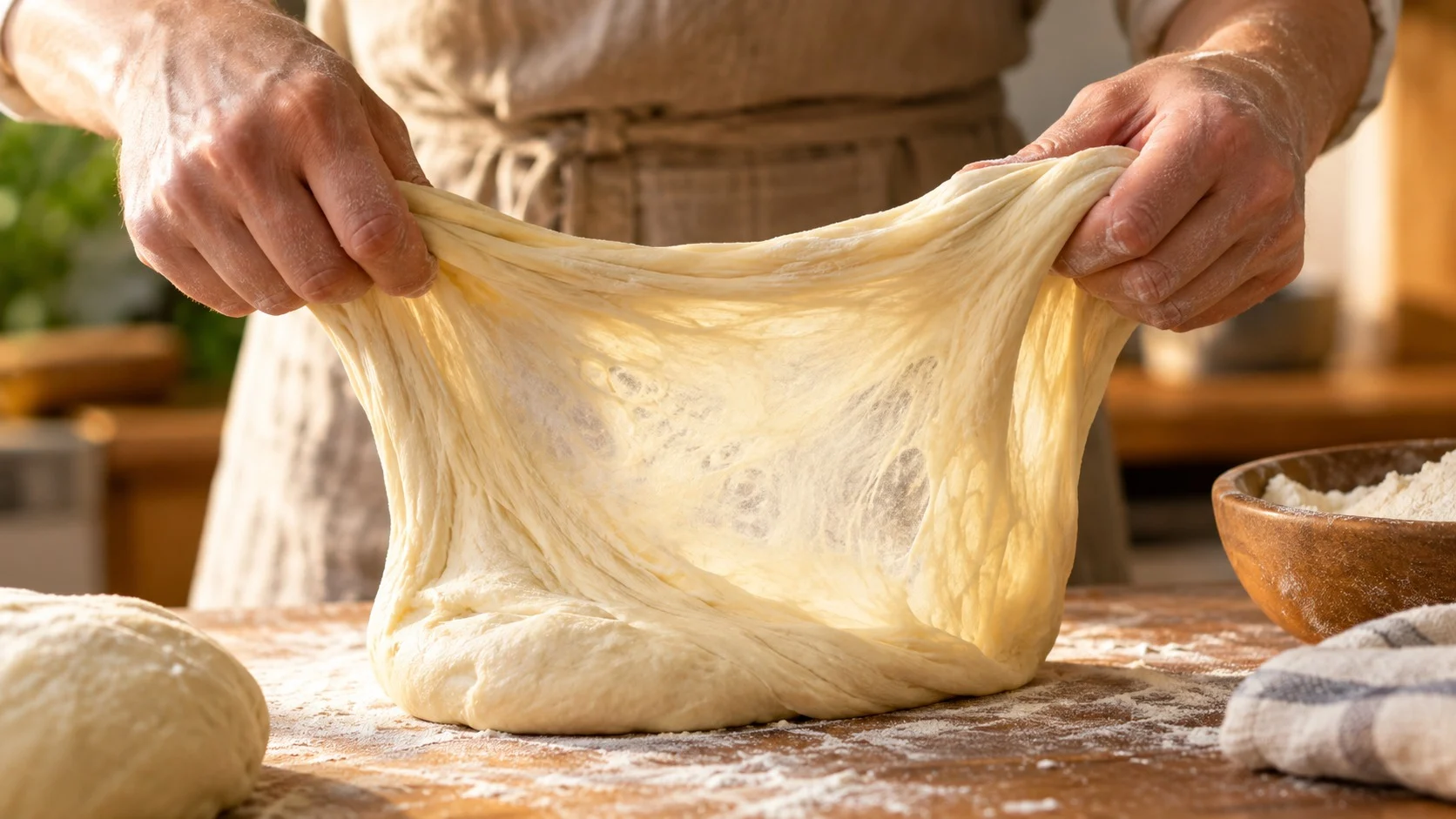
Wheat flour contains many proteins, but the two that make up gluten are gliadin and glutenin. In bread wheat, these two account for 75–85% of the total protein.
- Gliadin: A small, rounded protein that makes dough sticky and easy to stretch.
- Glutenin: A large protein made of long chains that gives stretched dough the elasticity to spring back into place like a rubber band.
In dry flour, the two proteins are scattered separately. When water is added and the mixture is kneaded, the proteins absorb water and unfold, and glutenin molecules link up into long chains by forming bridges between sulfur atoms. Gliadin slips in between these chains, completing a net that stretches easily yet pulls back again.
This net traps the carbon dioxide released by fermenting yeast like tiny balloons. That is why the dough rises, and when it is baked in the oven, the heat-set gluten becomes the framework of the bread together with the starch. If you knead dough under water to wash out the starch, only a rubbery, tough gray lump remains, and that is gluten.
Flour Types Are Divided by the Amount of Gluten
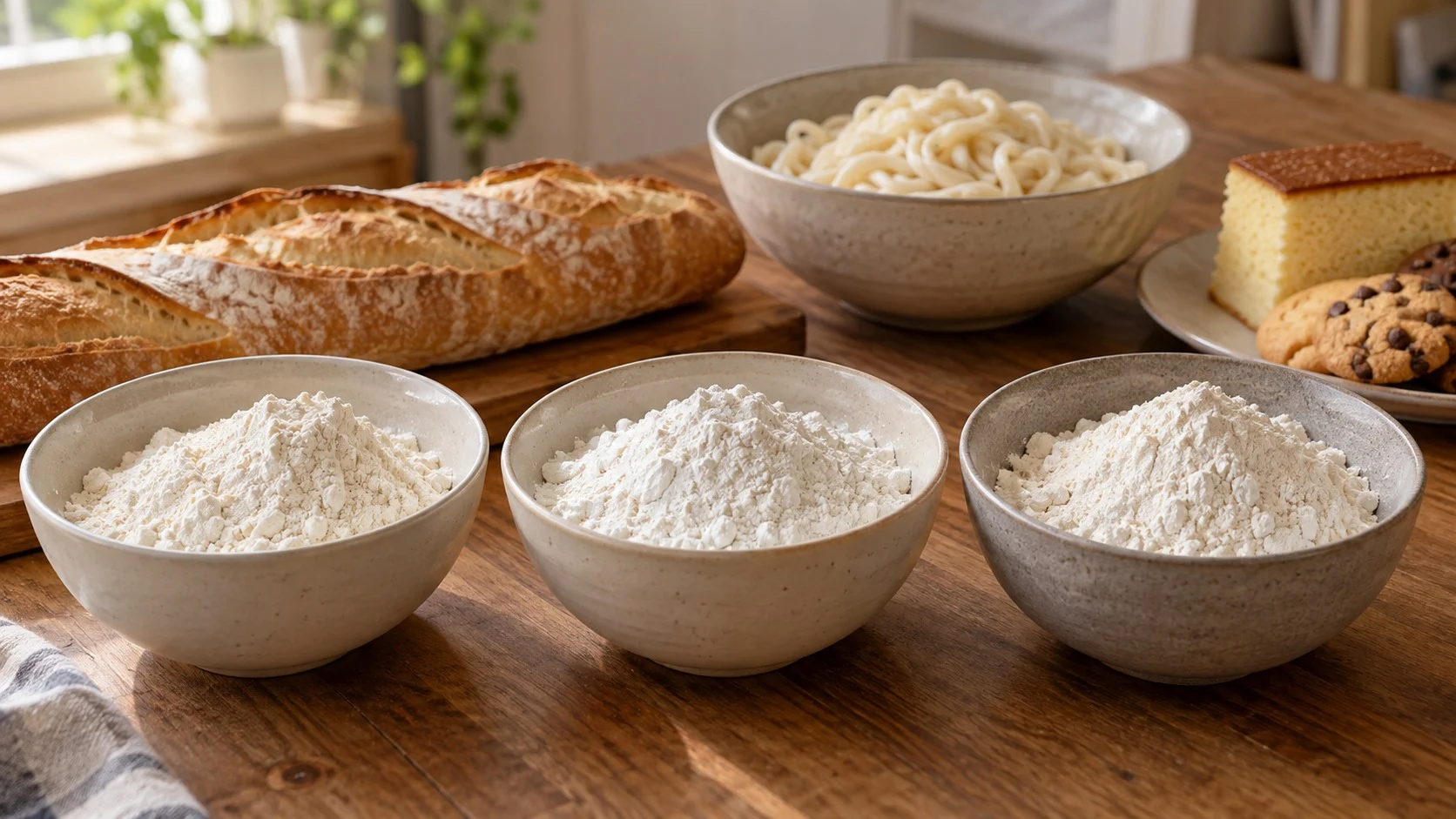
Flour sold in stores is divided into three types according to its protein content, that is, the amount that can form gluten. The more protein, the chewier and tougher the dough.
(1) Bread flour (strong flour)
It has the most protein, about 11–13%. Because it forms sturdy gluten that holds gas well, it is used for foods that need to rise high and be chewy, such as sandwich bread, baguettes and pizza dough.
(2) All-purpose flour (medium flour)
It has around 9–10% protein. Moderately chewy yet tender, it is widely used for noodles and dough dishes such as kalguksu, sujebi (hand-torn dough soup) and dumpling wrappers, as well as in Korean home cooking.
(3) Cake flour (weak flour)
It has the least protein, about 7–9%. Because it forms little gluten and gives a crisp, tender texture, it is suited to cakes, cookies and frying batter.
This is why, even among wheat flours, you have to choose the right one depending on what food you are making.
The Cooking Secrets That Build Up and Reduce Gluten
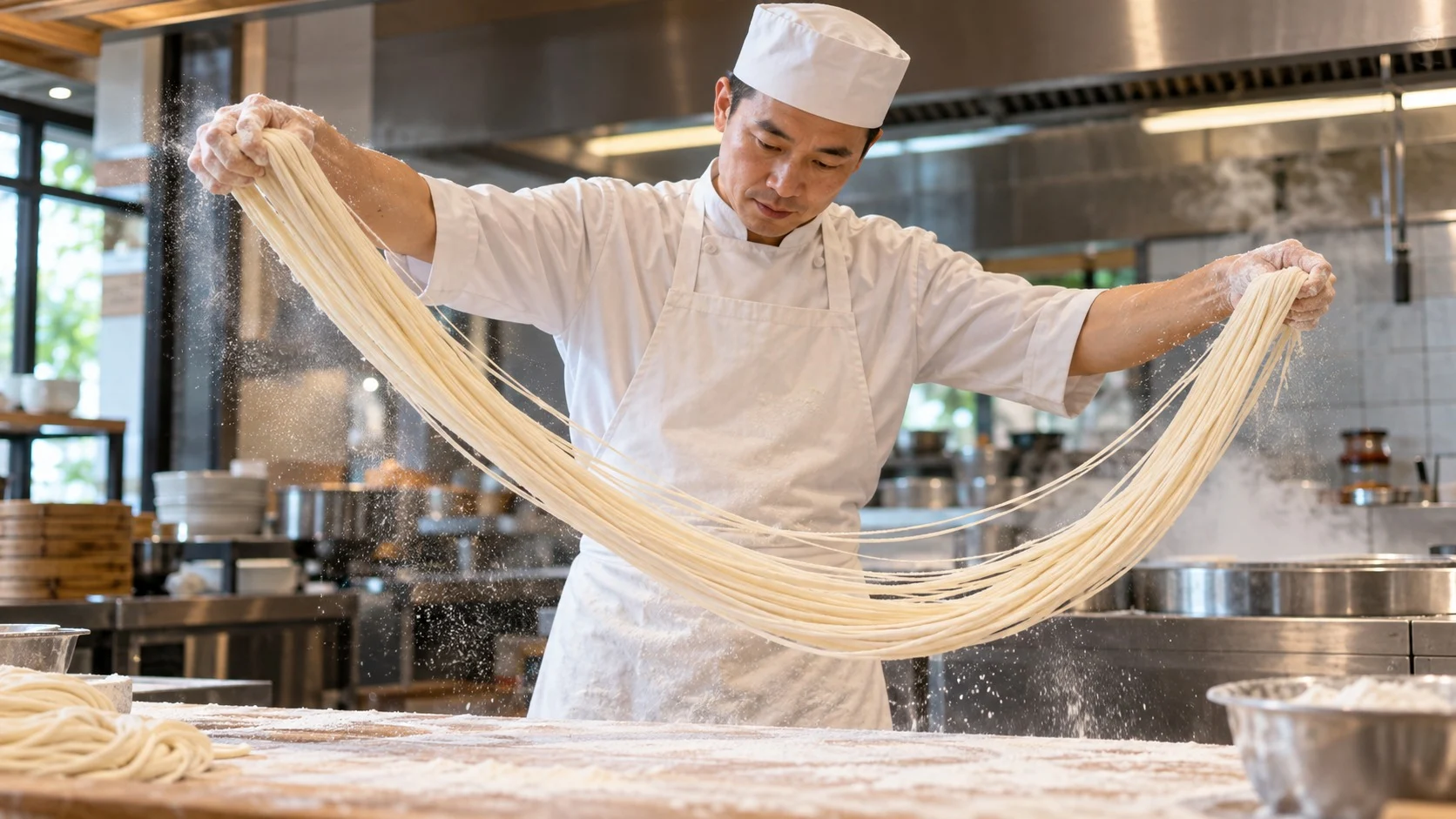
Cooks control gluten not only through the type of flour but also through how they make the dough.
Ways to Make Gluten Stronger
- Kneading: The longer the dough is kneaded, the more tightly the protein chains link up, and the chewier it becomes.
- Hydration: With plenty of water, the proteins unfold well and gluten forms easily.
- Salt: Salt tightens the gluten net and makes the dough firm. This is why salt is added to noodle dough.
Ways to Make Gluten Weaker
- Oil and butter (shortening): Fat coats the proteins and keeps them from linking to one another. The solid baking fat called “shortening” also gets its name from the idea of cutting gluten strands short.
- Sugar: Sugar grabs water first, so less gluten forms and the dough becomes tender.
- Gentle mixing: Cake and frying batters are mixed lightly to keep gluten from forming.
Letting the dough rest for a while relaxes the taut gluten and makes it much easier to roll out. Hand-pulled noodles, stretched long by hand, are also possible thanks to this stretchy gluten.
People Whose Bodies Do Not Tolerate Gluten
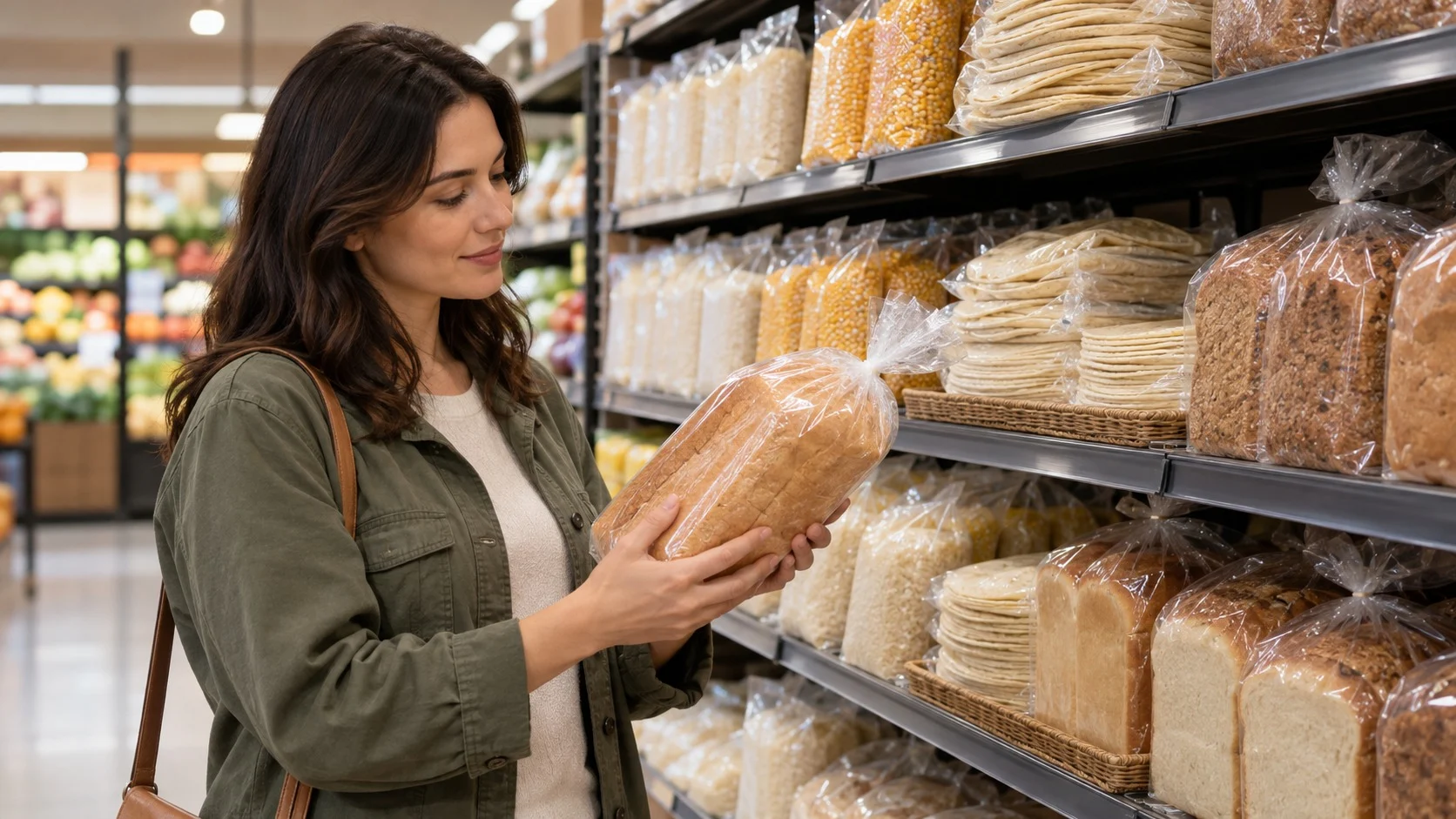
For most people, gluten is just one of many proteins, but for some it causes health problems. Gluten-like proteins are found not only in wheat but also in similar forms in barley and rye.
- Celiac disease: An autoimmune disease in which eating gluten causes the immune system to attack the person’s own small intestine, damaging the villi responsible for absorbing nutrients. It is known to affect about 1% of the world’s population, and a lifelong gluten-free diet is the only treatment.
- Wheat allergy: The immune system overreacts to proteins in wheat, and hives or difficulty breathing can appear within minutes to hours of eating it.
- Non-celiac gluten sensitivity: Cases in which eating wheat causes bloating or fatigue even though the person has neither celiac disease nor an allergy; its cause is still being studied.
For these people, there are “gluten-free” foods. Under international food standards, this label can generally be used when a food contains no more than 20 mg of gluten per 1 kg. However, there is no clear evidence that a gluten-free diet is especially healthier for people who have no problems with gluten.
Gluten is a small net that forms when flour, water and the human hand come together. Thanks to this net, humanity gained risen bread and chewy noodles, and with just the way dough is made, we can move freely between crispness and chewiness.
Of course, for some people it is also an ingredient to avoid. But once you understand the principle, choosing flour and making dough become much easier, and you can wisely plan a diet that suits your body. Understanding the invisible net inside the dough: that is the first step toward delicious and healthy wheat dishes.