Open a dehumidifier container during the rainy season, and you will find that the bottom, once filled with nothing but white granules, now holds a pool of water. Nobody poured any water in, yet the granules keep shrinking and clear liquid takes their place. The solid has drawn in water vapor floating in the air on its own and then dissolved itself in that very water. This phenomenon is called “deliquescence.”
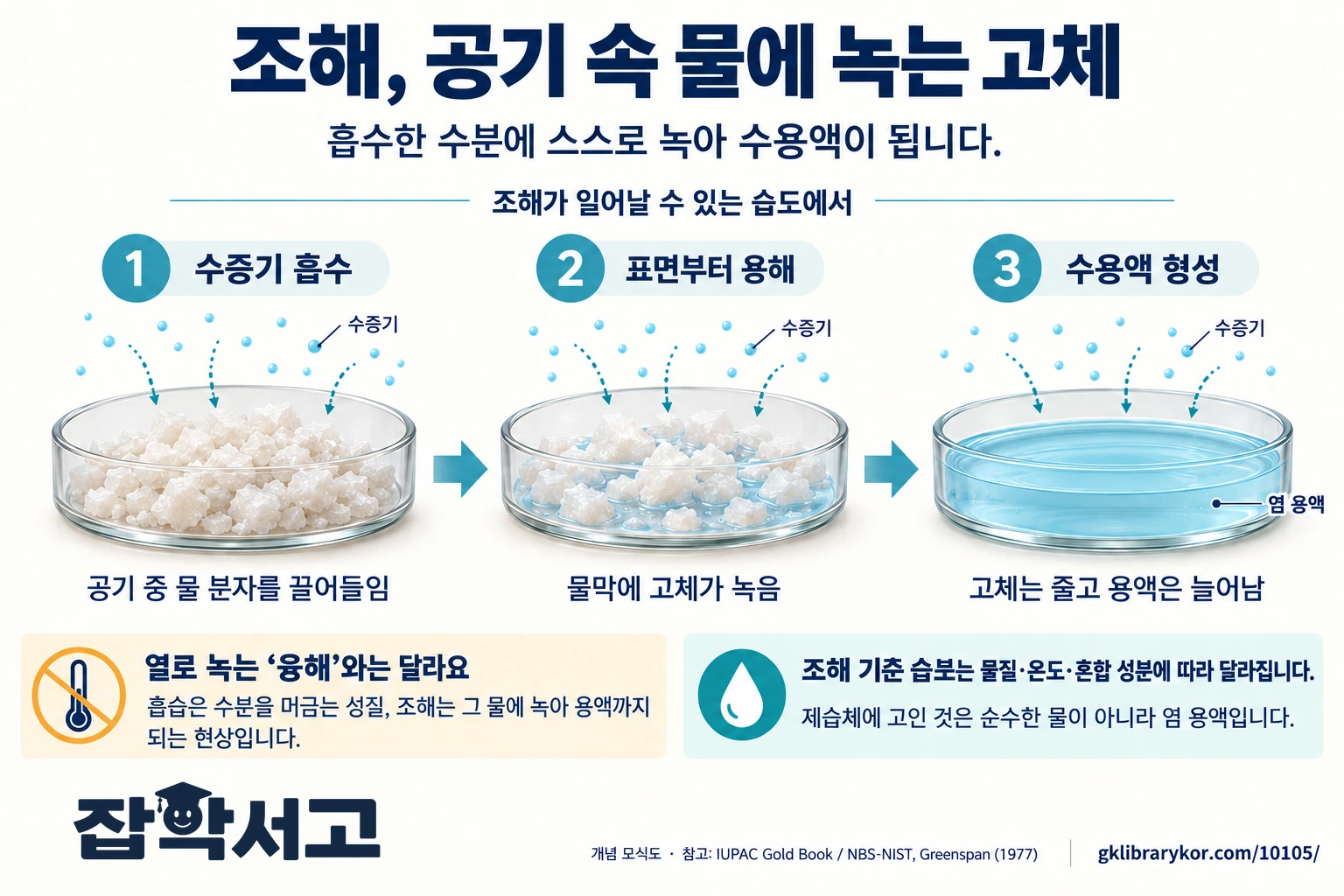
Simply put, deliquescence means “a solid absorbing moisture from the air and then dissolving in the water it has absorbed to become a solution.” Many substances can hold on to moisture, but those that attract water so strongly that they actually dissolve and turn into liquid are given a name of their own.
In this article, we will look in turn at what deliquescence is and how it differs from hygroscopy, the principle by which a solid begins to dissolve and the humidity that serves as the threshold, the deliquescent substances we meet in everyday life, and finally how to make use of them and what to watch out for when handling them.
A Solid That Dissolves in the Water in the Air: How Deliquescence Works and How It Is Used
What Is Deliquescence?
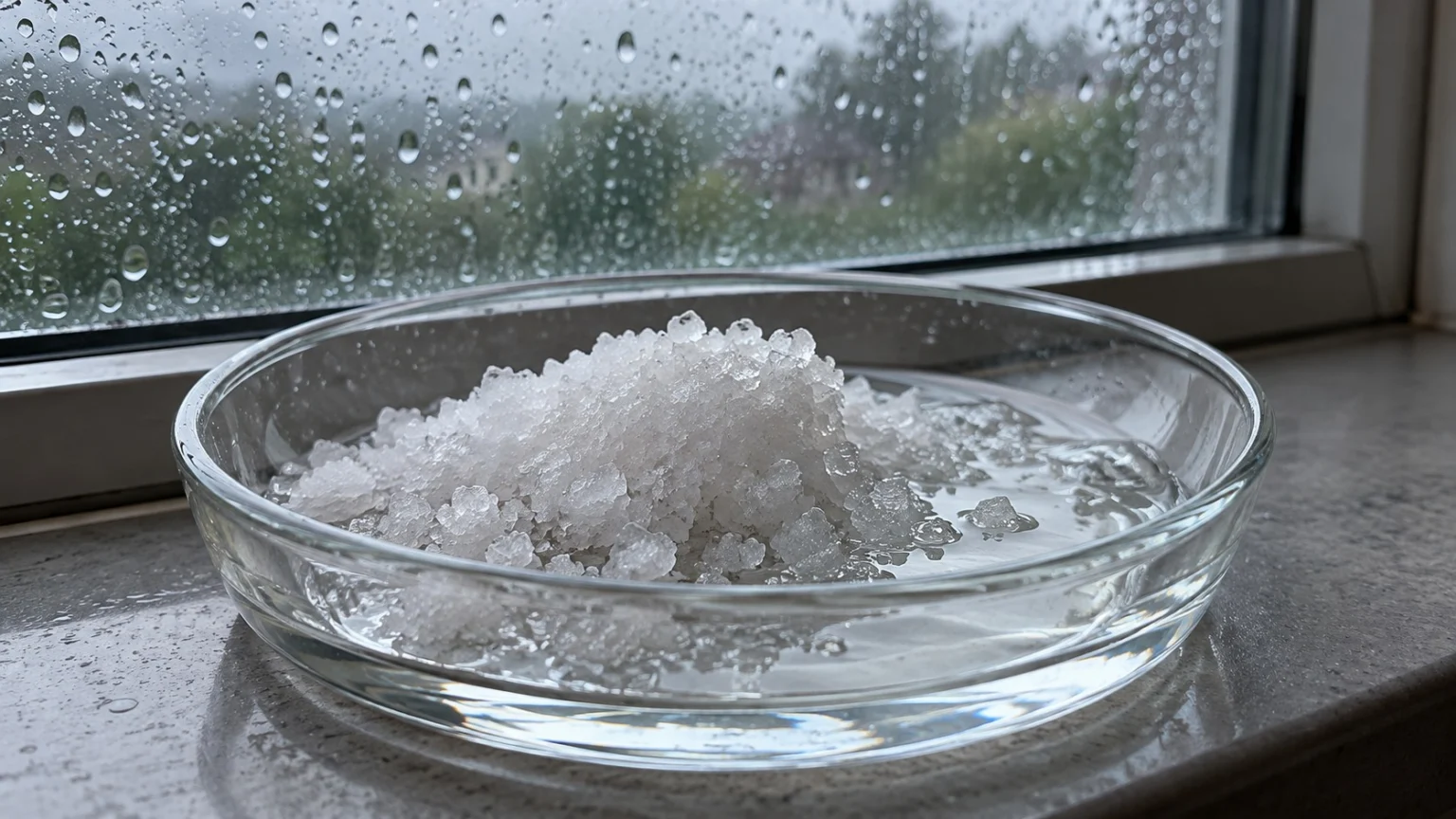
To understand deliquescence, it helps to separate two properties that look similar.
(1) Hygroscopy is the property of holding moisture
Hygroscopy is the property of a substance that draws water molecules from the surrounding air and holds on to them. Sugar, honey, paper, wood, and nylon are examples. Salt in a salt shaker turning damp and clumping on a humid day is also due to hygroscopy.
(2) Deliquescence is hygroscopy taken to the extreme
A strongly hygroscopic substance does not stop at holding water; it dissolves in the water it has gathered and becomes an aqueous solution. This is deliquescence, and the biggest difference is that its appearance changes from solid to liquid.
(3) There is also a phenomenon in the opposite direction
Some substances that hold water molecules within their crystals give up that water in dry air and crumble into a white powder. This is called efflorescence, and the water moves in the opposite direction from deliquescence.
When Does a Solid Begin to Dissolve?
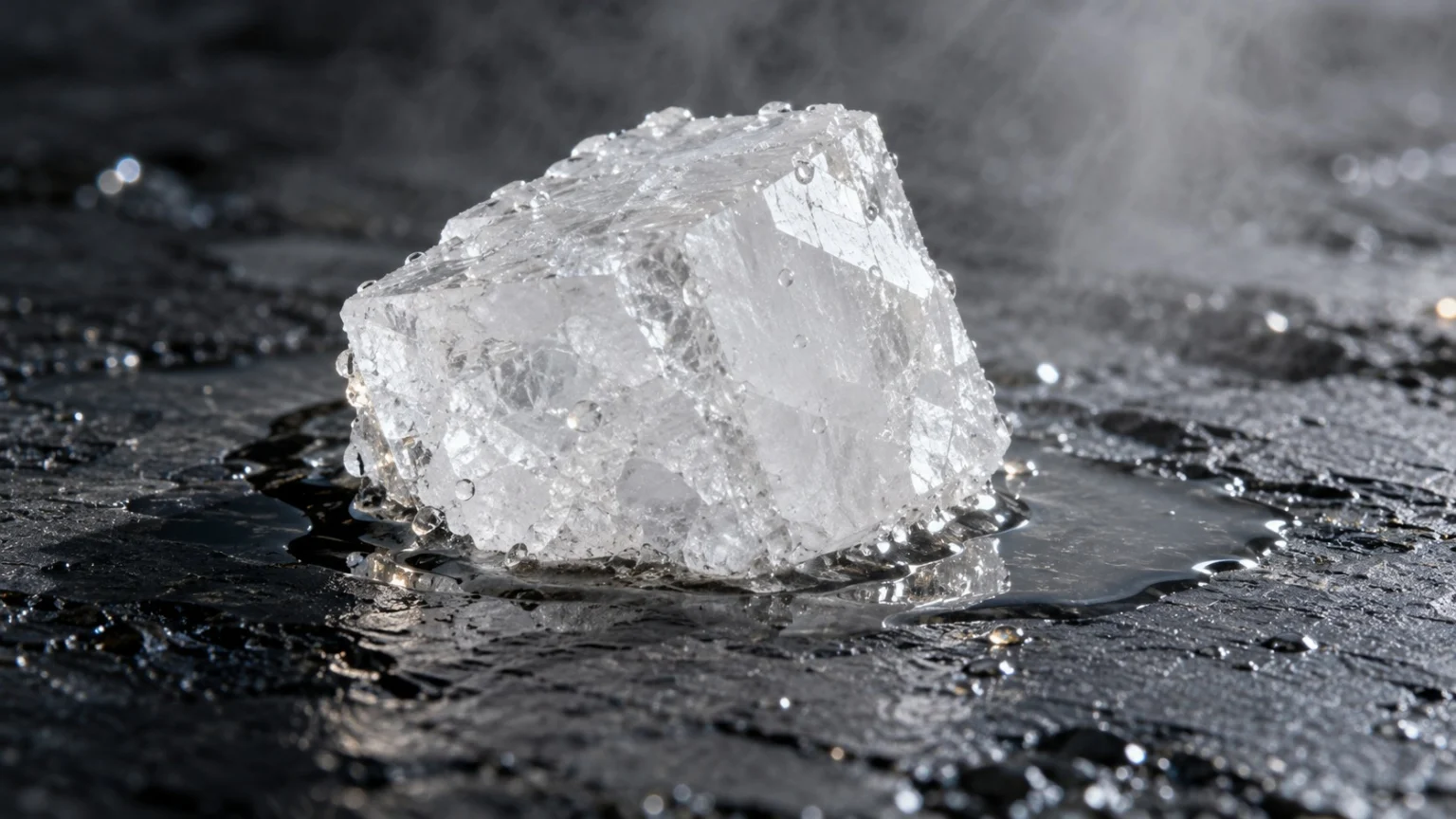
Whether deliquescence occurs depends on which way water vapor moves between the substance and the air.
(1) A difference in vapor pressure moves the water
When a very thin film of water forms on the surface of a deliquescent substance, the substance dissolves in it and forms a concentrated solution. If the water vapor pressure of this solution is lower than that of the water vapor in the air, water vapor keeps flowing from the air into the solution. The incoming water dissolves more of the solid, and as this process continues, the entire solid turns into liquid.
(2) Each substance has its own threshold humidity
The relative humidity at which a solid begins to dissolve is called the deliquescence relative humidity (DRH). When the humidity of the air is above this value, the solid dissolves; when it is below, the solid stays solid.
(3) The threshold humidity is not a fixed value
The deliquescence relative humidity varies with temperature, and even for the same substance it differs depending on how much water the crystal form contains.
Values measured at 25°C show clear differences: about 33 percent for magnesium chloride, about 43 percent for potassium carbonate, about 75 percent for sodium chloride, about 84 percent for potassium chloride, and about 97 percent for potassium sulfate. The lower the number, the more readily the substance melts away even in fairly dry air.
Deliquescent Substances in Everyday Life
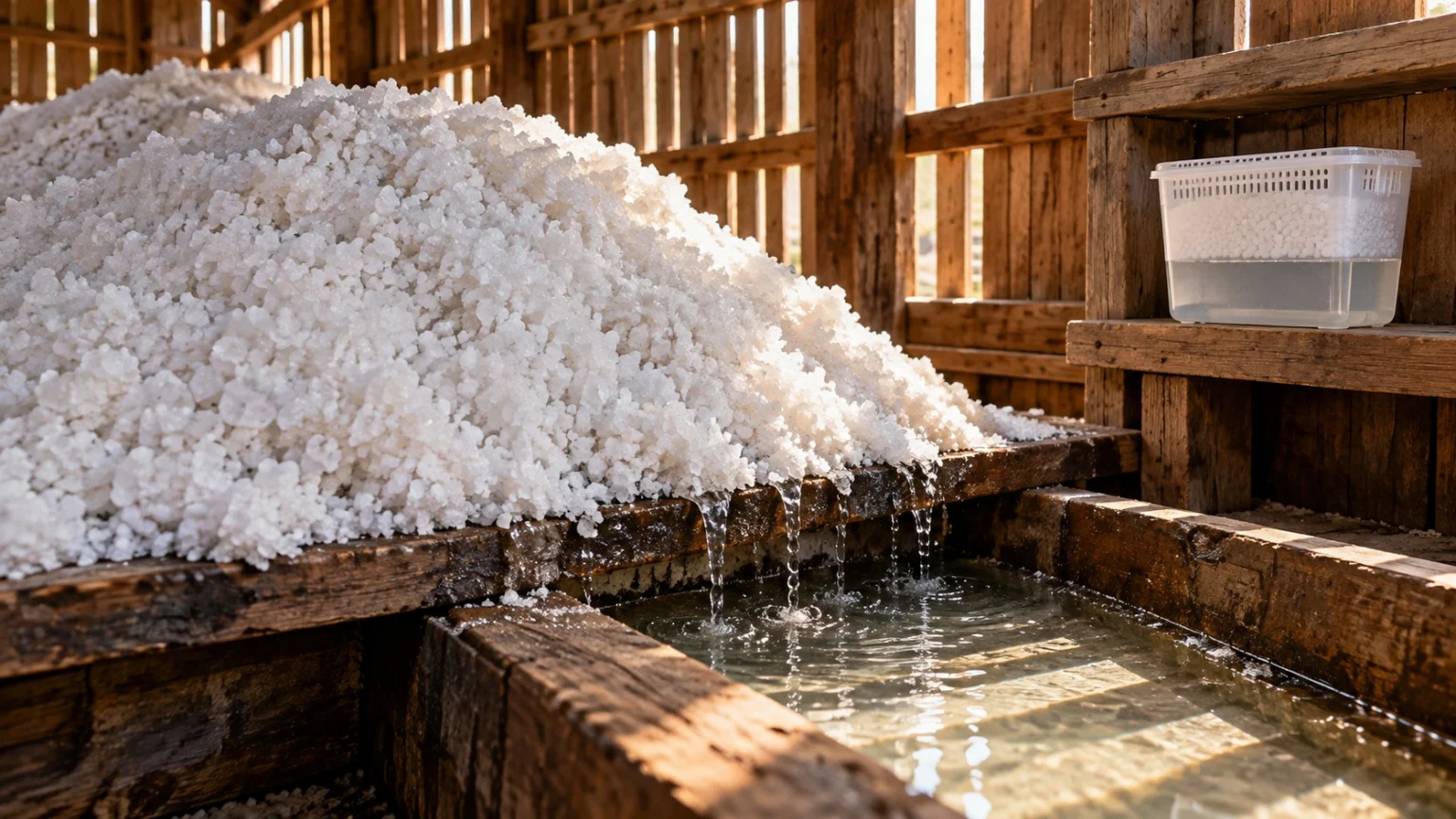
Deliquescence is seen more often close to home than in the laboratory.
- Calcium chloride: Used as a dehumidifier and as a winter deicer. The liquid that collects at the bottom of a dehumidifier container is a calcium chloride solution formed when the calcium chloride dissolves in the water it has absorbed.
- Magnesium chloride: The main component of the bittern that drains out of sea salt. Because its deliquescence relative humidity is low, salt left in a pile absorbs moisture from the air and melts away as it drips.
- Sodium hydroxide: A strong base known as an ingredient in soap making. Left out in the air, the solid quickly turns wet and sticky on its surface, and it even absorbs carbon dioxide from the air and changes its properties.
- Ammonium nitrate: A substance used as fertilizer. In a humid warehouse it tends to cake or dissolve, which lowers its quality.
Pure salt hardly dissolves unless the humidity rises above around 75 percent, but salt from which the bittern has not been fully drained gets damp even at much lower humidity. This is why the same salt calls for different storage methods depending on what is mixed into it.
How to Use Deliquescence and What to Watch Out For
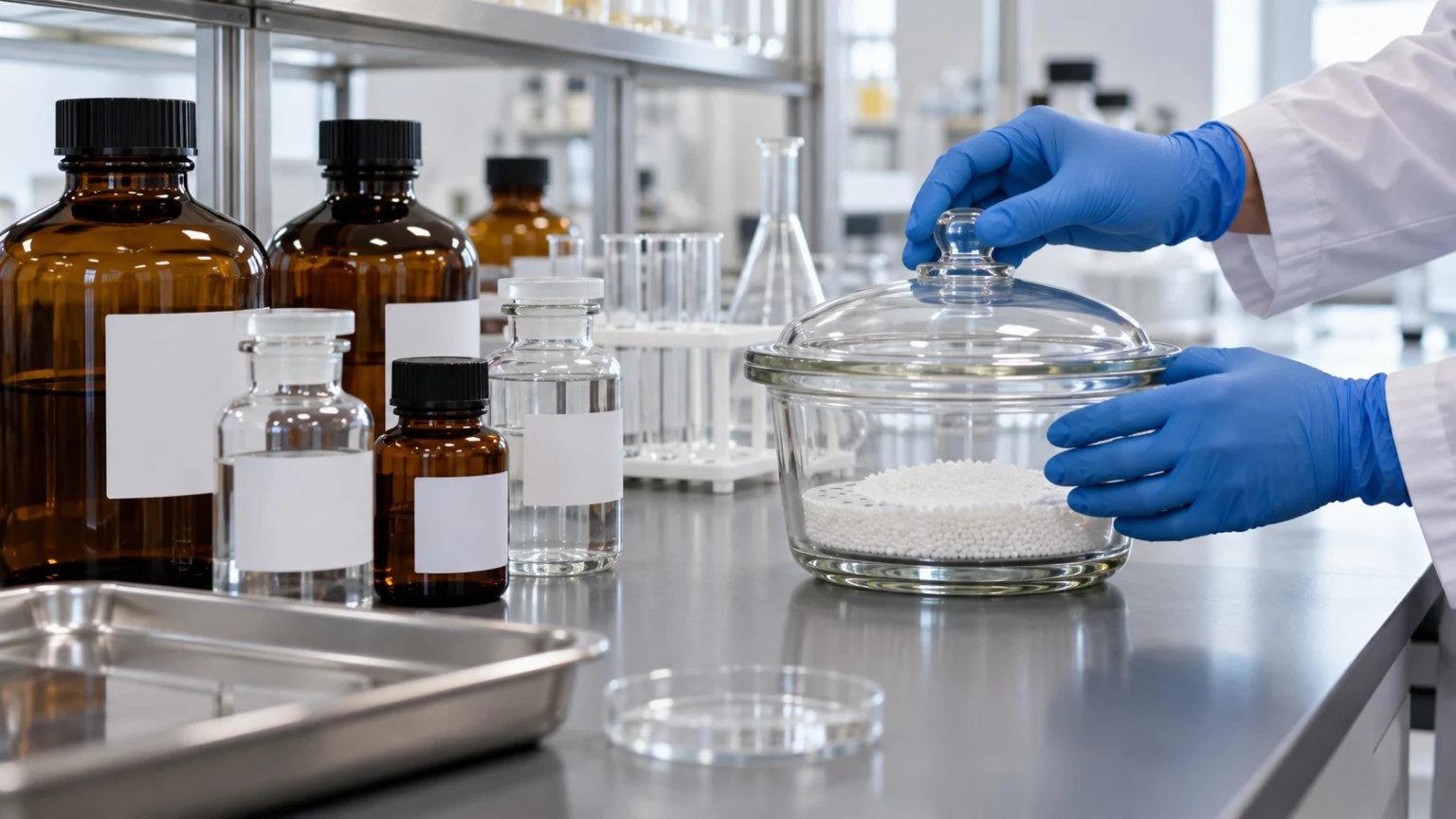
A property that pulls water in strongly becomes a tool when used well and a nuisance when mishandled.
(1) Desiccants that remove moisture
Because deliquescent substances actively gather moisture from the air, they are used as dehumidifiers in closets and shoe cabinets. In laboratories, they also serve as desiccants that remove water produced during reactions or moisture in gases.
(2) Seeds that make clouds
Particles that attract water well, such as tiny salt particles lifted from the sea, act as centers around which water vapor in the atmosphere gathers into droplets. In this way, deliquescence and hygroscopy play a part in the weather, too.
(3) Airtight storage is the basic rule
Deliquescent reagents and fertilizers change in weight and concentration when exposed to air, so they should be stored tightly capped in a place with little humidity. In experiments that require precise amounts, it is important to handle them quickly.
(4) Be careful with the collected liquid
The liquid that collects in a dehumidifier is a concentrated salt solution, so it can irritate the skin on contact, and if spilled it can corrode metal or leave stains on the floor. It is best to dispose of used dehumidifiers without spilling them.
Deliquescence is a phenomenon created by a simple principle: which way water flows between a solid and the air. Thanks to this property of capturing invisible water vapor and turning it into liquid, we can take the edge off rainy-season humidity and also understand why salt turns damp.
Knowing that each substance begins to dissolve at a different humidity, and choosing how to store and use it accordingly, is the first step toward handling deliquescent substances wisely.