Dry ice packed in a box of ice cream disappears without a trace after a while. If it were ordinary ice, it would melt and leave a puddle, but the spot where the dry ice sat never gets wet; only white vapor drifts up until it is gone. The solid has turned straight into a gas without becoming a liquid.
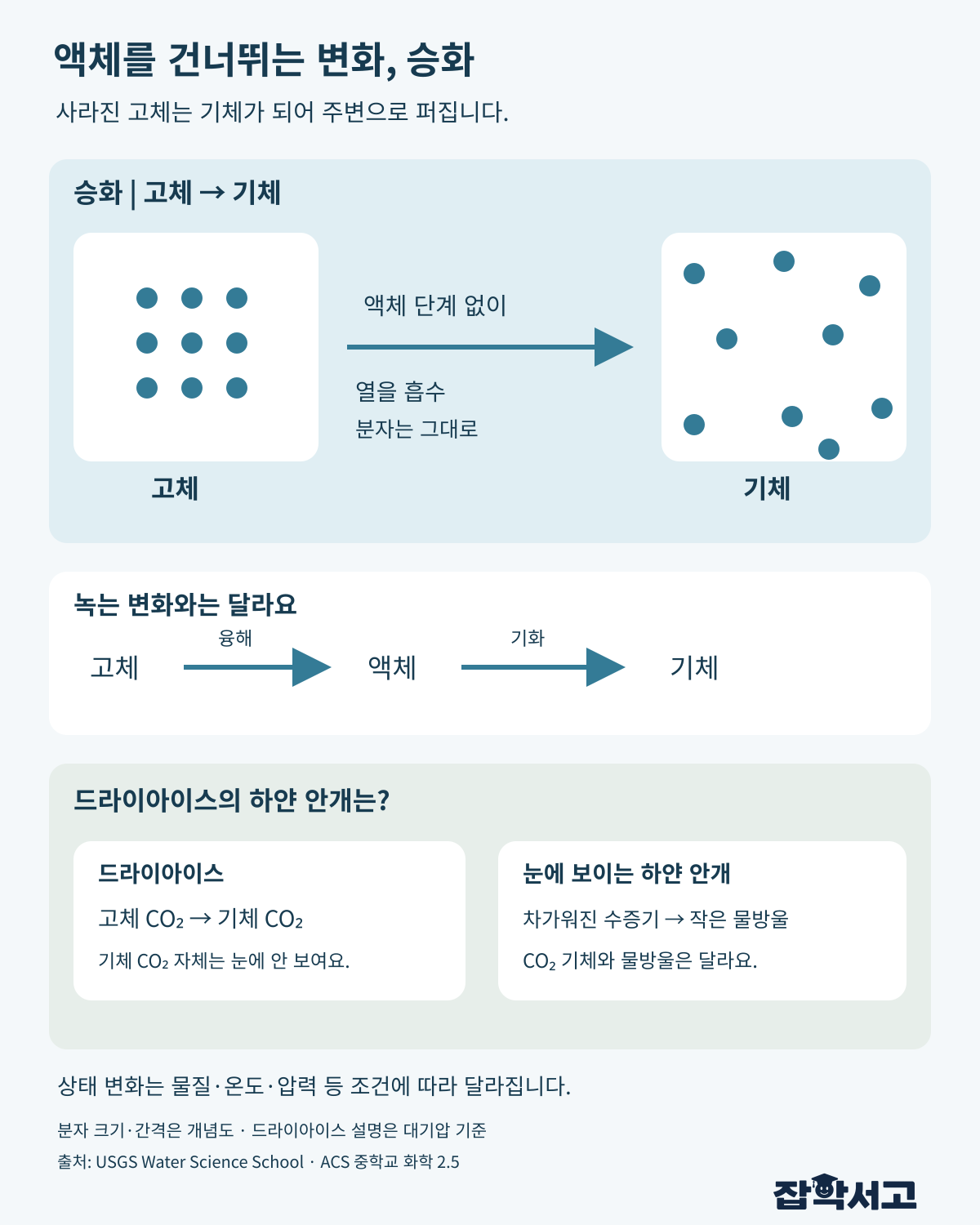
This phenomenon, in which a solid skips the liquid state and changes directly into a gas, is called ‘Sublimation.’ The reverse process, in which a gas turns directly into a solid without passing through the liquid state, is called ‘Deposition.’ In Korean, this reverse process was also long called sublimation, so both terms are still used side by side today.
In this article, we will look in turn at the principle and conditions of sublimation, sublimation we encounter in daily life such as dry ice, snow, and naphthalene, technologies that make use of sublimation such as freeze-drying and purification, and finally what to keep in mind when handling substances that sublimate.
Solids That Vanish Without Melting: The World of Sublimation
How and When Sublimation Happens
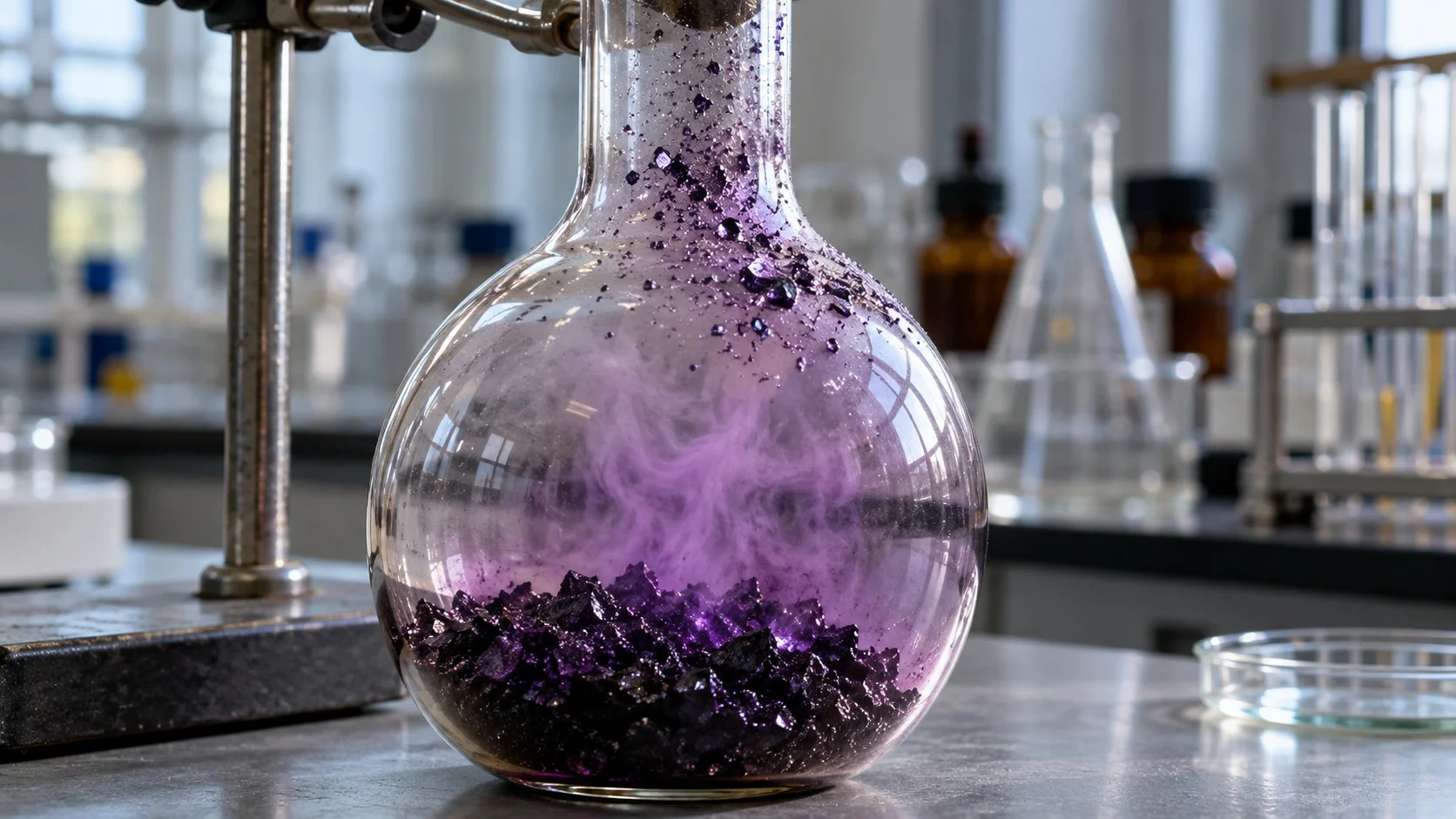
Molecules in a solid are held in place by the forces that pull them toward one another. When they absorb heat, the molecules vibrate more strongly, and those with enough energy overcome the pull of their neighbors and escape into the air. Because this process requires heat, sublimation is an endothermic change that draws heat from its surroundings. The heat needed for sublimation equals the heat needed to melt plus the heat needed to boil.
Strictly speaking, every solid sublimates a little. Most, however, do so far too slowly to notice. For sublimation to happen noticeably, the pressure of the vapor escaping from the solid's surface must be higher than the pressure of the same substance in the surrounding air.
This is where the Triple Point becomes important. The triple point is the temperature and pressure at which solid, liquid, and gas can coexist. If the surrounding pressure is lower than the triple-point pressure, the substance cannot exist as a liquid, so a heated solid turns directly into a gas without melting. Substances with very high triple-point pressures, such as carbon and arsenic, are hard to make liquid at ordinary pressures, and most of them simply sublimate when heated.
Sublimation in Everyday Life
Sublimation happens closer to us than we might think. Let us look at some typical examples.
(1) Dry Ice
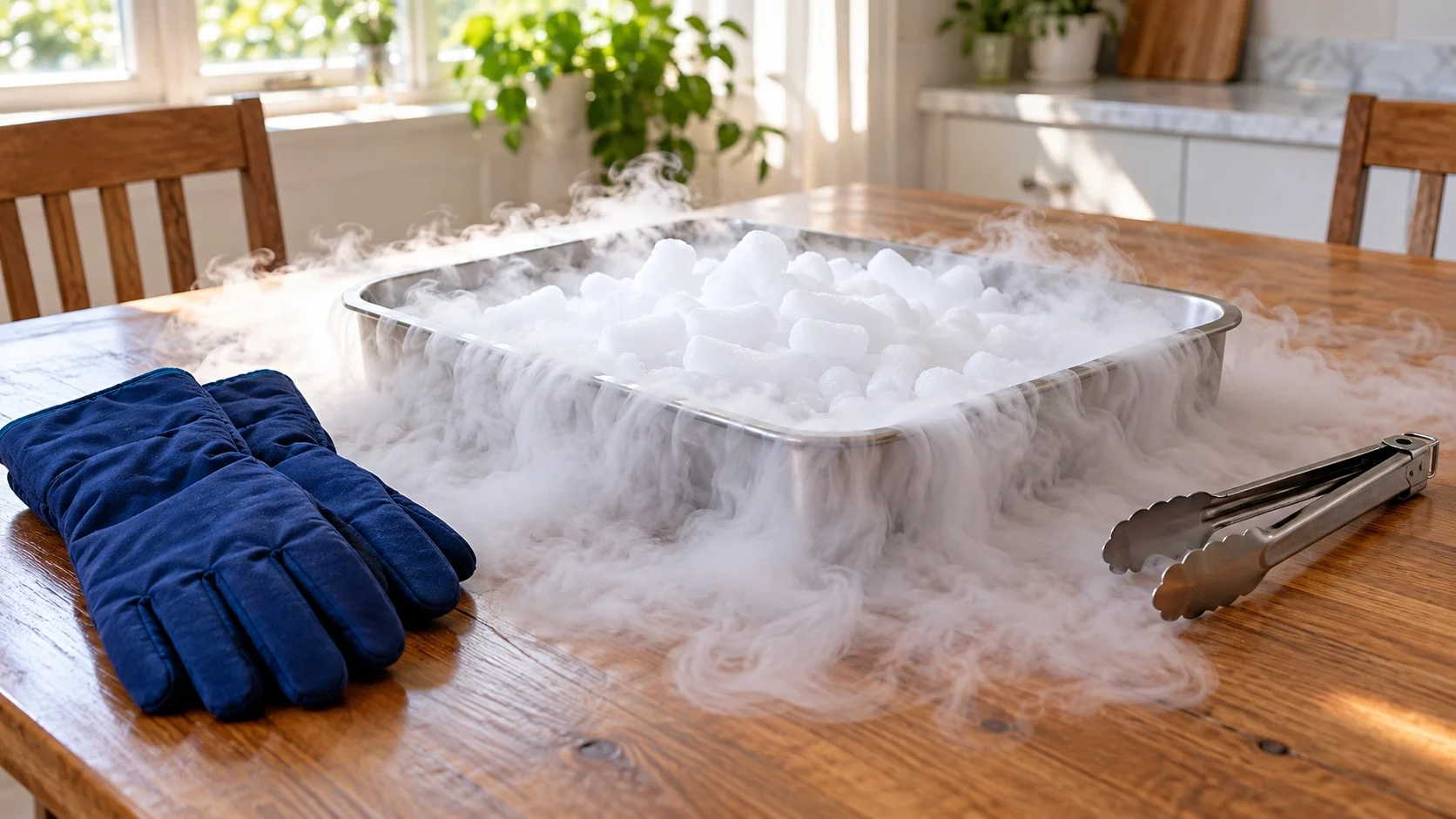
Dry ice is frozen carbon dioxide. The triple point of carbon dioxide is about 5.1 atmospheres and −56.6 degrees Celsius, so it cannot become a liquid at 1 atmosphere. That is why, at atmospheric pressure, it turns directly into a gas at −78.5 degrees Celsius without melting. The white vapor that billows up is not carbon dioxide itself but water vapor in the chilled air condensing into tiny droplets.
(2) Snow and Ice
The triple-point pressure of water is about 612 pascals, far below atmospheric pressure, but when the air is very dry, snow and ice slowly sublimate even in below-freezing weather. This is why piled-up snow shrinks without any sign of melting even during a long cold spell. Sublimation also plays a part in wearing away glaciers.
(3) Naphthalene
Naphthalene, the ingredient in the mothballs people used to put in their closets, has weak attractive forces between its molecules, so it slowly sublimates even at room temperature. That is why mothballs get smaller over time.
Sublimation also happens beyond Earth. When a comet approaches the Sun, ice on its surface sublimates and bursts out together with dust, forming the hazy head and long tail that surround the comet. In the polar regions of Mars, carbon dioxide in the atmosphere freezes in winter and builds up layers of dry ice, which sublimate back into the atmosphere when spring comes.
Technologies That Use Sublimation
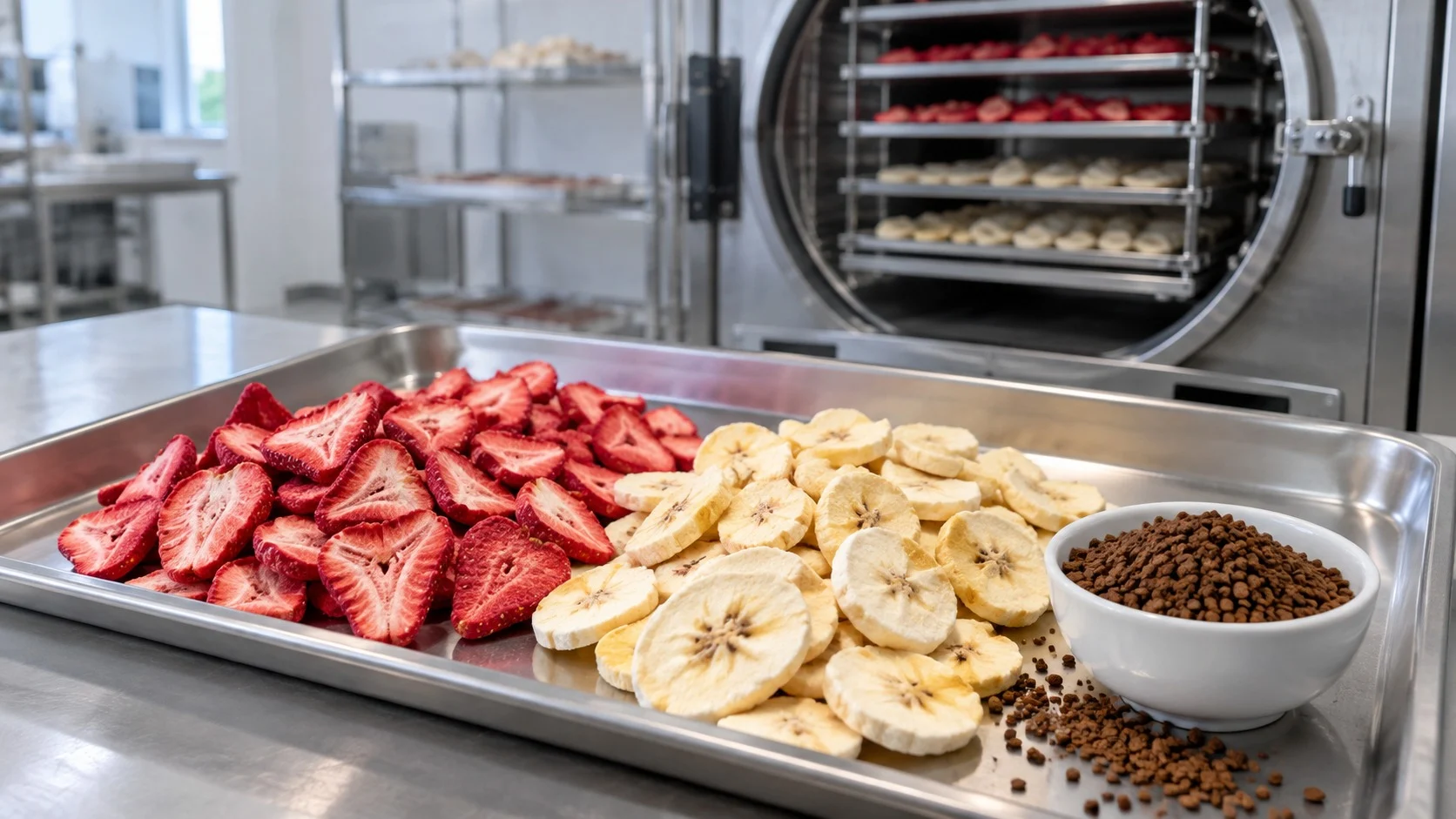
Sublimation is a useful tool in industry and research.
- Freeze-drying: Food or medicine is frozen, and then the pressure is lowered so the ice escapes directly as water vapor. Because little heat is applied, taste, shape, and ingredients are well preserved, which is why it is used to make instant coffee, dried fruit, and pharmaceuticals such as vaccines.
- Sublimation Purification: When a solid mixed with impurities is heated in a vacuum, only the substance that sublimates becomes a gas and recondenses as clean crystals on a cold surface. This method is also used to purify organic electronic materials that require extremely high purity.
- Dye-sublimation Printing: When paper printed with special ink is pressed with heat and pressure, the dye turns into a gas and soaks into polyester fabric or coated mugs. The result is a print that does not easily crack or peel.
Forensic science also makes use of sublimation. When iodine is gently warmed, it sublimates into a purple vapor, and this vapor clings to the oily residue of fingerprints left on paper, revealing prints that were previously invisible.
What to Know When Handling Substances That Sublimate
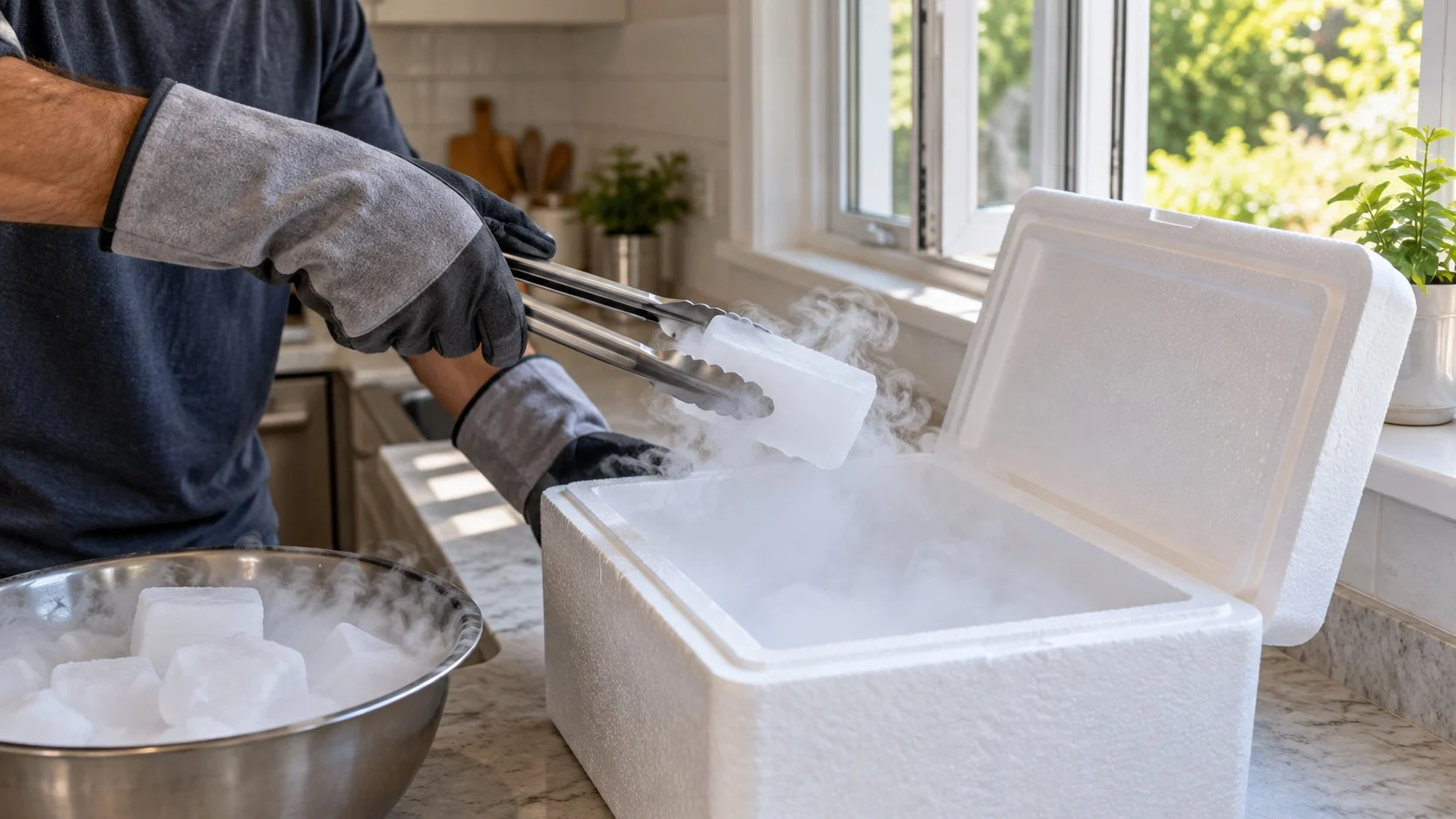
Because sublimation is a quiet change from solid to gas, its dangers are easy to overlook. Dry ice in particular produces hundreds of liters of carbon dioxide gas from just 1 kilogram, so it is best to follow these guidelines.
(1) Do Not Seal It
If you put dry ice in a tightly capped bottle or plastic bottle, the pressure of the expanding gas can make the container burst.
(2) Ventilate
If a large amount is left in a cramped car or a closed room, carbon dioxide can build up and make breathing difficult, so keep it somewhere with good airflow.
(3) Do Not Touch It With Bare Hands
Skin contact with a solid at −78.5 degrees Celsius can cause frostbite, so use gloves or tongs.
Even the same substance behaves differently when pressure rises. Dry ice, too, can be melted into liquid carbon dioxide if a pressure higher than its triple point is applied. Sublimation, in other words, is not a fixed property of a substance but an outcome determined by temperature and pressure together.
Sublimation, which skips the melting step, shows that substances do not always follow the sequence of solid, liquid, and gas. Looking at a solid vanishing before your eyes and thinking about the temperature and pressure it is under: that is the first step in the chemical thinking that leads to a deep understanding of how matter changes state.