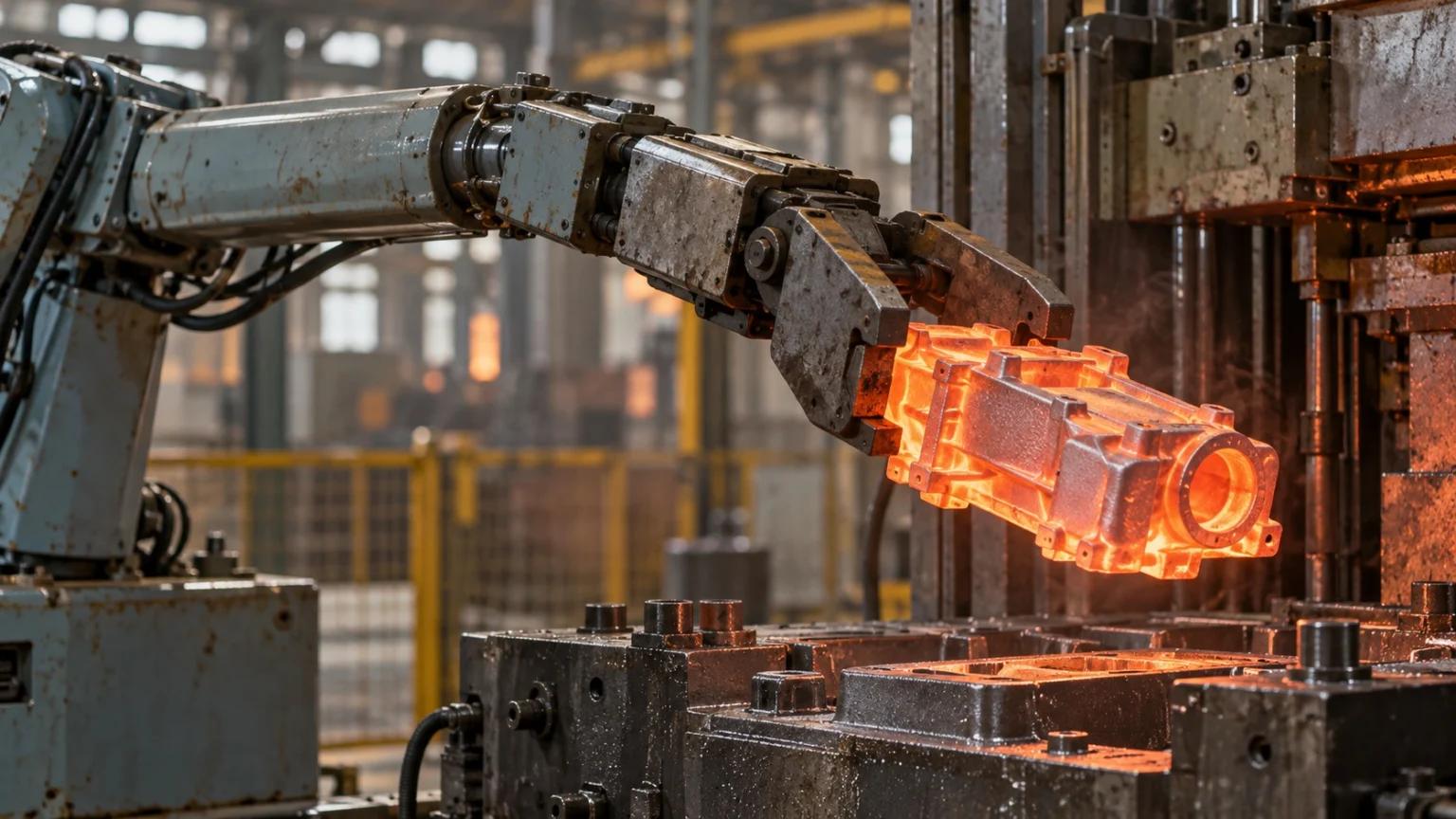
For a long time, picking up and moving car parts freshly cast from molten metal was a job for people. The parts were hot enough to burn a hand, and the factory was full of toxic fumes, so a moment’s carelessness could lead to serious injury.
In 1961, at a car factory in New Jersey in the United States, a machine appeared that took over this dangerous job from people for the first time. With a single arm attached to a body like a large box, it tirelessly repeated the motions it had memorized. This is “Unimate,” regarded as the world’s first industrial robot.
In this article, we will look in turn at how Unimate went from an inventor’s patent to the factory floor, how the machine was built and how it learned its motions, how it appeared before the public, and the legacy it left for today’s industrial robots.
The First Arm That Opened the Era of Industrial Robots
A Robot That Began With a Single Patent
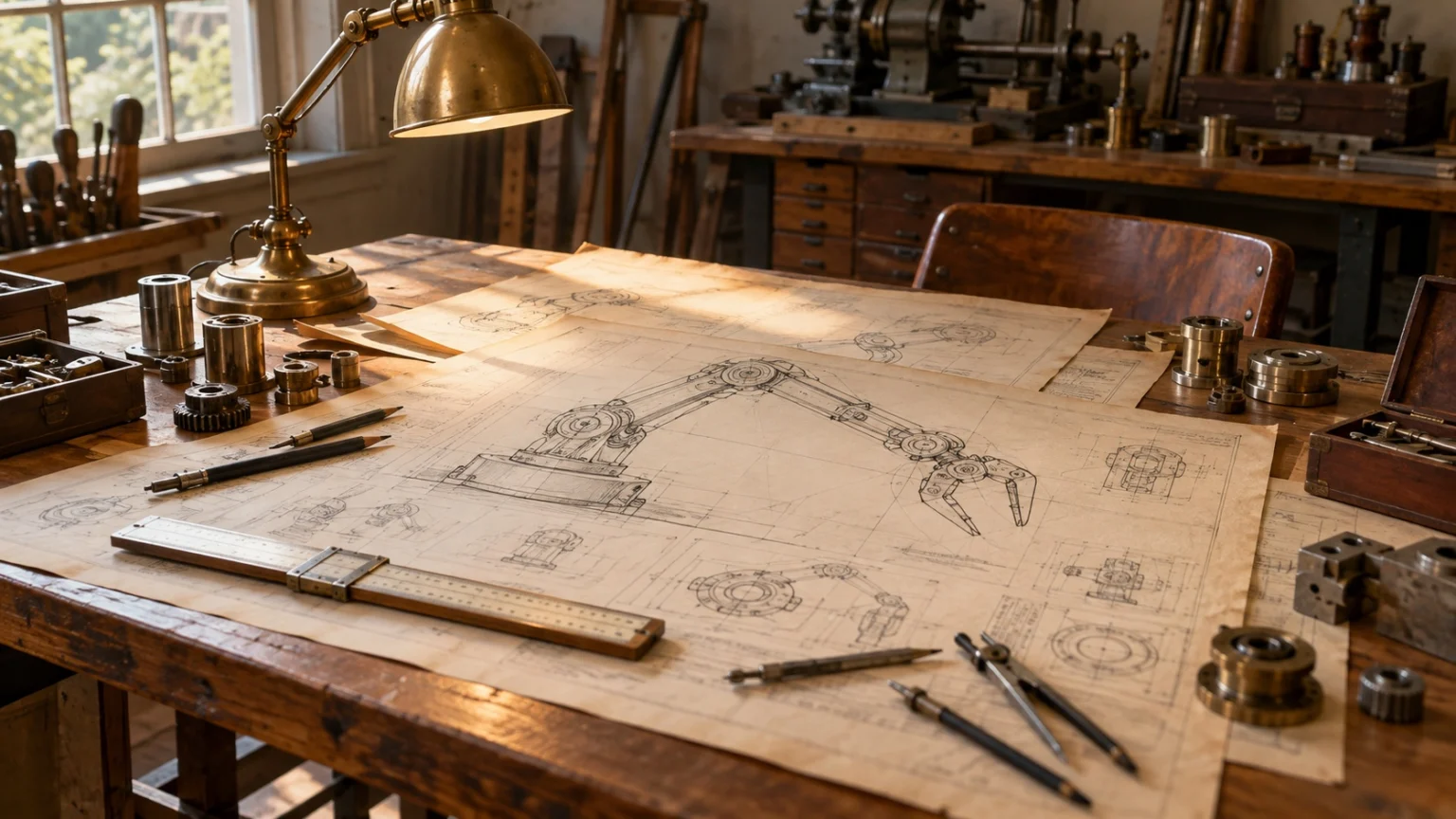
Unimate’s starting point was a patent filed by the inventor George Devol. Not an academic but an engineer who had worked with machines in the field, he thought about ways to hand repetitive factory work over to machines.
(1) A device that moves objects by program
On December 10, 1954, Devol filed a patent titled “Programmed Article Transfer,” which was granted on June 13, 1961. It contained the idea of a general-purpose machine that records set motions and then repeats them exactly, picking up and moving objects.
(2) Meeting a businessman
In 1956, Devol met the engineer Joseph Engelberger at a gathering. The two hit it off and set up a company to build and sell robots, which led to Unimation, known as the world’s first robot company. Engelberger later earned the nickname “the father of robotics.”
(3) The first customer: a car factory
The first Unimate was sold to General Motors and installed in 1961 at its plant in Ewing Township, New Jersey. The robot was given the job of picking up and moving hot metal parts fresh out of a die-casting machine.
A Box Body and a Hydraulic Arm
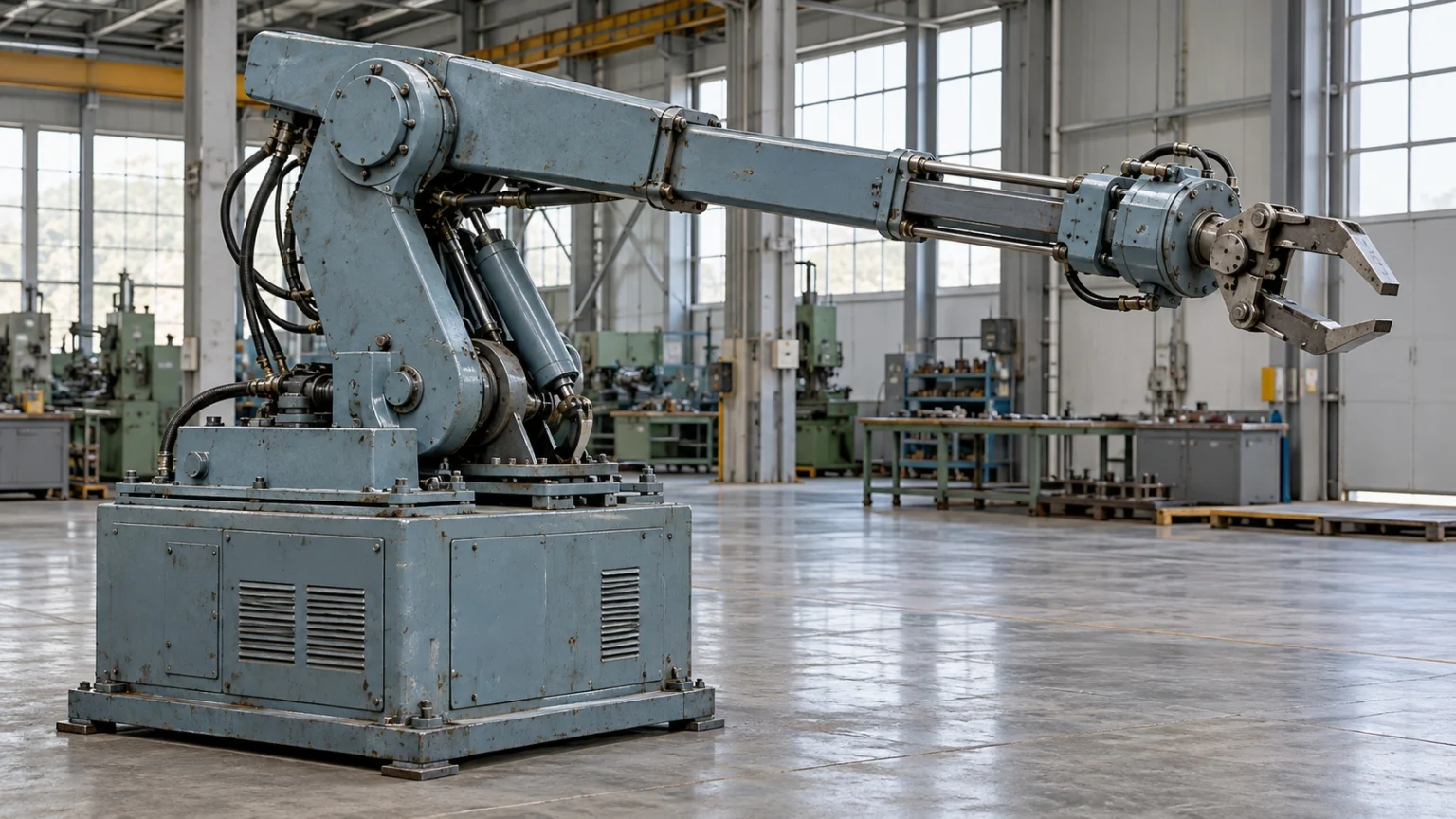
Unlike today’s sleek robot arms, the first Unimate was heavy and bulky. It weighed about 4,000 pounds, or roughly 1.8 tonnes.
- Base: A large box holding the control and memory units, which supports the whole arm.
- Hydraulic Arm: An arm driven by oil pressure, which can powerfully lift even heavy parts.
- Gripper: The clamp at the end of the arm that grabs parts.
- Drum Memory: A memory unit that records the sequence of motions as magnetic signals on a rotating cylinder.
The Unimate installed in the factory was a programmable manipulator with five degrees of freedom. It was a considerably more advanced form than the simple structure moving only in straight lines that the original patent had described.
Early units used vacuum tubes as digital switches, which were only later replaced with transistors. Because the parts available on the market at the time fell short in performance, Unimation had to design and machine most of the parts itself.
Teaching by Moving It Directly
The way Unimate learned its work is quite intuitive even by today’s standards. Instead of people writing program code, the motions were memorized by the robot’s body one by one.
(1) Recording positions one at a time
When an operator moved the gripper at the end of the arm to the desired position, the robot recorded that spot in its drum memory. Saving several points in order like this completed a single work sequence.
(2) Repeating the stored motions
Once recording was done, the robot moved through the stored points in order, repeating the same motions endlessly. This point-to-point motion, moving from point to point, is still used as a basic function in robot arms today.
(3) The same machine, a different job
Simply recording new motions let the same robot take on a different job. Unlike dedicated automation machines built to do only one task, the ability to be used for many tasks by changing the program became the heart of the industrial robot.
The Television Stage and the Legacy Left in Factories
Unimate also caught people’s attention outside the factory. In 1966, Engelberger appeared with Unimate on a popular American late-night talk show.
(1) Pouring beer and sinking a golf ball
On the show, Unimate poured beer into a cup, putted a golf ball into the hole, and picked up a baton to conduct the band. For many viewers, it was the first time they had seen a robot actually at work.
(2) Spreading through the car industry
Following General Motors, Chrysler and Ford also brought in Unimates. The first units were sold at a loss of $35,000, but as orders grew, production costs fell and the company began to make large profits.
(3) Entering the Hall of Fame
In the 1980s, as car makers sought robots driven by electric motors instead of hydraulics, Unimation was sold to Westinghouse in the early 1980s. Even so, in 2003 Unimate was named one of the first robots inducted into the Robot Hall of Fame created by Carnegie Mellon University in the United States.
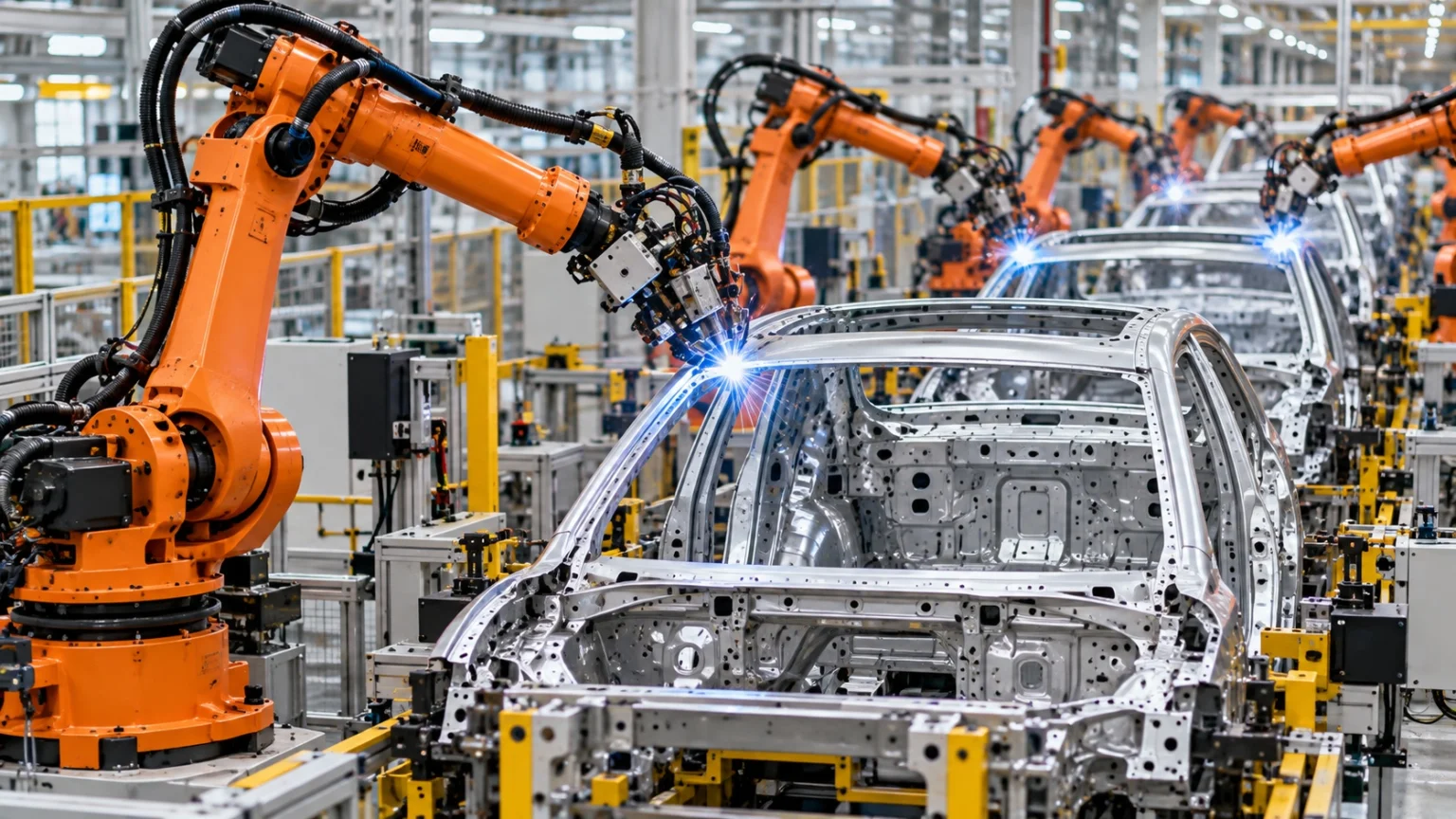
Unimate was the first to prove on the factory floor that dangerous and tedious work could be handed to machines while people worked somewhere safer. The countless robot arms tirelessly welding and assembling in today’s car factories are all descendants of this bulky first arm.
Moving repetitive, dangerous work from human hands to machine hands: that is the first step of industrial robotics, in which factories and robots work together.