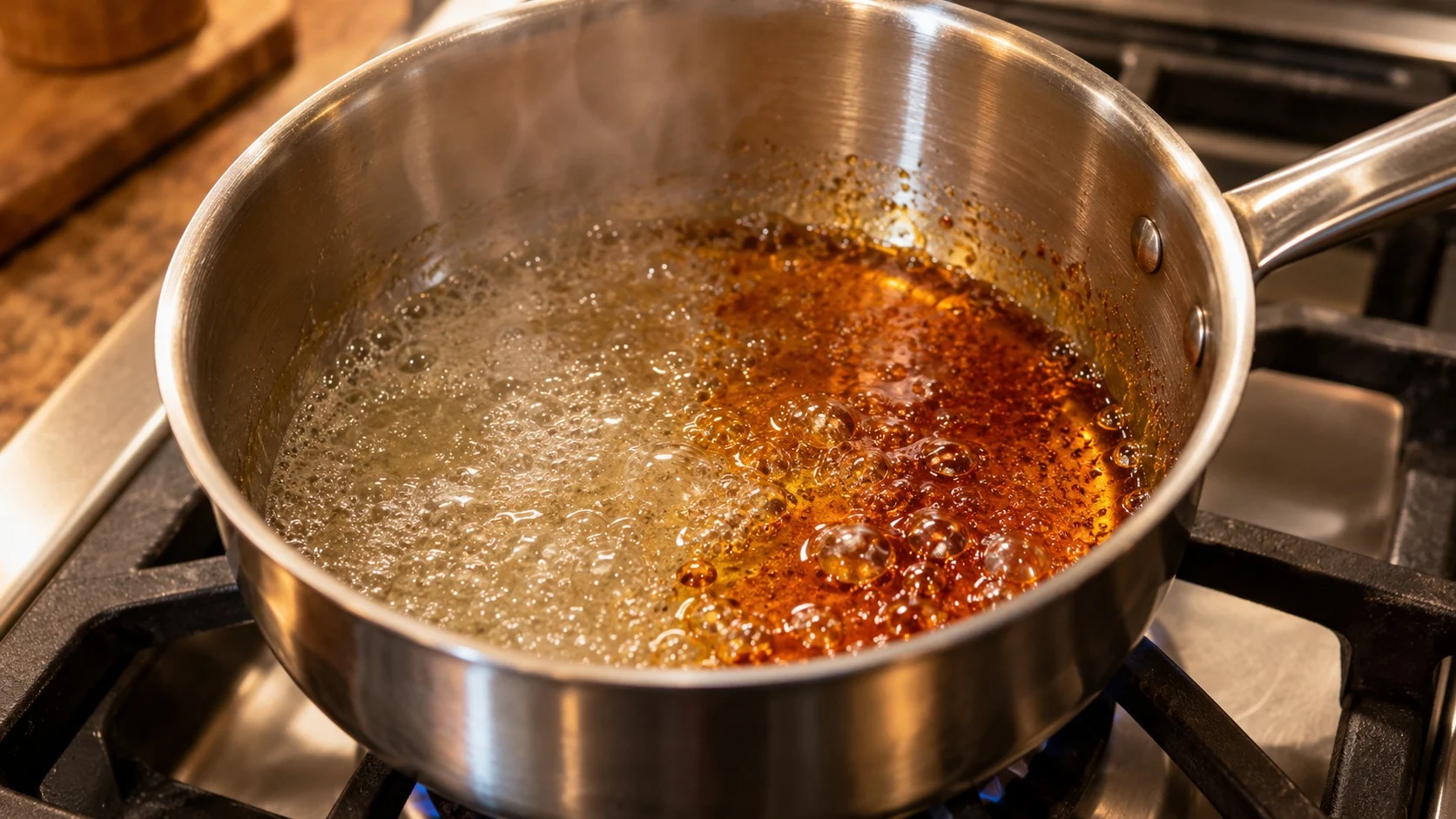
Put sugar in a pot over low heat, and at some point the white grains melt into a clear liquid, then pass through gold to a deep amber. A sweet, slightly bitter aroma fills the kitchen, and once the syrup cools it becomes candy or the caramel sauce on top of a pudding. Sugar, which had only sweetness, has turned into a new substance with color, aroma, and even bitterness. This change is called “Caramelization.”
Put simply, caramelization means “a reaction in which sugar molecules break down and recombine when sugar is heated to high temperatures, producing brown substances and aroma compounds.” This reaction is hidden in the sweetness of roasted onions, the crisp top of a crème brûlée, and the deep color of cola.
In this article, we will look in turn at how caramelization works and the temperatures it requires, how it differs from the Maillard reaction, its uses in cooking and the food industry, and the safety issues worth knowing about.
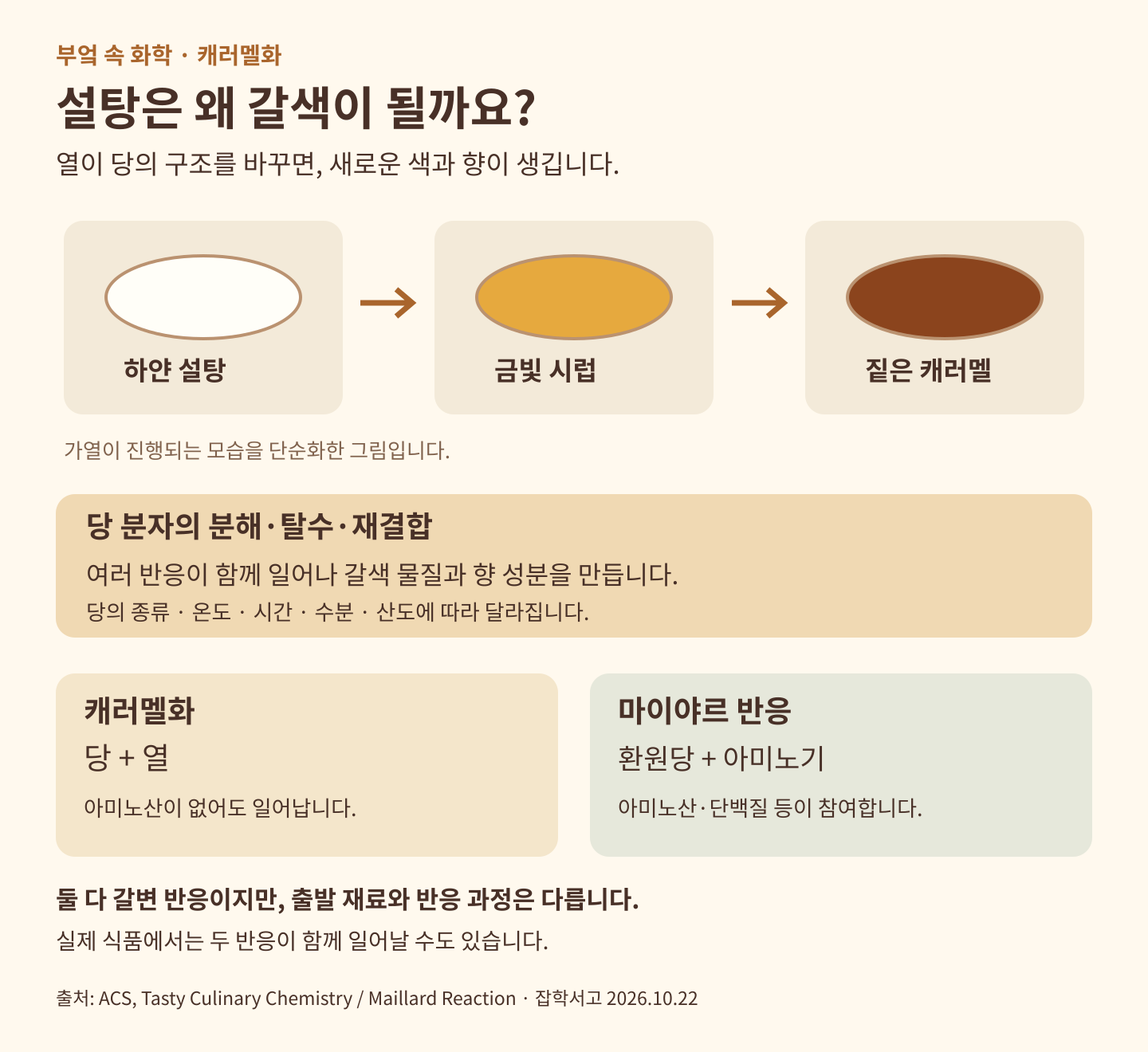
The Chemistry of Heat That Turns Sweetness into Color and Aroma
How Does Caramelization Happen?
Caramelization is a type of non-enzymatic browning, in which color changes through heat alone without enzymes. It is a complex process that produces hundreds of chemical compounds at once, so not every step has been worked out even today, but the overall flow is well understood.
(1) Breakdown and Dehydration
When heated, sucrose, the main component of sugar, first splits into glucose and fructose. Water is then removed from the sugar molecules, and as their structures change or break into small pieces, various intermediate compounds form.
(2) Polymerization and Brown Compounds
The broken fragments join together again to form large molecules. Three groups of polymers formed at this stage, called caramelans, caramelens, and caramelins, give the brown color. The longer the heating continues, the more large molecules form, so the color deepens and the sweetness decreases.
(3) Aroma Compounds
During the reaction, volatile substances are also released, such as Diacetyl, which gives a buttery aroma, furans, which give nutty or roasted aromas, and Maltol, which has a sweet aroma. The distinctive flavor of caramel is the result of these compounds blending together.
Different Temperatures for Different Sugars and the Difference from the Maillard Reaction
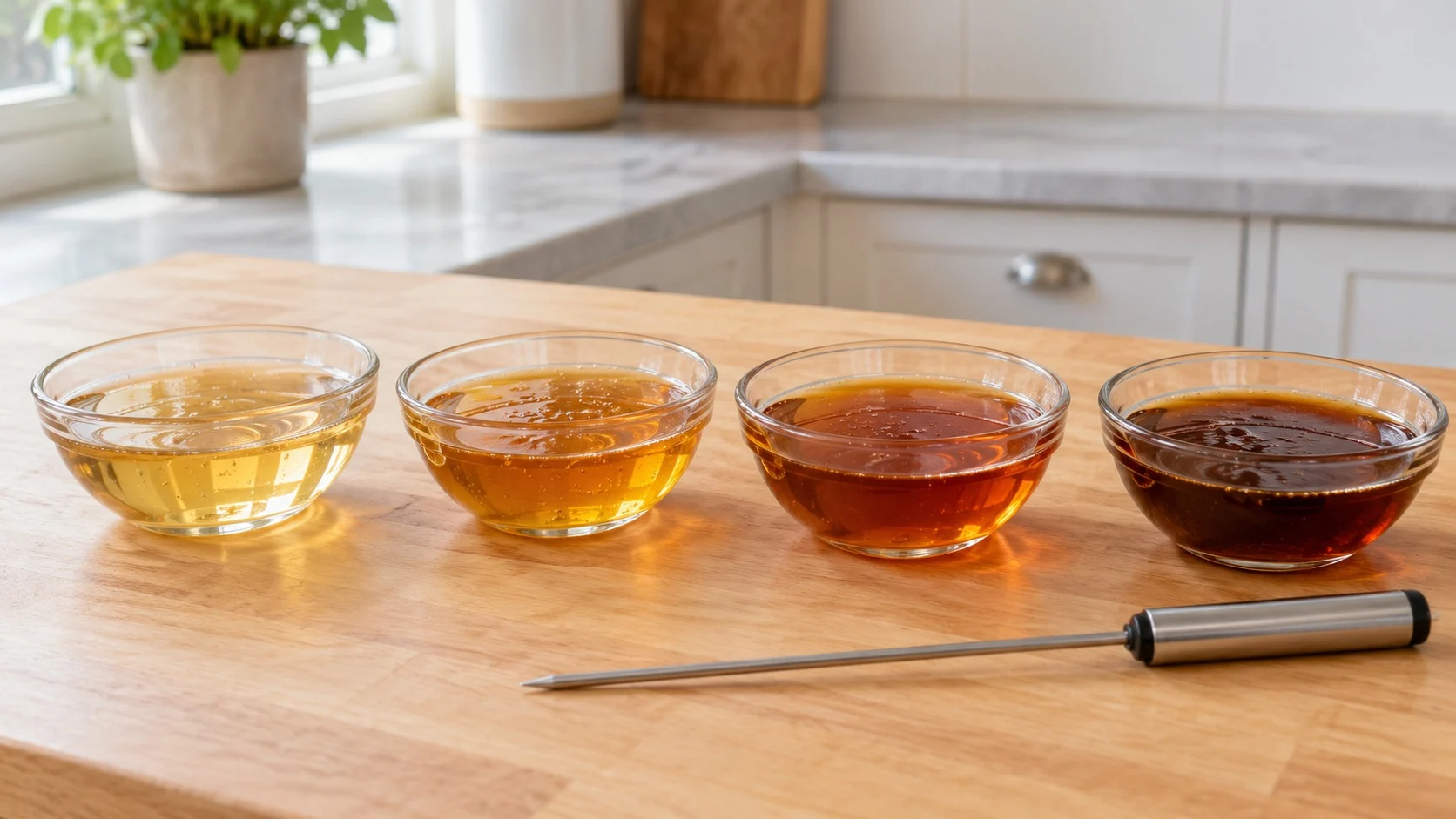
The temperature at which caramelization becomes active varies by type of sugar. The values compiled by Harold McGee, author of On Food and Cooking, are as follows.
- Fructose: The reaction begins at about 105°C, so it turns brown first.
- Glucose: The reaction becomes active at about 150°C.
- Sucrose: The sugar we commonly use, which begins to color in earnest at around 170°C.
- Maltose: Requires a relatively high temperature of about 180°C.
Acidity also changes the speed. The reaction is slowest near neutral, around pH 7, and becomes faster toward the acidic or alkaline side. When impurities such as molasses are mixed in, as in brown sugar, the reaction happens more easily.
The often-confused Maillard Reaction is also non-enzymatic browning, but it requires sugars to meet the amino acids in proteins. Caramelization differs in that it is a reaction in which sugar alone breaks down under heat, without amino acids. The brown color that forms when grilling meat comes mainly from the Maillard reaction, while the brown color of a syrup made only from melted sugar comes from caramelization.
Caramelization in the Kitchen and the Factory
(1) Caramelization in Cooking
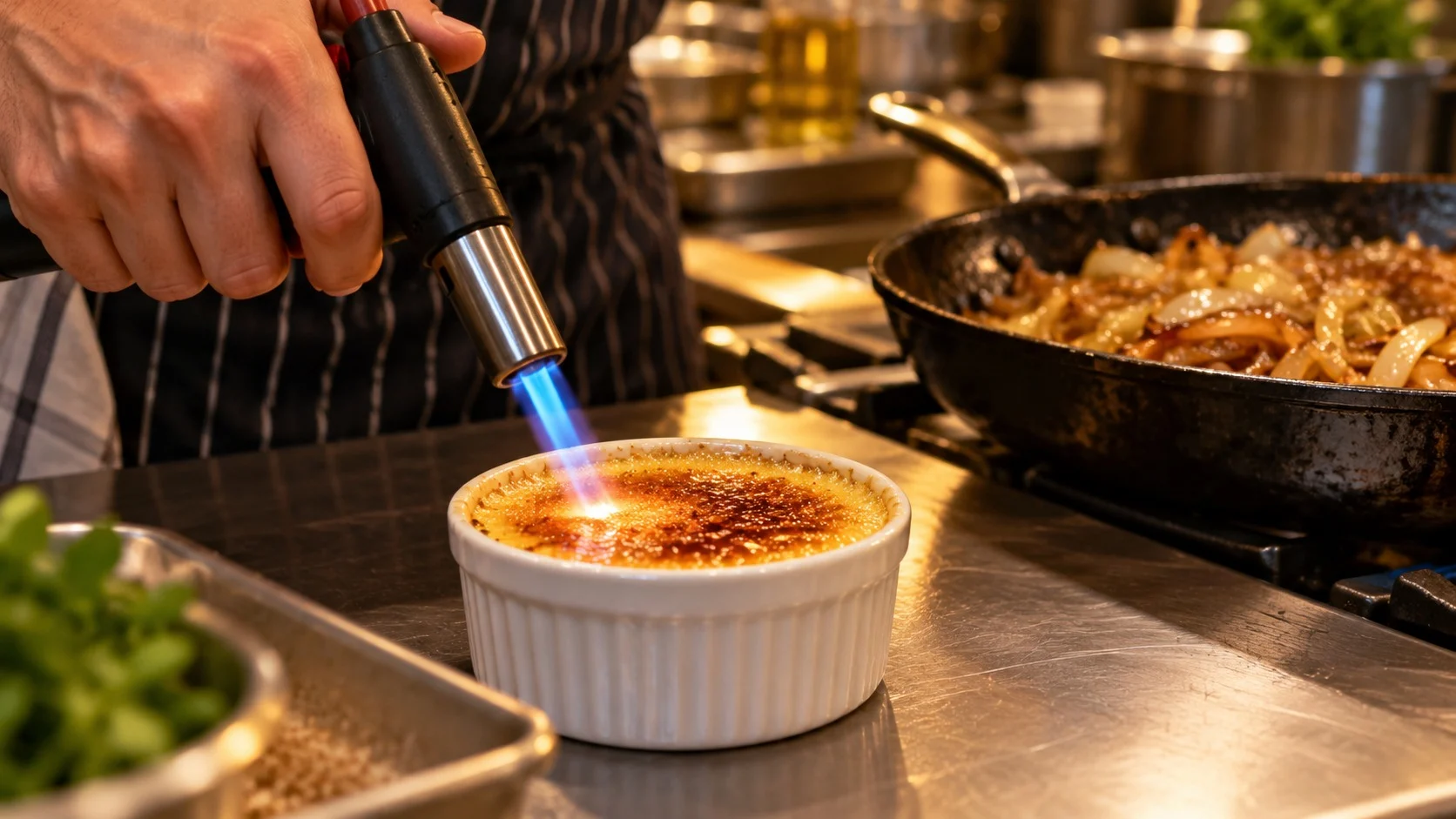
Caramel sauce and candy, crème caramel, and crème brûlée are typical examples. When onions are sautéed for a long time, their sweetness intensifies and they turn brown; doing it properly takes about 30 to 45 minutes. Because onions also contain amino acids, the Maillard reaction takes place at the same time.
(2) The Discovery That Sugar Does Not Melt
In 2011, a research team led by Professor Shelly Schmidt at the University of Illinois in the United States published findings showing that sugar does not melt at a fixed temperature but becomes liquid-like as it decomposes. The researchers called this “Apparent Melting” and showed that caramelization can occur even at lower temperatures if sugar is heated for a long time.
(3) Caramel Color as a Food Coloring
Food factories make caramel color by heating sugars together with acids, alkalis, or salts. Internationally it is divided into four classes: Class I plain caramel is mainly used in whisky and confectionery, Class II caustic sulfite caramel in tea and brandy, Class III ammonia caramel in beer and soy sauce, and Class IV sulfite ammonia caramel in carbonated drinks such as cola.
Safety Issues Surrounding Caramelization
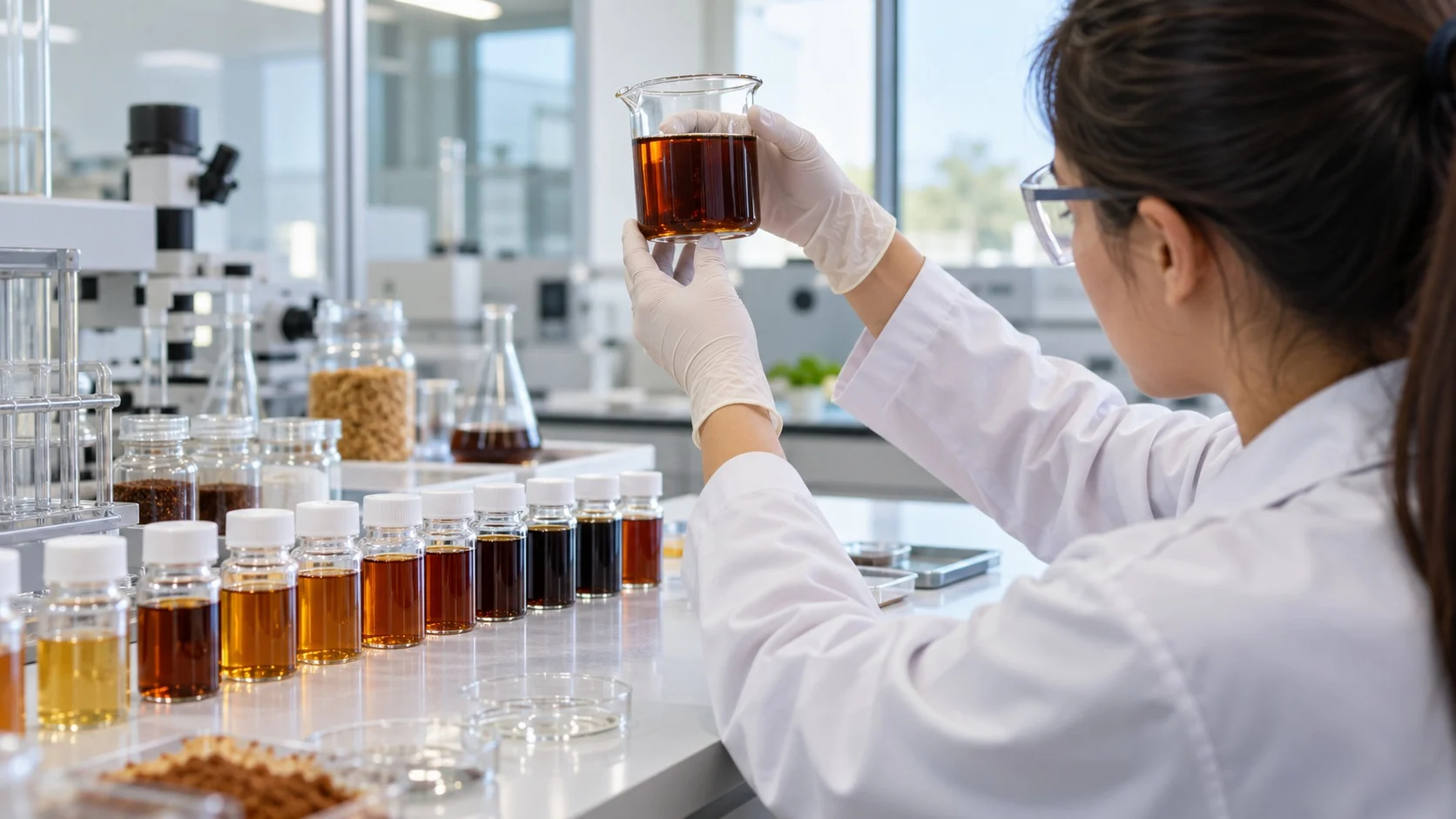
Caramelization is an old cooking technique, but it also comes with a few points worth examining.
(1) The 4-MEI Controversy
Class III and Class IV caramel colors, which are made using ammonia, produce a byproduct called 4-Methylimidazole, or 4-MEI for short. Based on animal study results, the U.S. state of California added this substance to its list of carcinogens in 2011, and the U.S. Food and Drug Administration (FDA) also continues to monitor its levels. However, it has not been concluded that it is dangerous to humans at everyday levels of intake.
(2) Overheating
If caramelization goes too far, bitterness and burnt smells become stronger, and substances such as 5-Hydroxymethylfurfural also increase. That is why cooks turn off the heat once the desired color appears, and food companies manage quality by setting temperatures and times.
Caramelization is the chemistry of heat that turns ordinary sugar into an ingredient with color, aroma, and depth of flavor. Because the result changes with the type of sugar, temperature, acidity, and heating time, both cooks and food scientists handle this reaction with care. Knowing the principles lets you get more delicious results from the same sugar.
Knowing how to wait in front of the right heat is the first step toward delicious caramel.