In the late 19th century, young graduates of Oxford and Cambridge began, one by one, to unpack their bags in the slums at the eastern edge of London. Instead of handing out goods to poor neighbors and going home, their idea was to move into the neighborhood itself, living there together while learning and teaching. This unfamiliar experiment spread across the ocean to the United States and, about 100 years ago, all the way to Insa-dong in Seoul. This is the “Settlement House Movement.”
Put simply, the settlement house movement means “a movement in which educated people moved into poor areas and lived alongside residents while carrying out education, everyday support, and social reform together.” The Korean name, “inbo” (隣保), means neighbors helping one another, and the community welfare centers found in neighborhoods today grew directly out of this movement.
In this article, we will look in turn at how the settlement house movement began, what Hull House in the United States achieved, the three principles that guided the movement, and the path it took to Korea along with its meaning today.
The Settlement House Movement: Facing Poverty as Neighbors
Toynbee Hall: The Start of an Experiment in Living Together

In Victorian England, at the height of industrialization, urban slums groaned under cramped housing, filthy sanitation, and endless poverty. Samuel Barnett, the vicar of a parish in London’s Whitechapel district, and his wife Henrietta Barnett, a teacher and social activist, worked in such neighborhoods for a long time and came to one realization: occasional visits to help were not enough to change poverty.
The couple proposed that university students stay in the slums themselves and experience their neighbors’ lives firsthand, and on December 24, 1884, they opened “Toynbee Hall,” the world’s first settlement house. It was named in honor of Arnold Toynbee, an Oxford historian who had worked for the poor and died in 1883 at the age of 30.
There were already activities to help the poor at the time. The Charity Organization Society, founded in London in 1869, carefully investigated the people who would receive help and organized charity so that it did not overlap, but it tended strongly to locate the causes of poverty mainly in individual laziness or wrongdoing. The settlement house movement was new in that it instead looked for the causes of poverty in the social structure created by industrialization.
Hull House and Jane Addams
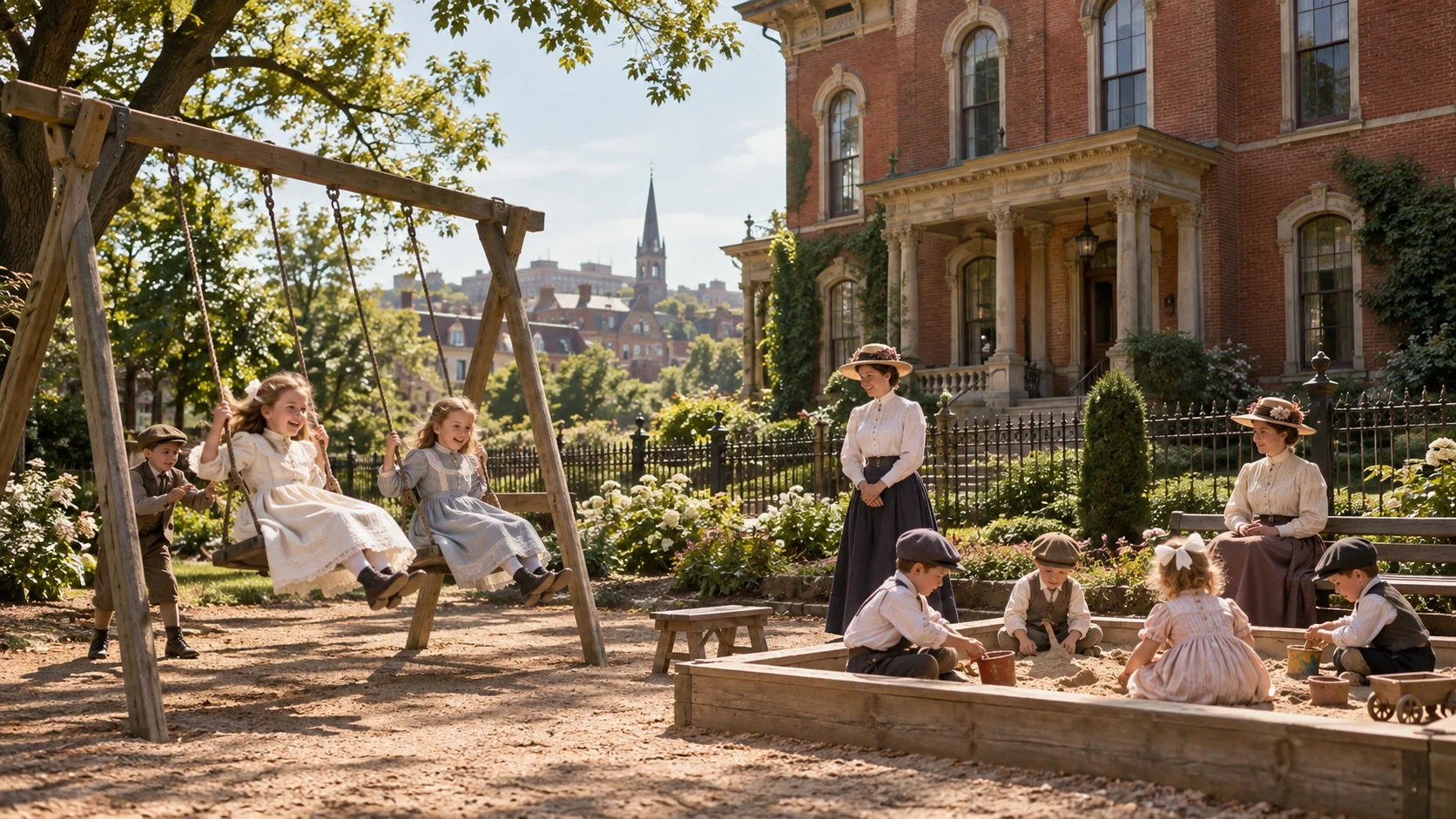
After touring Toynbee Hall, the American Jane Addams founded “Hull House” in Chicago in September 1889 together with her friend Ellen Gates Starr. The surrounding area was a poor neighborhood crowded with immigrants newly arrived from Italy, Greece, Germany, and elsewhere. It started in a single old mansion, but by 1911 it had grown to 13 buildings.
Hull House left a wide variety of marks on the neighborhood.
(1) Spaces for children and families
It created Chicago’s first public playground and a public bathhouse, and opened a kindergarten for mothers who had gone out to work.
(2) Learning and culture
It organized classes in English, literature, art, and crafts, along with free lectures, concerts, and amateur theater, to help immigrants adapt to their new society.
(3) Changes to institutions
It helped bring about laws against child labor, the first juvenile court in the United States, and protections for workers.
In recognition of this work, Addams received the Nobel Peace Prize in 1931, the first American woman to do so. Buoyed by the success of Hull House, the number of settlement houses in the United States grew to nearly 500 by the 1920s.
The Three Principles of the Settlement House Movement
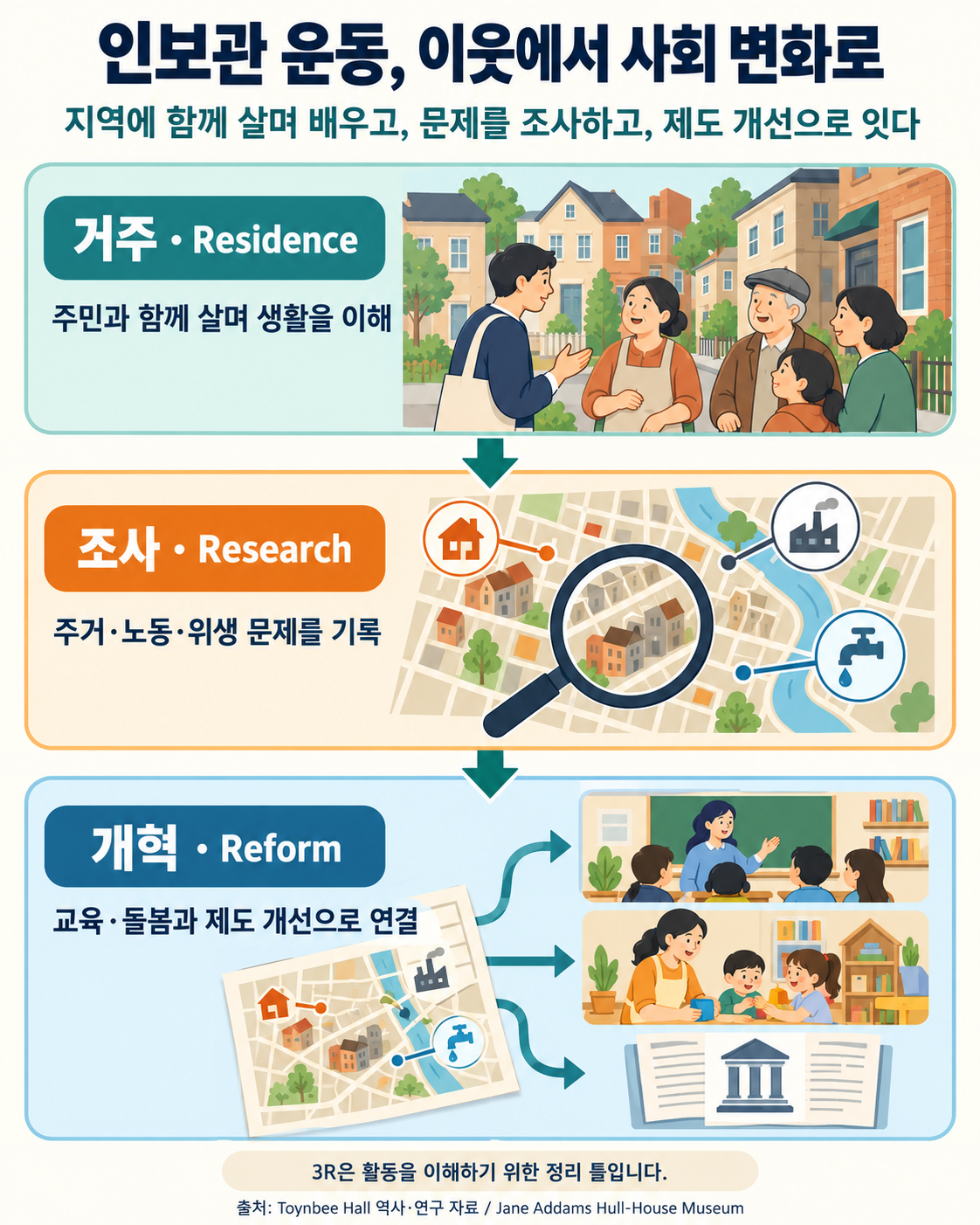
The work of the settlement house movement is often summed up in three principles known as the “3Rs,” after their English initials. This framework is less Addams’s own wording than a summary drawn up by later textbooks and introductory works, and it is still frequently cited in social work practice today.
- Residence: Helpers live in the area themselves, become neighbors to the residents, and understand their circumstances firsthand.
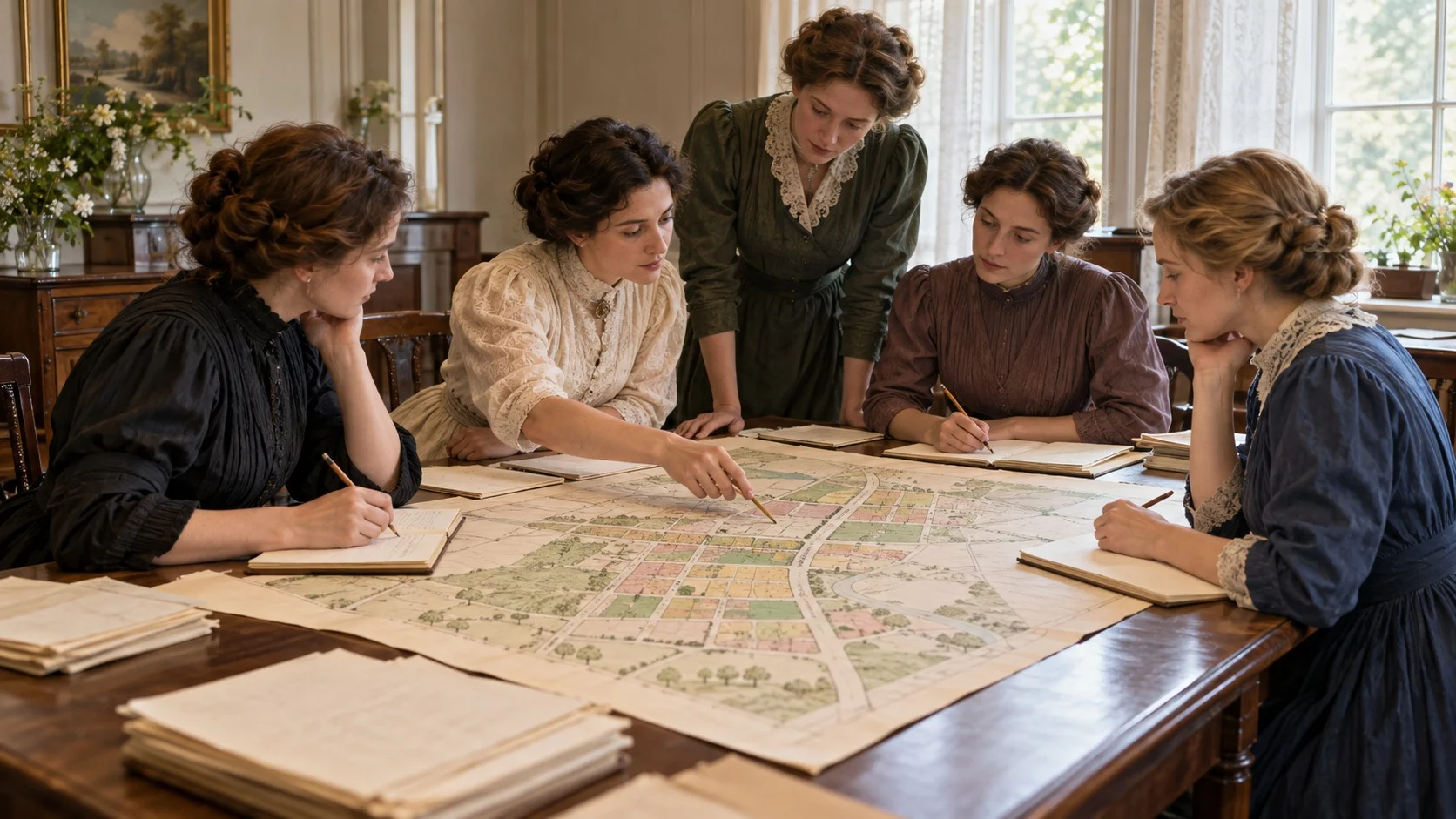
- Research: Housing, jobs, sanitation, countries of origin, and more in the neighborhood are carefully surveyed to identify the causes of poverty scientifically. “Hull-House Maps and Papers,” published in 1895, mapped residents’ nationalities and wages and also influenced sociological research in Chicago.
- Reform: Problems revealed by research are made public, and changes to laws and institutions are steadily demanded.
What stands out here is that help was seen not as “giving” but as “doing together.” Settlement house workers did not see residents only as people to be taught; they tried to treat them as colleagues to learn from and to solve neighborhood problems with.
The Settlement House Comes to Korea

The settlement house movement also reached Asia. In Korea, the “Taehwa Women’s Center” (Taehwa Yeojagwan), opened in Insa-dong, Seoul, in April 1921 by the Woman’s Missionary Council of the Methodist Episcopal Church, South in the United States, is regarded as the first settlement house and the beginning of community welfare centers. The building stood on the site of Taehwagwan, where the national representatives held the declaration of independence ceremony during the March 1st Movement in 1919.
The first director, the missionary Mamie D. Myers, opened night classes that taught practical skills such as cooking, embroidery, and sewing to women who found it hard to go out during the day. The center then expanded into Korean-alphabet (Hangul) education, home visits, child health, and public sanitation programs, and it continues today as the Taehwa Christian Social Welfare Center.
The community welfare centers found throughout Korea today also carry on the spirit of the settlement house. The era when workers had to live in the area has passed, but the idea of finding and solving local problems together with residents remains. Its traces are still clearly visible in everyday activities such as study rooms for children, free meal services, and neighborhood gatherings.
At a time when poverty was blamed solely on individuals, the settlement house movement saw poverty as a problem of society and chose solidarity as neighbors over charity from a distance. Thanks to this, it left a precious legacy: playgrounds and kindergartens, child protection laws, and neighborhood community welfare centers.
Of course, not every problem can be solved by neighbors’ goodwill alone. Yet the attitude of first listening to the circumstances of people in need, close to their lives, is still the starting point of social welfare. Treating the lives beyond the wall as our neighbors’ concern and staying by their side: that is the first step toward a local community where people live together.