Mention an industrial robot in a factory, and what usually comes to mind first is a huge machine swinging its arm at frightening speed inside a yellow fence. If a person stepped inside that fence, the robot had to stop at once, and people and robots always worked separately with a wall between them. These days, though, it’s not hard to see robot arms taking parts from a worker right beside them, brewing coffee in cafés, and shaking fryer baskets in kitchens. These robots, built to work alongside people without a fence, are called ‘collaborative robots.’
Put simply, a collaborative robot is ‘a robot designed to share the same workspace with people and to reduce its own force and speed when it bumps into or comes close to someone, so that no one gets hurt.’ It is also called a ‘cobot,’ a shortened form of the English term, and its goal is to add a robot’s strength and consistency to human dexterity and judgment.
In this article, we’ll look in turn at how collaborative robots came about, the four ways they work with people, examples in factories and everyday life, and the safety issues that must be weighed when bringing them in.
Robots That Crossed the Fence to Work Beside People
How Were Collaborative Robots Born?
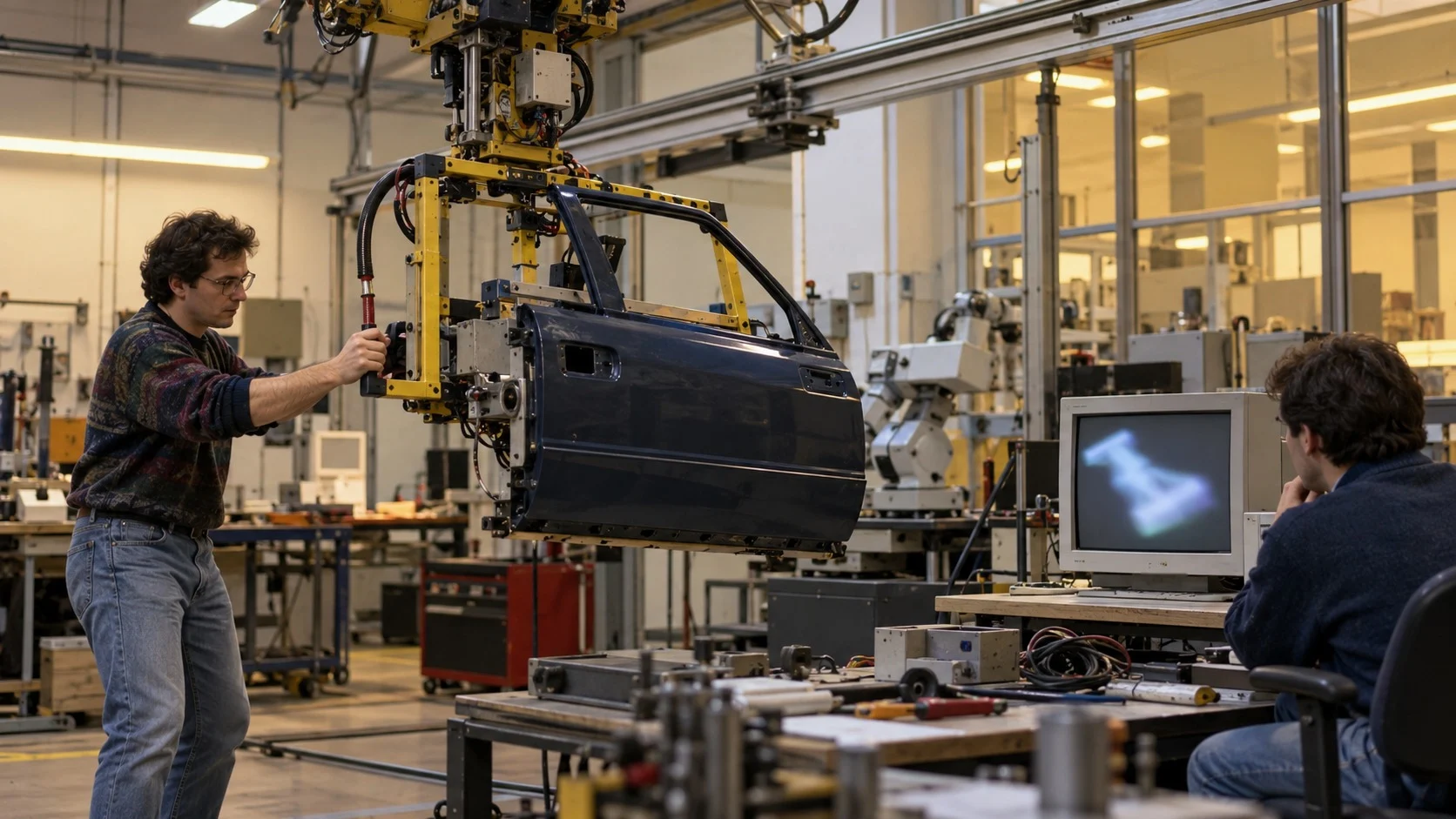
The idea of the collaborative robot came from Professors J. Edward Colgate and Michael Peshkin of Northwestern University in the United States in 1996. Their research aimed to help people move heavy parts on automobile assembly lines, and it was supported by the General Motors Foundation, among others.
(1) People Supply the Force, the Robot Sets the Direction
The first collaborative robot did not generate strong force on its own; instead, it was a device that smoothly guided a person’s pushing motion along a path set by a computer. At first it was called a ‘programmable constraint machine,’ but in a lab naming contest, postdoctoral researcher Brent Gillespie came up with the name ‘cobot,’ which became the name we use today.
(2) The First Cobots Enter the Factory
The robot-arm-style collaborative robots commonly seen today really began with the UR5, released in 2008 by Denmark’s Universal Robots. Its first customer, the Danish company Linatex, placed the robot next to its employees without a fence and had it feed materials into machine tools.
Four Ways of Working with People
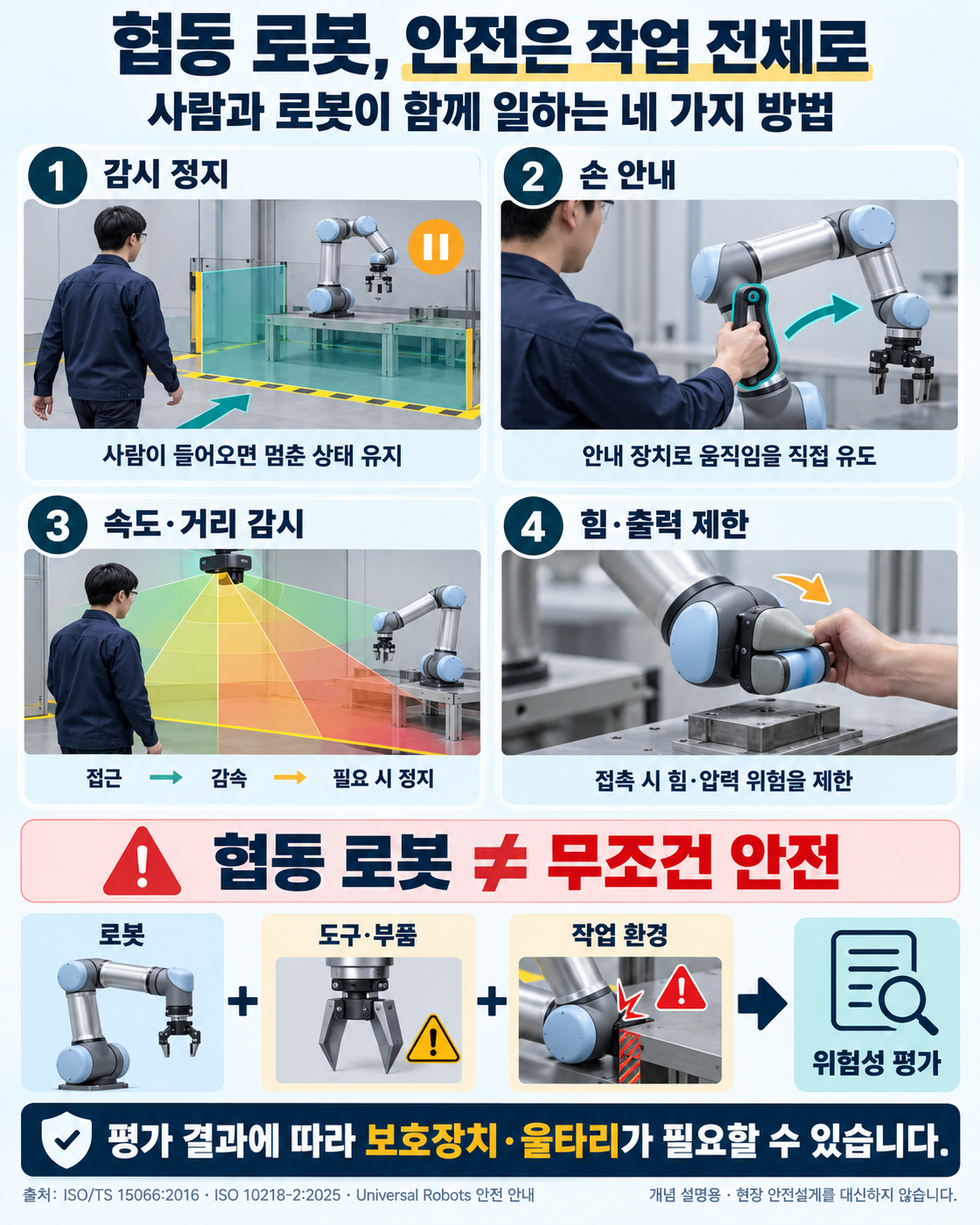
ISO/TS 15066, the technical specification for collaborative robots published by the International Organization for Standardization in 2016, broadly divided the ways people and robots work together into four types.
- Safety-Rated Monitored Stop: When a person enters the shared area, the robot stops and waits, and it starts moving again once the person leaves.
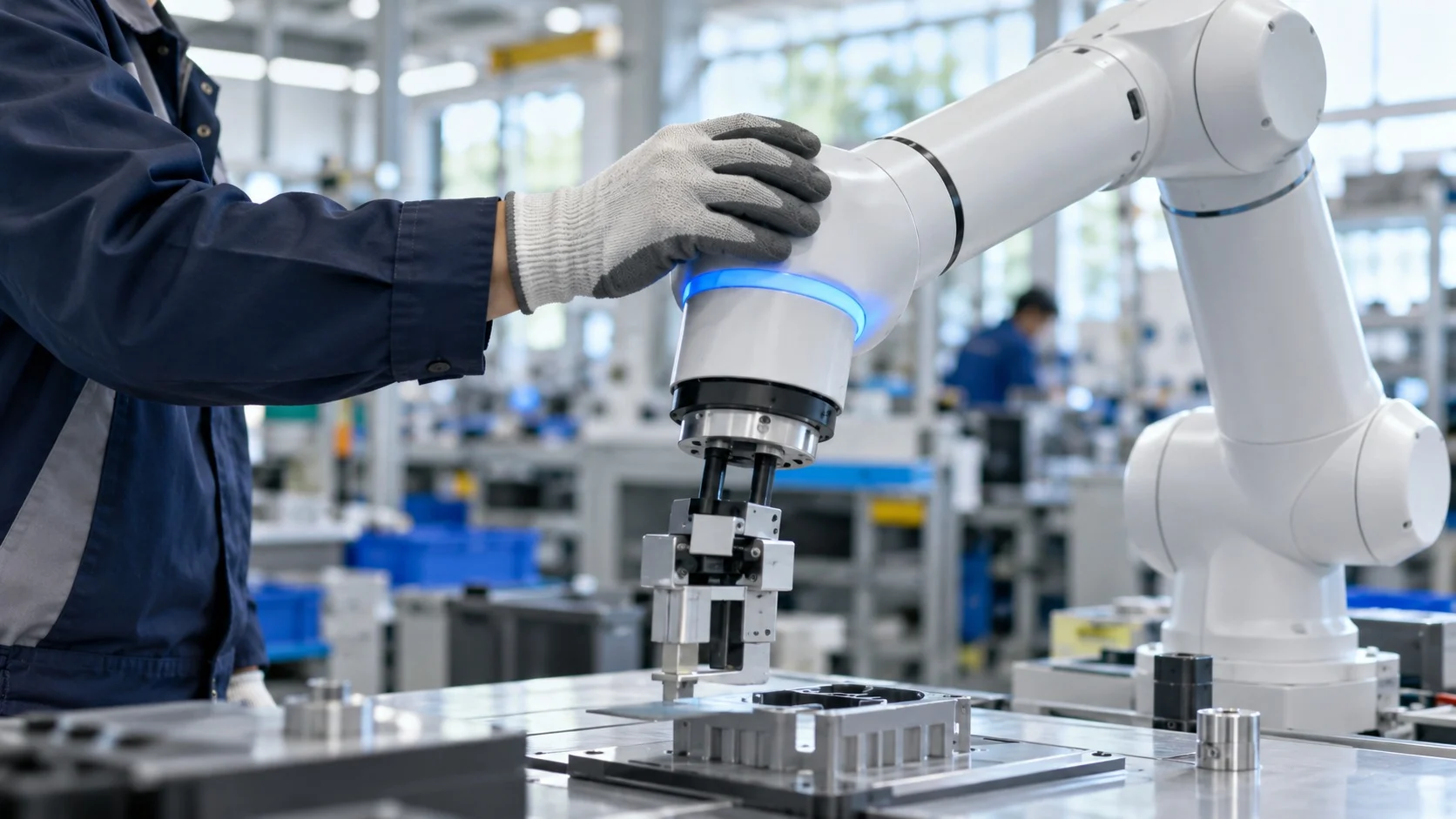
- Hand Guiding: The worker grips the robot arm directly by hand and guides it, teaching it movements or moving heavy objects together with it.
- Speed and Separation Monitoring: Sensors measure the distance to people; the robot slows down as they get closer and stops if they get too close.
- Power and Force Limiting: The robot keeps its force low enough that a collision won’t injure anyone, and it stops immediately when it senses an impact. The specification also gave reference values for the force and pressure that each body region, such as the head, hands, and arms, can withstand.
The international standard ISO 10218, revised in 2025, absorbed most of this content while deciding to stop using the term ‘collaborative robot.’ The point is that safety is determined not by a single robot but by the whole task, including the tool the robot holds, the work it does, and where it is placed.
Collaborative Robots in Factories and Everyday Life
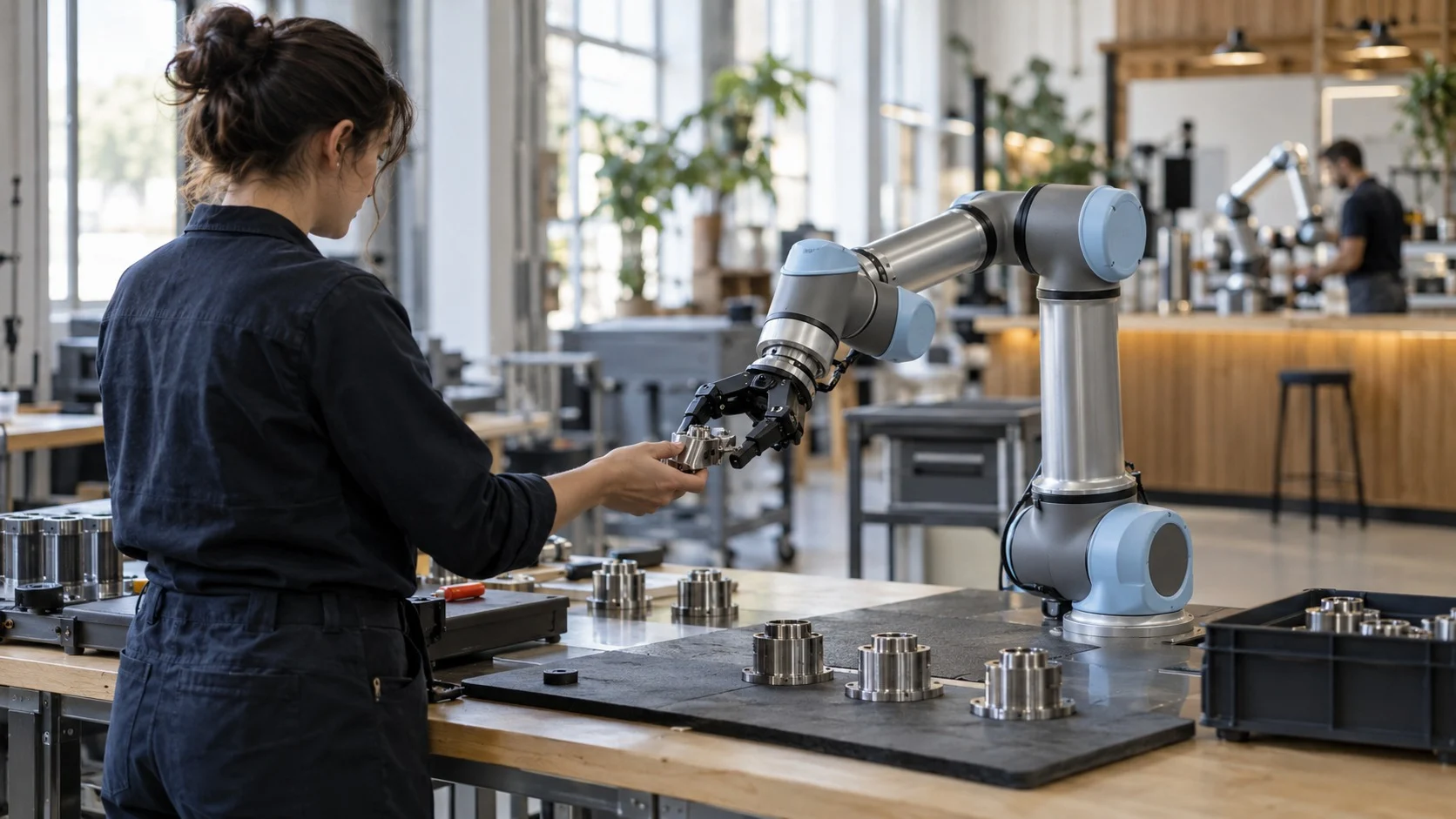
Because collaborative robots are small and easy to install, they were welcomed first in small factories that find it hard to bring in large automation equipment.
[Case 1] Korean Factories That Got Past the Fence Rule
For a long time, Korea required safety fences to be installed around industrial robots, which made it hard to bring in collaborative robots. In 2016, the Ministry of Employment and Labor amended the Rules on Occupational Safety and Health Standards, opening the way for robots recognized as meeting domestic and international safety standards to be used without fences. In 2018, the Korea Institute for Robot Industry Advancement created a certification system that verifies the safety of workplaces where collaborative robots are installed, and the first certified workplace appeared that same year.
[Case 2] Robot Arms Move into Cafés and Kitchens
Today, collaborative robots also work outside factories. Like robot baristas that brew coffee and kitchen robots that fry food in front of hot oil, they take on repetitive, strenuous, or dangerous tasks, while people focus on delicate work such as serving customers and finishing touches.
What to Consider When Bringing in a Collaborative Robot
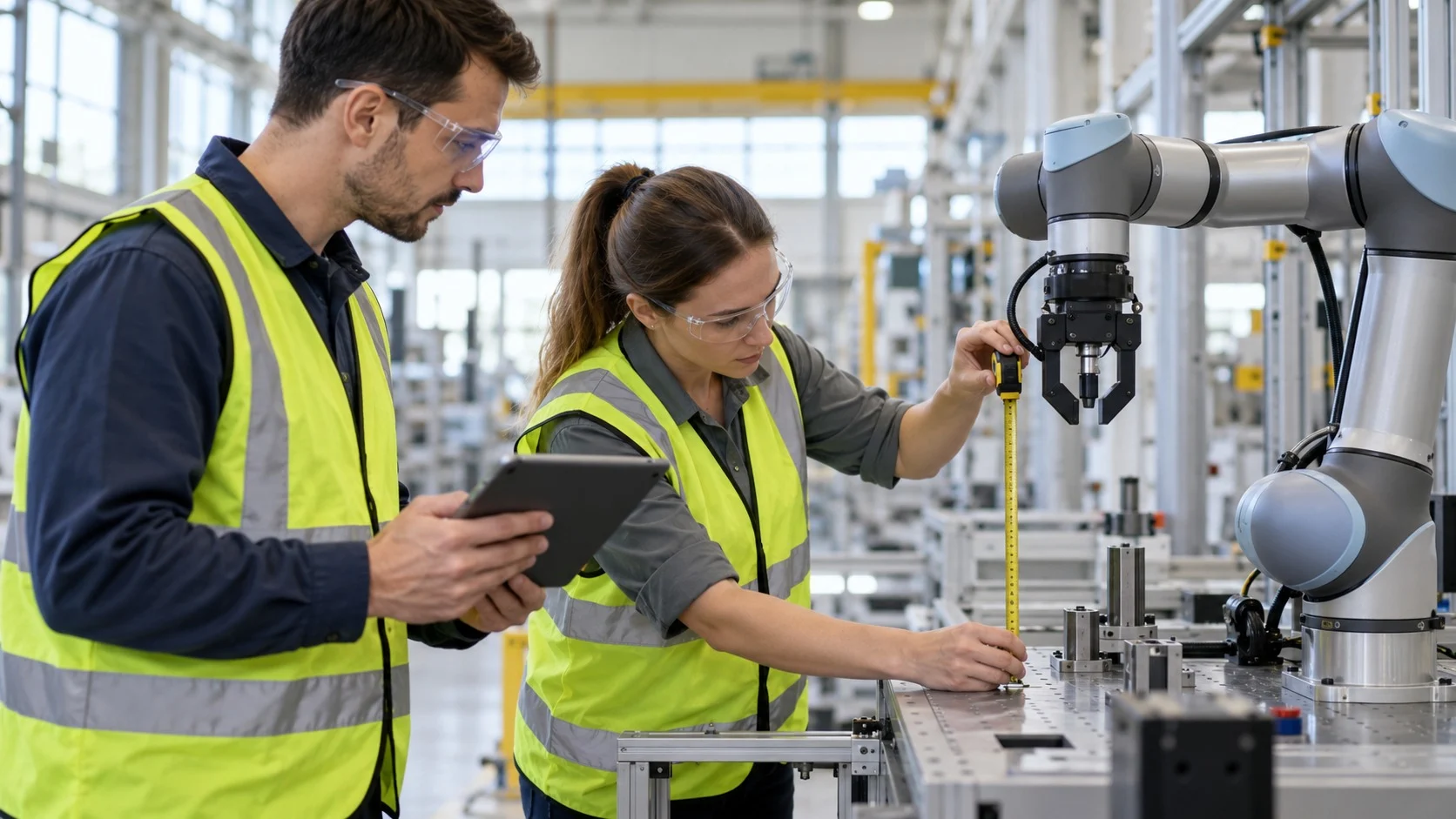
Calling a collaborative robot a ‘safe robot’ is only half right. The risk varies greatly depending on what tasks it is given and how.
(1) The Tool and the Task Can Be More Dangerous Than the Robot
Even if a robot arm stops gently, things change when a sharp blade or a hot welding torch is attached to its end. That is why it is essential to assess the risks of the entire task before bringing one in.
(2) The Limits of Being Slow and Weak
Because their force and speed are lowered to avoid hurting people, they are less productive than conventional industrial robots at heavy, fast work. Success depends on a design that properly divides tasks that need human hands from tasks the robot can do steadily.
Collaborative robots are not meant to be machines that push people out, but colleagues that stand beside people and take on heavy, tedious work. In exchange for taking down the fence, robots have learned to sense people and stop.
Dividing up what people and robots each do best, and safely designing a place where they can work together: that is the first step toward automation that works alongside people.