These days, many university students set off for Europe with nothing but a backpack before they graduate. They travel by train through Paris, Rome, and Venice, seeing with their own eyes the paintings and ruins they had only seen in books. But this kind of trip has an old prototype that goes back hundreds of years: the long European journey that young English aristocrats took from the 17th to the early 19th century to round off their education, known as the ‘Grand Tour.’
Put simply, the Grand Tour means ‘an educational journey in which upper-class young men, around the time they came of age, traveled around the European continent with a tutor to absorb classical culture and polish their social manners.’ Lasting anywhere from a few months to several years, this journey is regarded as a starting point that foreshadowed many features of modern tourism.
In this piece we will look in turn at the meaning and origins of the Grand Tour, its typical routes, the traces travelers left behind, and the changes that led to modern tourism.
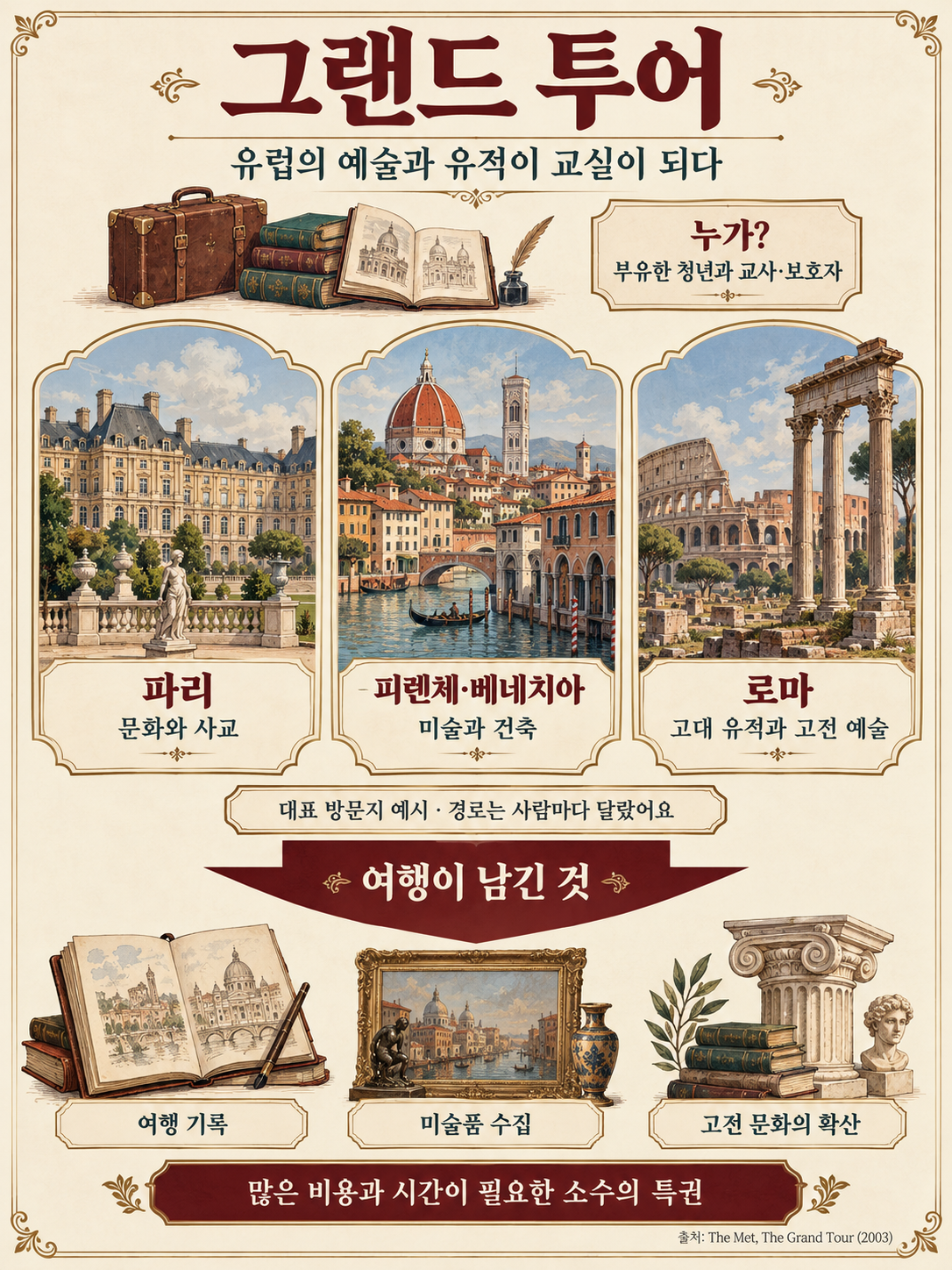
From Aristocratic Educational Travel to Modern Tourism
What Is the Grand Tour?

The Grand Tour was a custom that was widely popular from roughly 1660 until the 1840s, when railways spread widely. It was mainly young men from English aristocratic and wealthy landowning families who set out when they reached about the age of 21.
(1) The Origin of the Name
According to the Oxford English Dictionary, the phrase ‘Grand Tour’ is first recorded in The Voyage of Italy, a book by the English-born Catholic priest Richard Lassels. The book was published in 1670, after his death. Earlier still, in 1613–1614, the Earl of Arundel, famous as an art collector, toured Italy as far as Naples with Inigo Jones, who later won fame as an architect, as his guide, and this trip is regarded as an important precedent for the Grand Tour.
(2) The Purpose of the Journey
The main purpose of the Grand Tour was to see and learn from the cultural heritage of ancient Rome and the Renaissance firsthand. In an age without photography, the only way to properly see a famous painting or sculpture was to travel to where it was. The historian Edward Gibbon even said that foreign travel completes the education of an English gentleman.
The Typical Route of the Grand Tour
There was no fixed route, but many travelers followed a similar path. A tutor usually came along, and because his job was to lead an immature young aristocrat around, he was nicknamed the ‘bear-leader.’
- Paris: Travelers learned French, then the common language of Europe's upper classes, along with dancing, fencing, and riding, and polished their social manners.
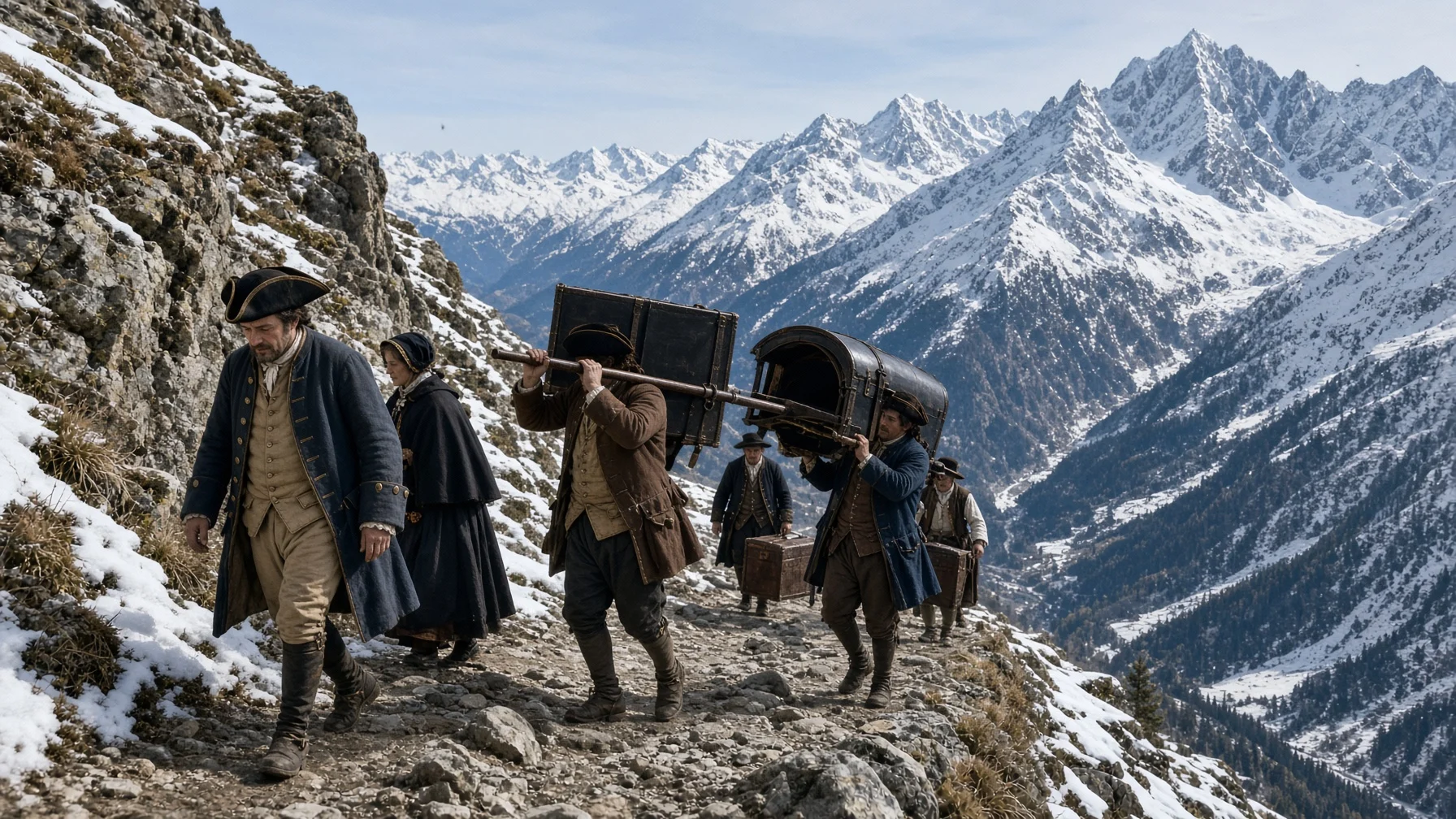
- Alps: After staying in Swiss cities such as Geneva, they crossed rugged mountain passes. It was such a grueling stretch that carriages had to be taken apart and carried like luggage.
- Italy: Passing through Florence and Venice, they studied ancient ruins and masterpieces in Rome. From the mid-18th century, they also went down as far as Naples to tour the newly excavated sites of Herculaneum and Pompeii.
- Return Route: They traveled through German-speaking cities, the Netherlands, and Flanders, visiting more art collections before returning to England.
The Traces Travelers Left Behind
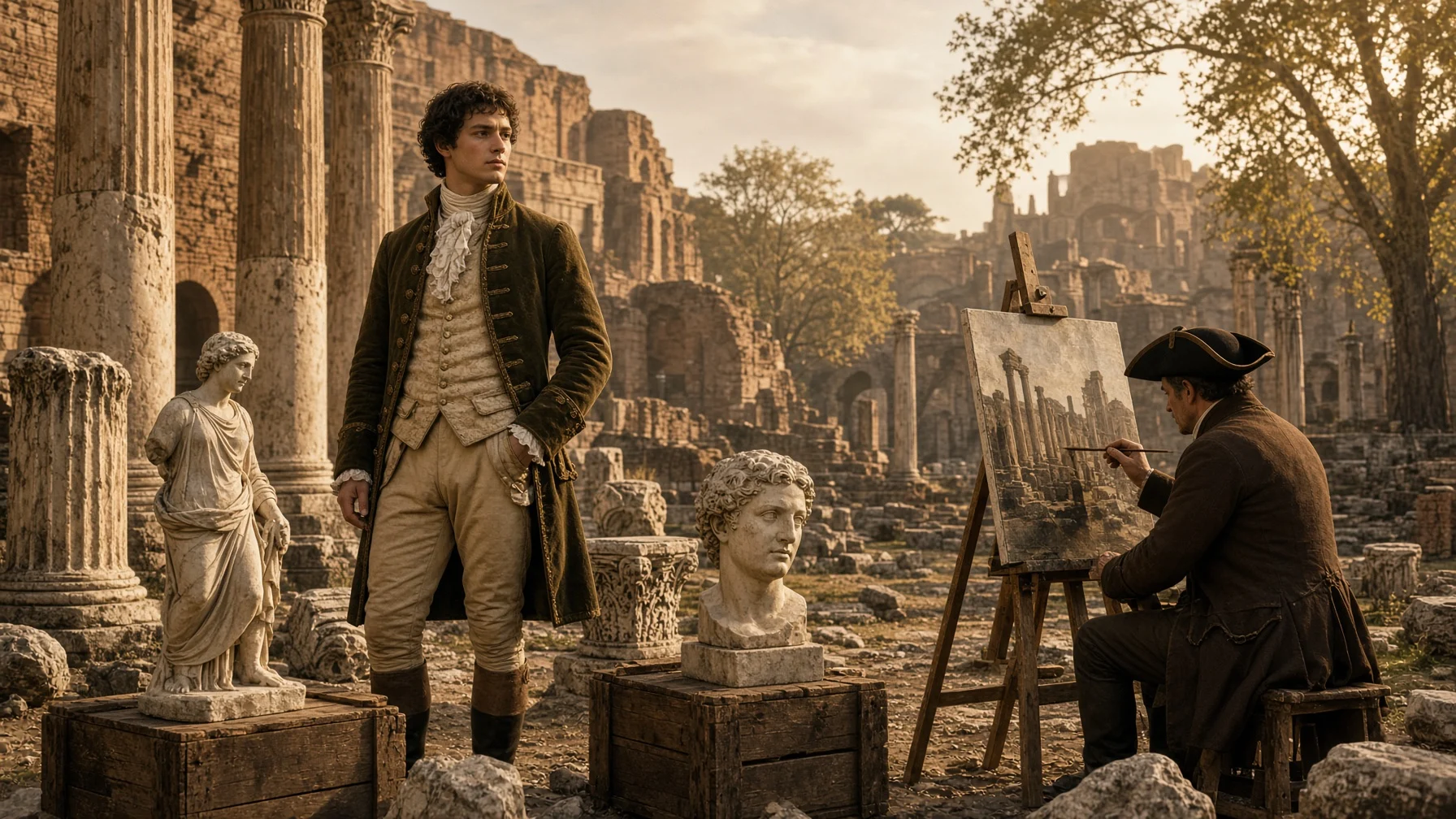
The Grand Tour did not end with each traveler's personal experience; it left a deep mark on Europe's art market and travel culture.
[Case 1] Paintings and Sculptures That Became Souvenirs
Travelers bought books, artworks, scientific instruments, ancient coins, and statues by the crate and shipped them home. The Roman painter Pompeo Batoni made his name painting portraits of young Englishmen against a backdrop of ancient ruins, and the paintings of Canaletto, who depicted Venetian scenes in precise detail, were also hugely popular. Such paintings were proof that ‘I was there,’ much like travel photos today.
[Case 2] The Rise of Guidebooks and Travel Writing
From the mid-18th century, guidebooks for the Grand Tour poured off the presses, and more and more books included city maps. People who had finished their travels each published their own travel accounts, and these records became yet another guide for the next generation of travelers.
[Case 3] Criticism and Stereotypes
The Grand Tour was not always well regarded. Some criticized it as a dull trip that always went around the same places, and others pointed out that it actually hardened stereotypes about the people of various countries. The view of Italy as merely ‘a beautiful country stuck in the past’ also spread at this time.
How the Grand Tour Led to Modern Tourism
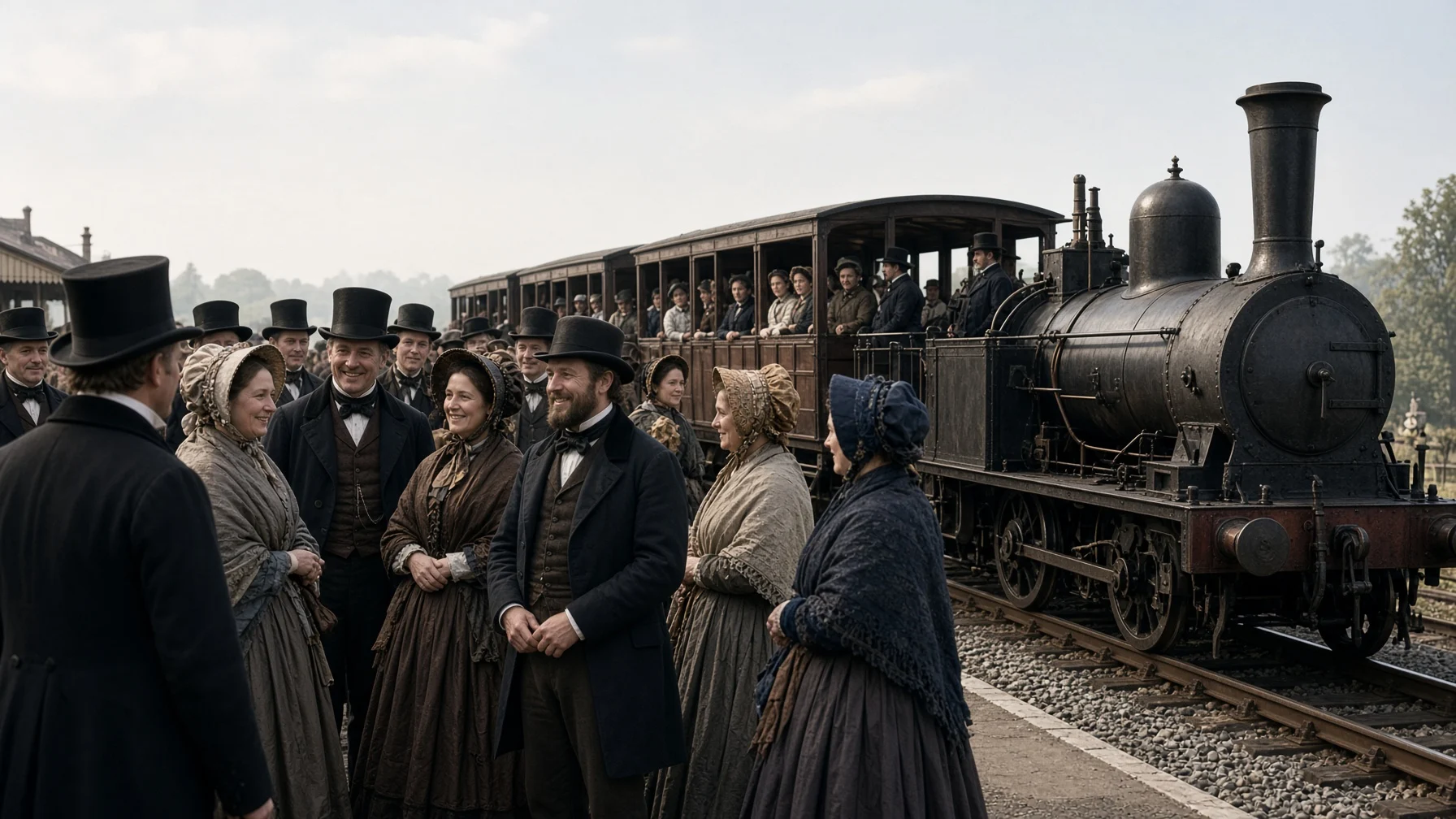
When steamships and railways appeared in the 19th century, travel changed dramatically. It became cheaper, safer, and easier, and people who were not aristocrats could set off too. In the late 19th century, young upper-class women also traveled to Italy with chaperones, and Americans who had grown rich through industrialization crossed the Atlantic to learn about European culture. The American writer Mark Twain published The Innocents Abroad, a travel book that cheerfully poked fun at such trips, in 1869, and it became very popular.
(1) The Beginning of Group Travel
In 1841, Thomas Cook of England chartered a train from Leicester to Loughborough and organized a group trip for about 500 people. He went on to create tour packages around the European continent, and ‘Cook's Tour’ became a byword for mass tourism.
(2) The Legacy Left in Today's Travel
Itineraries that visit set sights one after another, guidebooks and tour guides, buying souvenirs, and the habit of writing up one's travels had all already taken shape in the Grand Tour. The idea of ‘growing a little through travel,’ as with graduation trips or backpacking, can also be seen as carrying on its spirit.
The Grand Tour was the privilege of a small number of aristocrats, but the desire to see and learn about unfamiliar places firsthand was no different from that of today's travelers. Even though the means of transportation has changed from carriages to airplanes, the belief that travel broadens a person remains the same.
The wish to leave familiar places and learn about another world: that is the first step toward a good journey.