Have you ever watched a film or drama and felt the shape of one shot carry straight into the next? A bone spinning in midair suddenly becomes a spacecraft, or a match goes out and a desert sun rises in the same breath. That kind of edit—linking different times and places through likeness of form, motion, or sound—is a match cut.
Put simply, a match cut joins a preceding shot to the one that follows by making them similar visually, aurally, or conceptually, so the scenes connect smoothly or meaningfully. When shape, color, composition, action, or sound line up, viewers read the relationship between the two images before they notice the gap of the cut. It is a basic tool of continuity editing, and it can also build metaphor between one scene and the next.
In this article, we will look in turn at what a match cut is and how it differs from a jump cut, its main types, famous moments in film history, and what to watch out for when you use it in practice.
How Match Cuts Join Scenes
Editing That Continues Through Likeness
The heart of a match cut is likeness. When some element of the first frame remains in a similar place, shape, or motion in the next, the two shots feel like one continuous breath. Sometimes the match simply carries an action smoothly within the same space; sometimes it leaps across entirely different times and places while still planting a meaning.
A jump cut points the other way. A jump cut cuts time within a similar framing to expose discontinuity; a match cut connects or compares scenes through similarity. Both are cuts, but one shows a gap and the other shows a resemblance.
- Graphic Match: joins shots by aligning pictorial elements such as shape, color, or composition.
- Match on Action: continues a movement without a break so that continuity is preserved.
- Auditory Match: lines up the pitch, rhythm, or texture of a sound with the next shot.
The Feel of Matching, Type by Type
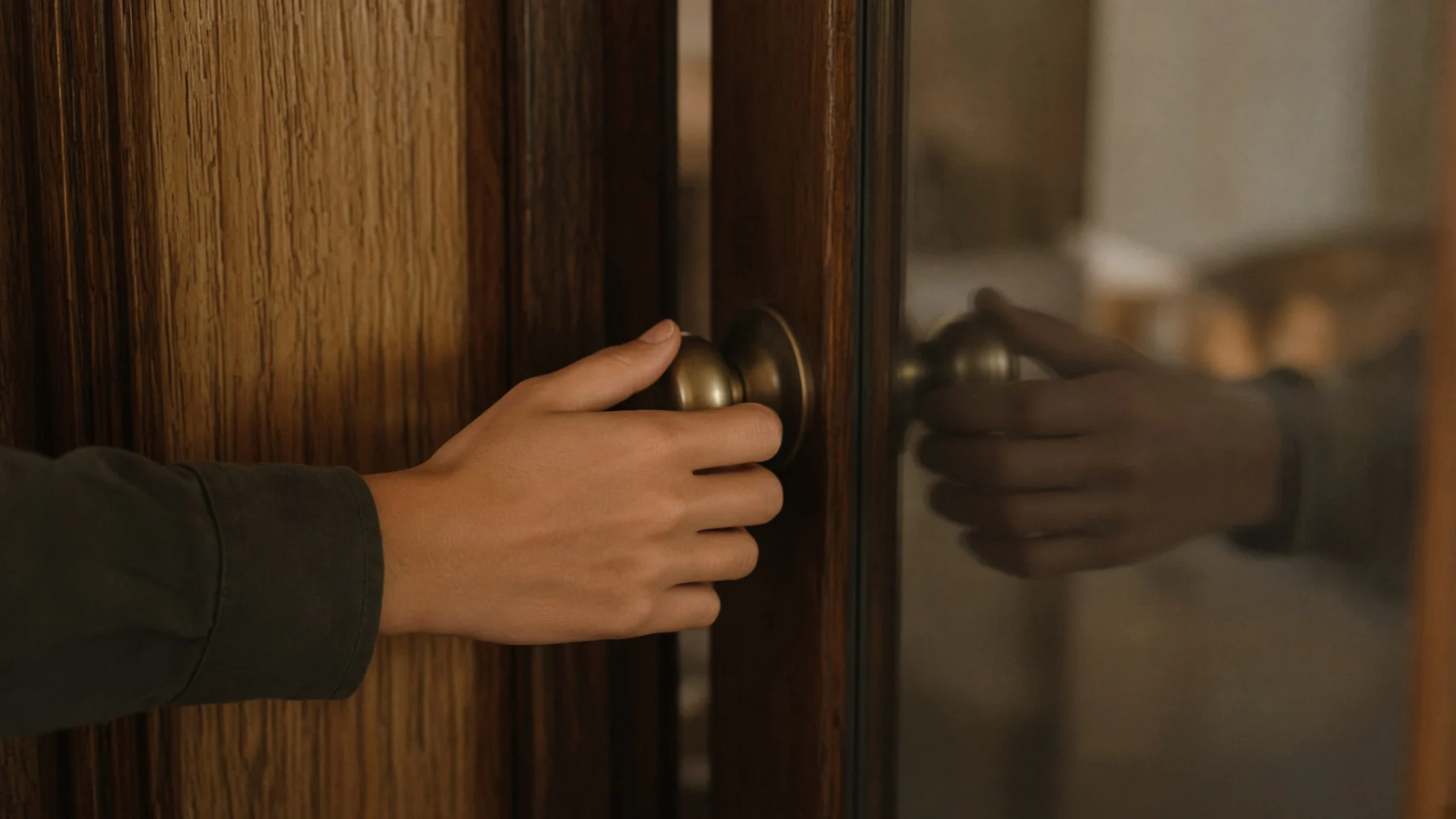
A match cut is not a single formula. What you choose to match changes how it feels.
(1) Graphic Match
From one round object to another, or from one tall vertical form to another, viewers sense the connection before any explanation. Similar brightness of color or a similar position on screen can produce the same effect.
(2) Match on Action
When a hand opening a door continues from another angle, or running feet keep the same direction in the next shot, the action reads as one even if time and space have changed. This is the match used most often in continuity editing.
(3) Auditory and Conceptual Match
When a breath, an impact sound, or a musical beat locks onto the next image, or when ideas such as “tool” and “weapon” overlap, the cut becomes metaphor rather than a mere transition. Visible likeness and the likeness that stays in the mind work together.
Famous Moments in Film History
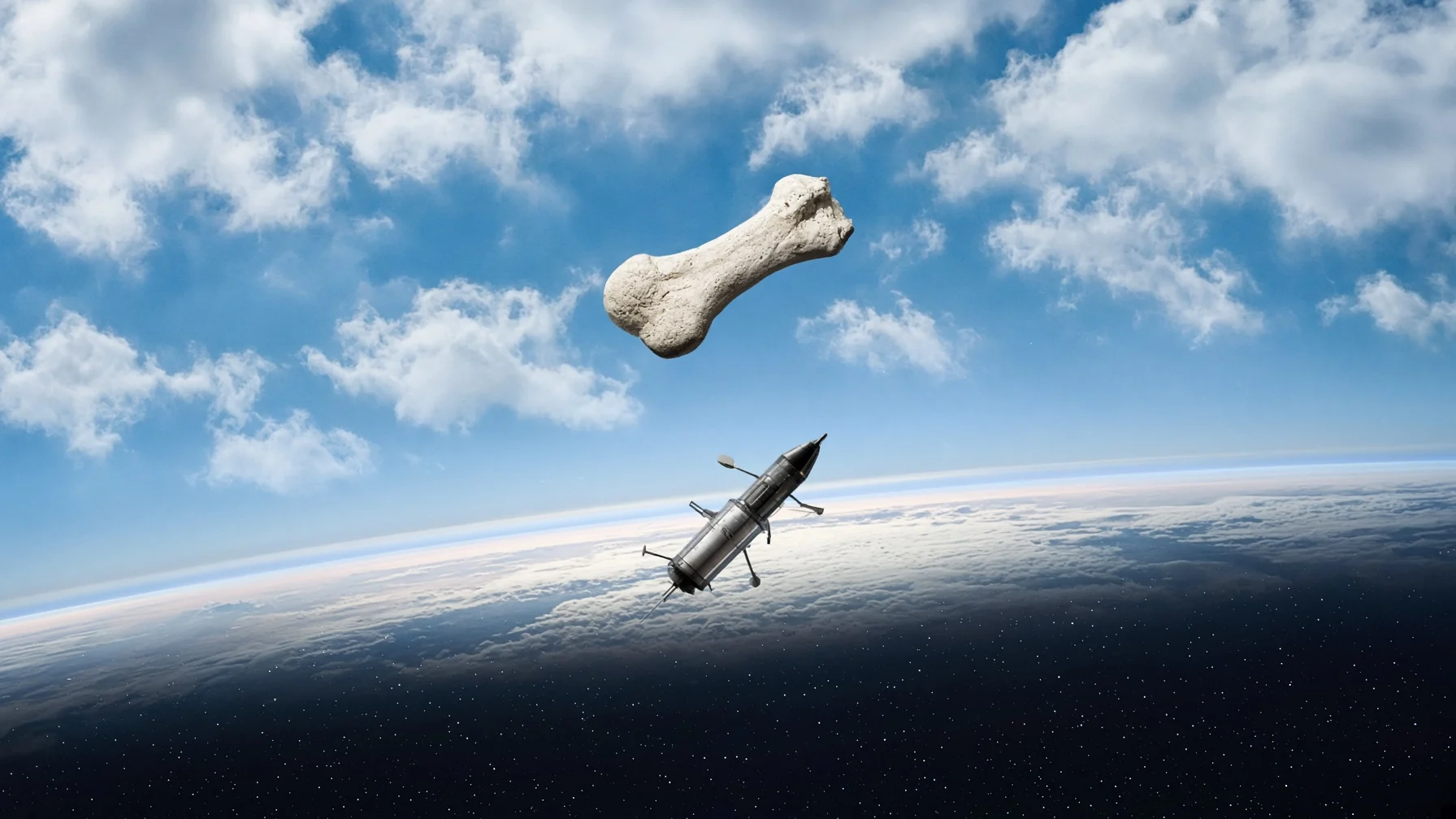
The scene most often cited when people talk about match cuts is Stanley Kubrick’s 2001: A Space Odyssey (1968). A prehistoric human uses a bone as both tool and weapon, throws it into the sky, and the bone spinning in the air cuts to a satellite in orbit. Form and motion lock together, compressing millions of years of technological evolution into a single cut.
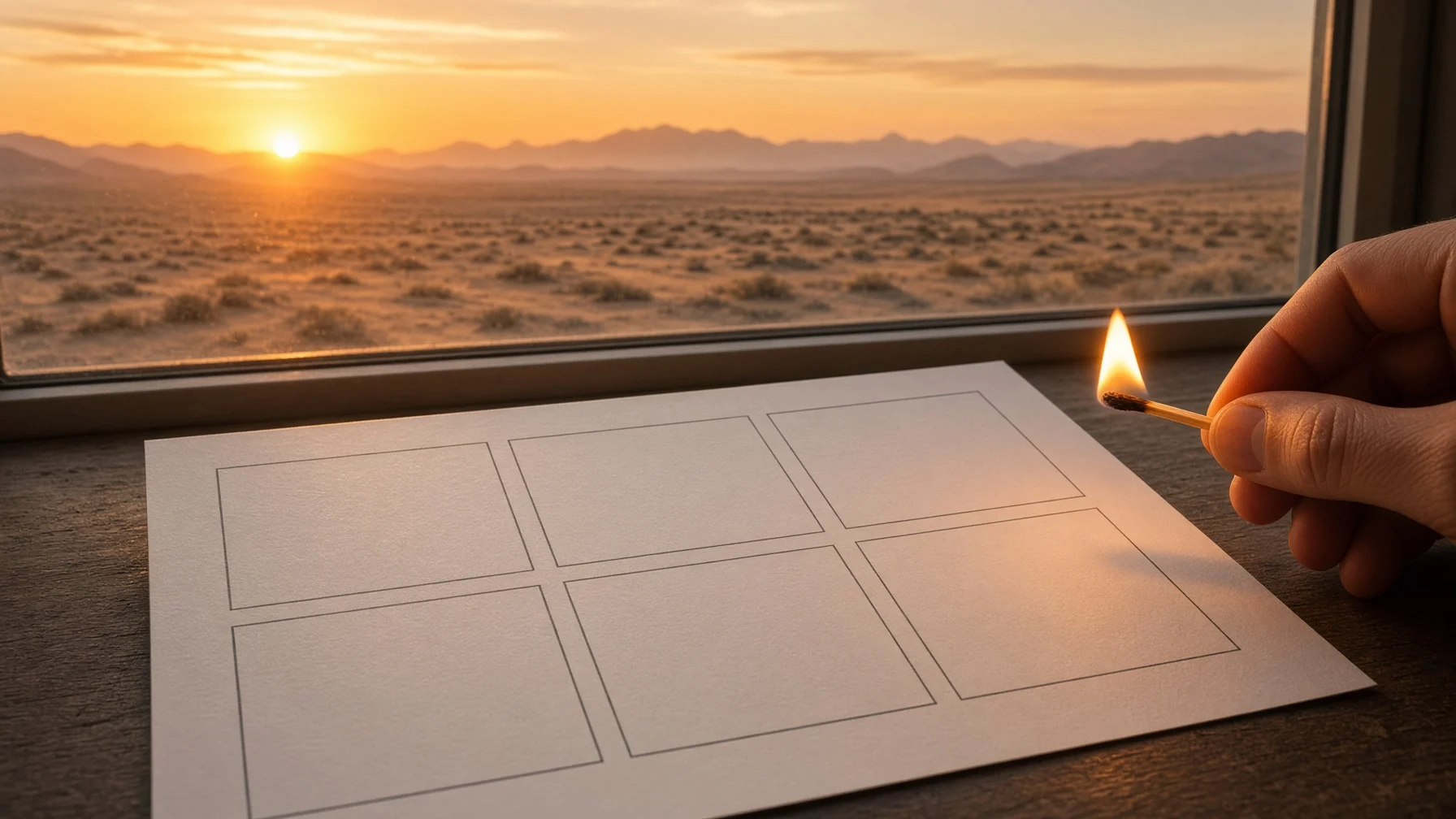
In David Lean’s Lawrence of Arabia (1962), the moment Lawrence extinguishes a match cuts straight to the sun rising over the desert. Editor Anne V. Coates and Lean chose a hard cut instead of a dissolve; the transition is famous as a graphic match in which the light, heat, and circular image of flame and sun lock together.
Alfred Hitchcock used match cuts freely as well. Late in North by Northwest, the action of pulling someone up by the hand on a cliff continues into a train berth, and after the shower scene in Psycho, the swirl of the drain continues into an eye, leaving a residual image of shock and gaze.
What to Notice When You Watch
- What Matches: ask first whether it is shape, motion, color, sound, or concept.
- What Is Skipped: omitted time—years, a romance, a journey—often enlarges the meaning of the cut.
- Seamless or Metaphor: distinguish continuity within the same space from a device that compares two different worlds.
Practical Tips and Cautions
A match cut can easily become decoration for a “cool transition.” If only the likeness lines up and story and feeling do not follow, viewers sense something forced.
(1) Decide the Reason First
You should be able to say in one line why these two images must be matched. The clearer the purpose—compressing time, showing a character’s change, contrasting themes—the more the cut comes alive.
(2) Ease Off on the Obvious Likeness
Repeating only round-to-round connections becomes predictable fast. You need balance: similar form with different meaning, or sound that continues while the picture flips.
(3) Divide Roles with Jump Cuts and Dissolves
Choose a jump cut to expose discontinuity, a dissolve to melt softly into the next shot, and a match cut to create meaning or continuity through likeness. The more techniques you mix, the more important it becomes to know why this link is needed now.
Even in a short phone video, matching small elements such as a hand gesture, a shadow, or a door opening lets you practice the same principle. What matters more than technique is designing what the audience will read between the two shots.
A match cut joins different shots through likeness of form, motion, sound, or concept, and lets time and meaning leap in an instant. Famous scenes—bone and satellite, match and sun—all showed a different story through something similar.
Looking once more at what continues and what is omitted when the frame changes—that is the first step toward reading a match cut well as a viewer of images.