When a robot arm reaches out to pick up a cup, it overshoots if it approaches the target position too quickly, and it hesitates for a long time if it is too cautious. People slow down naturally as they watch the distance with their eyes, but a machine has to calculate at every moment how much force to apply. The oldest and most widely used method for this calculation is PID control.
Simply put, PID control means ‘a method of deciding the force by looking at the difference between the target and the current state, and weighing together the size of that difference, how much of it has accumulated, and how fast it is changing.’ Its full name is Proportional-Integral-Derivative Control, and it is called PID after the first letters of the three words.
In this article, we will look in turn at how PID control came about, what each of its three elements does, and how it is used in robots and everyday machines, along with its limits.
The Principles and Uses of PID Control
Control Learned from a Ship's Helmsman
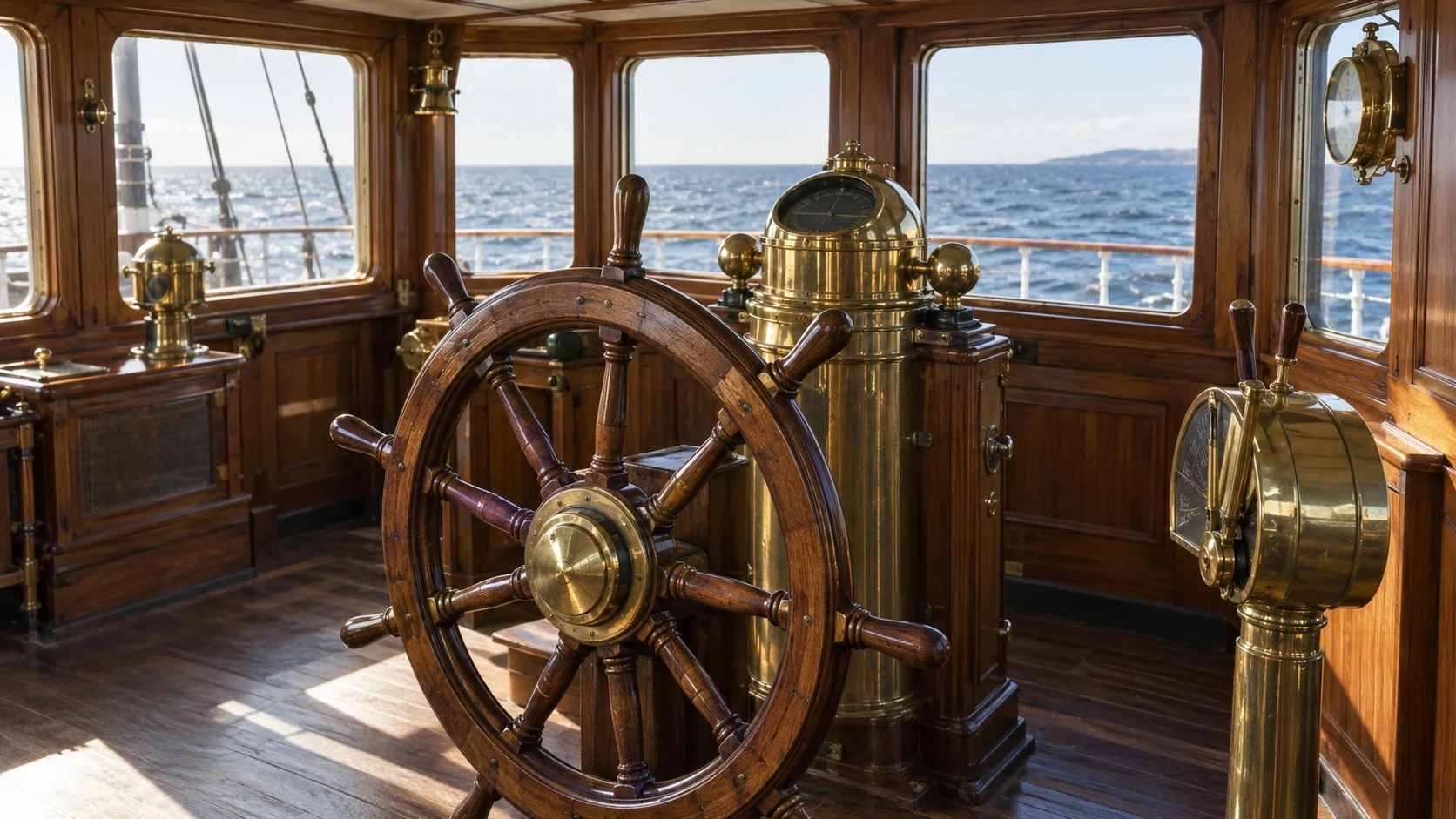
The theory of PID control began with the problem of steering a ship straight. In 1922, Nicolas Minorsky, a Russian-born American engineer, mathematically analyzed a control method that combines three elements in his paper “Directional Stability of Automatically Steered Bodies.”
Minorsky paid close attention to how skilled helmsmen steered their ships. A helmsman did not look only at how far the ship had strayed from its course; he also watched how quickly the ship was turning as he turned the wheel. Minorsky translated this intuition into equations, and the following year, in 1923, he tested an automatic steering system aboard the U.S. Navy battleship USS New Mexico with good results.
This work matters because it turned steering that had relied on human intuition into rules that anyone could follow. The same principle could now be applied to anything that moves, whether a ship or a machine.
Later, in 1942, John Ziegler and Nathaniel Nichols of the United States published tuning rules that could be used in the field, and PID control spread rapidly to devices that regulate temperature and pressure in factories.
What the Three Elements Do

PID control first measures the current state with a sensor and finds the error, which is the difference from the target value. It then examines this error in three ways.
(1) Proportional
The larger the current error, the greater the force applied. It is the most basic response: move strongly when far from the target and gently when close. On its own, however, it often stops just short of the target.
(2) Integral
It adds up the error accumulated so far and adds it to the force. Even a small error, if it lingers for a long time, gradually increases the force and eventually pushes the system to hit the target exactly.
(3) Derivative
It looks at how quickly the error is shrinking or growing. If the system is approaching the target quickly, it reduces the force in advance, acting as a brake that keeps the system from overshooting the target.
It is easy to understand if you picture someone adjusting the water temperature in a shower. If the water is cold, they turn the handle a lot (proportional); if it is still lukewarm after a while, they turn it a little more (integral); and if they feel the water heating up quickly, they stop their hand early (derivative).
The final output is the sum of these three values, each multiplied by an appropriate weight. In short, the proportional term looks at the present, the integral term at the past, and the derivative term at the near future.
PID Control in Robots and Everyday Life
Because PID control has a simple structure and light computation, it still accounts for a large share of control devices in industry today. In robotics, too, it is found in almost every part that moves the body.
- Joint Position Control: It makes each joint motor of an industrial robot arm turn to a set angle precisely and stop there.
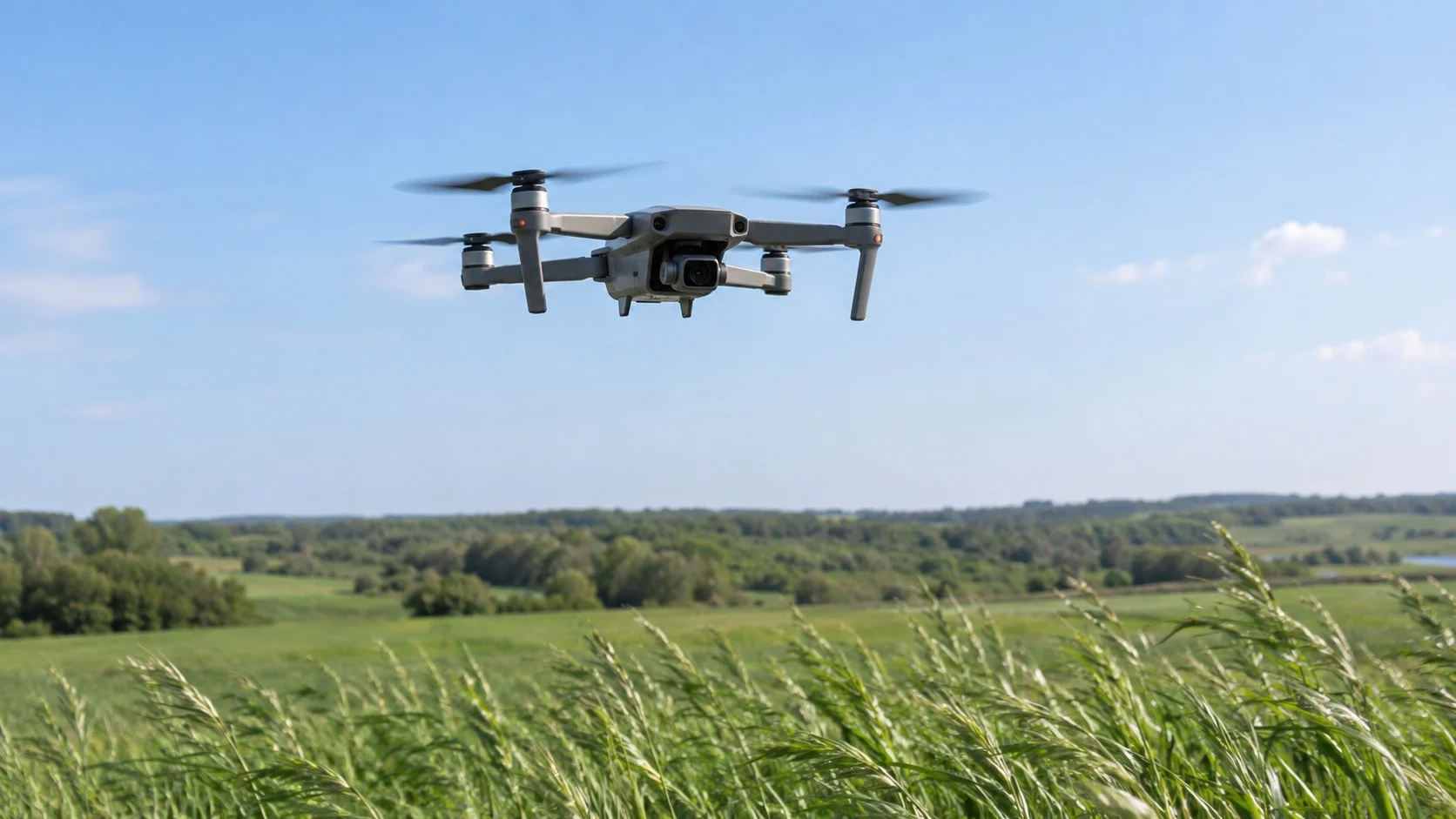
- Attitude Stabilization: A drone watches its tilt sensor readings and constantly corrects the rotation speed of its propellers to stay level even in the wind.
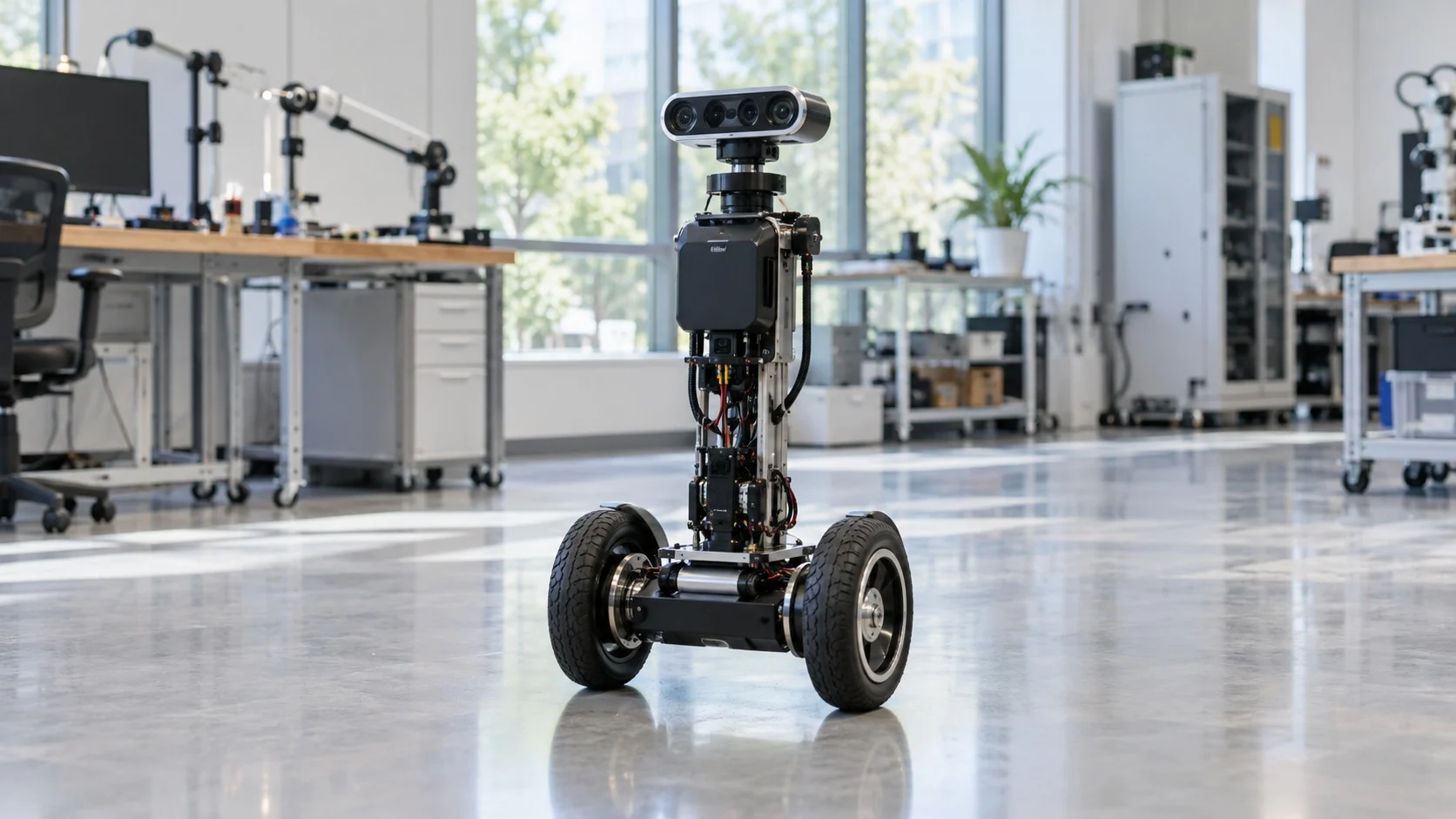
- Balancing: A robot that stands on two wheels rolls its wheels in the direction its body leans to keep from falling over.
- Cruise Control: A car's cruise control adjusts engine output to hold the set speed even on hills.
The way a home boiler keeps the indoor temperature steady works on the same principle. Without our even noticing, countless machines are reducing errors with PID control.
The Difficulty and Limits of Tuning
The performance of PID control depends on how well the weights of the three elements are set. This work is called tuning, and if the weights are off, the machine keeps oscillating around the target or moves too sluggishly.
Common Problems
- Overshoot: If the proportional or integral term is too strong, the system repeatedly passes the target and comes back.
- Integral Windup: If error keeps accumulating even though the force a motor can produce is limited, it later causes a large overshoot.
- Noise Amplification: Because the derivative term is sensitive to change, it can greatly amplify even small jitters in sensor readings.
In addition, because PID control reacts only after an error has occurred, its limits show in robots whose load changes greatly or whose movements are complex. That is why difficult cases such as walking robots often combine it with other control methods that calculate the body's motion in advance.
PID control is a way of bringing a machine to its target through three lenses: the present difference, the accumulated difference, and the rate of change. This simple principle, learned from a ship's helmsman 100 years ago, is still working tirelessly today inside the joints of robots and the rotors of drones.
Honestly measuring the difference from the goal and correcting it little by little: that is the first step toward precise movement.