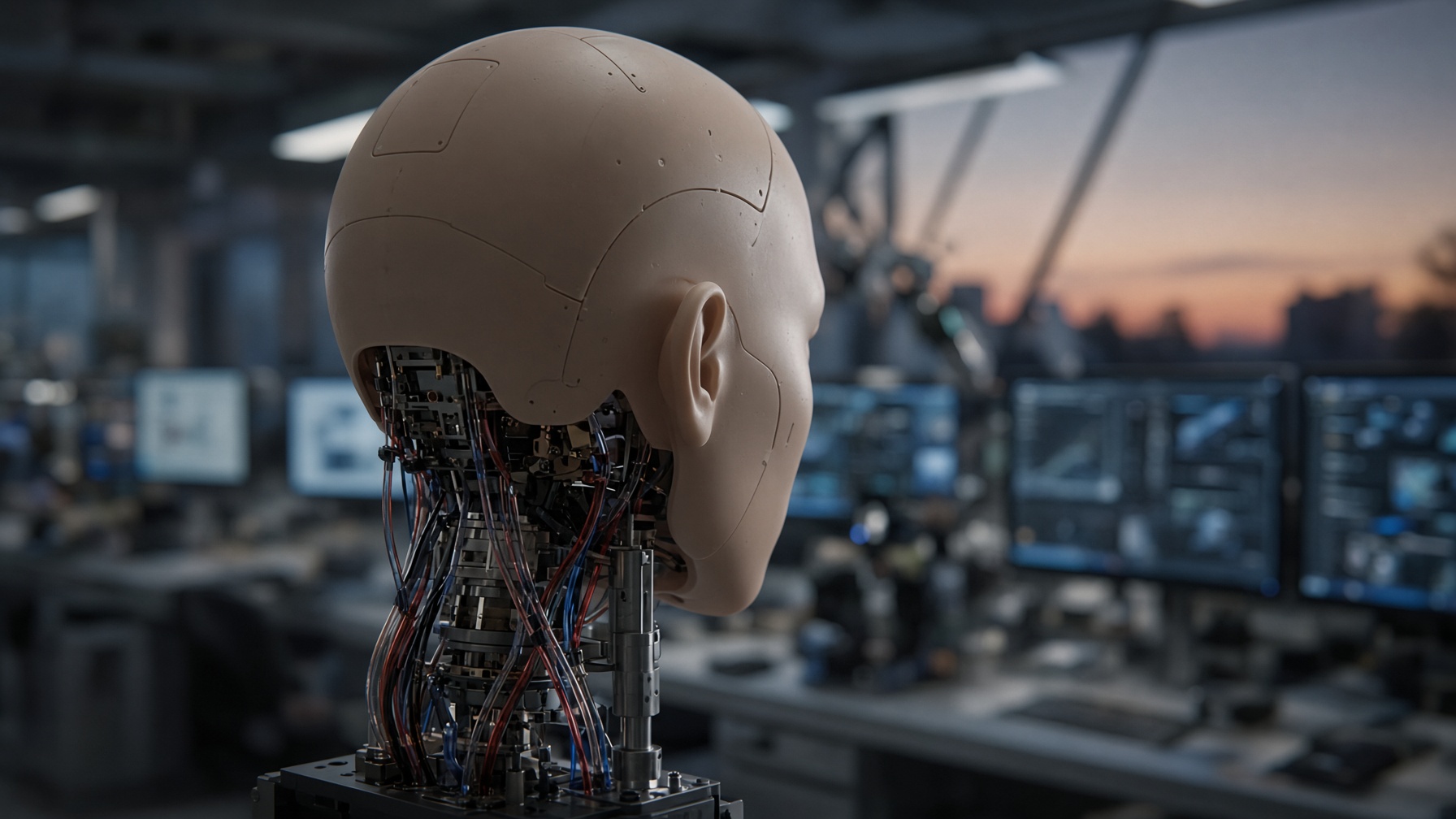
You may have marveled at a robot that looks just like a person in a film or at an exhibition, only to feel a sudden chill down your spine. The skin and hair look real, but when the eyes move a little too slowly or the smile seems somehow stiff, what felt charming suddenly turns uncomfortable. This zone, in which something becomes eerier the more it resembles a human, is called the “uncanny valley.”
Put simply, the uncanny valley refers to “the phenomenon in which our affinity for a robot or doll grows as it becomes more similar to a human, then drops sharply and turns into aversion at the point where it becomes almost human.” The idea was first introduced in 1970 by Masahiro Mori, a roboticist at the Tokyo Institute of Technology in Japan, in a short essay he published in a magazine. He drew the curve based not on experimental results but on his observations and intuition as someone who builds robots.
This article walks step by step through how to read the uncanny valley curve, the hypotheses about why the eeriness arises, examples seen in robots and on screen, and how to avoid the valley when designing robots.
The Uncanny Valley: The Dip Between Resemblance and Affinity
Reading the Uncanny Valley Curve
Mori’s graph places “how much something resembles a human” on the horizontal axis and “how familiar it feels” on the vertical axis. The curve rises gently at first, plunges deeply at a point very close to human likeness, and then climbs again when it reaches an actual healthy person.
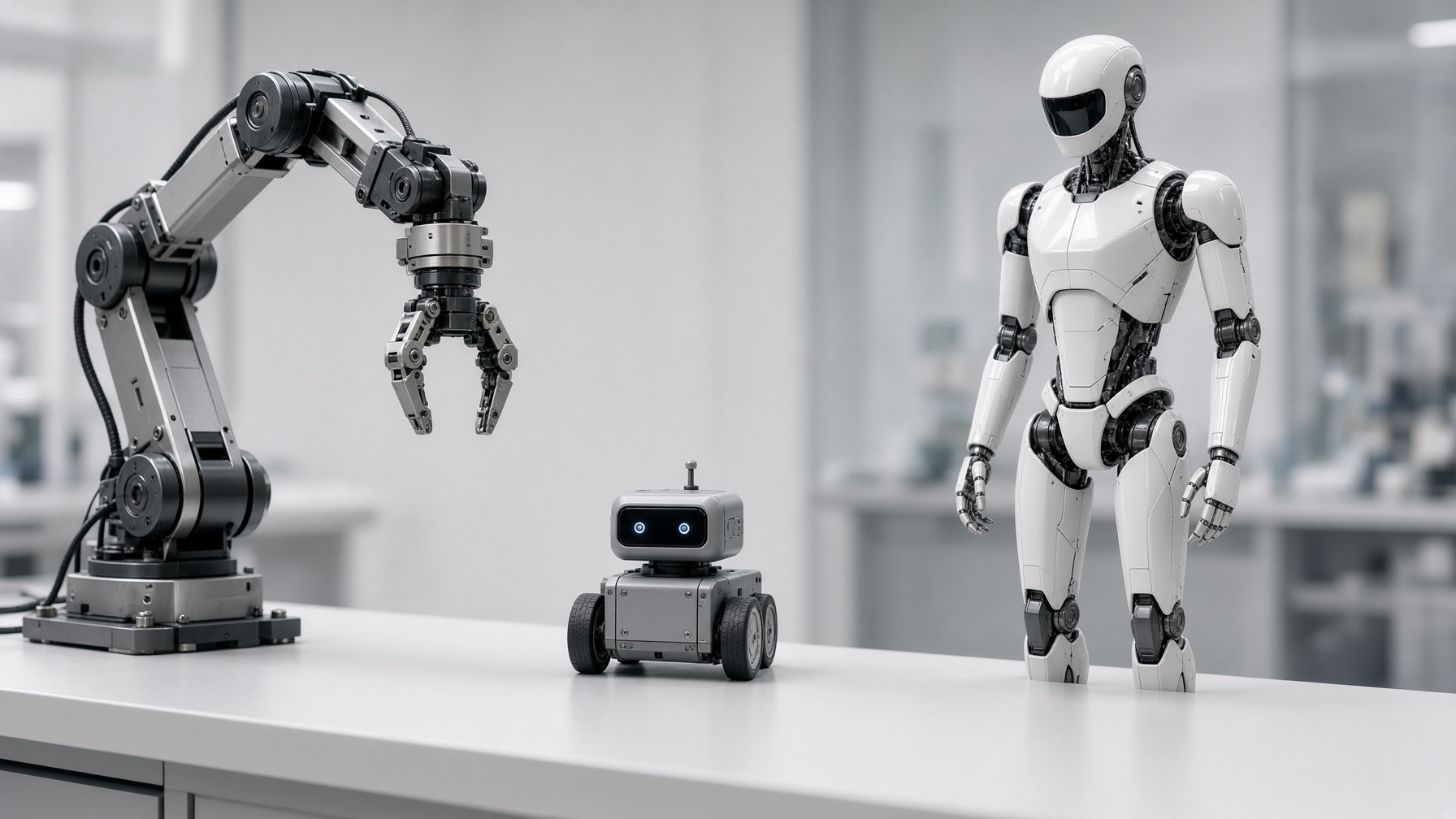
- Industrial robot: With its machine-like form consisting only of an arm, it sits at the starting point, low in both resemblance and familiarity.
- Toy robot: Because it has a head, arms, and legs that remind us of a person, familiarity rises considerably.
- Valley floor: Mori gave the example of a prosthetic hand that looks like a real hand. When you shake it and feel its boneless-seeming texture and cold temperature, it becomes eerie instead.
- Second peak (healthy person): When something becomes like a human in every respect, familiarity rises to its highest point again.
Mori placed the puppets of bunraku, Japan’s traditional puppet theater, on the side that climbs back up beyond the valley. Up close they are clearly different from people, but audiences watching from a distance become deeply absorbed in the puppets’ movements, he explained.
Mori believed that adding movement makes the rises and falls of the curve steeper. Small awkwardnesses stand out far more in something that moves than in something standing still.
Why Does It Feel Creepy?

After Mori’s essay appeared, researchers in many fields tried to find the cause of this discomfort. There is still no single agreed-upon answer, and several hypotheses are discussed side by side.
(1) Signals That Don’t Match
The perceptual mismatch hypothesis explains that the brain becomes confused when a face is as finely detailed as a human’s but its blinking, skin texture, or speed of movement is off. The awkwardness grows when only one part is overly realistic.
(2) A Category That Can’t Be Decided
The categorical ambiguity hypothesis holds that discomfort arises when it is hard to classify something clearly as either a “person” or an “object.” This is because we tend to want to categorize unfamiliar things quickly.
(3) An Instinct to Protect the Body
The pathogen avoidance hypothesis explains that pale skin or a rigid expression calls to mind someone who is sick or dead, awakening an instinct to keep our distance. In fact, Mori himself placed the corpse and the zombie at the bottom of the valley.
Many view these hypotheses not as mutually exclusive but as able to work together.
Examples in Robots and on Screen
The uncanny valley is discussed not only in robotics labs but in every field that creates human figures, such as film and games.
[Example 1] A Robot That Looks Just Like a Person
- Geminoid: A robot that Professor Hiroshi Ishiguro of Osaka University in Japan modeled on himself, used to study how closely a robot must resemble a person for us to feel familiar with it.
[Example 2] Realistic Animation
- The Polar Express: Released in 2004, this film featured realistic characters that directly transferred actors’ movements, but it was widely criticized for characters whose eyes looked lifeless.
Today, people who create virtual humans and game characters on screen also try to cross the valley by refining even the smallest details, such as the flush of color showing through the skin, the moistness of the eyes, and the facial muscles that move along with speech. By contrast, cartoon-like robots and characters with big eyes and simple faces often stay near the first peak and are loved without much aversion.
Lessons for Robot Design

Mori advised that, rather than straining to reach the second peak when building robots, designers should aim for a moderately humanlike appearance near the first peak. Here are the points today’s robot designers keep in mind.
- Make it different on purpose (stylization): Simplify the face or keep a machine-like look to show clearly that it is not a person.
- Match appearance and movement (consistency): If the looks are realistic, the blinking, facial expressions, and gait must be just as natural.
- Choose a look that suits the purpose (purpose fit): The more closely a robot works with people, as in guidance or caregiving, the more important a friendly impression becomes.
- Ask people (user study): Measure real users’ reactions to find and fix the awkward parts.
Follow-up studies have produced both results in which the valley clearly appeared and results in which it did not, so the uncanny valley remains a hypothesis that is still being tested. Even so, it endures as an important question that has made us think about the place where humans and machines meet.
Making a robot easy to approach rather than making it look exactly human: that is the first step in designing robots that will stand beside people.