A warehouse worker lifting heavy boxes all day, a person who can no longer move their legs after an accident, a patient who has to relearn how to walk after surgery: they all share the same wish. They wish their bodies had just a little more strength. The machine built to answer that wish is the exoskeleton robot.
Put simply, an exoskeleton robot is ‘a robot that people wear on their bodies like clothing to add muscle power or assist movement.’ Originally, exoskeleton is a biological term for the hard shell that covers the outside of the body in animals such as crabs and insects; in robotics, it refers to a mechanical frame attached to the outside of the human skeleton.
This article explains, in easy-to-understand terms, what exoskeleton robots are and how they came about, the principles of the sensors and control systems that read the body's intentions, the different types by purpose, and the challenges they face in real-world settings.
How Exoskeleton Robots Work and Where They Are Used
What Is an Exoskeleton Robot?
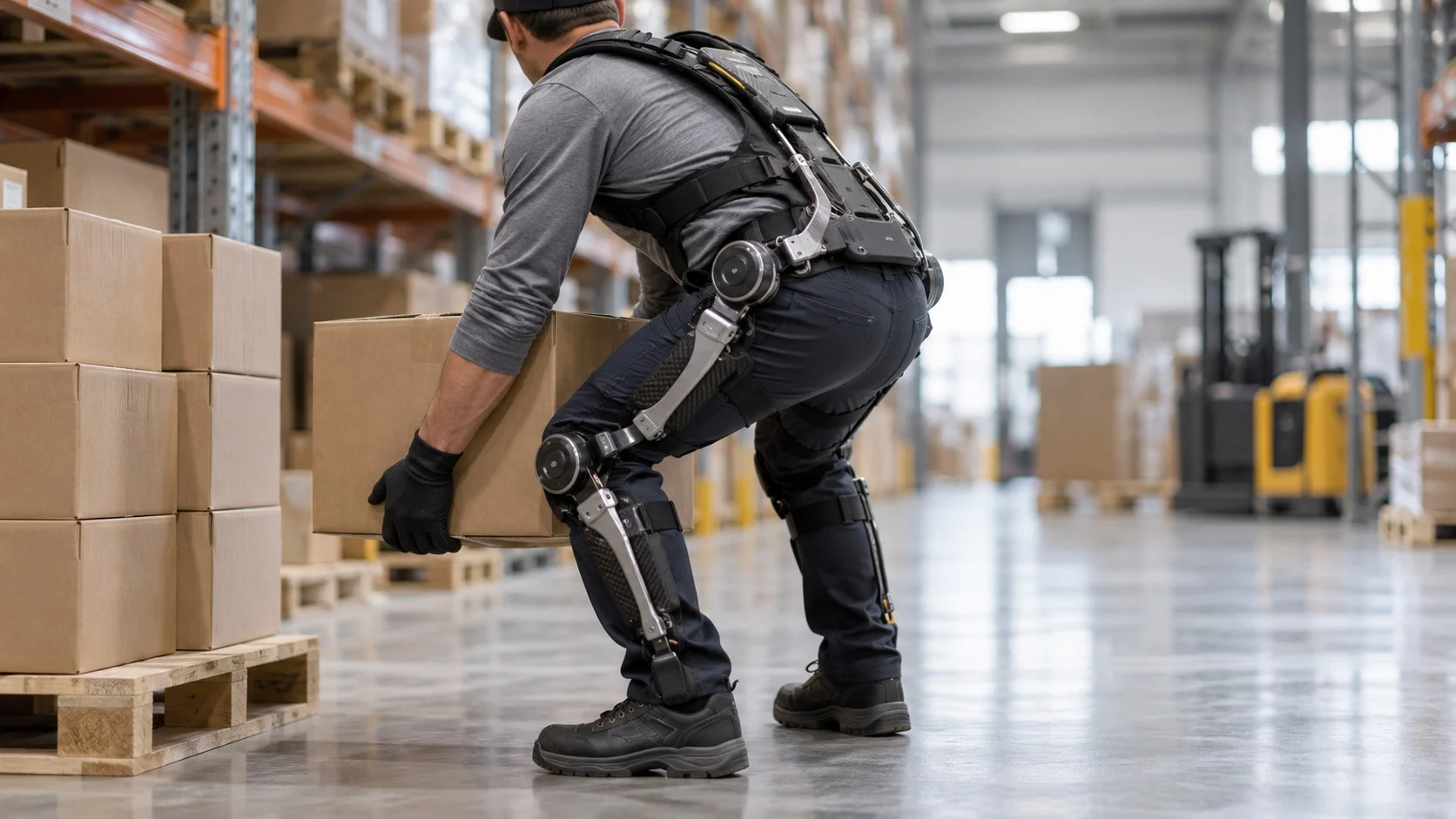
An exoskeleton robot is a device with mechanical joints placed to match the positions of the wearer's joints, strapped to the body with belts and straps so that it moves together with the wearer. When the wearer tries to walk, the robot bends the knee and hip joints along with them; when the wearer tries to lift something, it adds strength to the back and arms.
The first serious attempt was ‘Hardiman,’ a project launched in 1965 by General Electric in the United States with military funding. Led by engineer Ralph Mosher, the project aimed to let a person lift loads of about 680 kg with ease. However, the machine itself also weighed about 680 kg, and whenever engineers tried to move the whole body at once, the control became unstable, so it could never be operated with a person inside. In the end, the research wrapped up in 1971 with only a single arm successfully tested.
Hardiman failed, but it left an important lesson: precisely matching the movements of a person and a machine is far harder than simply increasing strength.
Sensors and Control That Read the Body's Intentions
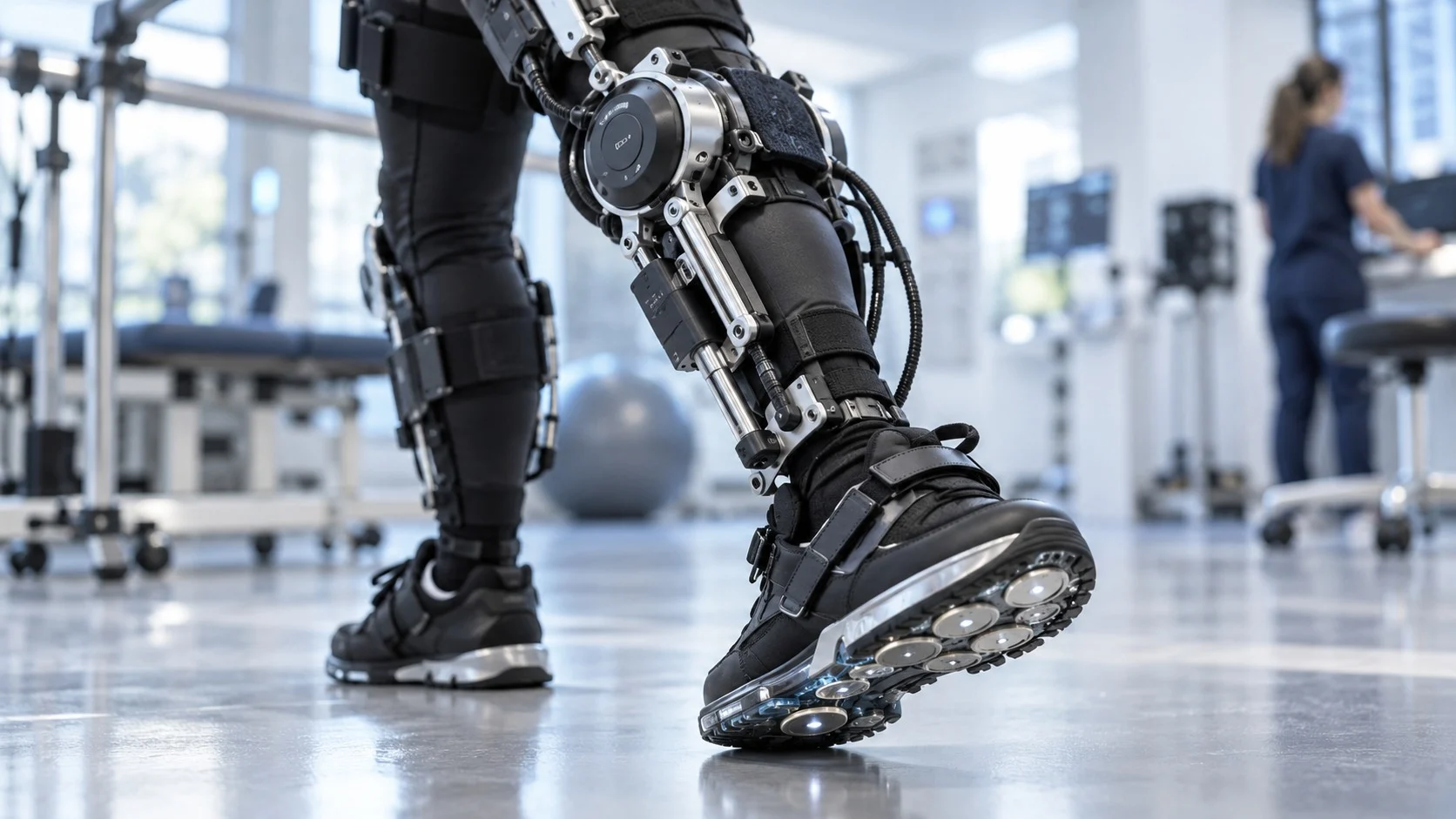
The key to an exoskeleton robot is recognizing ‘what the person is trying to do’ a step ahead. To do this, a variety of sensors constantly read signals from the body.
(1) Joint angle sensors
Sensors mounted on each mechanical joint measure in real time how far the knee and hip joints are bent. From this, the robot determines whether the wearer is walking, standing, or climbing stairs.
(2) Foot pressure sensors
Pressure sensors in the soles of the shoes show which foot is bearing the body's weight. This is an important clue for telling where each step begins and ends.
(3) Electromyography (EMG) sensors
Just before a muscle contracts, faint electrical signals flow across the surface of the skin. HAL (Hybrid Assistive Limb), developed by Professor Yoshiyuki Sankai of the University of Tsukuba in Japan, is well known for reading these bioelectrical signals to detect the wearer's intention to move.
(4) Inertial measurement units
An inertial measurement unit (IMU), which combines accelerometers and gyroscopes, shows how far the torso is tilting forward or backward. Thanks to this device, the robot can treat a slight forward lean of the wearer's upper body as a signal to take a step.
The information gathered this way is sent to the controller, which tells the motors or hydraulic actuators how much force to produce. Because this process repeats hundreds of times or more per second, wearers feel as though the robot follows them like part of their own body.
Types of Exoskeleton Robots by Purpose
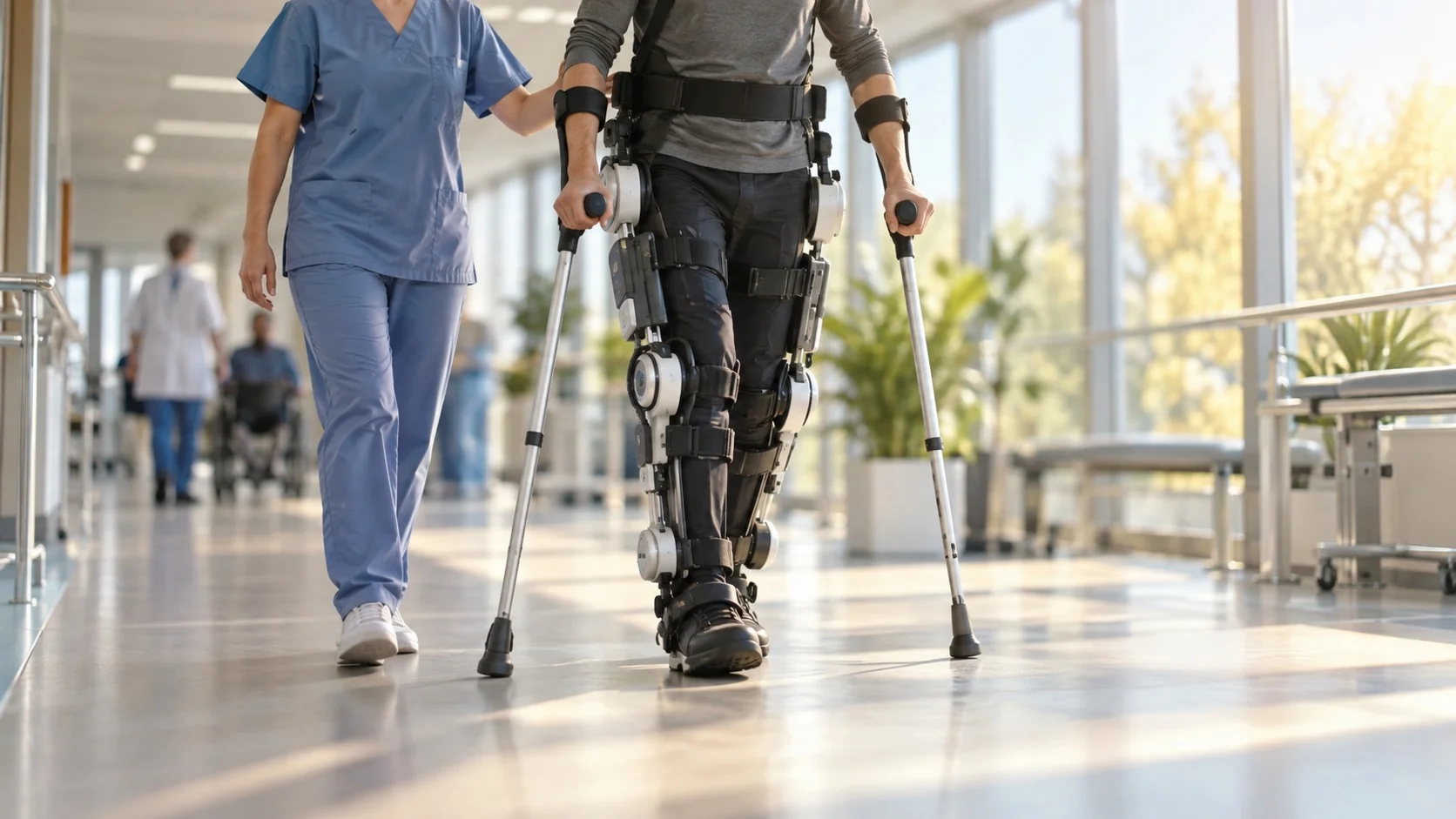
Exoskeleton robots fall into several categories depending on how they generate force and where they are used.
- Powered exoskeletons: Motors and batteries drive the joints directly. A typical example is the medical robot that helps people with paralysis of the lower body stand and walk.
- Passive exoskeletons: Without motors, springs or elastic materials store energy and then give it back. Because they are light and inexpensive, they are widely used by factory workers who must keep their arms raised for long periods.
- Rehabilitation exoskeletons: They help patients with stroke or spinal cord injuries relearn a correct walking pattern through repetition.
- Industrial exoskeletons: Their goal is to reduce the strain on the lower back and shoulders and thereby cut down on musculoskeletal disorders.
In 2014, ReWalk, developed in Israel, received clearance from the U.S. Food and Drug Administration for personal use, opening the door for medical exoskeleton robots. In Korea, too, the ‘WalkON Suit,’ developed jointly by KAIST researchers and a company, won gold and bronze medals in the exoskeleton event of Cybathlon 2020, an international competition for assistive technologies for people with disabilities.
Three Challenges Exoskeleton Robots Must Overcome
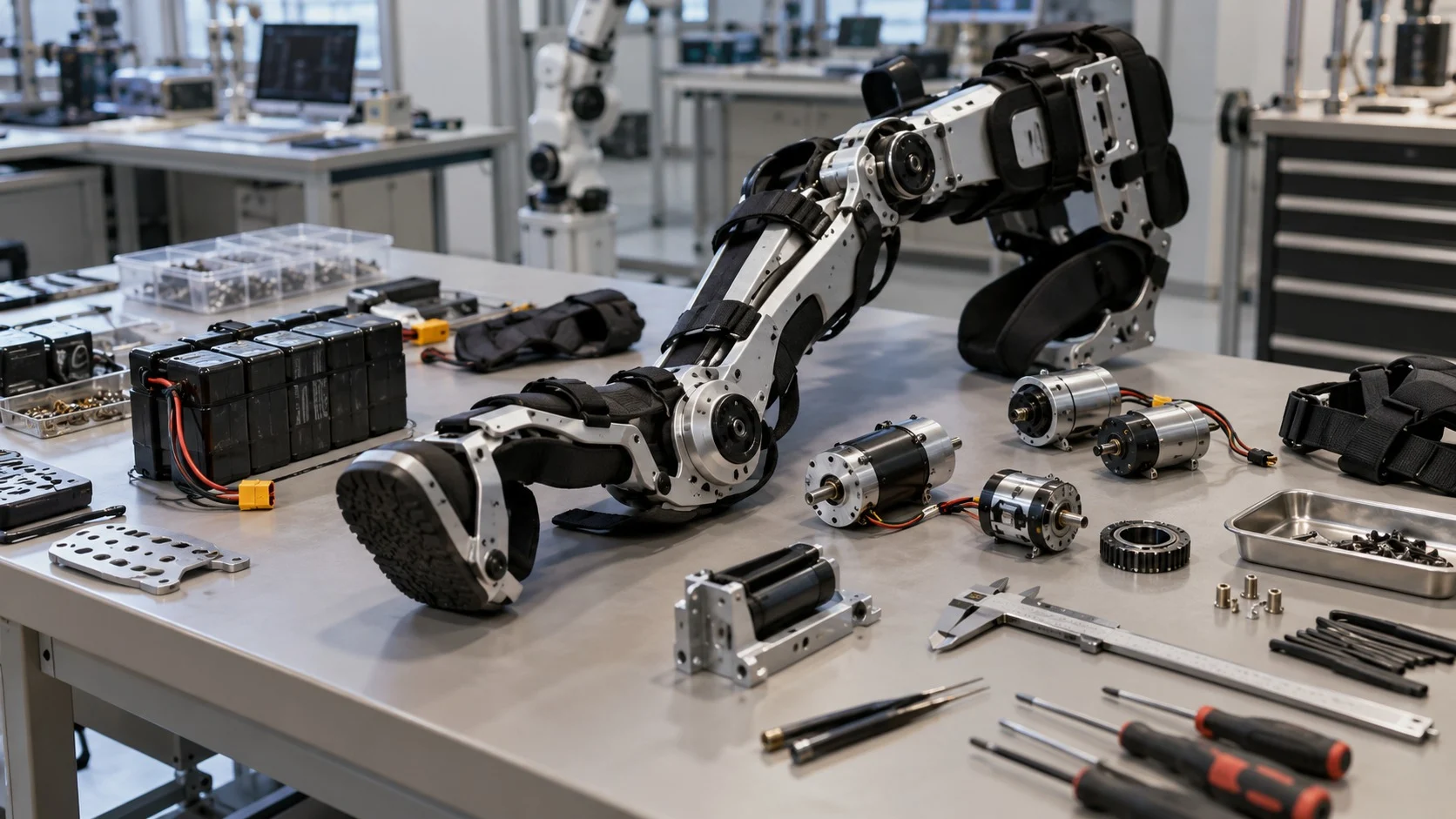
Exoskeleton robots are advancing quickly, but there are still mountains to climb before anyone can wear one in everyday life.
(1) Weight and batteries
Producing more force requires bigger motors and batteries, which make the robot heavier. Building a power source that is lightweight yet lasts a long time is the biggest challenge.
(2) Every body is different
Height, leg length, and range of joint motion differ from person to person. Even a slight misalignment between the axes of the mechanical joints and the wearer's joints can chafe the skin or strain the joints.
(3) Safety and cost
If the robot loses its balance, the wearer falls with it. In addition, medical models are very expensive, so they are still out of reach for many people.
Exoskeleton robots are special in that the machine does not replace the person; it adds strength to the human body and moves together with it. Starting from the failure of Hardiman, this technology has now reached the point where it gives people back the joy of walking again and eases back pain in the workplace. As battery and materials technologies advance further, exoskeleton robots are expected to enter much more everyday settings, for example as walking aids that help elderly parents go for a stroll.
Considering the body of the person who will wear a technology before considering the size of the technology itself: that is the first step in developing robots that walk alongside people.