When people sense that the economy is about to worsen, the first thing they do is close their wallets. They eat out less, put off buying clothes or home appliances, and put whatever money is left over into the bank. Spending carefully and saving when the future feels uncertain is an extremely sensible choice for an individual or a household.
But when everyone makes the same choice at the same time, the story changes. Sales at shops and factories fall, jobs and incomes shrink, and in the end even the total savings of society as a whole can decline. This idea, that thrift, a virtue for the individual, can actually harm the economy as a whole, is called the ‘Paradox of Thrift.’ It is also known as the Paradox of Saving.
In this article, we will look in turn at the principle behind the paradox of thrift, the history this idea has followed, how the paradox reveals itself during economic crises, and the counterarguments raised against it.
The More You Save, the Poorer the Economy: The World of the Paradox of Thrift
The Money I Save Is Someone Else’s Income

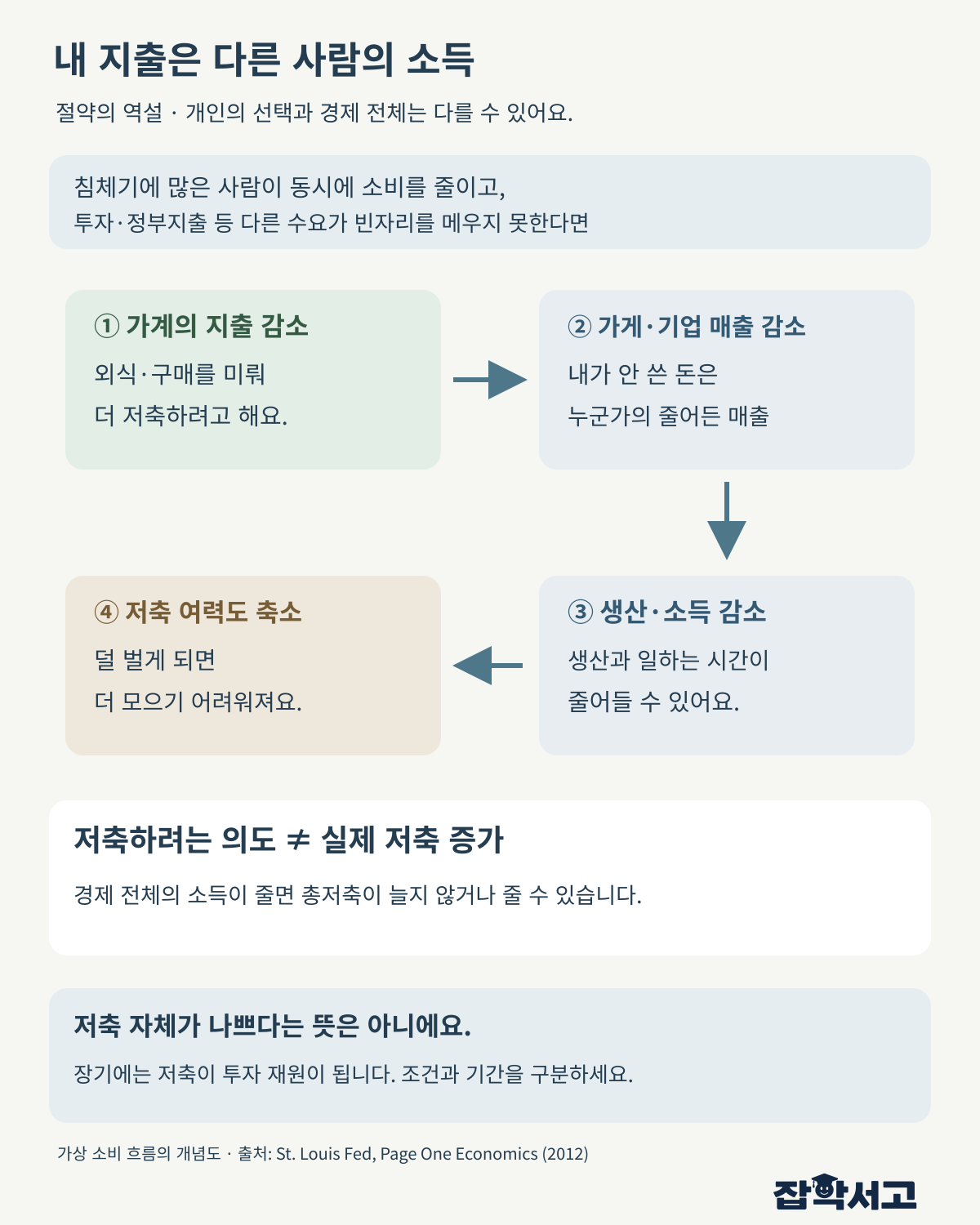
The key to understanding the paradox of thrift lies in the fact that one person’s spending is another person’s income. The money I spend at a bakery becomes the baker’s sales, and the baker uses that money to buy flour and pay the staff. In this way money passes from hand to hand and becomes income for many people.
(1) Less spending means lower sales
When many people cut back on consumption at once, the amount of goods that shops and companies sell goes down. The overall power in the economy to buy goods and services, in other words aggregate demand, weakens.
(2) Lower sales mean lower incomes
When goods don’t sell, companies cut production and reduce working hours or let people go. The incomes of workers and the self-employed then fall along with them.
(3) Lower incomes mean lower savings
People whose incomes have fallen can no longer afford to save as much as before. They cut back at first in order to save more, but as everyone becomes poorer, the savings of society as a whole stay the same or even shrink.
The mistake of assuming that what is true of the part must also be true of the whole is called the Fallacy of Composition. The paradox of thrift is a classic example of this fallacy.
From the Fable of the Bees to Keynes

The idea that a country can actually get into trouble if everyone only saves has been around for a very long time. In 1714, Dutch-born physician Bernard Mandeville pointed out in ‘The Fable of the Bees’ that it is a mistake to think the thrift that makes a household rich will have the same effect on the nation as a whole.
In the 19th century, scholars who believed that the economy suffers from too little consumption and too much saving examined this problem in depth. In 1892, John M. Robertson of Britain wrote in his book ‘The Fallacy of Saving’ that if the whole nation had devoted itself only to saving, the amount saved would actually have been far smaller.
The person who placed this idea at the center of economics was the British economist John Maynard Keynes. In ‘The General Theory of Employment, Interest and Money’ in 1936, Keynes explained that every attempt to save more by cutting consumption reduces other people’s incomes and therefore ends up defeating itself. Later, in 1948, the American economist Paul Samuelson introduced it under the name paradox of thrift in his textbook ‘Economics,’ and the term spread widely.
The Paradox Revealed in Economic Crises
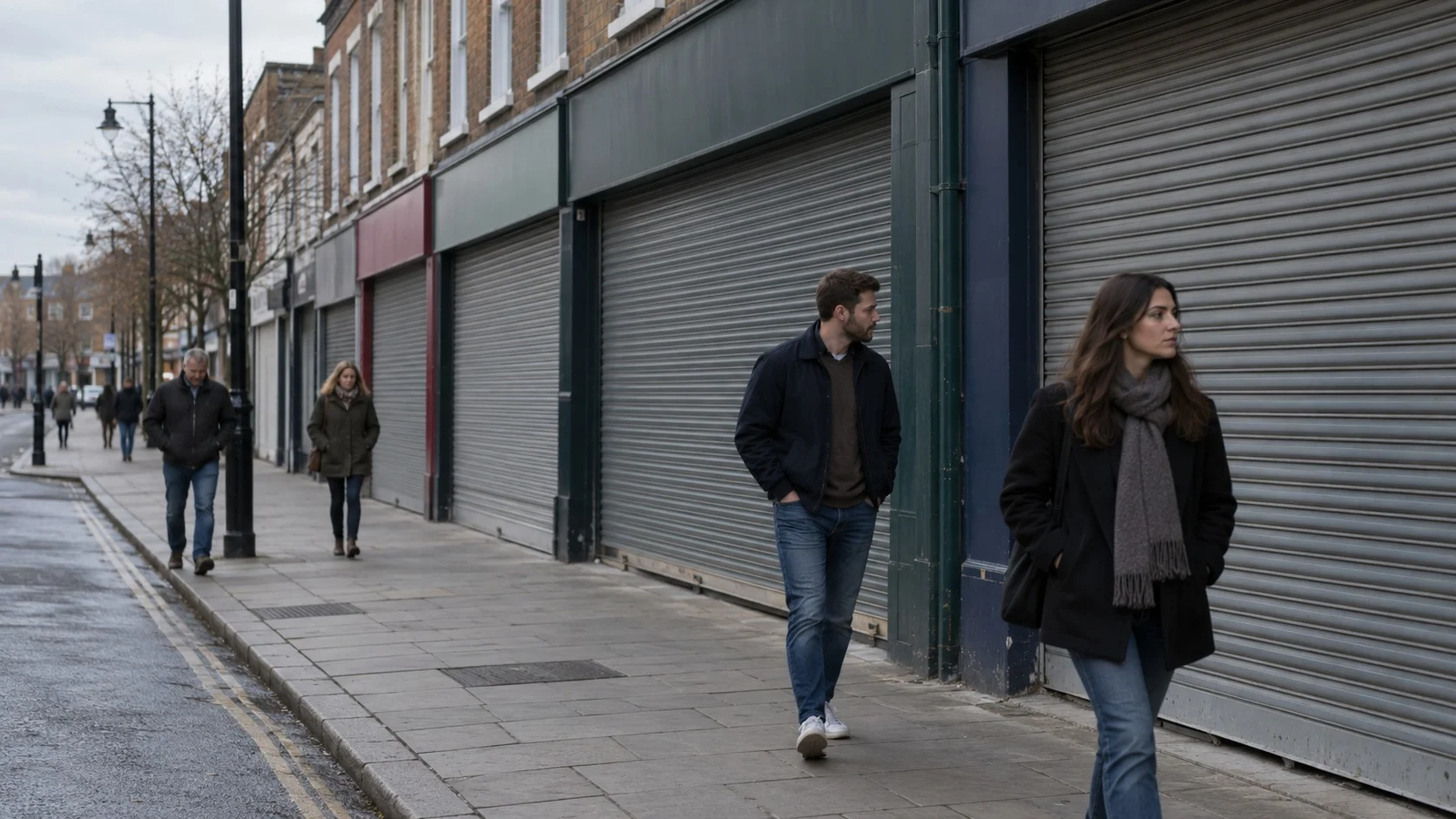
The paradox of thrift appears especially clearly when the economy is frozen. Because everyone is anxious and doesn’t spend, the economy gets worse, and because the economy gets worse, people grow more anxious and spend even less, creating a vicious cycle.
- Paradox of Debt: When people all tighten their belts at once to pay off debt, their incomes fall, and paying off the debt actually becomes even harder.
- Paradox of Deleveraging: Described by American economist Hyman Minsky, this means that when households, companies, and banks all reduce their debts and assets at the same time, precautions that are prudent for each of them end up deepening the pain of the economy as a whole.
After the 2008 global financial crisis, this paradox drew attention again. In April 2009, Janet Yellen, then President of the Federal Reserve Bank of San Francisco, used Minsky’s paradox of deleveraging to explain how consumers were cutting purchases to save more while companies were canceling investments and laying people off to protect their cash. The argument that governments should increase spending at such times to fill the gap left by falling demand is also rooted in this paradox.
Counterarguments to the Paradox of Thrift

The paradox of thrift is an important idea in Keynesian economics, but not every economist accepts it. The main counterarguments are as follows.
(1) Lower prices revive demand
This argument holds that when demand falls, prices go down, and the cheaper prices in turn encourage people to buy again. There is also a rebuttal, however, that in reality prices and wages do not fall easily.
(2) Savings are the seed money for investment
This argument holds that savings deposited in banks become money that can be lent to companies, lowering interest rates and increasing investment. But this path can be blocked when people hoard cash at home, or when interest rates are already close to 0 and cannot be lowered further.
(3) Over the long run, saving drives growth
This argument holds that in the long run, capital built up through saving is used for factories, machinery, and technology and makes the economy grow. For this reason, the paradox of thrift is mainly understood as applying to short periods when the economy is in a slump.
The paradox of thrift does not mean that the habit of spending carefully is bad. It is a warning that when everyone’s choices add up, the result can be completely different from what each individual calculated. Taking one more moment to consider whether what is good for me is also good for all of us is the first step in macroeconomic thinking.