If you had to send a single container from Seoul to Busan, most people would think of a truck first. It is convenient and fast because it loads at one door and unloads at another. But if the same cargo goes by train or ship, fuel use and carbon emissions can fall sharply, and road congestion and the shortage of drivers can be eased as well. Switching the means of carrying freight from roads to rail or shipping in this way is what we call ‘Modal Shift.’
Put simply, modal shift means ‘moving freight transport that has been centered on trucks onto modes that carry large volumes at once, such as rail or coastal shipping.’ Here, ‘mode (Mode)’ refers to a means of transport, and in Korean policy the idea goes by the name ‘jeonhwan gyotong’ (conversion transport). In logistics, it is treated as a transport strategy that weighs not only cost and speed but also the environment and the workforce.
In this piece, we will look in turn at the concept of modal shift and why it is needed, how freight is actually transferred between modes, policy cases from several countries, and the challenges that still have to be overcome.
Freight Moving from Roads to Rails and Sea Lanes
What Is Modal Shift?

Modal shift, just as the words say, means shifting (Shift) the mode of transport (Mode), changing the route that freight travels. That does not mean every leg is switched to trains or ships, however. The usual pattern is that trucks carry the cargo to a nearby freight station or port, rail or ships handle the long trunk leg of several hundred kilometers, and trucks take over again near the destination.
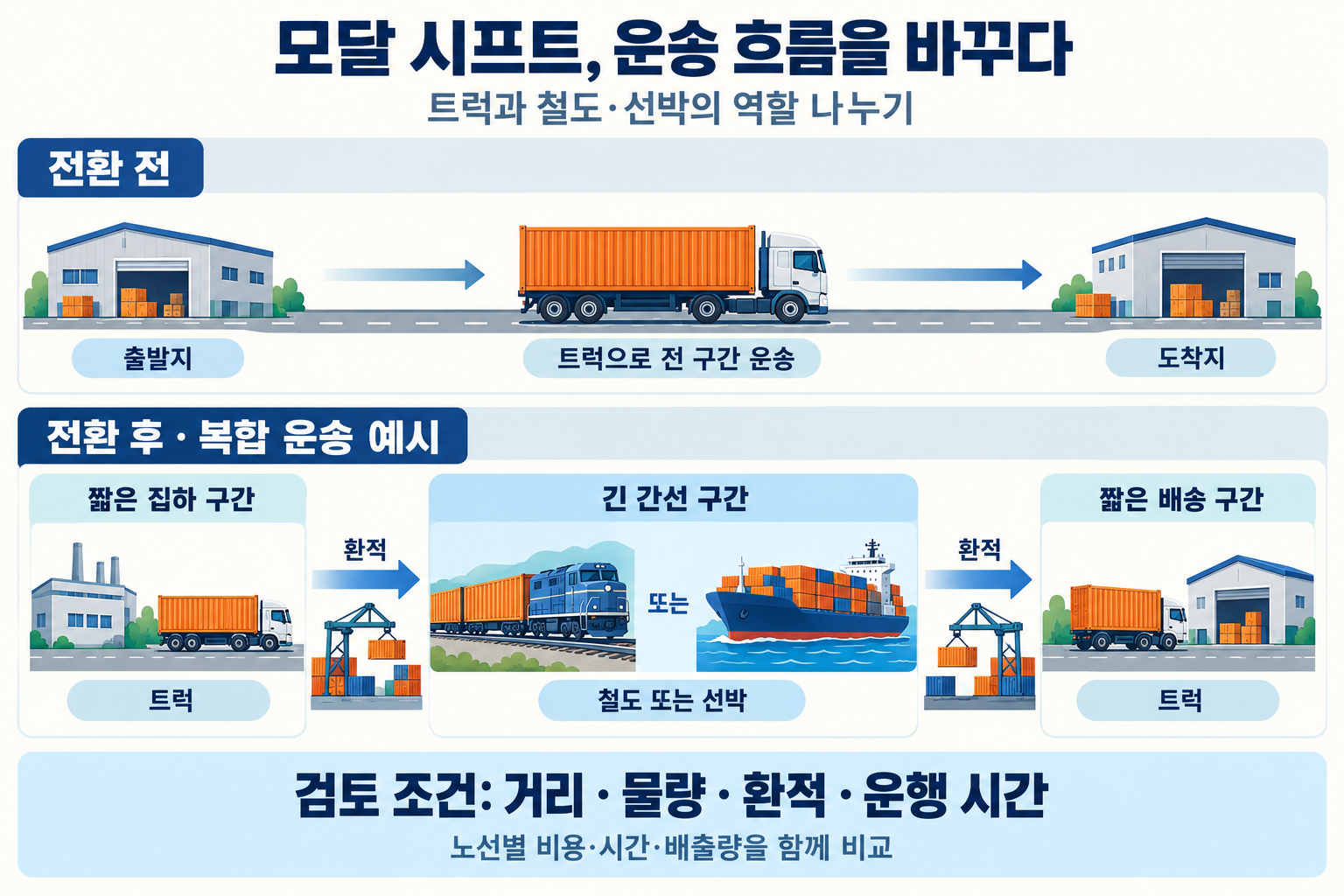
(1) Long Legs Go to High-Volume Modes
Rail and ships can carry far more in one load than a truck ever could. According to Japan’s Ministry of Land, Infrastructure, Transport and Tourism (MLIT), a single freight train can carry up to 650 tons, the equivalent of 65 ten-ton trucks.
(2) Redesigning the Whole Flow of Transport
Changing the mode also changes the pickup point, departure time and even the packaging unit. That is why modal shift is not something a carrier can do alone; the shipper who hands over the freight, the carrier, and the rail and shipping companies have to plan it together.
Why Change the Mode of Transport?
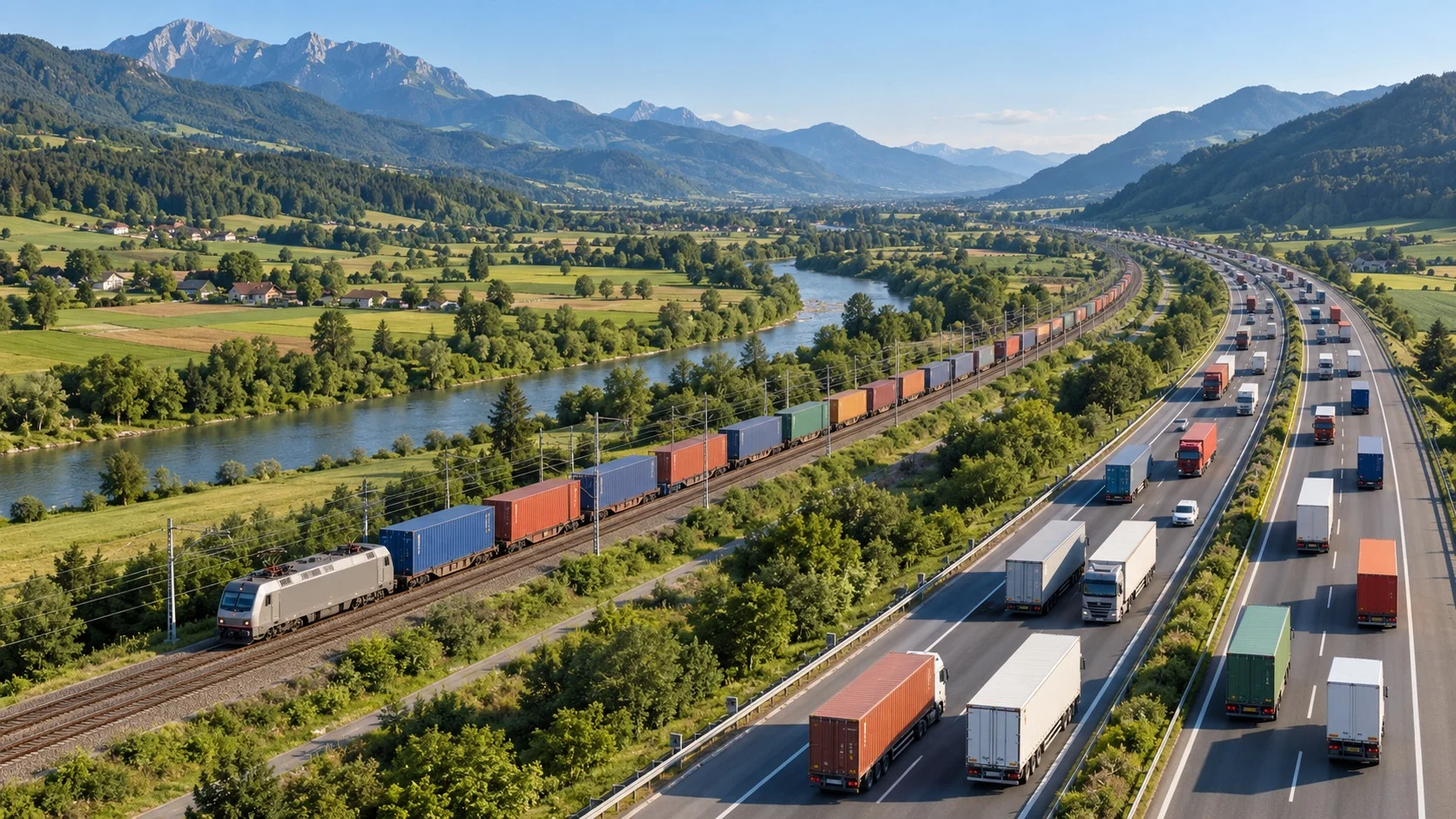
The reasons modal shift is drawing attention can be broadly divided into three.
- Emission reduction (Emission Reduction): According to MLIT’s estimate for fiscal year 2024, carrying one ton of freight one kilometer emits about 195 grams of carbon dioxide by commercial truck, but only 41 grams by ship and 19 grams by rail. By this calculation, switching from truck to rail can cut emissions by about 90%, and switching to ships by about 79%.
- Responding to the driver shortage (Driver Shortage): Since April 2024, Japan has capped truck drivers’ annual overtime at 960 hours, and it is now facing the ‘2024 logistics problem,’ the concern that not all freight can be delivered. When trains or ships take the long legs, drivers only need to drive as far as a nearby hub, so long-haul trips that used to take several days decrease.
- Reducing social costs (Social Cost Reduction): Fewer freight trucks on the road also means less of the burden that society as a whole has carried, such as traffic congestion, accidents, air pollution and road damage.
In the past, it was thought that modal shift paid off only for runs of roughly 500 kilometers or more, but in Japan cases of switching modes are recently increasing even on routes of 300–400 kilometers.
Intermodal Methods for Transferring Freight
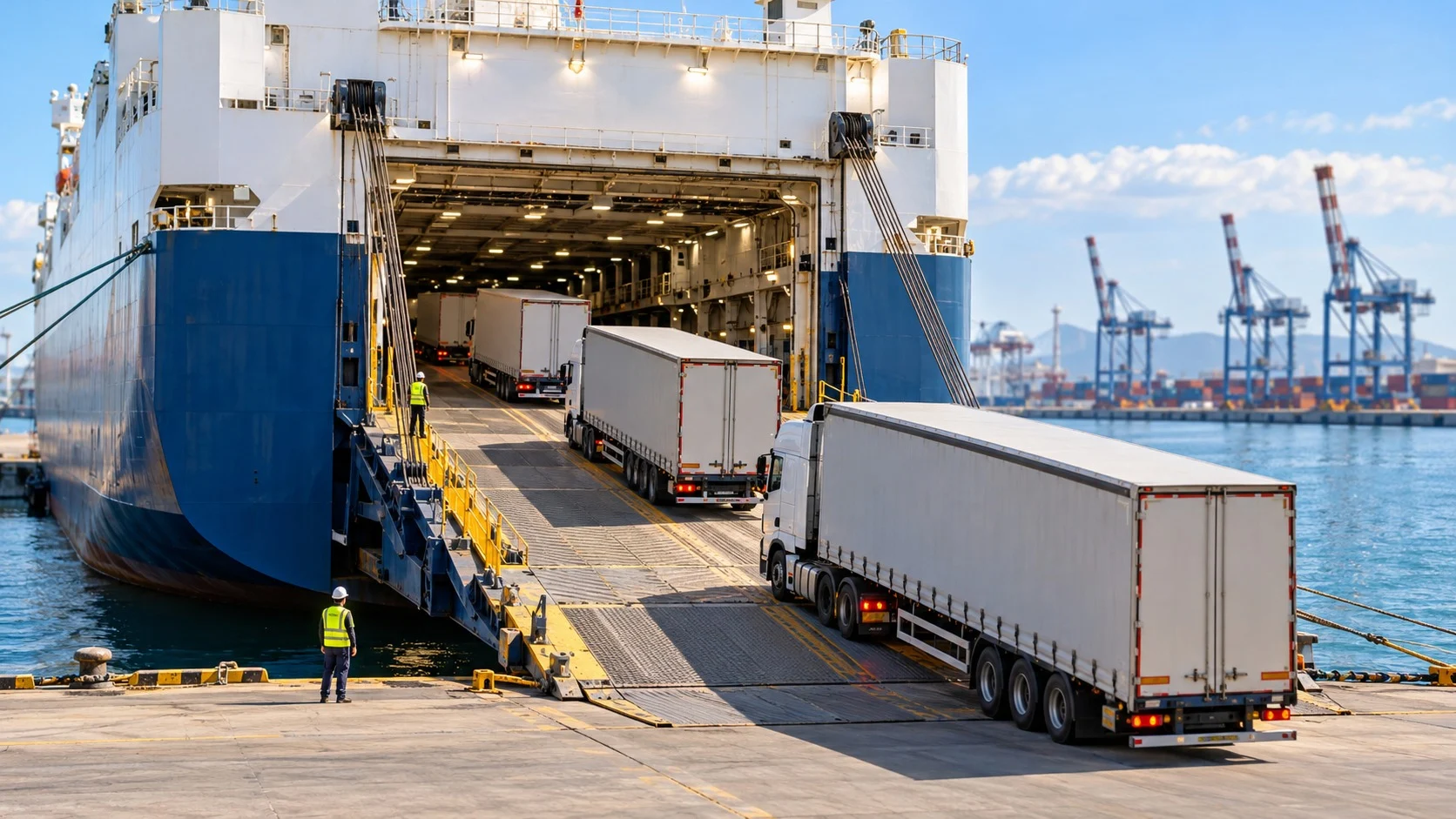
For modal shift to work well, cargo has to be handed over quickly between trucks, trains and ships. Several intermodal transport methods are used for this.
(1) Loading Only the Container onto a Railcar
Detaching just the container and placing it on a rail flatcar is called COFC (Container on Flat Car). Because the cargo moves box and all instead of being unloaded and reloaded piece by piece, handling time is short, and containers can be stacked in several tiers, so it is the most widely used method.
(2) Piggyback: Loading the Whole Trailer
Loading a trailer or truck full of freight onto a railcar as a whole is called piggyback (Piggyback), after the way one person rides on another’s back, and is also known as TOFC (Trailer on Flat Car). Some countries, such as Austria, operate a Rolling Highway (Rolling Highway), on which trucks drive up a ramp directly onto the train.
(3) RoRo Ships That Take Vehicles Aboard As They Are
A ship that trucks or trailers drive into and out of directly over a ramp is called a RoRo ship (Roll-on/Roll-off Ship). With unaccompanied transport, in which only the trailer is loaded onto the ship and the driver gets off, the driver does not have to travel on board with it.
Policies Around the World and the Challenges Ahead
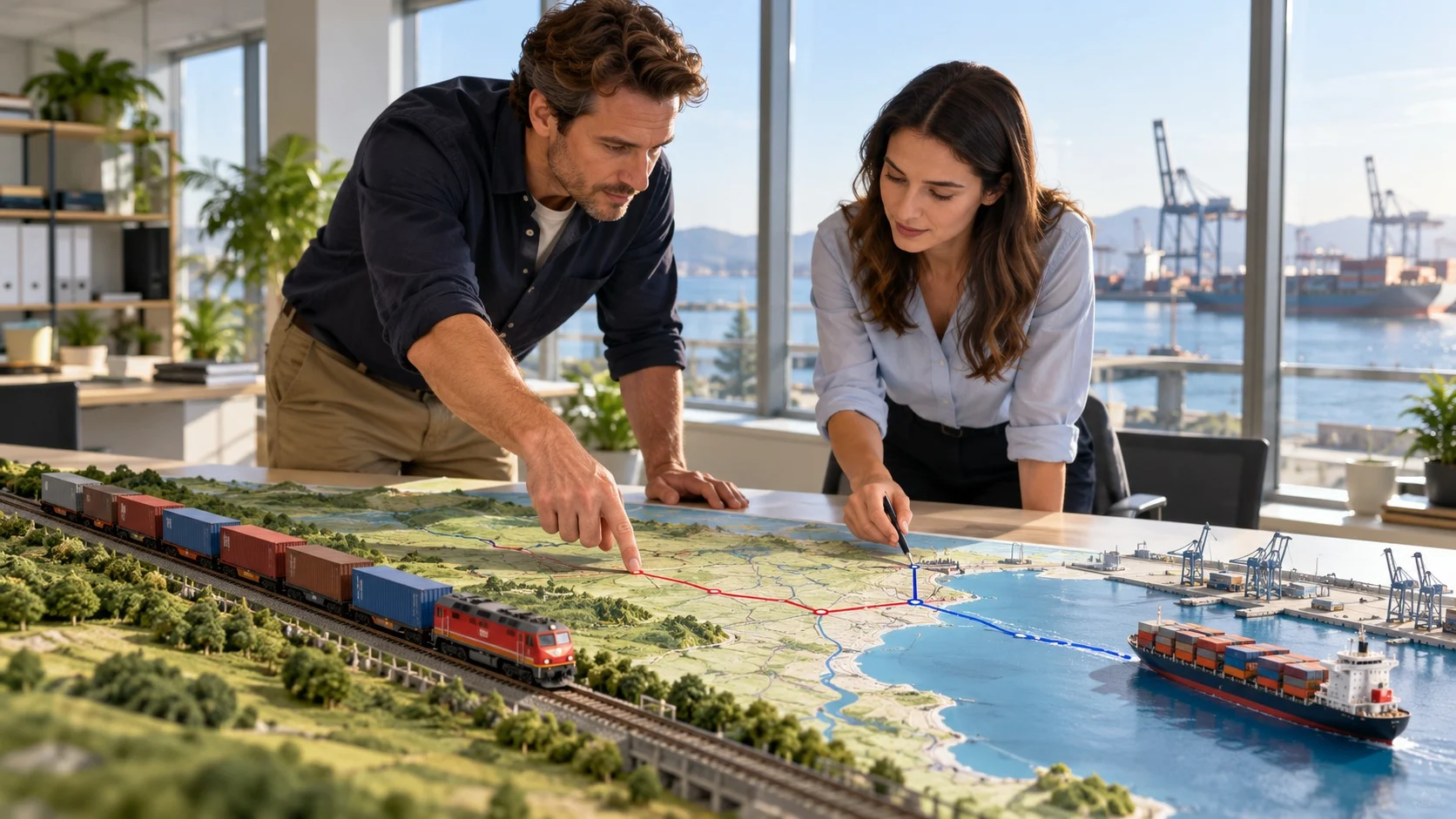
Because modal shift is hard to expand through companies’ choices alone, many countries back it with policy.
[Case 1] Korea’s Conversion Transport Support Program
Under the Sustainable Transport Logistics Development Act, enacted in June 2009 and in force from December of that year, Korea launched its conversion transport support program as a pilot in July 2010 and expanded it into a full program from 2011. The program pays subsidies, based on the volume shifted, to shippers and carriers that move freight from roads to rail or coastal shipping. The Ministry of Oceans and Fisheries stated that from 2010 to 2015, shifts to coastal shipping moved about 8.32 million tons of freight and cut carbon dioxide by about 1.13 million tons.
[Case 2] Moves in the European Union and Japan
In its 2011 Transport White Paper, the European Union (EU) set a goal of shifting 30% of road freight traveling more than 300 kilometers to rail or waterborne transport by 2030, and more than 50% by 2050. In Japan, companies are also taking action themselves; Yamato Transport, for example, has switched trunk transport from Kyushu to the Kanto region from mainly trucks to rail.
Challenges to Overcome
(1) Limits in Time and Flexibility
In a survey from around 2010, a 40-foot container between the Seoul metropolitan area and Busan arrived in about 6 hours by road, but took about 18 hours by rail and about 48 hours by coastal shipping. Transfers at stations and ports add time, and it is hard to accommodate freight sent frequently in small amounts.
(2) Disasters and Infrastructure
When rail stops because of heavy rain or a typhoon, it is hard to find another mode to carry the freight instead, and freight stations and ports also need enough cargo-handling facilities. That is why preparing hub facilities and handling equipment matters as much as subsidies.
Modal shift is less a technique for sending freight faster than a strategy for choosing the mode that fits the distance and volume to make the whole flow lighter. When trucks handle the short, dense legs and trains and ships handle the long, heavy ones, the burden on costs, the environment and people falls together.
Giving each mode of transport the leg it handles best: that is the first step toward sustainable logistics.