Imagine spending your school vacation in a small village abroad, teaching children English, repainting a school wall, and guarding sea turtle eggs. Every year, more people fill their itineraries with helping others instead of traveling to rest. Travel that combines tourism and volunteering like this is called “Volunteer Tourism.”
Put simply, volunteer tourism means “tourism in which travelers spend part or all of their trip on volunteer work that helps local communities or nature.” Combining the English words Volunteer and Tourism, it is also called “Voluntourism,” and it is a field that draws sharp criticism along with good intentions.
In this article, we will look in turn at the background of how volunteer tourism emerged, its main types, what travelers and communities gain, and the problems surrounding this kind of travel and the direction it should take.
The Light and Shadow of Traveling to Help
How Did Volunteer Tourism Begin?
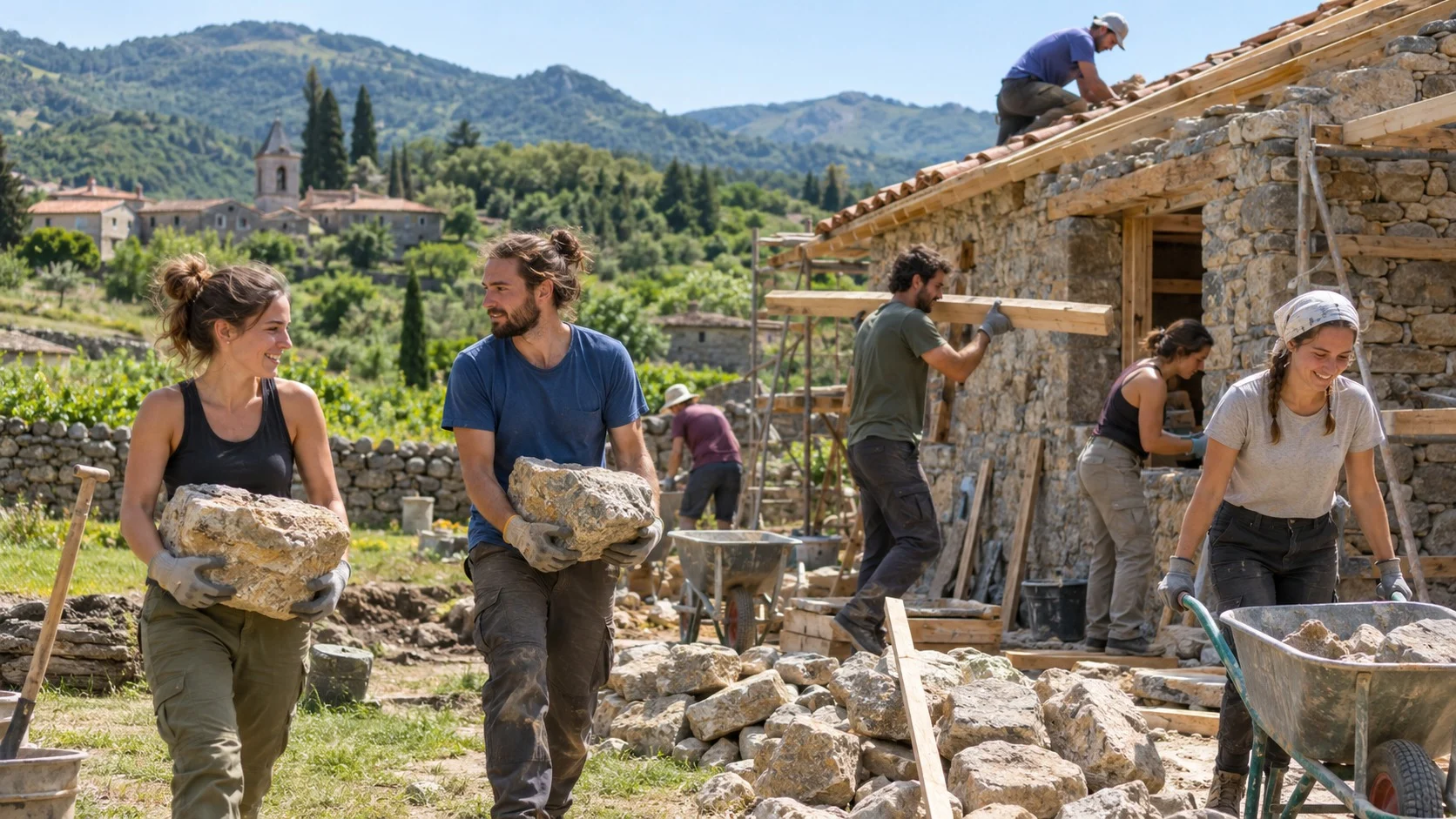
The tradition of going abroad to volunteer is fairly old. Starting in 1920, after the end of World War I, the international organization Service Civil International organized “Workcamps” where young people from many countries rebuilt ruined villages together. Overseas volunteering became widely known when the British overseas volunteering organization VSO (Voluntary Service Overseas) was founded in 1958 and the Peace Corps was established by the U.S. Kennedy administration in 1961.
Until then, overseas volunteering centered on long-term work lasting from several months to several years. Then, from the late 20th century, the “Gap Year,” in which people take a year off before entering university or after graduating to experience the world, became popular, and travel companies increasingly sold short volunteering programs for a fee. It became established as a field of tourism research when Australian tourism scholar Stephen Wearing described the phenomenon in his 2001 book “Volunteer Tourism: Experiences that Make a Difference.”
Main Types of Volunteer Tourism
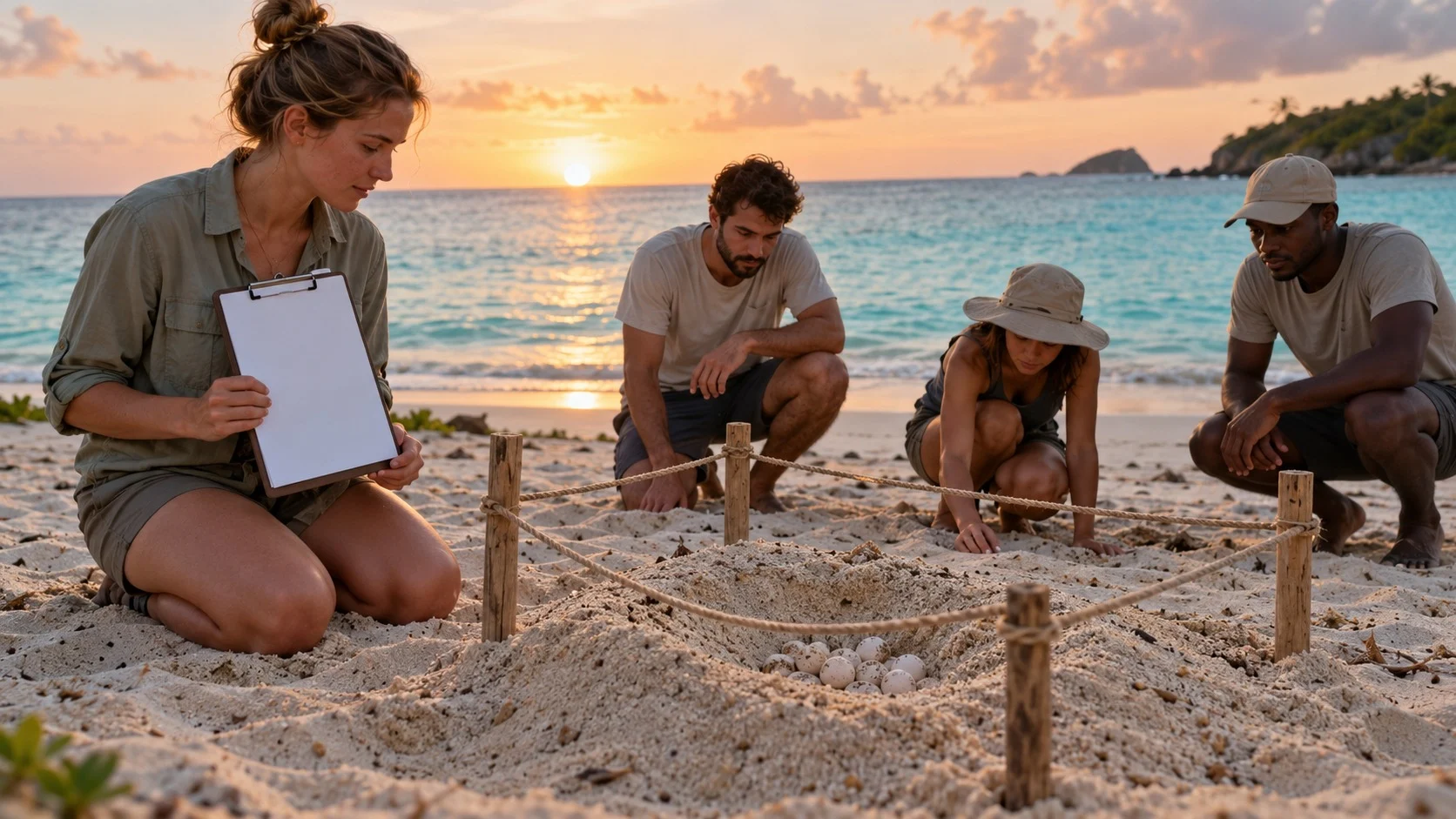
Volunteer tourism can be broadly divided into three branches depending on what is being helped.
(1) Helping Local Communities
This includes teaching children at schools, building houses and wells, and helping out at village health centers. It is the most common form, with stays ranging from a few days to several months.
(2) Protecting Nature and Animals
This includes surveying coral reefs, planting trees in forests, and guarding beaches where sea turtles lay their eggs. Caring for injured animals at wildlife sanctuaries also falls into this category.
(3) Assisting Research and Documentation
This includes counting plants and animals with scientists or helping with archaeological excavations. Even without expert knowledge, volunteers lend a hand in collecting data under researchers’ guidance.
About 1 million Americans volunteer abroad each year, and among those who spent most of their volunteer time abroad, nearly half (45%) went on short trips of two weeks or less (according to a 2012 report by the Center for Social Development at Washington University in St. Louis, which analyzed the Current Population Survey). Such short-term volunteering is the core of volunteer tourism.
What Travelers and Communities Gain Together
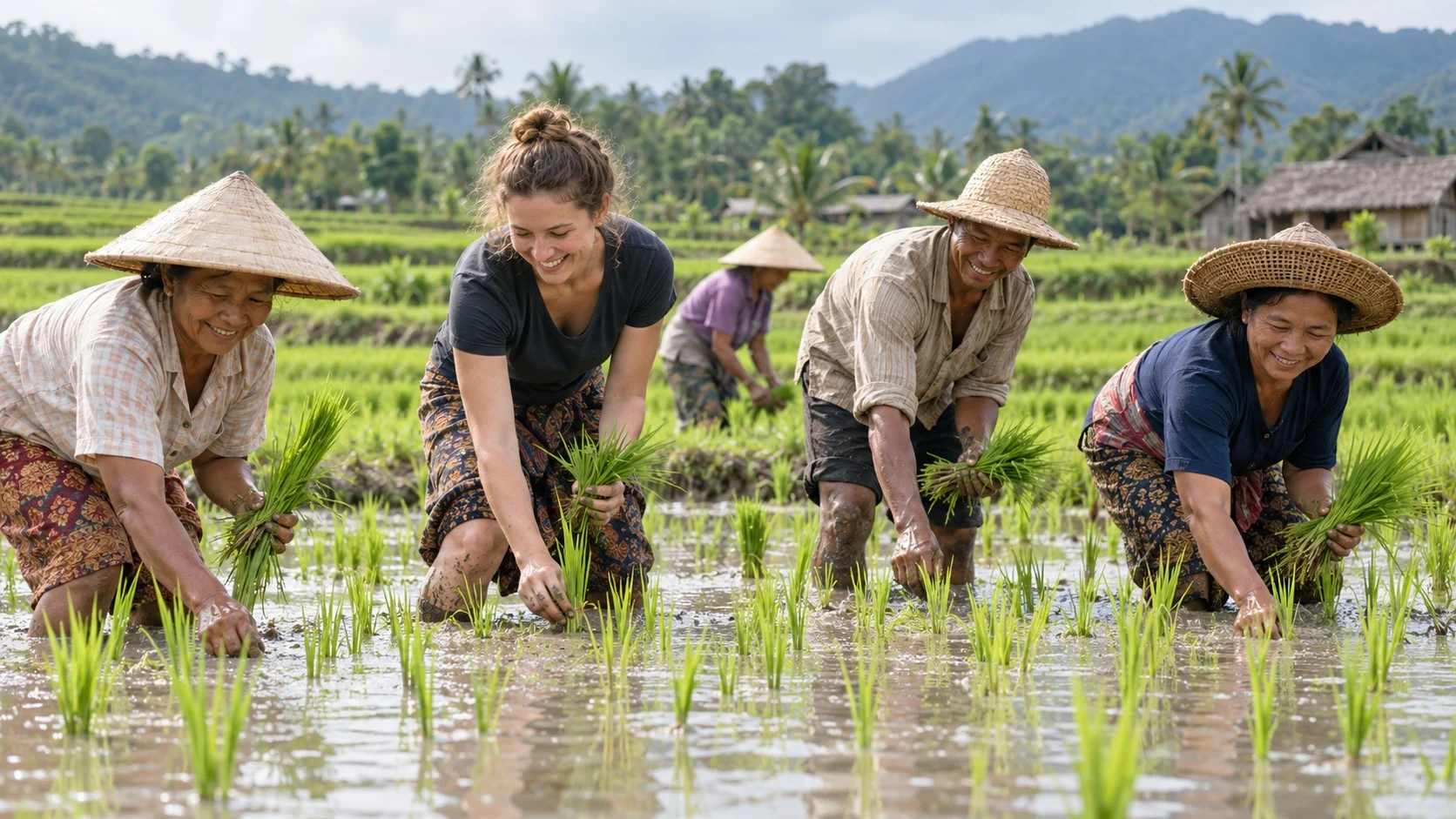
When volunteer tourism is done well, it benefits both travelers and local communities.
- Cultural Understanding: Instead of just passing through tourist spots, travelers work alongside residents and get to know their society deeply.
- Personal Growth: Solving problems in an unfamiliar environment builds confidence, teamwork, and a broader perspective.
- Community Support: Along with extra hands, money such as accommodation and food costs flows into the community, and funds needed for conservation work are raised.
It is especially effective when travelers use the skills they already have. When doctors provide medical care and carpenters help build houses, they can directly offer help that is hard to find locally.
Balancing Volunteering and Travel
Volunteer tourists do not spend all their time volunteering. They often mix work and leisure, volunteering on weekdays and visiting nearby attractions on weekends. Wearing, too, saw volunteer tourists as “travelers who, for various reasons, volunteer in an organized way and spend their holidays doing so.” When we accept that the wish to help and the wish to see new places exist together, travelers can more honestly match their own expectations with the community’s needs.
Criticisms of Volunteer Tourism and the Right Path
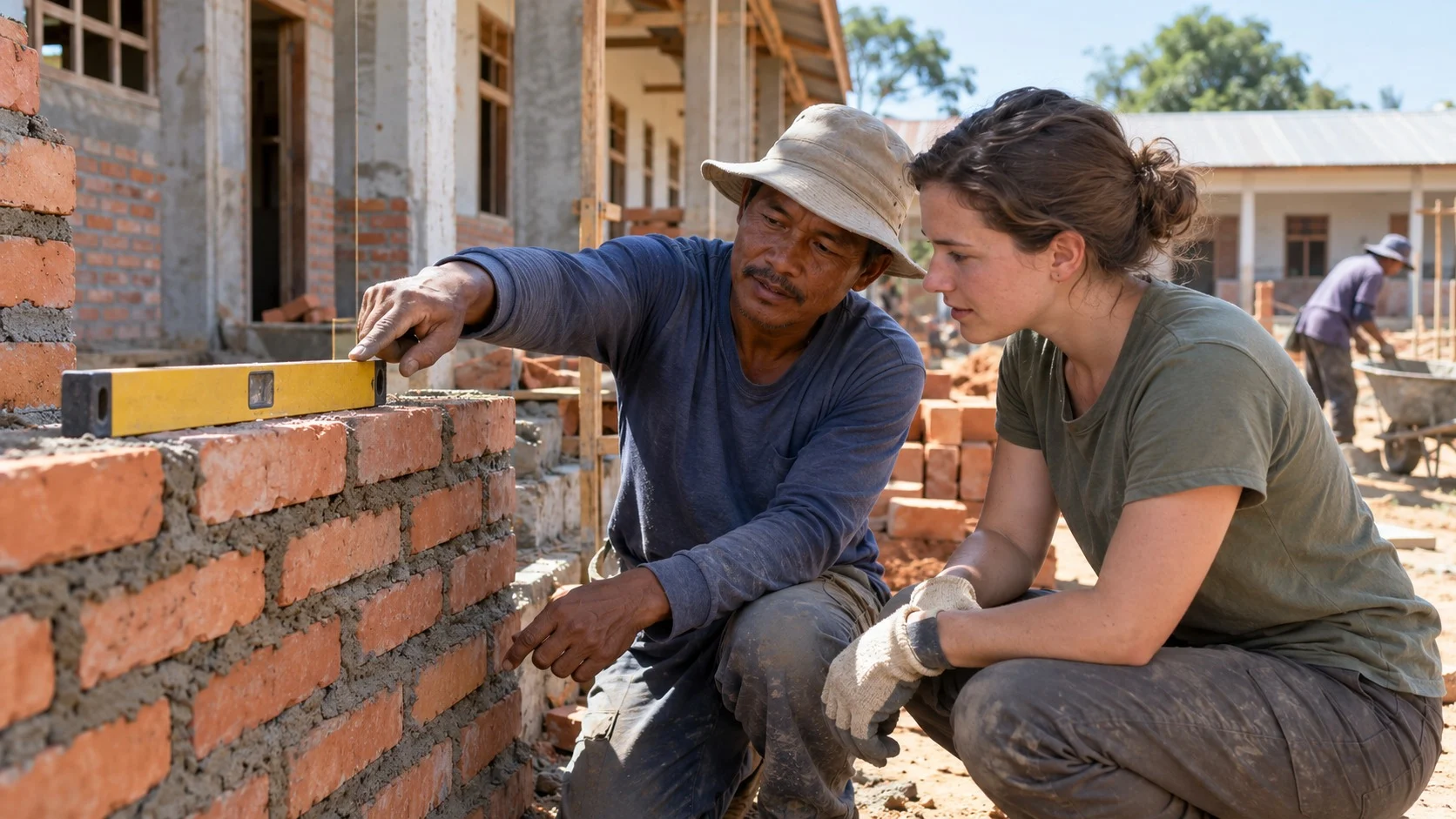
Even a trip that starts with good intentions can become a burden on the community if it is poorly prepared.
(1) It Takes Away Local Jobs
Walls and classrooms built by unskilled volunteers often have to be repaired again. On top of that, volunteers sometimes take over jobs that residents could have been paid to do.
(2) It Leaves Scars on Children
The most heavily criticized form is orphanage volunteering. When volunteers rotate in every few weeks, children go through repeated farewells just as they grow attached. There have even been cases of children who have parents being brought in to run orphanages aimed at volunteers’ money, and in 2018 Australia wrote “Orphanage Trafficking” into law as a form of modern slavery.
(3) The Helpers Become the Main Characters
When volunteers care more about taking photos of their service, the people receiving help can be treated like a backdrop and their dignity can be harmed.
That is why experts advise checking, before you leave, whether the organization is led directly by local residents, where the money you pay goes, and whether the work is something your skills can truly help with.
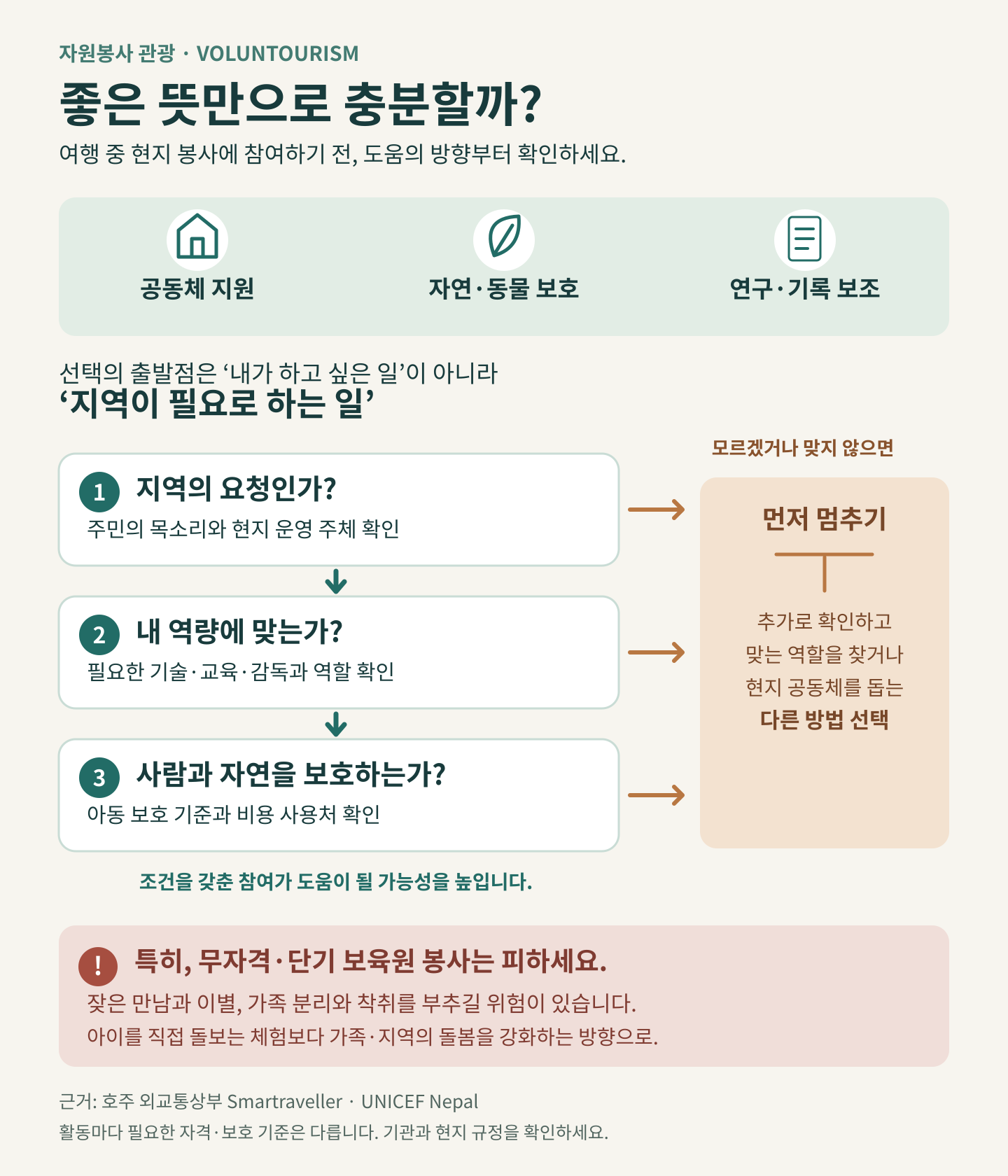
Volunteer tourism shows that travel can go beyond enjoyment and make a difference for someone. But for that help to be real, what the community truly needs must come before what I want to do.
Listening first to the voices of the people there, before acting on the wish to help, is the first step in learning to be a good traveler.