When you lift the lid of a pot while cooking ramyeon, the water droplets clinging to the inside of the lid trickle down. The broth is salty and rich, but if you taste the droplets on the lid, they are close to plain water with no salt. That is because, while it boils, only the water rises as steam, touches the cold lid and turns back into water. The technique that refines this simple phenomenon to separate mixed substances is “Distillation.”
Put simply, distillation means “a separation method that heats a liquid mixture, sends the components that boil more easily off as vapor first, and then cools that vapor to collect it as liquid again.” It takes advantage of the fact that each substance has a different boiling point and evaporates to a different degree, and it is a physical separation that sorts out what is mixed, not a chemical reaction that changes the components themselves.
In this article, we will look in turn at the history of distillation, how it works and its types, and its uses in spirits, petroleum and seawater, along with its limits.
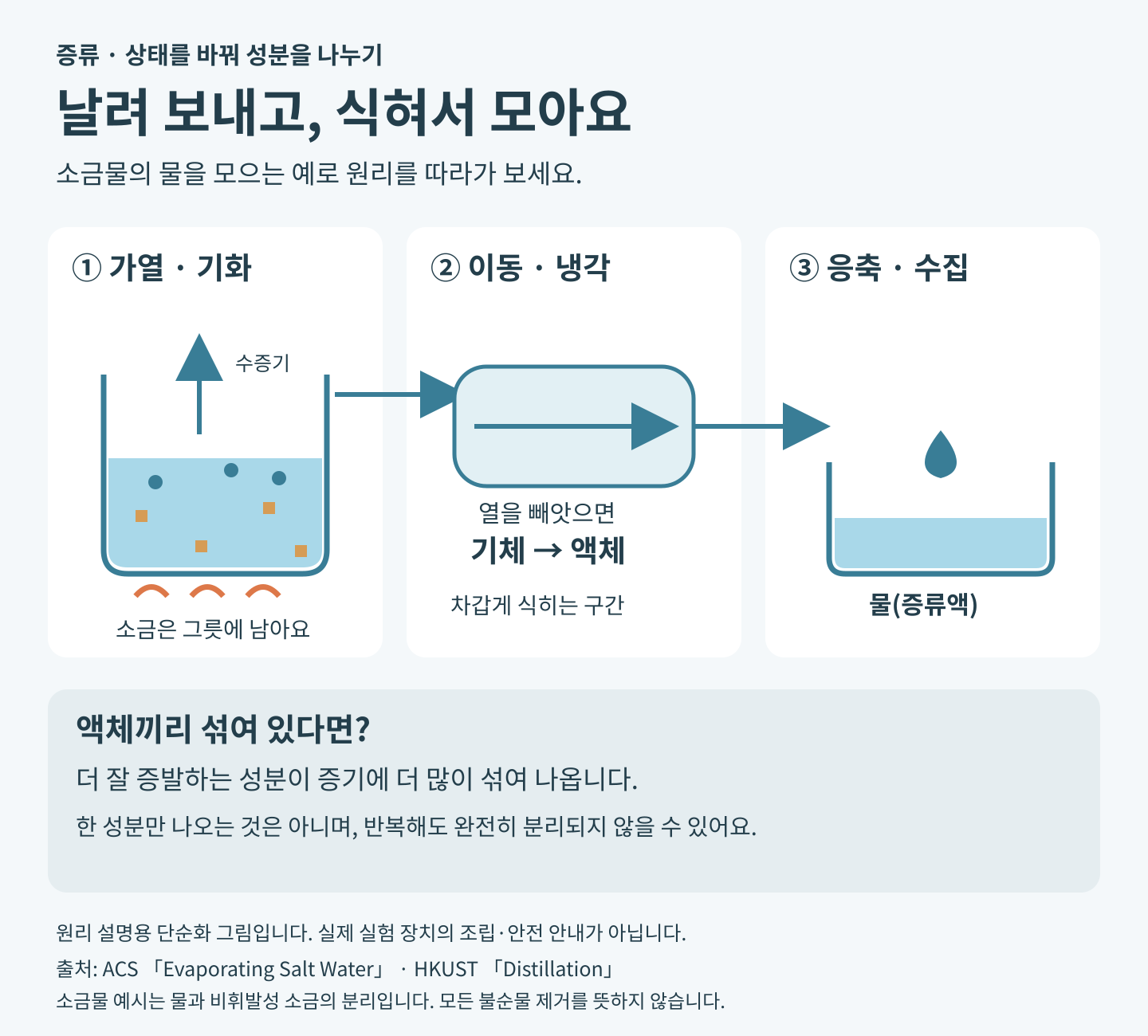
A Technique That Separates Mixtures by Differences in Boiling Point
How Did Distillation Begin?
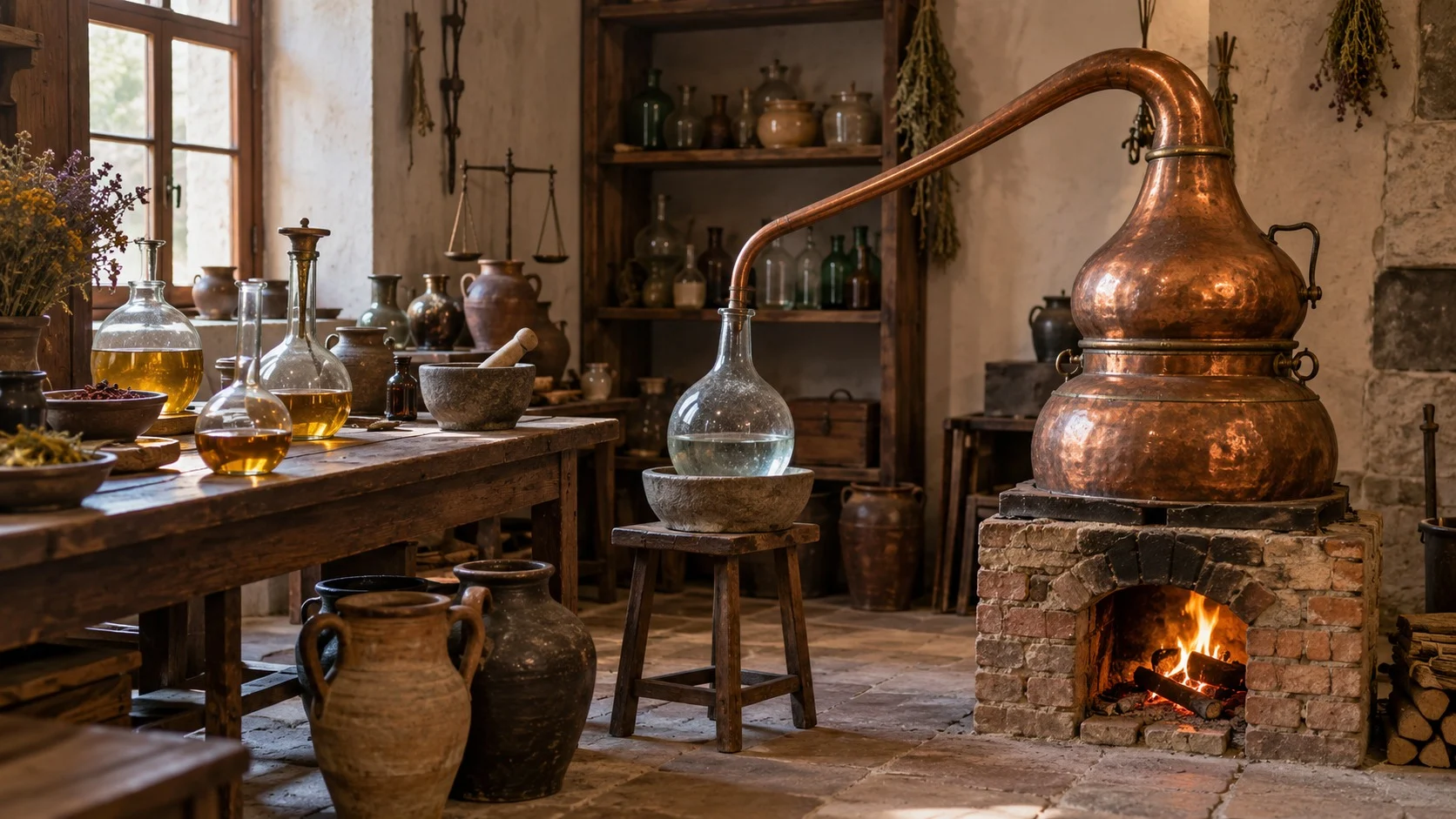
People noticed long ago that steam turns back into water. The ancient Greek philosopher Aristotle recorded that water condensed from evaporated seawater is not salty. Around the 1st century AD, alchemists in Alexandria, Egypt, then under Roman rule, worked with distillation apparatus, and drawings of apparatus left by the 3rd-century alchemist Zosimos of Panopolis have also survived.
It was chemists of the medieval Islamic world who greatly advanced distillation. They experimented again and again by distilling many substances, and by around the 9th century they had also recorded a method for distilling wine. The name “Alembic,” a long-necked vessel used for distillation, also comes from the Arabic “al-inbiq.” The technique spread to Europe, where around the 12th century it was used to make alcohol, called “burning water,” and in Korea it arrived via the Yuan dynasty during the Goryeo period, giving rise to the tradition of making soju with a sojugori still.
How Distillation Works in 4 Steps
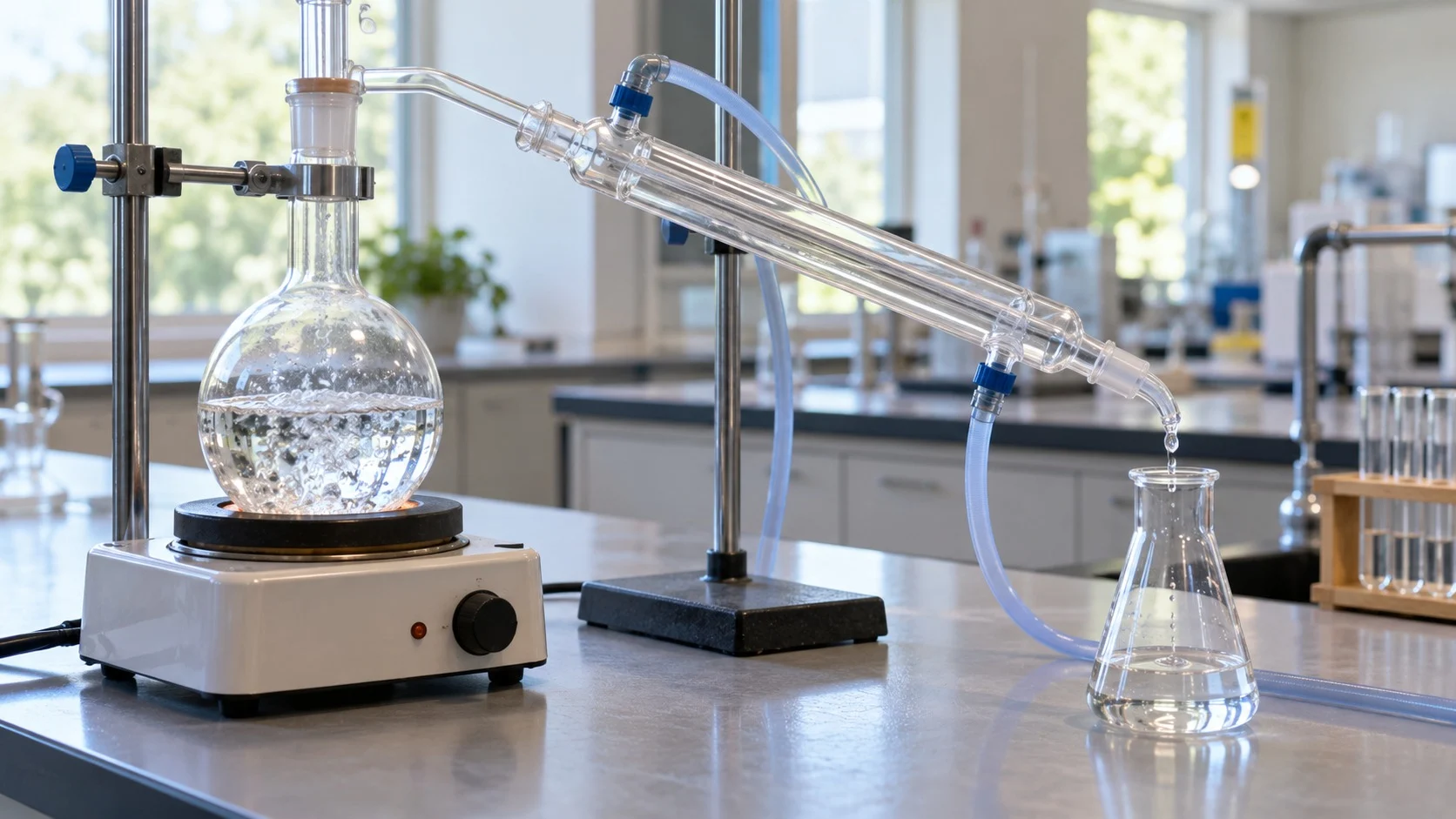
Whether it is a small flask in a laboratory or a giant tower in a factory, distillation generally follows the same flow.
(1) Heat
Warm the vessel holding the mixture. As the temperature rises, the vapor pressure of each component rises too, and the moment the total vapor pressure equals the outside pressure, the liquid begins to boil.
(2) Components that boil easily become richer in the vapor
People often think that only the component with the lower boiling point boils off on its own, but in reality all the components evaporate together. It is just that the components that evaporate more easily make up a larger share of the vapor. For example, ethanol boils at about 78 degrees and water at 100 degrees, so when you heat an alcoholic drink, the first vapor that comes off contains more alcohol.
(3) Cool it back into liquid
When the rising vapor passes through a condenser with cold water flowing around it, it condenses back into liquid. The liquid collected this way is called the “distillate.”
(4) Collect and repeat
Collect the distillate, and if it is not pure enough, put it through the same process again. Each round of distillation raises the concentration of the desired component a little more.
Types of Distillation Chosen to Suit the Situation
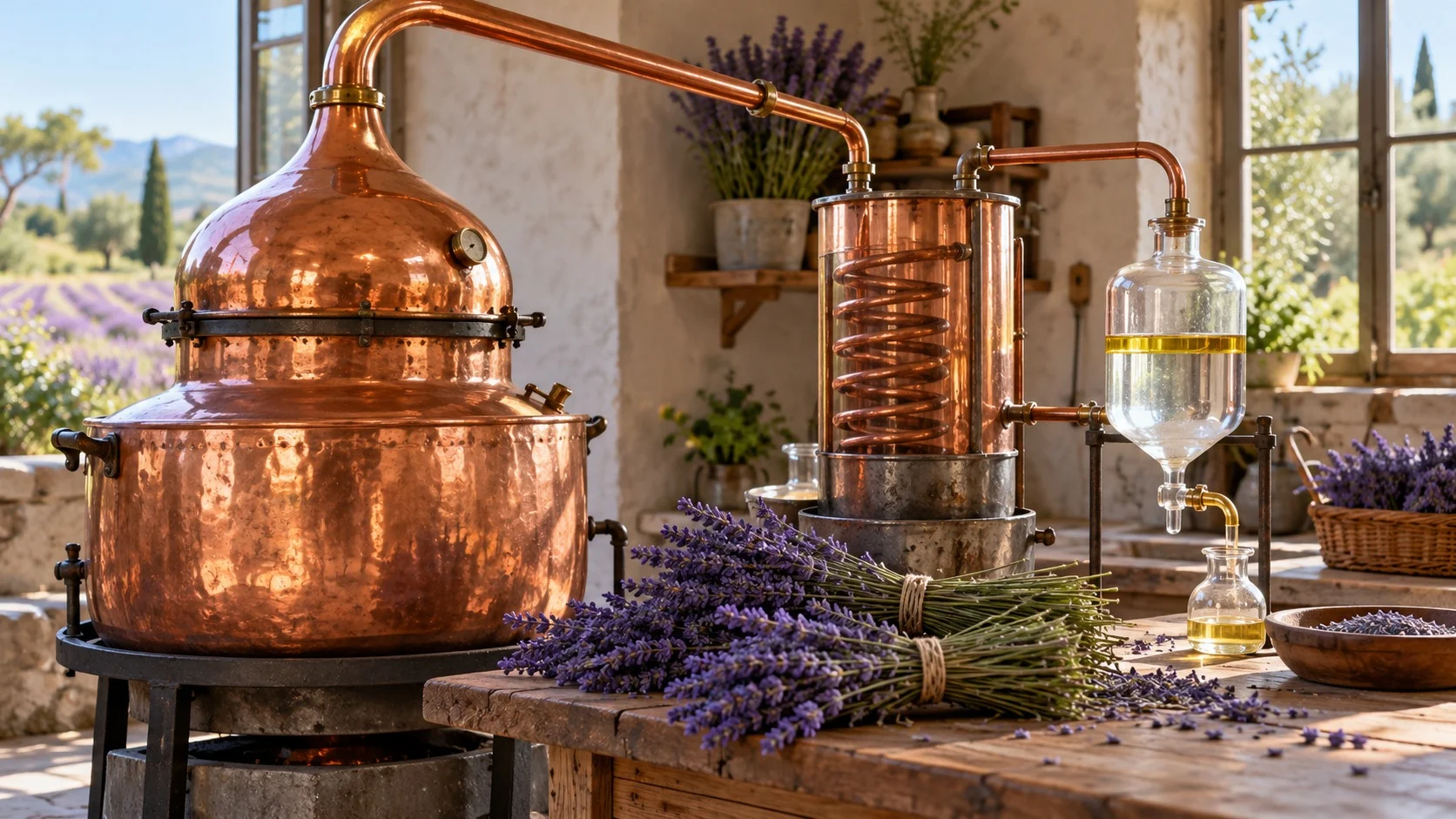
The distillation method also differs depending on the properties of the mixed substances.
- Simple Distillation: The most basic method, in which the vapor is cooled and collected directly. It is suitable when the difference in boiling points is large, roughly 25 degrees or more, or when a salt that does not easily evaporate is dissolved, as in seawater.
- Fractional Distillation: A method that places a long fractionating column above the flask so evaporation and condensation repeat many times, making it possible to separate even liquids with similar boiling points.
- Vacuum Distillation: Taking advantage of the fact that lowering the pressure also lowers the boiling point, it boils substances that break down at high temperatures at relatively low temperatures.
- Steam Distillation: A method that blows hot steam into the raw material so the fragrant components are carried off with it, used to obtain essential oils from flowers and herbs.
Mixtures That Never Fully Separate: Azeotropes
Not every mixture can be cleanly separated by distillation. With water and ethanol, once ethanol reaches about 95.6% by mass, the compositions of the liquid and the vapor become identical, and this is called an “Azeotrope.” At this point, no matter how many times you distill it again, the purity does not rise any further, so if you need purer alcohol, you have to combine it with other methods, such as adding a substance that absorbs water.
Distillation in Daily Life and Industry, and Its Limits
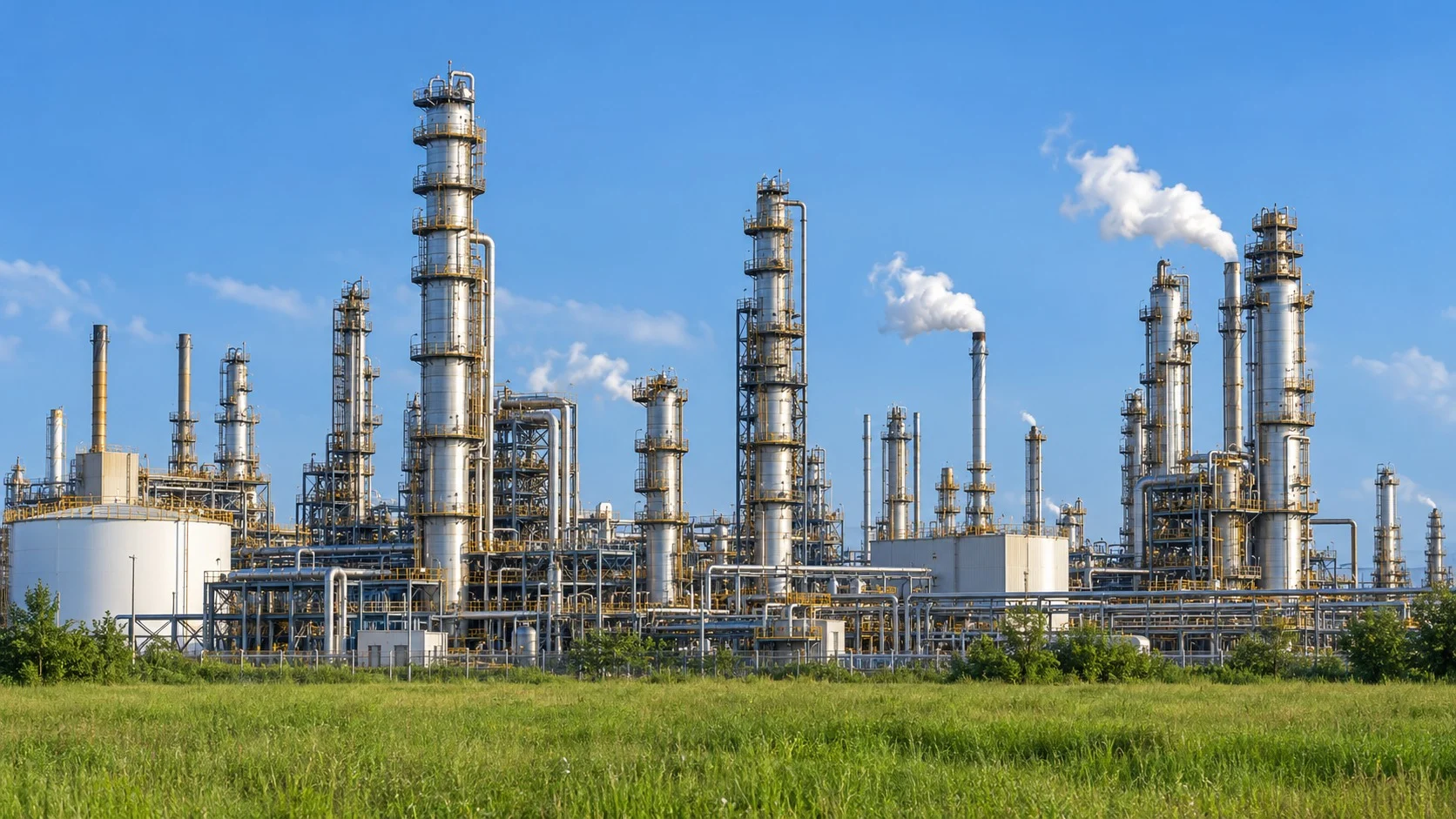
Distillation is used in all corners of our lives.
- Spirits: Weak alcoholic drinks made by fermenting grains or fruit are distilled to make strong spirits such as whisky, brandy and distilled soju.
- Oil Refining: When crude oil is fed into a tall tower and heated, light gases and gasoline come out separated at the top, kerosene and diesel in the middle, and heavy oils and asphalt feedstock at the bottom.
- Desalination: Seawater is boiled, leaving the salt behind and collecting only the steam to obtain drinking water.
- Air Separation: Air is cooled until it becomes liquid and then distilled to obtain oxygen, nitrogen and argon separately.
However, because distillation works by boiling substances to change their state, it takes a lot of energy. In fact, a significant share of the energy used in the chemical industry goes into distillation. That is why today, people are building equipment that reuses heat several times and also researching methods that use less energy, such as separation using membranes.
Starting from an ordinary phenomenon like the water droplets that form on a pot lid, distillation has grown into a technology that produces everything from spirits and perfume to gasoline and drinking water. It is interesting that, instead of forcibly pulling apart what is mixed, it is a method that waits for each substance’s own distinct properties.
Finding each different boiling point among things mixed together and sorting them out one by one: that is chemistry’s first step toward obtaining pure substances.