In a seaside town, you can easily spot gate hinges or bicycle chains that have turned unusually red. Even a newly bought iron chair starts to show brown stains spreading across its surface after a few rains. This phenomenon, in which a metal that once seemed solid slowly turns into a different substance as it meets air and water, is ‘Corrosion.’
Put simply, corrosion means ‘the process by which a metal reacts chemically with its surroundings, loses its original properties, and breaks down.’ What we commonly call rust is the product of iron corroding, and other metals such as copper and aluminum also corrode in their own ways.
In this piece, we will look in turn at how iron rusts, the problems that arise when different metals meet, cases from history, and ways to prevent corrosion.
How Metals Rust and the Wisdom to Stop It
What Is Corrosion?
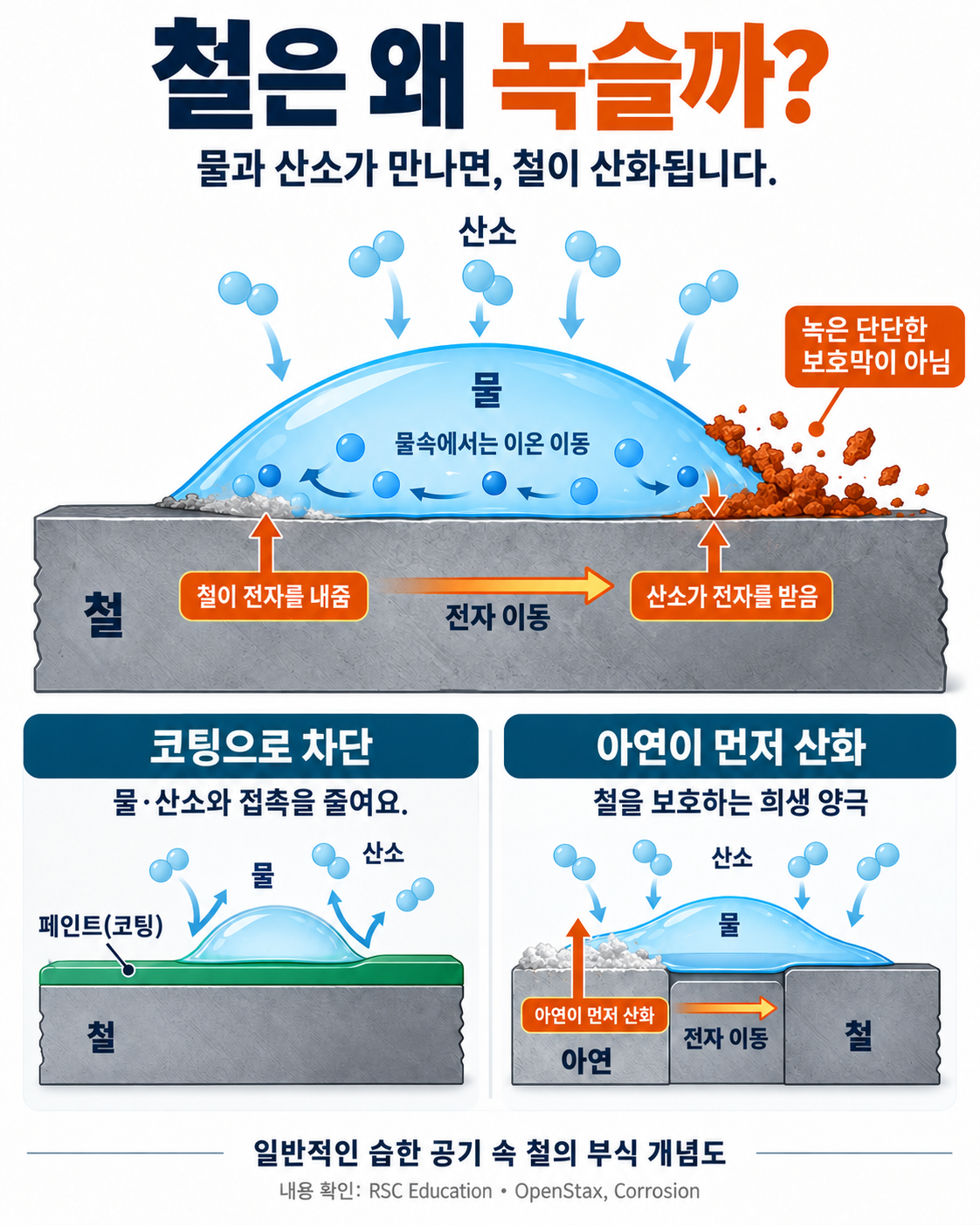
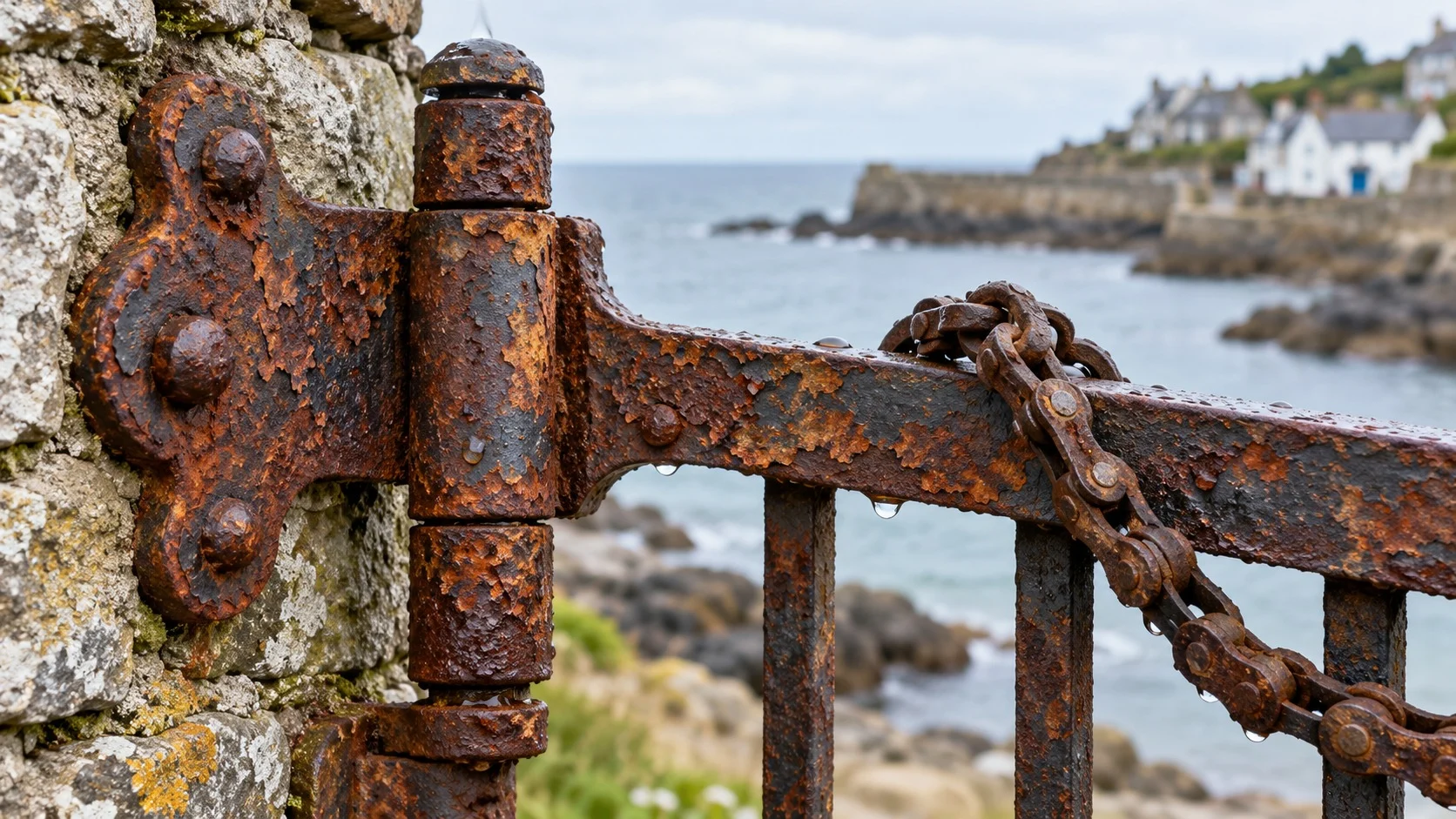
The rusting of iron is an oxidation-reduction reaction in which electrons are exchanged. Iron is oxidized as it gives up electrons, and oxygen in the air is reduced as it takes those electrons. The substance formed this way is red-brown hydrated iron oxide (Fe2O3·nH2O), the true identity of the rust we know.
(1) Water and Oxygen Must Both Be Present
Iron barely rusts when there is only pure water or only dry oxygen. The reaction gets going in earnest when water and oxygen are present together, and the water opens a path for electrons to travel.
(2) Salt Speeds Up the Reaction
Water containing chloride ions, such as seawater or the calcium chloride spread on roads in winter, conducts electricity well and makes corrosion much faster. This is why iron structures by the sea and the undersides of cars in snowy regions rust especially quickly.
(3) Rust Cannot Protect Itself
Rust has a larger volume than the original iron, so it swells up and easily falls away. Where the rust peels off, fresh iron is exposed, so corrosion keeps digging deeper inside.
(4) Each Metal Rusts Differently
Aluminum reacts with oxygen more readily than iron, but a thin, dense film of aluminum oxide about 10 nanometers thick forms on its surface and covers the metal underneath. This phenomenon of forming a protective film on its own is called ‘Passivation,’ and it is the biggest difference from iron, whose rust easily falls away.
When Different Metals Meet
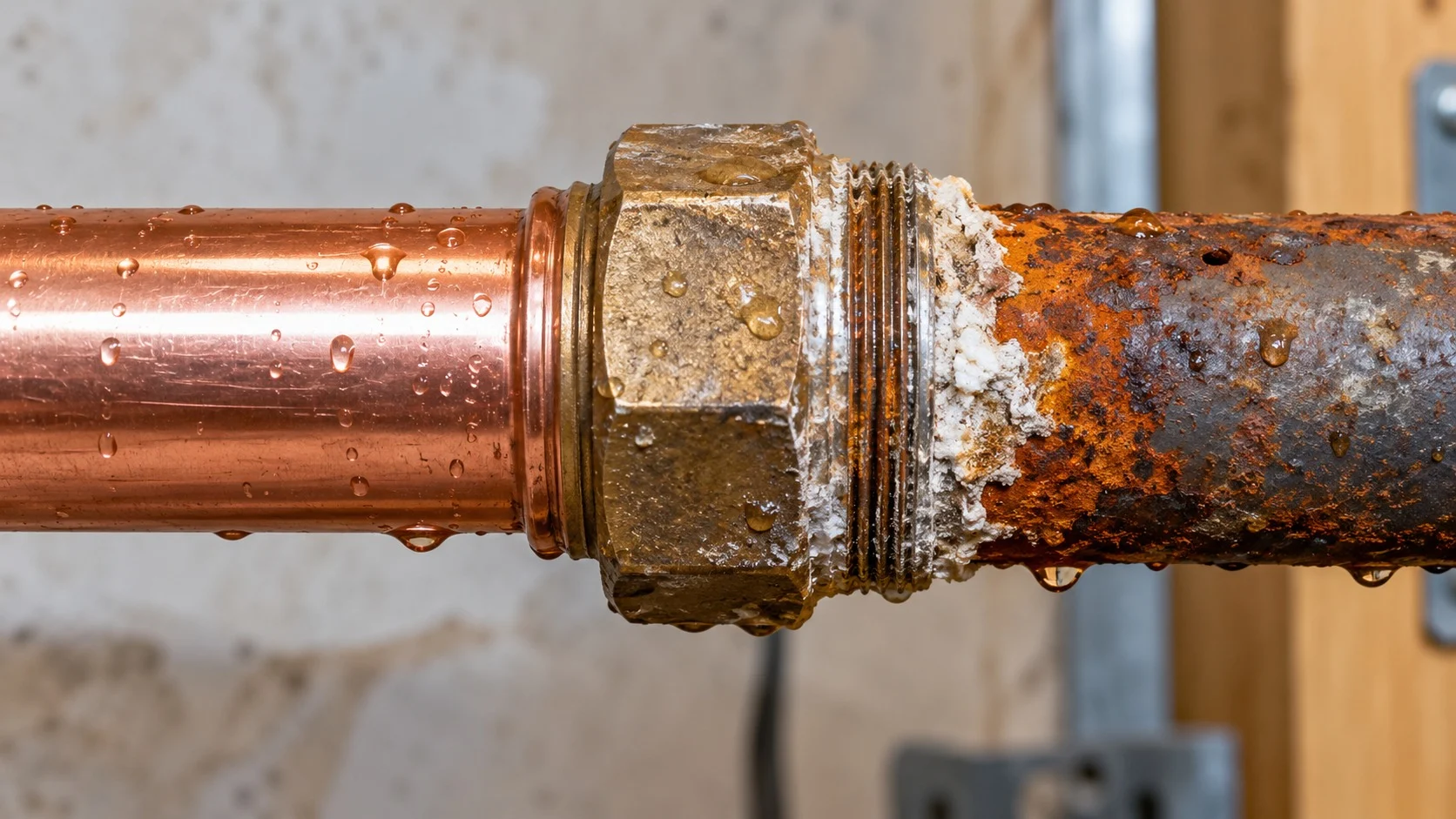
When two different metals are in contact and immersed in an electrolyte such as seawater, the one that gives up electrons more easily corrodes much faster. This is called ‘Galvanic Corrosion.’
- Anode: the side that loses electrons and dissolves away; reactive metals such as zinc or iron fall into this category.
- Cathode: the side that receives electrons; less reactive metals such as copper are actually protected.
- Electrolyte: the pathway through which ions move between the two metals; the saltier it is, the faster the reaction.
Galvanic corrosion happens often in everyday life, too. If you drive iron screws into an aluminum window frame or join a copper pipe directly to an iron pipe, the damage starts where they touch. That is why designers insert insulating materials such as rubber or plastic between different metals to cut off the path for electrons.
Stories of Corrosion in History

Corrosion has long plagued ships and buildings, and important discoveries followed along the way.
[Case 1] The Iron Nails That Melted Away
In 1761, the British Royal Navy sheathed the wooden hull of the frigate HMS Alarm with copper plates. When the ship returned from a voyage to the West Indies, the copper plates were intact, but the iron nails that held them had decayed like a rusty paste. In 1763, the Navy concluded that iron and copper must not come into direct contact in seawater.
[Case 2] The Statue of Liberty
When the Statue of Liberty was first erected, it was a reddish copper color, but it began turning green in the early 1900s. This green patina covers the copper surface and prevents deeper corrosion. On the other hand, an inspection in the 1980s revealed that the insulating layer between the copper skin and the iron framework had deteriorated and the iron framework had rusted, leading to a major restoration project.
Four Ways to Prevent Corrosion
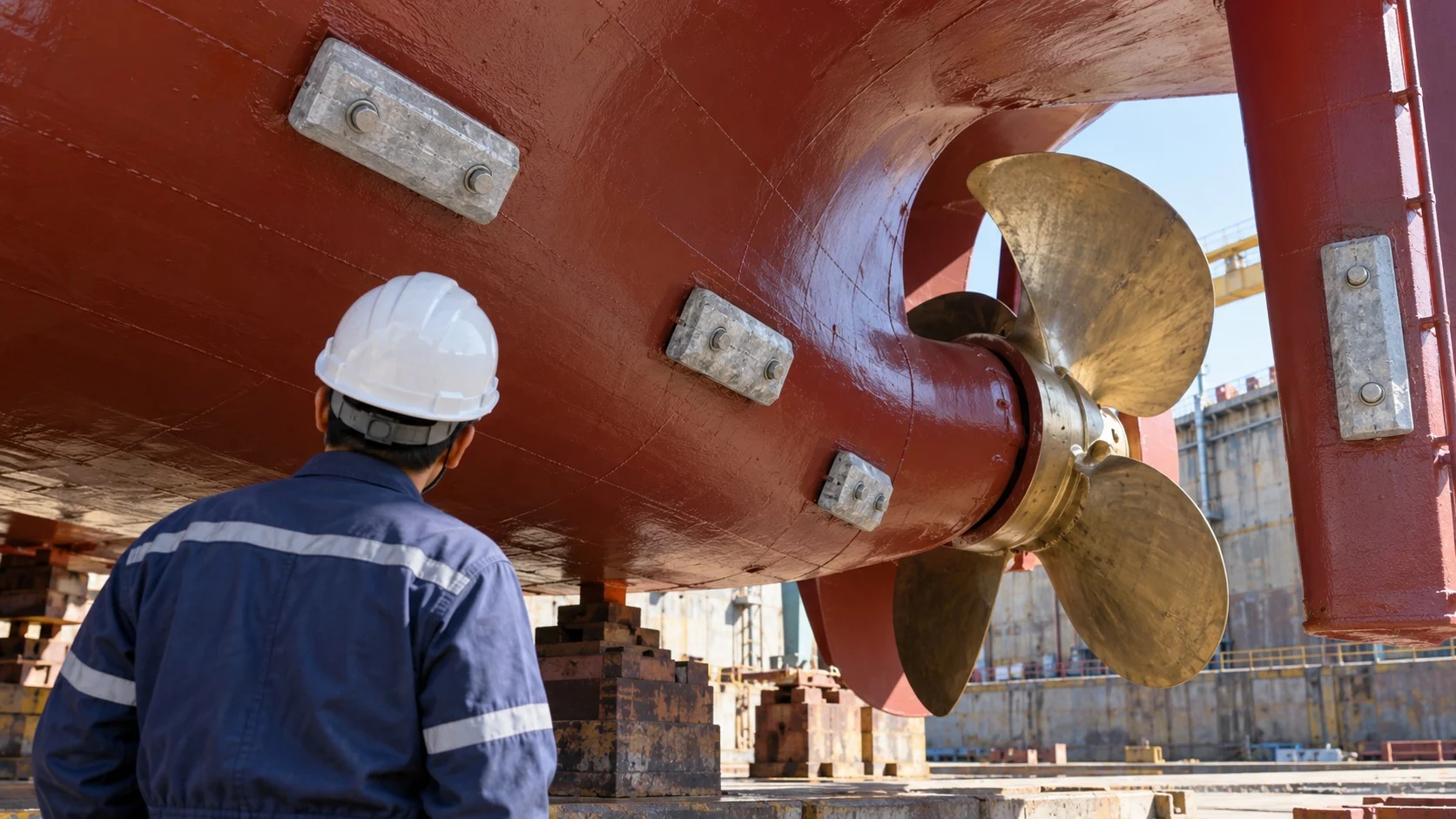
Corrosion is a natural reaction that cannot be avoided, but its pace can be slowed greatly.
(1) Apply a Coating
Cover the metal surface with paint, oil, or a plastic coating so that water and oxygen cannot reach it.
(2) Dress It in Zinc
Coating iron with zinc is called ‘Galvanization.’ Even if the surface is scratched and the iron is exposed, the zinc oxidizes first and keeps protecting the iron.
(3) Attach a Metal That Rusts Instead
If blocks of zinc, aluminum, or magnesium are attached to the bottom of a ship or to marine structures, these metals corrode instead. This is called a ‘Sacrificial Anode.’ In 1824, Humphry Davy presented this principle to the Royal Society in Britain and tested it by attaching iron blocks to the copper sheathing of warships. Corrosion of the copper dropped sharply, but because more sea creatures attached themselves to the hull, the Navy of the time did not continue using the method.
(4) Use Alloys That Protect Themselves
Stainless steel, which contains 10.5% or more chromium, forms a very thin chromium oxide film on its surface that prevents corrosion. Even if this film is scratched, it forms again when it meets oxygen.
Corrosion is the natural tendency of a metal to return to its original, stable state. Bridges and pipes, cars and ships, all the metal structures that support our lives are in a constant struggle against this tendency. According to a report published in 2002 by the U.S. Federal Highway Administration, the direct cost of corrosion in the United States in 1998 alone was about $276 billion, reaching 3.1% of the gross domestic product at the time.
Understanding how rust forms and spotting small stains early to take care of them: that is the first step in everyday chemistry for keeping metal sound for a long time.