
If you stand on wet sand at the beach and gently tap your feet, you may find that the firm sand suddenly turns soft and your feet sink right in. When this small phenomenon meets a massive earthquake, it becomes a terrifying disaster in which entire buildings tilt and underground sewer pipes rise out of the ground. The term for this is soil liquefaction.
Put simply, soil liquefaction is the phenomenon in which loose, water-saturated sandy ground subjected to strong shaking, such as an earthquake, momentarily turns into something like a liquid. Serious research began after images of apartment buildings during the 1964 Niigata earthquake in Japan, which tipped over onto their sides intact rather than collapsing, became widely known. In Korea, too, clear traces of it were confirmed for the first time during the 2017 Pohang earthquake.
This article explains, in easy-to-understand terms, what soil liquefaction is and how it occurs, the conditions that make ground prone to it, real cases of damage, and the measures that can be taken to prevent it.
How Soil Liquefaction Works and How to Prepare
What Is Soil Liquefaction?

The ground we stand on looks like a solid mass, but it is actually made up of countless soil grains touching and leaning on one another. The gaps between the grains are filled with air or water, and below the water table, these gaps are mostly filled with water. Such ground can bear the weight of buildings because the grains interlock tightly and share the load among themselves.
But when an earthquake shakes the ground rapidly back and forth, this interlocking is disrupted. Once the grains separate from one another and end up in a state similar to floating in water, the ground can no longer support weight like a solid and becomes as soft and runny as mud. When the shaking stops and the water drains away, the ground hardens again, but by then the buildings and roads on top of it have already tilted or sunk.
How the Ground Turns Into a Liquid
The key to understanding liquefaction is the pressure of the water trapped between the grains, known as pore water pressure. Normally, most of the weight pressing down from above is supported by the interlocking of the grains, while the water carries only part of it. This force actually transmitted between the grains is called the effective stress of the soil.
When an earthquake strikes, the loosely packed grains are shaken and tend to settle more tightly together. But because the shaking is so fast that the water has no time to escape from the gaps, the force pressing on the grains is transferred entirely to the water, and the water pressure steadily rises. The moment the water pressure becomes nearly equal to the weight pressing down from above, the interlocking between the grains disappears, the effective stress approaches zero, and the ground begins to behave like a liquid.
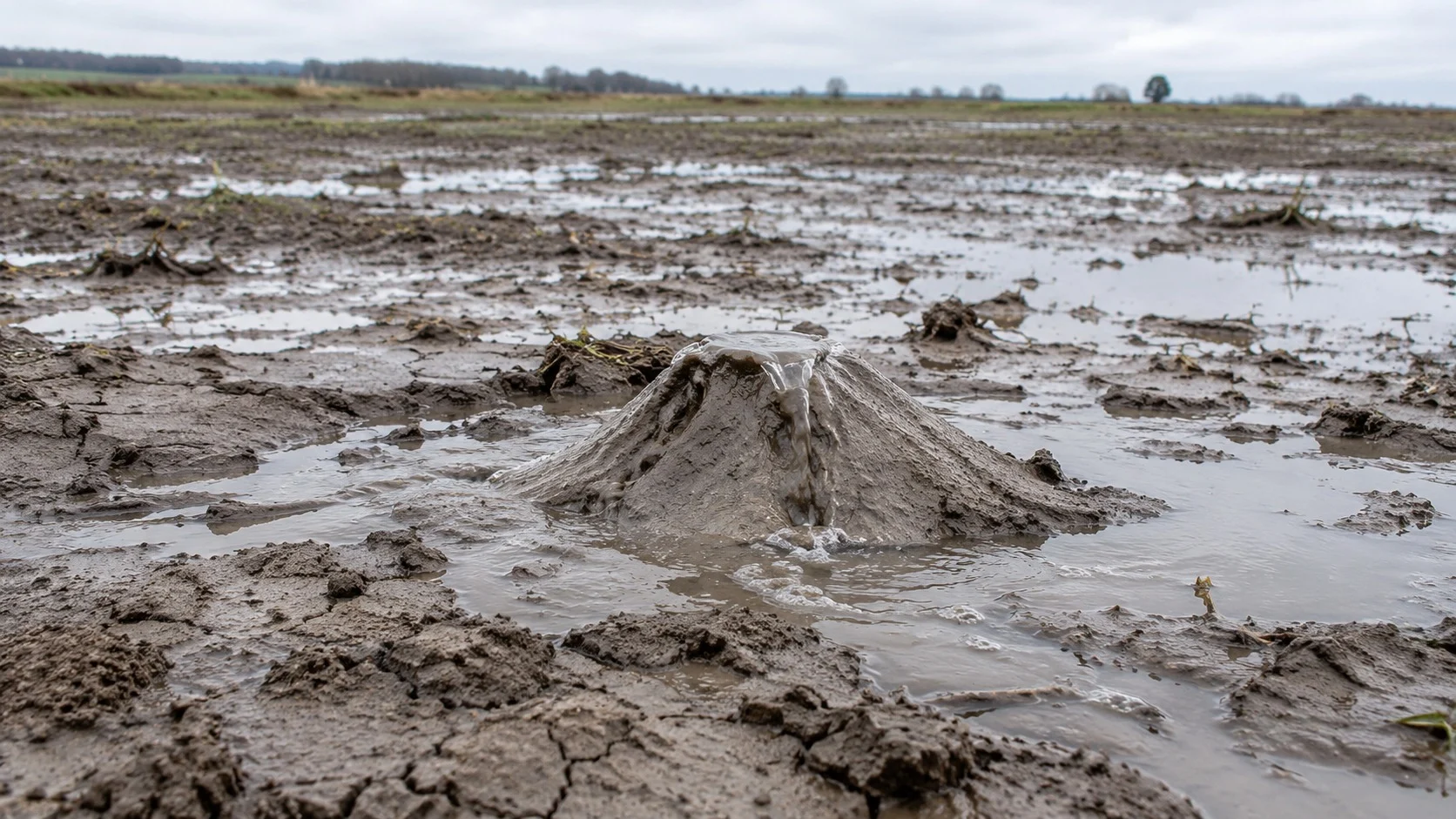
At this point, water and sand that can no longer withstand the increased pressure may spurt out through cracks in the ground; this is called a sand boil. If you see mounds of sand rising like small volcanoes in fields or vacant lots after an earthquake, it is evidence that liquefaction occurred beneath them.
Ground Prone to Liquefaction
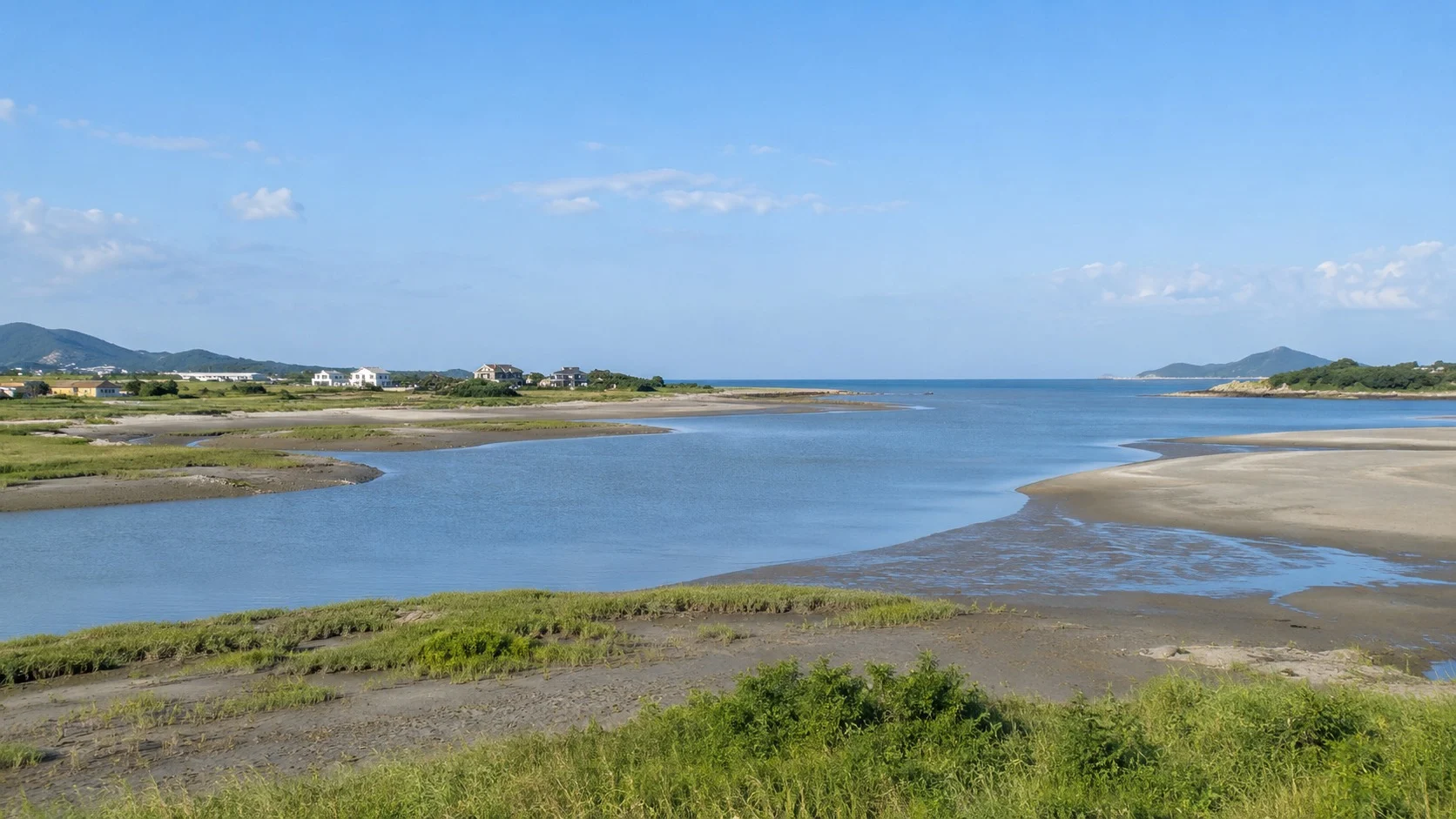
Not all ground liquefies. The more of the following conditions overlap, the greater the risk.
- Loose sand: Because the grains are loosely packed, they settle easily when shaken, raising the water pressure. Soils whose grains stick together, such as clay, are relatively resistant to liquefaction.
- Shallow groundwater: Because the gaps in the ground must be filled with water, places where groundwater lies close to the surface are more at risk.
- Reclaimed land and riverbanks: Land reclaimed from the sea and plains built up from sand carried by rivers were often formed recently and are less compacted.
- Strong and long shaking: The stronger and longer the shaking lasts, the more time there is for water pressure to build up.
In the 1964 Niigata earthquake, apartment buildings built on sandy ground along the river tilted severely, and in the Alaska earthquake in the United States that same year, ground in coastal areas slid and subsided. In the 2011 Great East Japan Earthquake, liquefaction occurred across reclaimed land around Tokyo Bay, and in the Christchurch earthquake in New Zealand that same year, it occurred in many parts of the city, especially in the east, damaging many homes and roads. During the 2017 Pohang earthquake, traces of sand boils were found in fields near the epicenter, confirming that Korea is not safe from it either.
Measures to Reduce Liquefaction Damage
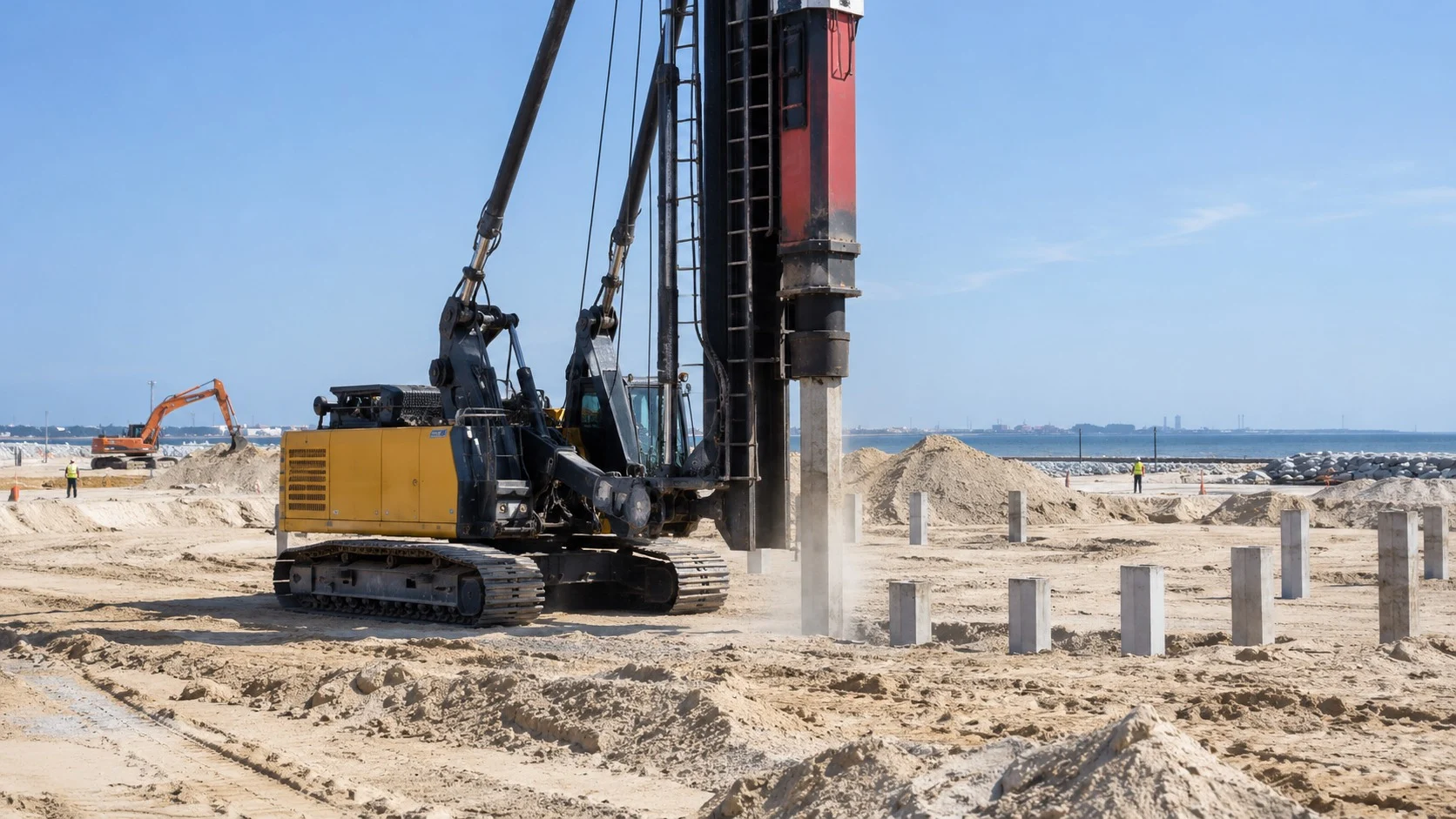
Since earthquakes themselves cannot be prevented, the key to dealing with liquefaction is strengthening the ground in advance and constructing buildings appropriately.
(1) Identify high-risk areas
Drilling into the ground to investigate the type and firmness of the soil and the depth of the groundwater makes it possible to gauge the risk of liquefaction in advance. Since the Pohang earthquake, Korea has also been producing and publishing liquefaction risk maps by region.
(2) Compact the ground firmly
Compacting loose sand tightly with vibration or heavy weights keeps the grains from moving easily. Another method is to mix materials such as cement into the soil to harden it.
(3) Create drainage paths for water
Installing gravel columns or drainage materials in the ground allows the water pressure that rises during shaking to dissipate quickly, delaying liquefaction.
(4) Support buildings with deep foundations
Driving piles down to deep, firm strata where liquefaction does not occur to support a building greatly reduces the risk of the building tilting even if the ground above softens.
Soil liquefaction shows that even ground we take for granted as solid can turn into something like water in an instant under the right conditions. Even in places where earthquakes are infrequent, damage can be greatly reduced by identifying risky ground such as reclaimed land and riverbanks in advance and preparing for it.
Knowing what the ground beneath your feet is made of: that is the first step toward an earthquake-resilient city.