There is a lot to take care of before setting off on a trip. You have to book plane tickets, choose where to stay, and work out everything from the route between the airport and your lodging to the places you will visit each day. In an unfamiliar country where you can't easily make yourself understood, all this preparation can feel like a bigger task than the trip itself.
That is why many people choose products that travel agencies have bundled in advance. Transportation, lodging, meals, and an itinerary are all included for one price, so once you pay, the agency takes care of the rest. A product like this, which bundles the various services needed for a trip and sells them as one, is called a “package tour.”
In this article, we will look in turn at how the package tour began with an English preacher's train excursion, the elements that make up the product, the age of mass tourism opened up by charter flights, and how it is changing today.
A Product That Bundles a Trip into One
Group Travel That Began with a Single Train
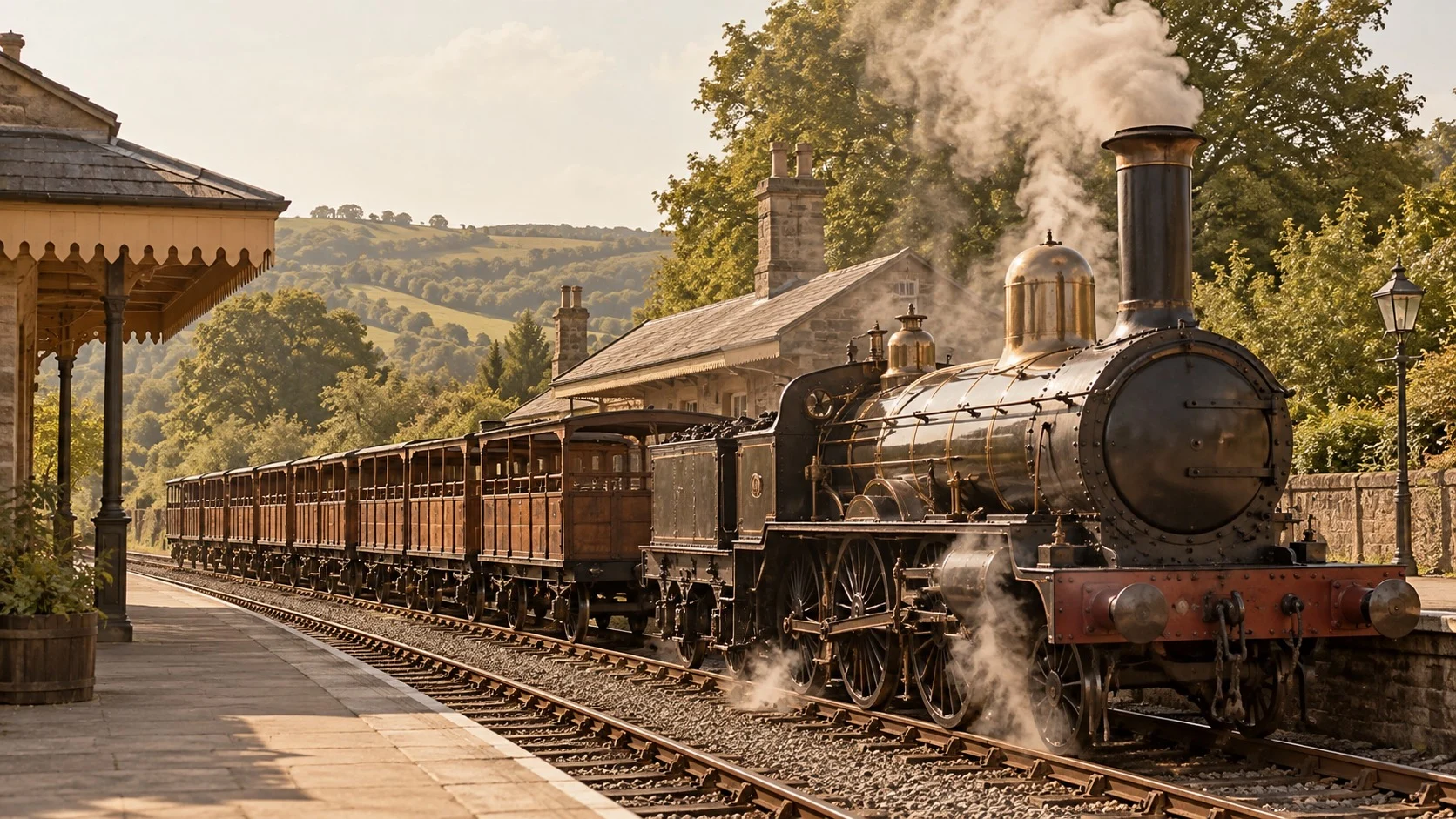
The roots of today's package tour are traced to Thomas Cook in 19th-century England. He was a Baptist preacher who was at the forefront of the temperance movement, which urged people to give up alcohol.
(1) The First Train Excursion in 1841
On July 5, 1841, Cook put 485 members of a temperance society on a train and took them to a temperance meeting in Loughborough, about 18 kilometers from Leicester. He chartered the entire train and charged each person 1 shilling to cover the cost, and this is often cited as the first group tour.
(2) Travel Becomes a Business
From 1845, he began organizing trips for profit. In 1851, he carried 165,000 people to the Great Exhibition in London, and in 1855 he ran his first overseas group tour, a circuit through Belgium, Germany, and France built around the Paris Exposition.
(3) Inventions That Eased the Hassles of Travel
In 1868, he introduced hotel coupons for buying hotel stays and meals in advance, and in 1874 the “Circular Note,” the forerunner of the traveler's cheque, which could be exchanged for local money at the destination. Even earlier, in 1872, Cook himself had set off on a round-the-world trip, returning the following year.
The Elements of a Package Tour

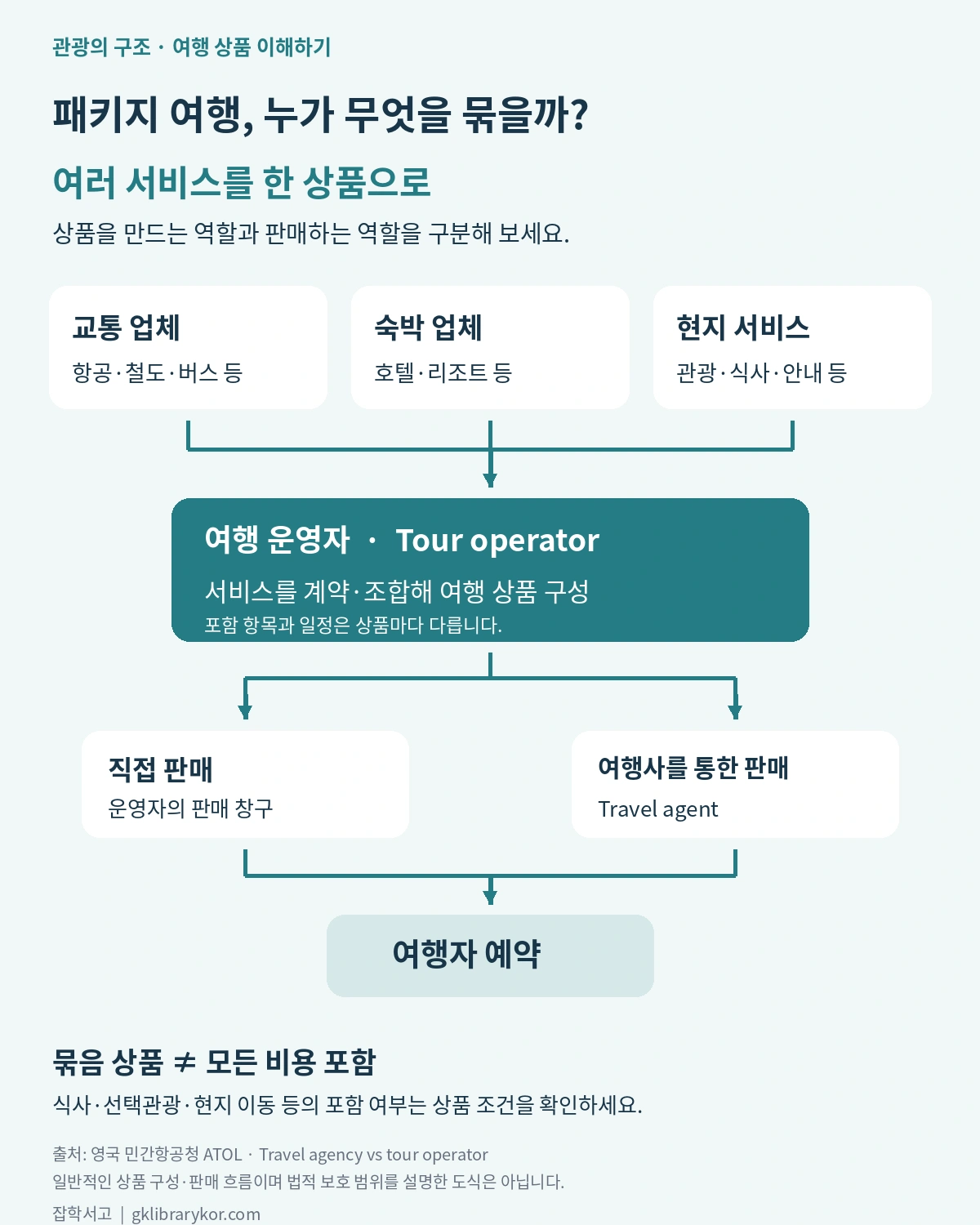
A package tour bundles services that would otherwise have to be bought separately into a single product. It is, in effect, bundling, as the term is used in business, applied to travel.
- Transportation: This includes the means of travel connecting the departure point and the destination, such as planes, trains, buses, and ships, as well as local transport.
- Accommodation: The hotels or resorts where you will stay during the trip are arranged in advance.
- Itinerary and Activities: Sightseeing visits, meals, shows, local guiding, and more are included in the schedule.
- Tour Operator: A company that contracts with airlines, hotels, and local businesses to bundle various services into a product.
- Travel Agency: The outlet that sells the products created by tour operators to consumers; some are run by operators themselves, while others are independent.
Because tour operators buy airline seats and hotel rooms in bulk, they can offer lower prices than what it would cost to arrange the same trip on your own.
The Age of Mass Tourism Opened by Charter Flights
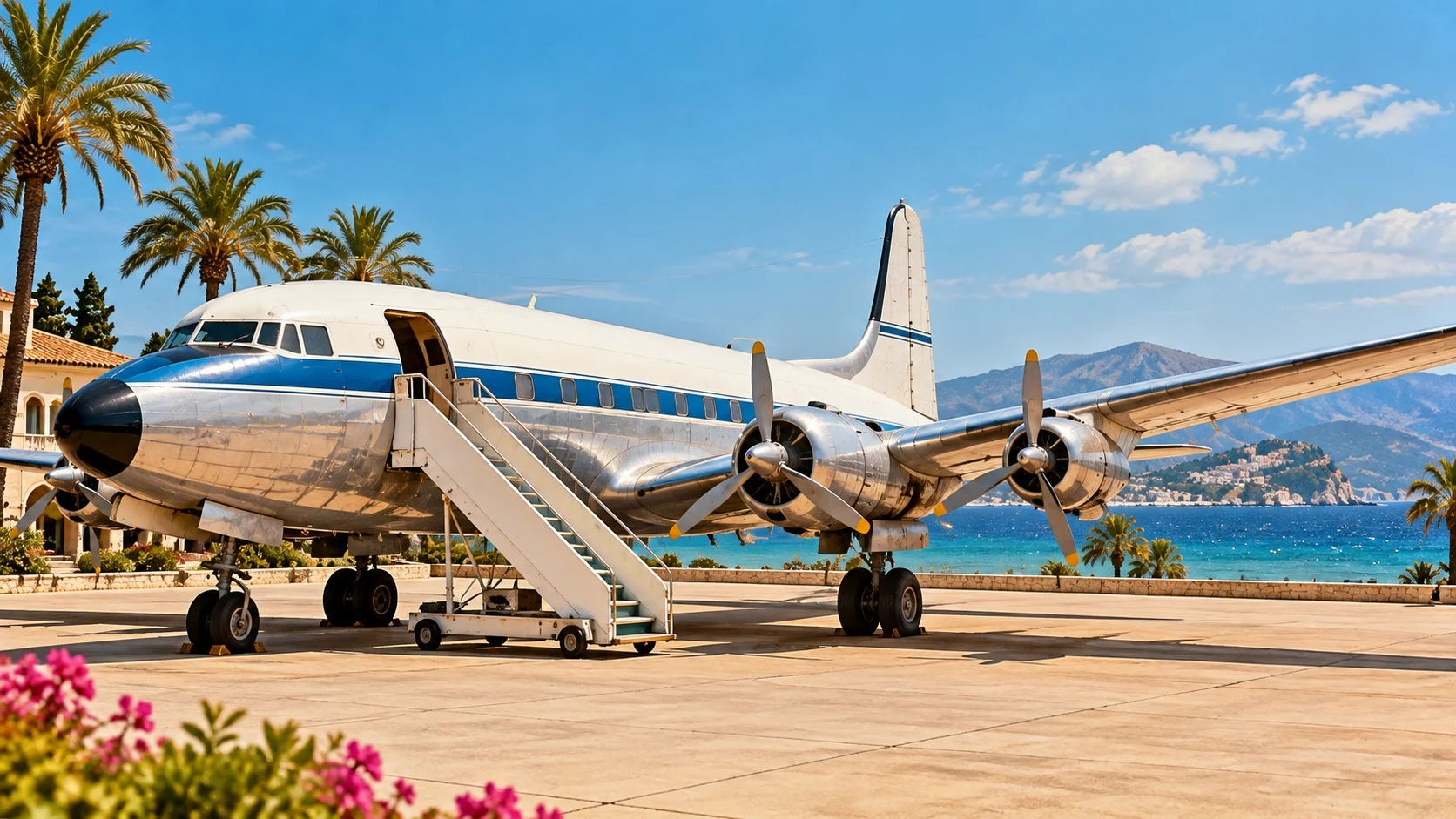
After World War II ended, the package tour changed dramatically once again. The airplane took over from the train.
(1) The Arrival of Charter Packages
In 1950, Vladimir Raitz of Britain used a chartered plane to send people to the Mediterranean island of Corsica. This product, which bundled airfare and accommodation together, is regarded as the true start of overseas package tourism.
(2) Crowds Head for the Seaside
From the late 1950s through the 1960s, charter packages carried people to the coasts and islands of Spain. Ordinary British people, for whom foreign travel had until then been unfamiliar, could for the first time visit foreign beaches at a price they could afford.
(3) Package Tours in Korea
In Korea, group package tours grew rapidly after overseas travel was fully liberalized in 1989. Following a tour leader through foreign lands where the language and roads were unfamiliar lowered the threshold of a first trip abroad for many people.
The Package Tour, Shaken and Changing Again

As the internet spread, people began booking flights and accommodation themselves, and the package tour faced a major challenge.
(1) The Collapse of Thomas Cook Group
Thomas Cook Group, which carried on Thomas Cook's name, went bankrupt on September 23, 2019. About 21,000 employees worldwide lost their jobs, and about 600,000 customers abroad were left without a way home, prompting the UK to carry out its largest peacetime repatriation operation.
(2) Safeguards for Travelers
When a travel company collapses, travelers can be stranded in a foreign land. That is why, since 1990, the European Union has had a Package Travel Directive requiring safeguards so that customers can get their money back and return home even if the company goes bankrupt.
(3) Bundles You Choose Yourself
These days, instead of fixed products, dynamic packaging is on the rise, in which travelers pick flights, accommodation, and rental cars and bundle them on the spot. It is a way to enjoy both the freedom of choosing for yourself and the convenience of buying everything at once.
The package tour turned travel from a privilege of a few into an everyday experience anyone can enjoy. The shape of the bundle has changed with each era, but its role of easing the burden of heading somewhere unfamiliar remains the same.
Knowing who prepares what behind the convenience, and choosing with that in mind, is the first step in tourism studies toward designing a better trip.