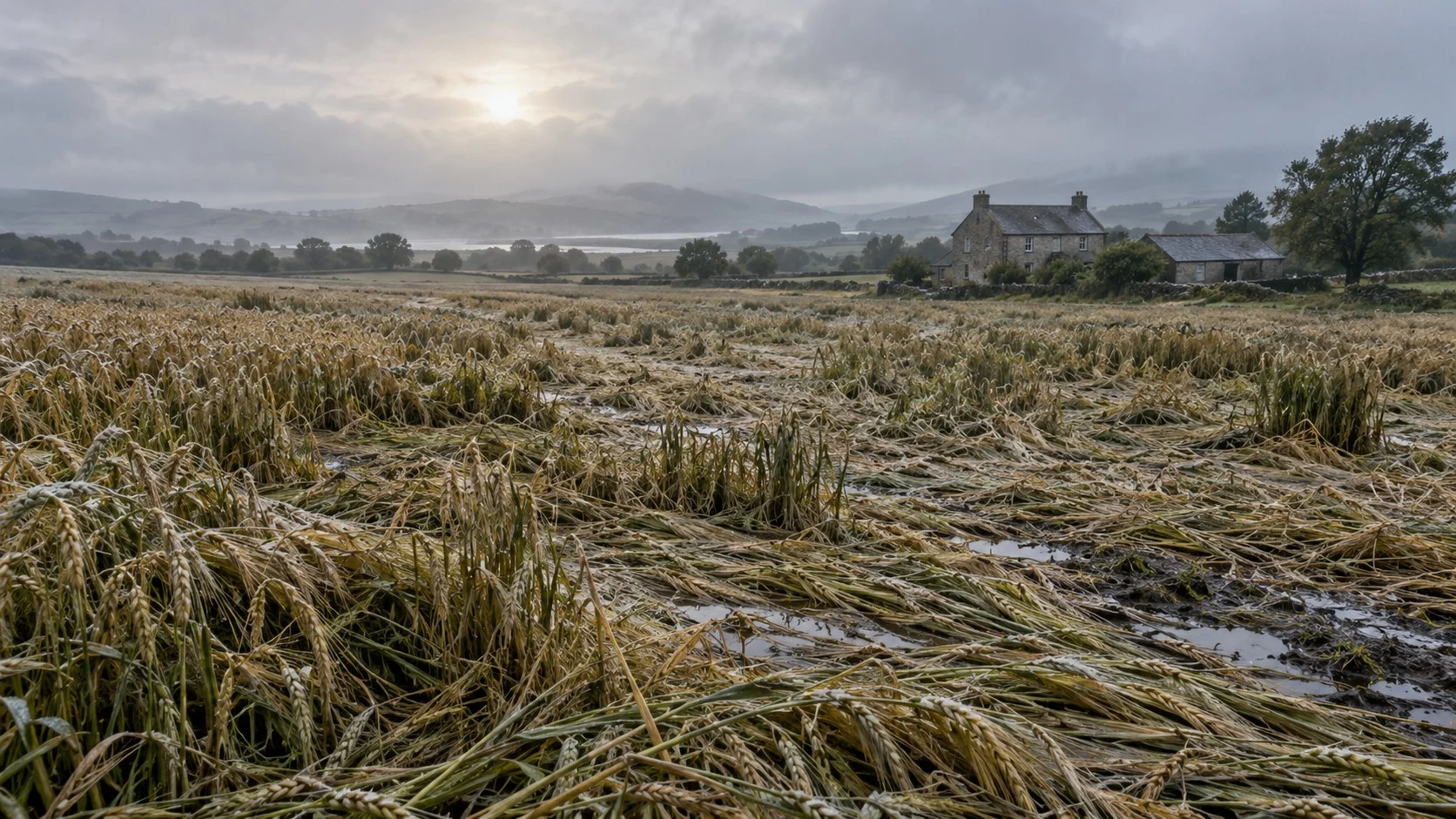
In June 1816, unseasonable snow fell across New England in the United States. In Europe, cold rain kept falling all summer long, wheat and potatoes rotted, and bread prices soared, sparking riots in many places. That year, people had no idea what was causing the strange weather. The cause we know today is the “Volcanic Winter.”
Put simply, a volcanic winter is “a phenomenon in which a huge, sulfur-rich volcanic eruption spreads tiny sulfuric acid droplets through the stratosphere, blocking sunlight and lowering Earth's temperature for several years as a result.” It is not the heat a volcano spews out but the gas lofted high into the sky that cools the planet.
In this article, we will look in turn at how volcanic winters happen, famous examples from history, how scientists track down past volcanic winters, and what this phenomenon means for us today.
How Volcanoes Cool the Earth and the Traces They Leave
How Does a Volcanic Winter Form?
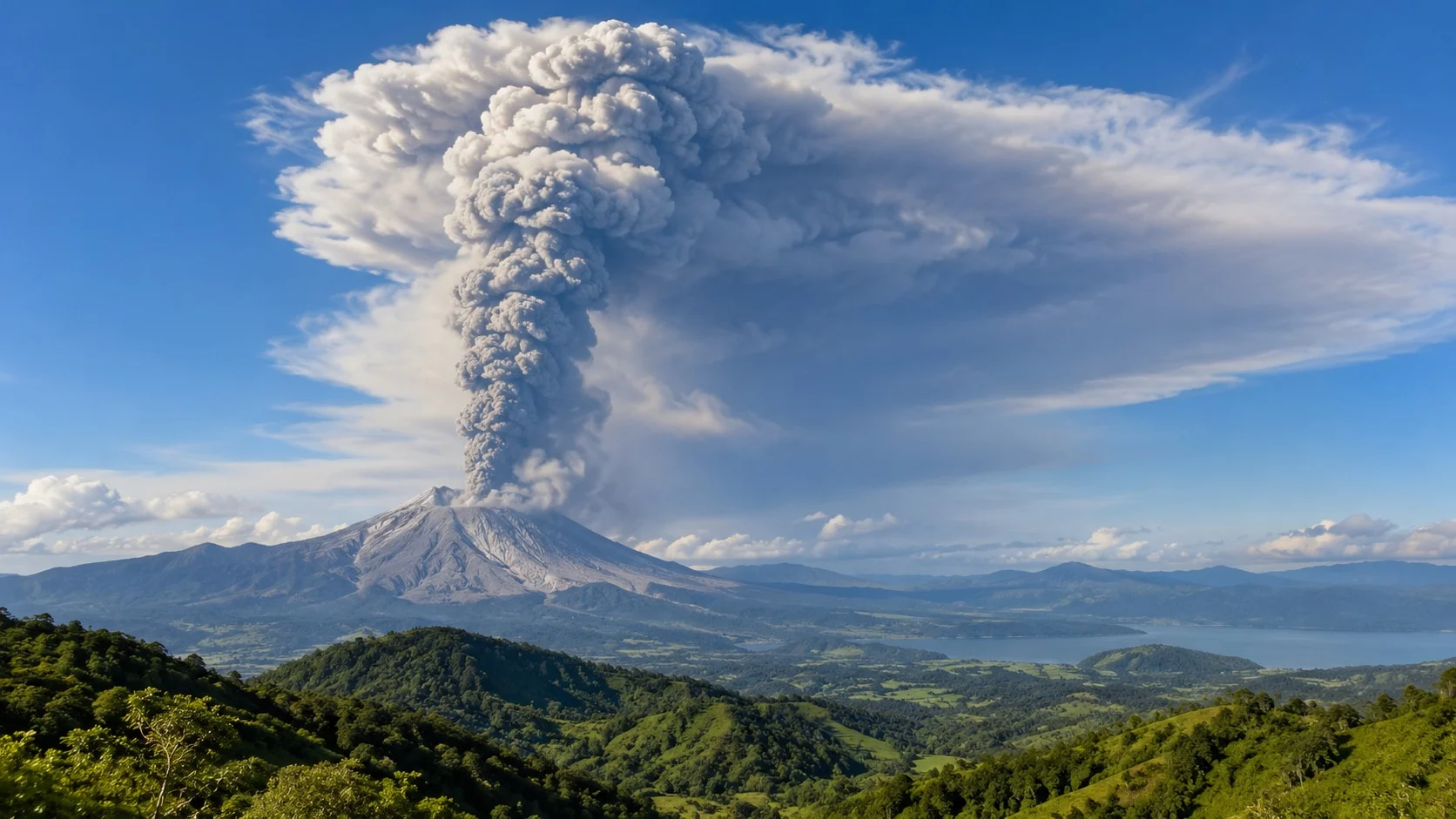
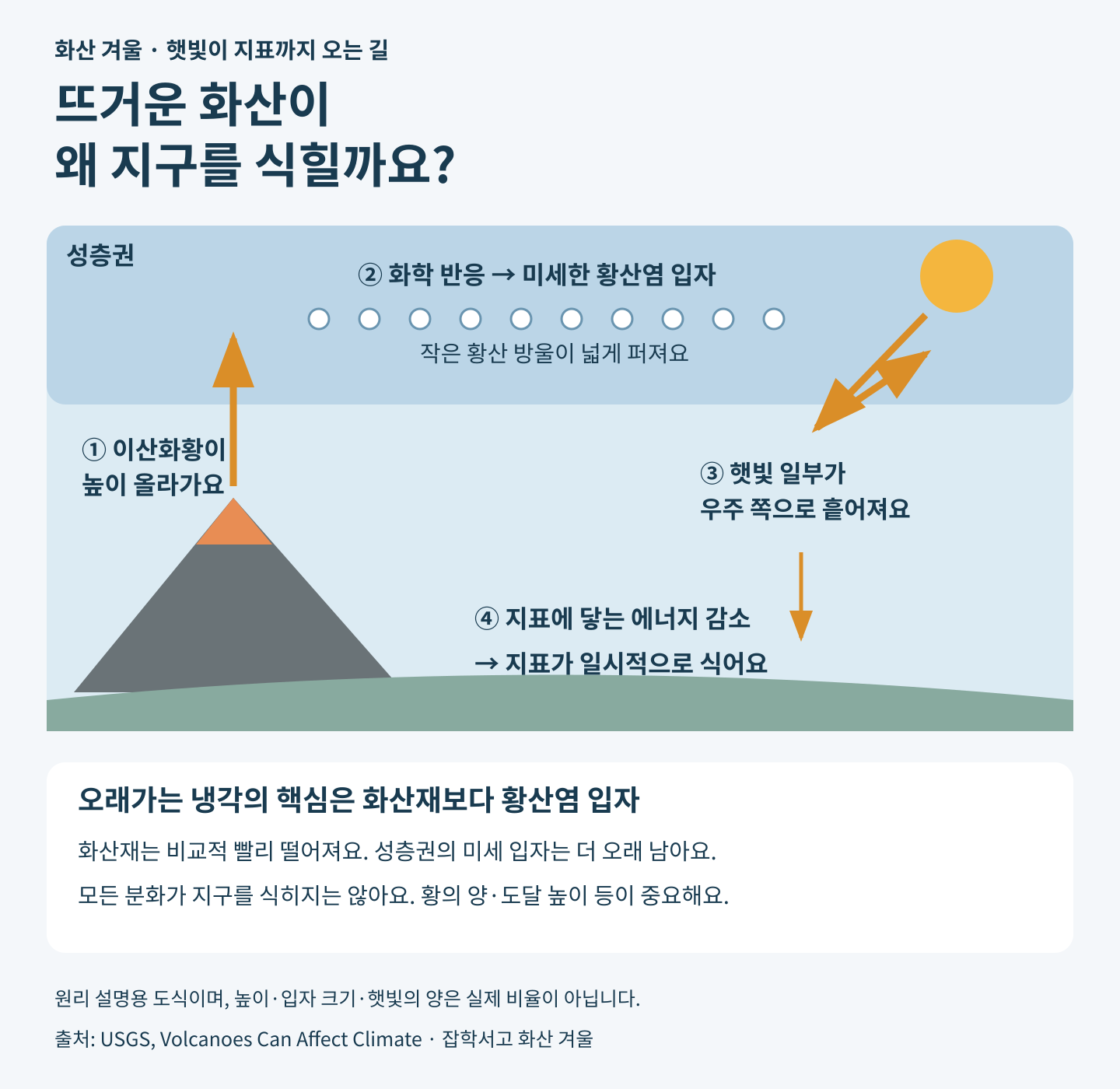
When a volcano erupts, gases such as sulfur dioxide shoot into the sky along with volcanic ash. Yet the main culprit in lowering temperatures is not the visible ash. Ash is heavy, so it usually falls back to the ground within a few weeks, and its effects stay near the volcano.
(1) It has to reach the stratosphere
The eruption must be powerful enough to carry sulfur dioxide up into the stratosphere, 10–50 km above the ground. Gas that stays in the troposphere is washed out by rain and disappears within days, but in the rainless stratosphere it can stay aloft for a long time.
(2) The gas turns into sulfuric acid droplets
Over about a week, sulfur dioxide that reaches the stratosphere reacts with water vapor to form extremely small sulfuric acid droplets, known as Sulfate Aerosol. Within a few weeks, these droplets wrap around an entire hemisphere.
(3) It sends sunlight back to space
Spread out like a thin film, the sulfuric acid droplets reflect and scatter incoming sunlight, reducing the light that reaches the surface. Because the droplets dwindle gradually over roughly a year, the cooling effect usually lasts 2–3 years.
The key point here is that the strength of the cooling depends less on the size of the eruption than on “how much sulfur it released.” Even a volcano that pours out enormous amounts of lava will not change temperatures much if it releases little sulfur.
Famous Volcanic Winters in History
Volcanic winters have left clear traces in tree rings and old records.
Mount Tambora in 1815 and the Year Without a Summer
In April 1815, Mount Tambora, on what is now the island of Sumbawa in Indonesia, produced the largest eruption confirmed in modern times. The following year, 1816, the global average temperature fell by about 0.4–0.7℃, and the year came to be called the “Year Without a Summer.” Crop failures and food shortages followed across the Northern Hemisphere, and in Europe, typhus spread in the wake of famine.
This gloomy summer left its mark on literature, too. Mary Shelley, Lord Byron, and their companions, staying at a villa on the shores of Lake Geneva in Switzerland, were trapped indoors by the endless rain and held a contest to write frightening stories. The story Shelley came up with then later became the novel Frankenstein.
Mount Pinatubo in 1991
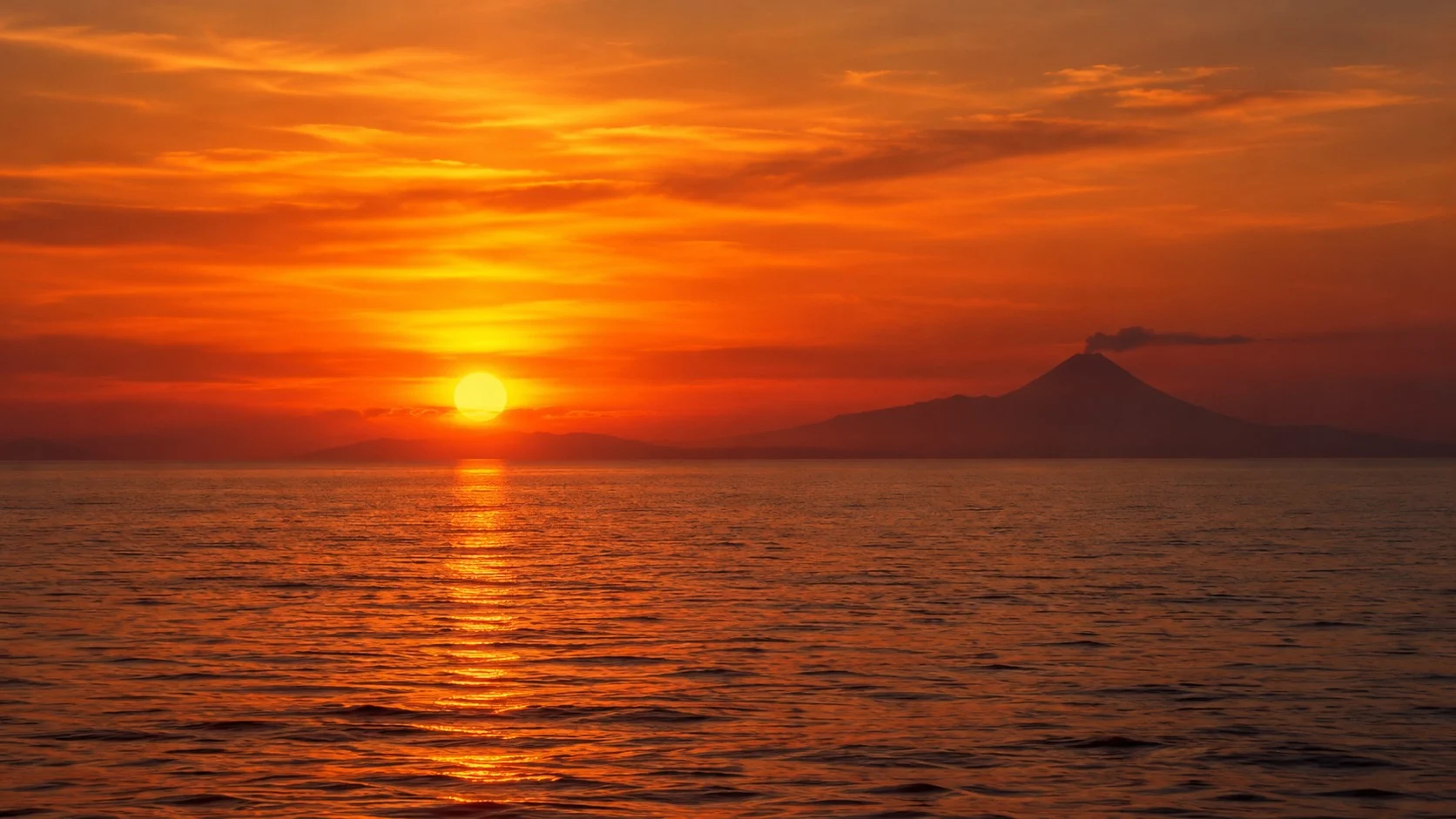
When Mount Pinatubo in the Philippines erupted in June 1991, it sent about 15 million tons of sulfur dioxide into the stratosphere. Over the next 1–2 years, the global average temperature fell by about 0.5℃. As a volcanic winter watched from start to finish with satellites and instruments, it became a valuable experiment for scientists to see how the climate responds. For some time after the eruption, unusually red and vivid sunsets were also observed around the world.
How Do Scientists Find Past Volcanic Winters?
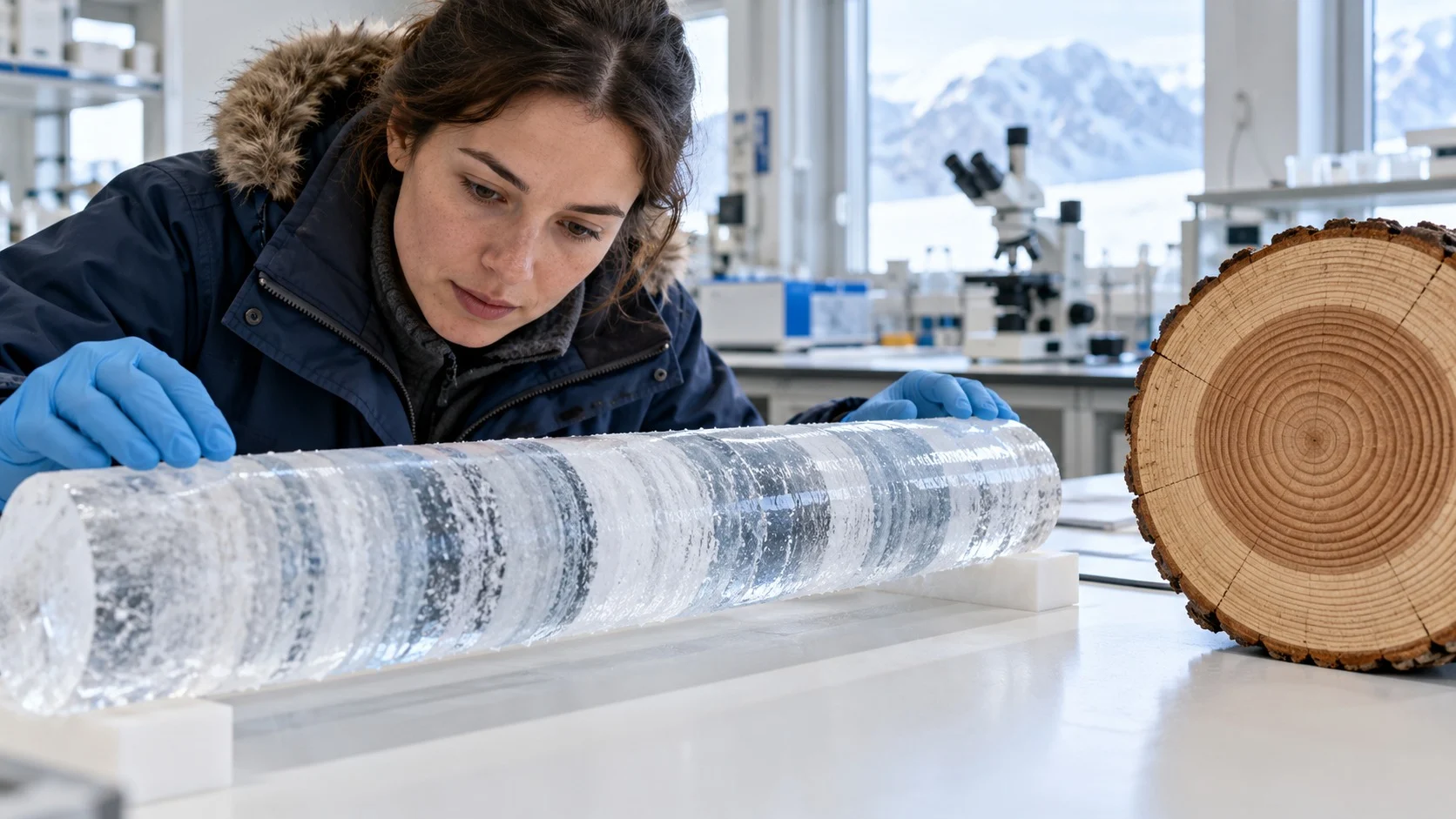
Volcanic winters from the distant past, before any instrumental records, are found by tracing back through the records nature has left behind.
(1) Sulfuric acid in the ice
The ice sheets of Greenland and Antarctica are made of snow that piled up in layers year after year. If you drill out an ice core and measure the sulfuric acid concentration layer by layer, layers with a sudden jump in sulfuric acid appear in years when large eruptions occurred.
(2) Tree rings
Trees that live through a cold summer form unusually narrow rings, or frost rings, which are marks of frost damage during the growing season. Matching these year-by-year traces against the ice record reveals when the Earth cooled.
(3) Records left by people of the past
Accounts of a dim sun, unusually red sunsets, or a moon that was almost invisible during a total lunar eclipse also serve as clues. By putting such evidence together, scientists found that major volcanic winters also occurred around 536 and after the eruption of Samalas in 1257.
What Volcanic Winter Means for Us Today
Volcanic winter is not just a tale from long ago. Whenever a large volcano erupts again, farming and food supplies around the world could be shaken for several years. The food crisis of 1816 was severe less because of the temperatures themselves than because of societies' weaknesses in preparing for crop failures. At the time, there were no railways, making it hard to bring in grain from far away, and the wounds of the Napoleonic Wars had not yet healed. That is why it is important to keep in mind that a large eruption can reduce grain production for several years and to check food reserves and import routes in advance.
At the same time, volcanic winters are an important source of data for climate science. Temperature changes after Pinatubo served as a yardstick for testing how well climate models mimic the real Earth. Some scientists are researching ways to slow global warming by artificially spraying particles into the stratosphere, an idea that also came from volcanic winters. However, debate continues because of serious risks such as changes in rainfall and rapid warming if it were suddenly stopped.
Volcanic winter shows that the eruption of a single mountain can change what is on the dinner table on the other side of the world. Once you understand how tiny sulfuric acid droplets spread high in the sky block sunlight, you can also see how tightly interconnected Earth's climate is.
Reading the traces nature has left and preparing for the next change in advance is the first step toward the wisdom of living alongside the vast natural world.