Nanotechnology precisely manipulates materials at the molecular or atomic level and is driving innovative changes across a variety of industries. In chemistry in particular, nanotechnology opens up new possibilities, and its importance is growing day by day.
This article aims to provide an overview of nanotechnology and explore in depth its importance in chemistry, innovative approaches at the molecular level, improvements in the efficiency of chemical reactions, and its potential for environmental protection and sustainability.
An Overview of Nanotechnology and Its Importance in Chemistry

The Definition and Basic Concepts of Nanotechnology
Nanotechnology refers to the manipulation of matter at extremely small scales measured in nanometers (1nm = 10^-9 meters). This technology provides the ability to precisely control the physical and chemical properties of materials, and such manipulation is producing innovative results across a variety of industries. Nanotechnology plays a particularly important role in materials science, biotechnology, medicine, and electronics, and its range of applications is gradually expanding.
The Importance of Nanotechnology in Chemistry
Nanotechnology is extremely important in chemistry. It enables precise control of the structure and properties of materials at the nanoscale, which plays an essential role in maximizing the efficiency of chemical reactions or developing new materials. In particular, catalyst technologies that use nanoparticles offer greater reactivity and efficiency than conventional catalysts, making a substantial contribution to improving productivity and reducing costs in chemical processes. In addition, chemical sensors that use nanotechnology have highly sensitive detection capabilities and are useful across a variety of industries.
Nanotechnology and Innovation at the Molecular Level
Nanotechnology provides the ability to manipulate materials at the molecular level. This greatly helps improve existing material structures or chemical reaction pathways, or develop entirely new compounds. Such innovations receive considerable attention in a variety of fields, including new drug development, biosensors, and personalized treatments. For example, developing nanoparticles with high specificity for a particular disease can maximize the effectiveness of treatment. Manipulation at the molecular level can also be applied to the development of new materials and energy conversion technologies.
The Various Applications of Nanotechnology
Nanotechnology is actively being applied not only in chemistry but also in many other industries. In drug delivery systems, nanoparticles can be used to efficiently deliver drugs to specific cells or tissues, helping enhance treatment effectiveness and minimize side effects. Highly efficient batteries that use nanomaterials are also being developed for energy storage devices, bringing major changes to the energy industry. Environmental protection technologies are likewise using nanotechnology to remove pollutants and develop environmentally friendly catalysts, contributing to sustainable development.
Promoting Environmental Protection and Sustainability
Nanotechnology plays an important role in promoting environmental protection and sustainable development. For example, highly efficient energy storage devices developed using nanotechnology help increase the use of renewable energy, reducing carbon emissions and enabling environmentally friendly energy consumption. Pollutant removal technologies that use nanotechnology can also help effectively address air, water, and soil pollution. These technologies play a key role in protecting the environment and building a sustainable society.
In conclusion, nanotechnology is driving innovative changes in chemistry and opening up new possibilities across a variety of applications. Through the fundamental principles of nanotechnology and precise manipulation at the molecular level, we gain an important tool for maximizing the efficiency of chemical reactions and promoting environmental protection and sustainable development. The continued advancement of nanotechnology will enrich our lives and play an important role in a variety of industries in the future.
Innovation at the Molecular Level: The Fundamental Principles of Nanotechnology
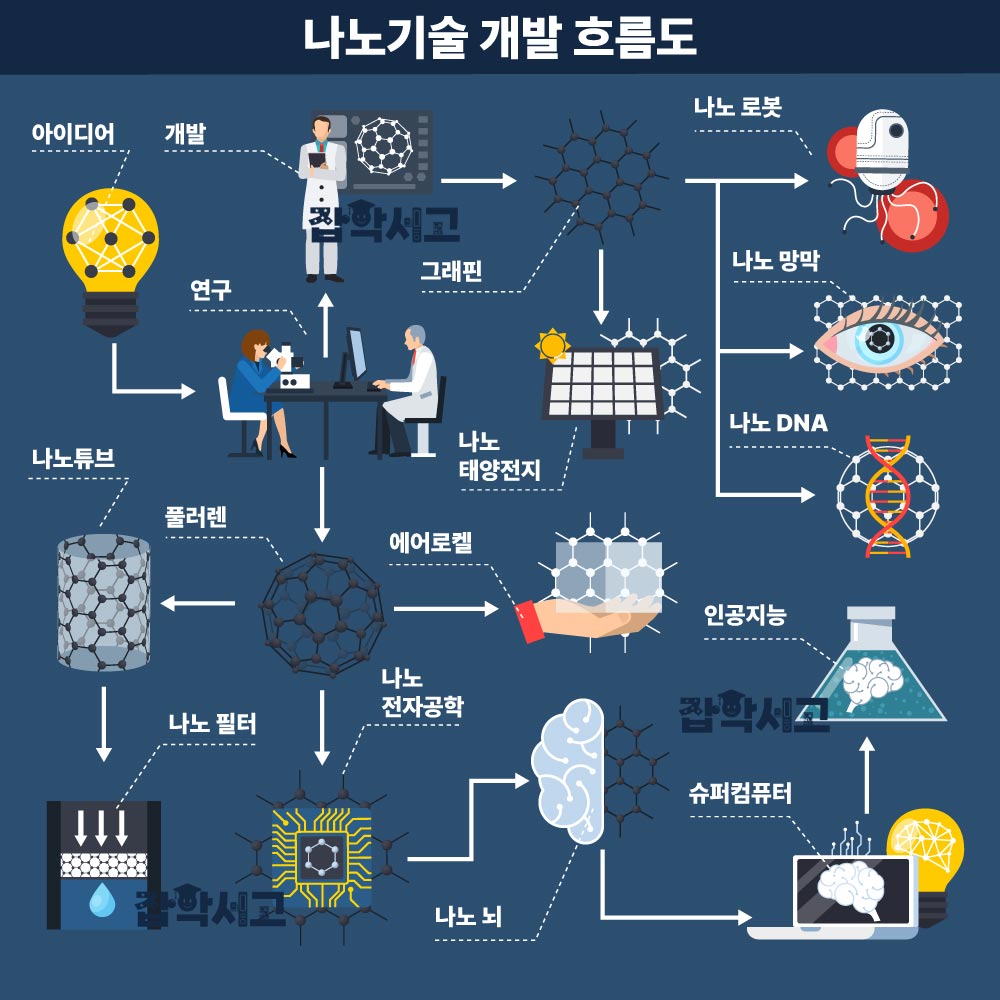
The Fundamental Principles of Nanotechnology and Quantum Mechanics
The core of nanotechnology lies in manipulating materials at the molecular or atomic level, and this manipulation is primarily based on quantum mechanics and interactions at the nanoscale. Quantum mechanics plays an important role in understanding the properties and behavior of matter at the nanoscale, allowing the electrical, optical, and chemical properties of materials to be changed by controlling electron cloud distributions or energy levels. These principles are particularly essential for developing new types of semiconductors and optical devices.
Nanostructures and Maximizing Reactive Surface Area
Nanotechnology can maximize the surface area of materials by using nanostructures such as nanoparticles and nanotubes. Using nanostructures greatly increases the reactive surface area, enhancing catalysis or sensor sensitivity. This is an important factor in maximizing the efficiency of chemical reactions and can be used in a variety of applications that require greater reactivity. For catalysts in particular, nanostructures make it possible to achieve substantial effects with small amounts, which is useful for designing cost-effective reaction systems.
Molecular Design and the Development of Tailored Materials
Nanotechnology provides the ability to precisely design and manipulate materials at the molecular level. This allows tailored materials or compounds to be developed for specific purposes. For example, designing nanostructures in drug delivery systems that act precisely on a target disease can maximize treatment effectiveness, while in the field of biosensors, it is possible to develop highly sensitive sensors that recognize specific biomolecules. In this way, nanomaterials developed through molecular design can provide innovative solutions across a variety of fields.
Intermolecular Interactions and Innovation in Chemical Reaction Pathways
By precisely controlling interactions between molecules, nanotechnology offers the possibility of improving existing chemical reaction pathways or developing new ones. For example, the efficiency of chemical reactions can be increased by lowering the activation energy of a particular reaction or improving reaction selectivity. These technologies play a particularly important role in catalytic reactions and can contribute to the production of high-value-added compounds or the development of environmentally friendly chemical processes.
Industrial Applications and the Potential of Nanotechnology
Innovations in nanotechnology at the molecular level offer possibilities for application across a variety of industries. Nanotechnology opens up new opportunities for research and development not only in chemistry but also in industries such as pharmaceuticals, energy, and environmental protection. For example, highly efficient batteries that use nanotechnology are being developed for energy storage devices, which can provide sustainable energy solutions. Pollutant removal technologies that use nanotechnology also play an important role in environmental protection. These advances in nanotechnology will ultimately contribute to improving people's quality of life.
Increasing the Efficiency of Chemical Reactions: Developing New Catalysts

An Overview of Nanocatalysts and Their Importance
Nanotechnology plays an important role in maximizing the efficiency of chemical reactions, with the development of nanocatalysts at its center. Nanocatalysts have greater activity and selectivity than conventional catalysts, giving them the potential to bring innovative changes throughout the chemical industry. These catalysts can substantially improve reaction rates and efficiency, thereby increasing productivity in a variety of industries.
Surface Area and Reaction Activation in Nanocatalysts
A major advantage of nanocatalysts is their very large surface area. When materials are reduced to the nanoscale, their surface area increases dramatically, greatly increasing the number of active sites where reactions can occur. As a result, reaction rates rise sharply, and high efficiency can be achieved even with small amounts of catalyst. These characteristics are particularly advantageous in large-scale industrial processes and can contribute to resource conservation and cost reduction.
Achieving High Selectivity
Nanocatalysts can exhibit high selectivity in specific chemical reactions. This plays an important role in increasing the yield of desired products and minimizing the formation of unwanted by-products. Nanotechnology allows the surface structure and chemical composition of catalysts to be precisely controlled, making it possible to achieve selectivity optimized for a particular reaction. Such selectivity is particularly important in the fine chemicals and pharmaceutical industries and is essential for synthesizing complex compounds.
Environmentally Friendly Chemical Reactions
Nanocatalysts have the potential to provide environmentally friendly reaction conditions. For example, nanocatalysts can maintain high reactivity even at low temperatures or pressures, reducing energy consumption and minimizing environmental pollution. This plays an important role in developing environmentally friendly chemical processes and is an important technology that can contribute to sustainable industrial development. These characteristics are essential for reducing the use of fossil fuels and efficiently utilizing renewable resources.
Industrial Applications and Economic Benefits
Nanocatalysts have potential applications in a variety of fields, including petrochemicals, fine chemicals, and pharmaceuticals. Developing efficient chemical processes using nanocatalysts directly affects production cost reduction and product quality improvement. For example, processes that use nanocatalysts can produce more products with fewer raw materials, maximizing resource utilization. These catalysts can also serve as important tools for developing new compounds or materials.
The Need for Continued Research and Development
Research and development of nanocatalysts are ongoing, playing an important role in maximizing the efficiency of chemical reactions and developing new types of compounds or materials. These technological advances can contribute to promoting innovation not only in the chemical industry but across industry as a whole. Catalyst development using nanotechnology will continue to accelerate and serve as an important factor driving innovative changes in the chemical industry.
Environmental Protection and Sustainability: The Potential of Nanotechnology

Nanotechnology's Role in Promoting Environmental Protection and Sustainability
Nanotechnology plays a key role in promoting environmental protection and sustainable development. This technology can be used to effectively remove environmental pollutants and maximize energy efficiency, offering considerable potential for conserving resources and preserving the environment. Applications of nanotechnology can contribute to achieving environmental protection and sustainability across a variety of fields.
Nanotechnology in Pollutant Removal Technologies
Nanotechnology can serve as a highly effective tool for removing pollutants. Nanoparticles have a large surface area and unique chemical properties, allowing them to perform exceptionally well in adsorbing and removing heavy metals, organic pollutants, and other contaminants. Technologies that use these nanoparticles play an important role in a variety of environmental protection applications, including water pollution prevention and soil remediation. For example, filters that use nanomaterials can quickly remove harmful substances from contaminated water, contributing to improved water quality.
Nanotechnology for Improving Energy Efficiency
Nanotechnology offers the possibility of greatly improving energy efficiency. Energy storage devices such as solar cells and fuel cells that use nanostructures boast higher efficiency than conventional technologies, playing an important role in maximizing the utilization of renewable energy resources. These technologies can provide sustainable energy solutions by helping reduce energy consumption and dependence on fossil fuels. In particular, battery technologies that incorporate nanotechnology enable longer lifespans and faster charging speeds, which can promote the adoption of environmentally friendly transportation such as electric vehicles.
Environmentally Friendly Catalysts and Air Pollution Reduction
Nanocatalysts play an important role in promoting environmentally friendly chemical reactions. They can maintain high reactivity even at low temperatures and pressures, reducing energy consumption and minimizing environmental pollution. These catalysts can be particularly useful for purifying vehicle exhaust or reducing air pollutants and can also play an important role in industrial applications such as treating factory emissions. Through these applications, they can contribute to reducing air pollution and maintaining clean air.
Purification Technologies Using Nanofilters
Nanofilters are powerful tools that can effectively remove fine particles, viruses, bacteria, and other contaminants. Filters that use nanotechnology are highly useful for purifying air and water and can play an important role at industrial sites or in public facilities. For example, nanofilters used in air purification systems can effectively filter out fine particulate matter or harmful substances, contributing to improved indoor air quality. In water purification systems, nanofilters can also safely treat contaminated water and help provide clean drinking water.
Nanotechnology in Resource Conservation and Recycling
Nanotechnology can also play an important role in resource conservation and recycling. Recycling processes that use nanotechnology are more efficient than conventional processes and can maximize resource utilization while minimizing waste generation. For example, applying nanotechnology to metal recycling allows more metal to be recovered using less energy, providing both resource conservation and economic benefits. In addition, utilizing renewable resources through nanotechnology can contribute to sustainable resource management.
Nanotechnology is a highly important technology for achieving environmental protection and sustainable development. Its applications in a variety of fields, including pollutant removal, energy efficiency improvement, air pollution reduction, purification technologies, resource conservation, and recycling, can contribute substantially to solving environmental problems. These technological advances will ultimately make our lives more sustainable and lay the groundwork for passing on a cleaner and healthier environment to the next generation.
In conclusion, nanotechnology is driving innovative changes in chemistry and opening up new possibilities across a variety of applications. Through the fundamental principles of nanotechnology and precise manipulation at the molecular level, we gain an important tool for maximizing the efficiency of chemical reactions and promoting environmental protection and sustainable development.
The development of nanotechnology and its applications will continue in the future, playing an important role in enriching our lives.