Organic chemistry is a branch of chemistry that studies the structures, properties, and reactions of carbon-based compounds, and it is closely connected to various disciplines, including life sciences, pharmacy, and materials science. Organic chemistry occupies a highly important place in modern science, making an understanding of its basic concepts and reaction mechanisms essential, and this knowledge is applied across numerous industries and research fields through advanced synthesis and analytical techniques.
This resource aims to provide a comprehensive understanding of organic chemistry by examining its basic concepts, molecular structures and reaction mechanisms, and synthesis and analytical techniques in depth, as well as exploring various examples of its applications in modern science and industry.
Basic Concepts and Importance of Organic Chemistry
Carbon's Properties and Bonding
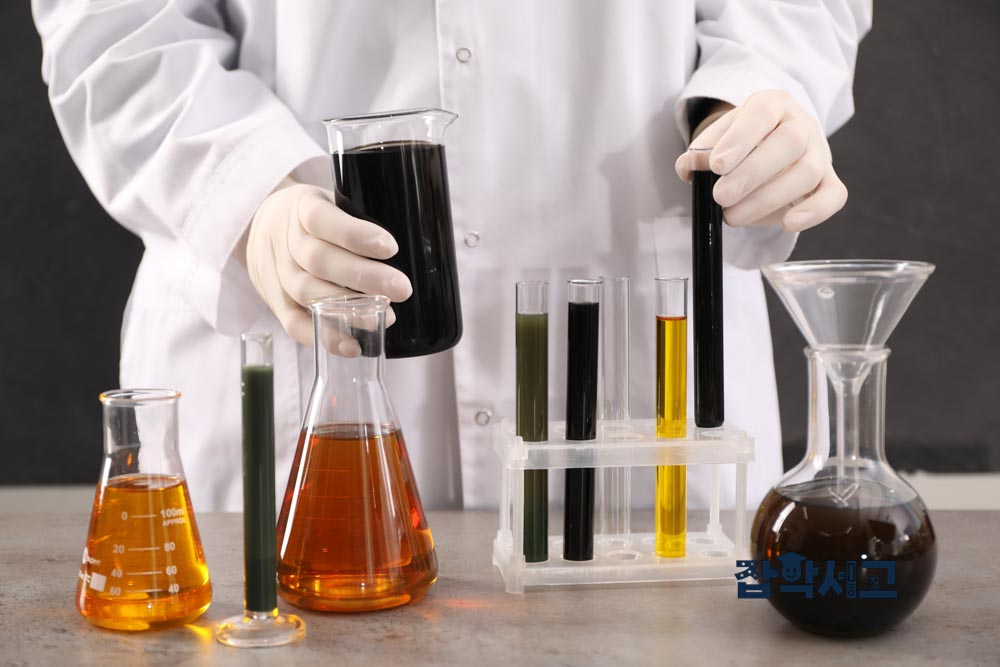
The basic concepts of organic chemistry begin with carbon's unique properties and bonding. A carbon atom has 4 valence electrons, allowing it to form various types of bonds. This enables it to form a range of molecular structures, including long chains, rings, and helices, which serve as the foundation for complex and diverse organic compounds. These flexible bonding properties of carbon make the complexity of organic compounds possible and give them a variety of chemical properties.
Organic Compounds and Functional Groups
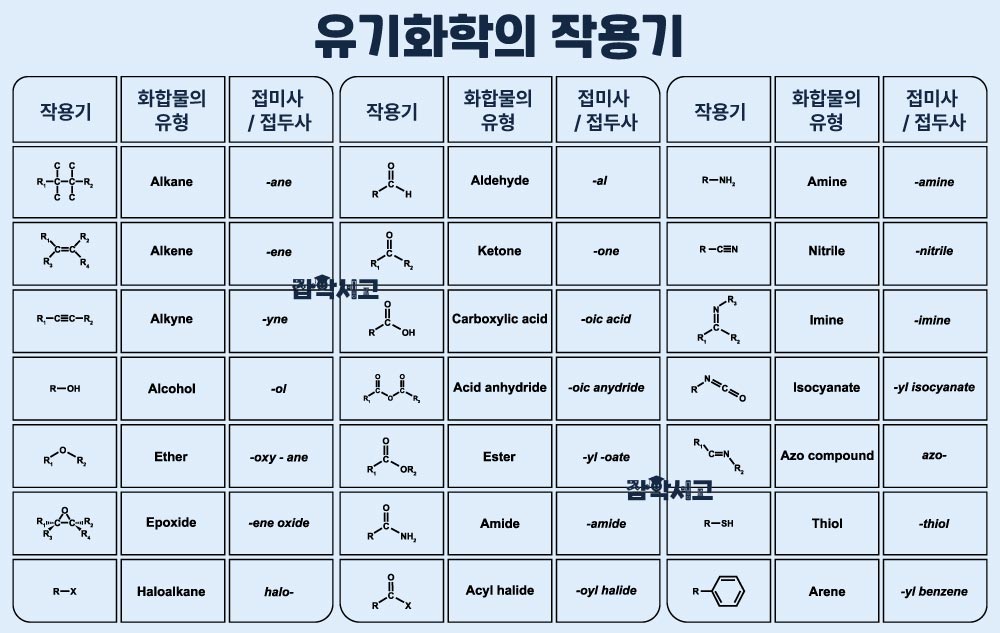
Organic compounds consist primarily of carbon and hydrogen, but they may also contain other elements, such as oxygen, nitrogen, sulfur, and phosphorus. These elements bond with carbon to form various functional groups, such as alcohols, amines, ethers, and ketones. These functional groups are key factors that determine the chemical properties and reactivity of organic compounds, enabling them to carry out various physiological and chemical functions. As a result, organic chemistry plays an important role in studying the reactivity of various compounds and using this knowledge to design and synthesize new substances.
Organic Chemistry in Life Sciences
Organic chemistry plays an important role in understanding the chemical foundations of living organisms. All living organisms are composed of organic compounds, and biomolecules such as DNA, proteins, carbohydrates, and fats are all organic compounds. These biomolecules form and undergo changes according to the laws of organic chemistry, and life processes take place through these transformations. Organic chemistry therefore forms the foundation of life sciences and is an essential discipline for understanding and applying biological phenomena at the molecular level.
Drug Development and Organic Chemistry
Organic chemistry also plays an important role in drug development. Many medicines are composed of organic compounds, and drug design, synthesis, and the understanding of mechanisms of action all rely on knowledge of organic chemistry. Improving the efficacy and safety of drugs requires a thorough understanding of the structural characteristics and reactivity of organic compounds. This makes it possible to develop effective and safe drugs and introduce new approaches to treating diseases.
Industrial Applications
Organic chemistry also has great industrial importance. Various products that play important roles in modern industry, including plastics, synthetic fibers, and polymeric materials, are based on organic chemistry. These products make our everyday lives more convenient and are essential in various industrial fields. Organic chemistry also provides essential technologies for developing and producing high-value industrial products and is one of the driving forces behind industrial innovation and progress.
Environmental Science and Organic Chemistry
Organic chemistry also plays an important role in environmental science. Knowledge of organic chemistry is essential for addressing various environmental problems, including breaking down organic pollutants, developing environmentally friendly synthesis methods, and using renewable energy resources. Organic chemistry plays a central role in developing environmentally friendly and sustainable chemical approaches, through which the coexistence of humans and nature can be pursued. In this way, organic chemistry has established itself as an important tool for environmental protection and ensuring sustainability.
Understanding Molecular Structures and Reaction Mechanisms
The Importance of Molecular Structure
Understanding molecular structure is highly important in organic chemistry. This is because a molecule's structure is a key factor in determining its chemical properties and reactivity. Molecular structure consists of various elements, such as bond lengths, bond angles, and spatial arrangements, which together form the molecule's 3-dimensional (3D) structure. Since a molecule's spatial structure has a particularly strong influence on the selectivity and efficiency of reactions, understanding it accurately is essential. Molecular structure plays an important role in determining a molecule's physical and chemical properties, which also has great significance for the design and synthesis of new substances.
Techniques for Analyzing Molecular Structure
Various analytical techniques are needed to understand molecular structures accurately. Representative techniques include X-ray crystallography, nuclear magnetic resonance (NMR) spectroscopy, and infrared (IR) spectroscopy. X-ray crystallography is a powerful tool for visualizing a molecule's 3-dimensional structure at the atomic level, allowing accurate measurements of its bond lengths and bond angles. NMR spectroscopy analyzes molecular structure through interactions between atoms within a compound and is particularly widely used to interpret the structures of organic compounds. IR spectroscopy measures vibrational energy within molecules and is useful for identifying specific bonds and functional groups in compounds. These analytical techniques play an essential role in visually understanding molecular structures and predicting molecules' chemical properties on that basis.
Understanding Reaction Mechanisms
In organic chemistry, a reaction mechanism is a theoretical framework that explains how a chemical reaction occurs. A reaction mechanism describes every step that takes place as reactants are converted into products, including intermediates and transition states. Understanding these mechanisms makes it possible to predict reaction rates, selectivity, yields, and other characteristics, providing important information for designing and optimizing new chemical reactions. Understanding reaction mechanisms is essential for interpreting experimental results and adjusting reaction conditions to obtain the desired products.
Theoretical Models and Computational Techniques
Various theoretical models and computational techniques are used to understand reaction mechanisms. Quantum chemistry is used to predict reaction pathways by calculating electron distributions and energy states, while molecular mechanics studies the dynamic aspects of reactions by simulating molecular motion and interactions. Transition state theory calculates a reaction's activation energy by analyzing the transition state with the highest energy during the course of the reaction, making it possible to predict the reaction rate. These theoretical approaches serve as important tools for interpreting the mechanisms of experimentally observed reactions and designing new chemical reactions.
Major Reaction Mechanisms
Important reaction mechanisms in organic chemistry include nucleophilic substitution, elimination, addition, and oxidation–reduction reactions. A nucleophilic substitution reaction is a reaction in which substitution occurs when a nucleophile in one molecule bonds to an electron-rich site in another molecule. An elimination reaction is a reaction in which two atoms or groups of atoms are removed from a molecule, forming a double or triple bond. An addition reaction is a reaction in which new atoms or groups bond to a molecule with an unsaturated bond to form a saturated bond, while an oxidation–reduction reaction involves the transfer of electrons and plays an important role in processes that store or release chemical energy. Each reaction mechanism occurs with particular types of compounds under specific conditions, making it possible to synthesize a variety of organic compounds.
The Role of Biochemical Reaction Mechanisms
Reaction mechanisms in organic chemistry also play an important role in biochemical processes. For example, understanding the mechanisms of enzymatic reactions makes it possible to explain the complex chemical reactions that occur within living organisms. Enzymes catalyze specific reactions to greatly increase their rates, precisely controlling reaction pathways and intermediates in the process. Understanding these mechanisms provides important information for developing new drugs or treating diseases by regulating biological pathways. Research into biochemical reaction mechanisms makes a substantial contribution to advances in life sciences, medicine, and pharmacy.
Techniques for Synthesizing and Analyzing Organic Compounds

Overview of Organic Compound Synthesis
The synthesis of organic compounds encompasses chemical methodologies for creating new molecules. This process aims to develop new substances that are not found in nature or modify existing substances for specific purposes. Synthetic chemistry is a core field of organic chemistry, enabling the development of new drugs, materials, chemical catalysts, and other products. These synthesis processes provide an essential foundation for organic chemistry's important role in various industries and research fields.
The Diversity of Synthesis Methods
Various methods are used to synthesize organic compounds. A traditional method is stepwise synthesis. This approach builds progressively more complex molecules at each step and allows highly precise control, making it possible to obtain the exact structure of the desired molecule. In addition, modern synthesis methods are also actively used, including multiple-bond-forming reactions that form several bonds in a single step and transition-metal-catalyzed reactions that use metal catalysts. These modern methods make important contributions to improving the efficiency and selectivity of synthesis.
The Importance of Analytical Techniques
Various analytical techniques are needed to analyze synthesized organic compounds accurately. These techniques are used to verify the structures, purity, and properties of synthesized substances. Representative analytical techniques include nuclear magnetic resonance spectroscopy (NMR), mass spectrometry (MS), infrared spectroscopy (IR), and ultraviolet–visible spectroscopy (UV-Vis). NMR spectroscopy is particularly important as one of the most significant analytical techniques in organic chemistry and is used to determine molecular structures by analyzing the environments of hydrogen and carbon atoms within molecules. MS is highly useful for determining a molecule's molecular weight and composition by measuring the mass of a substance. IR and UV-Vis spectroscopy are used to analyze molecules' functional groups and electronic structures, respectively.
Advances in Synthesis and Analytical Techniques
Advances in synthesis and analytical techniques have had a major impact on organic chemistry research and applications. Advanced analytical techniques have made it possible to determine the structures of new compounds accurately and optimize synthesis methods on that basis. These techniques play important roles in various fields, including new drug development, materials characterization, and environmental analysis. In particular, advances in analytical techniques help clarify the structures of complex molecules, making it possible to further expand the functions and potential applications of compounds.
The Introduction of Automation and High-Speed Analytical Techniques
Recently, the introduction of automated synthesis systems and high-speed analytical techniques has greatly improved research efficiency. These technologies make it possible to address various research tasks quickly and efficiently, including the synthesis of complex compounds in large quantities, rapid structure determination, and high-speed detection. Automated systems make it easier to implement complex synthesis pathways in particular, enabling researchers to perform more experiments in a shorter time. High-speed analytical techniques allow rapid verification and analysis after synthesis, contributing to improvements in both research accuracy and efficiency.
Examples of Organic Chemistry Applications in Modern Science and Industry
Applications of Organic Chemistry in Modern Science
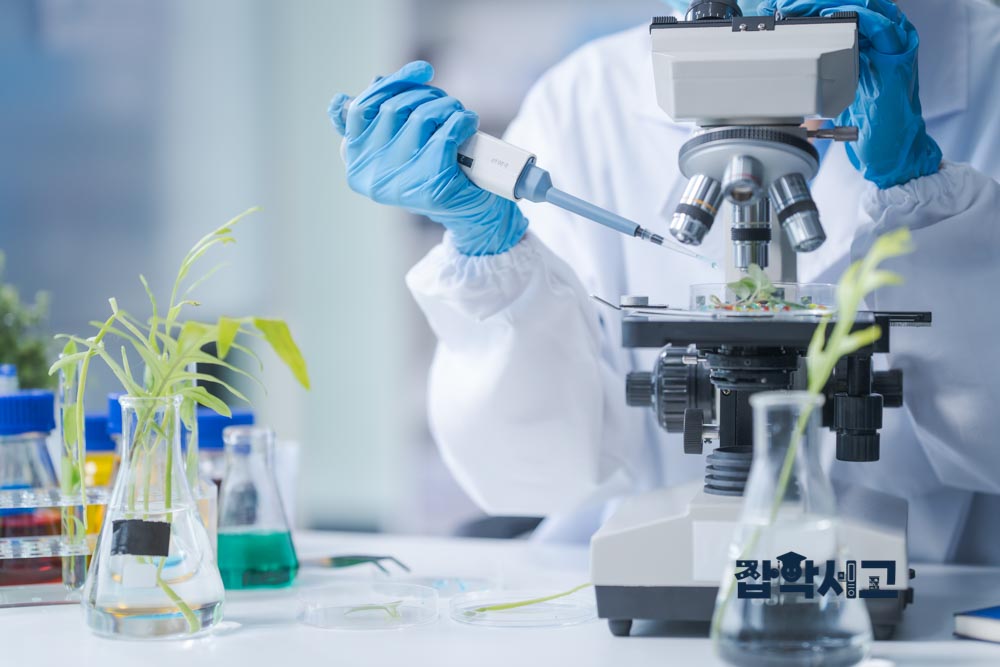
Organic chemistry plays a central role in various fields of modern science. Organic chemistry is actively applied in many fields, including drug development, new materials research, life sciences, and environmental science, and these examples clearly demonstrate its importance to advances in modern science and technology.
Organic Chemistry in Drug Development
Drug development is one of the representative application areas of organic chemistry. Many drugs are composed of complex organic compounds, and their synthesis, structure determination, and the understanding of their mechanisms of action all depend on knowledge of organic chemistry. For example, developing various drugs, such as anticancer drugs, antibiotics, and antiviral drugs, is impossible without organic chemistry methods. Organic chemistry plays an essential role in optimizing chemical structures and improving drug efficacy and stability during the development of new drugs.
New Materials Research and Organic Chemistry
Organic chemistry also plays an important role in new materials research. Polymeric compounds, nanomaterials, and organic electronic materials are all products of organic chemistry research. These materials enable innovative applications in various advanced fields, including electronic devices, energy storage devices, and biosensors. In particular, organic electronic materials are driving important technological advances in flexible electronic devices, OLED displays, and highly efficient solar cells. These materials offer properties and performance that cannot be achieved with conventional inorganic materials, and creative applications of organic chemistry make important contributions to the development of future technologies.
Applications of Organic Chemistry in Life Sciences
The applications of organic chemistry are also prominent in life sciences. Organic chemistry makes it possible to understand enzymatic reaction mechanisms, cellular signaling pathways, gene regulation mechanisms, and other processes, and this knowledge is essential for various areas of life sciences research, including new drug development, disease diagnosis, and gene therapy. For example, the design of drugs that target the active sites of specific enzymes is based on knowledge of organic chemistry, which plays an important role in developing personalized treatments that precisely target the causes of diseases. Organic chemistry also enables the synthesis and modification of biomolecules in molecular biology research, serving as an essential tool for developing new treatments and diagnostic tools.
Environmental Science and Organic Chemistry
In environmental science, organic chemistry contributes to solving environmental problems through various applications, including breaking down organic pollutants, developing environmentally friendly synthesis methods, and using renewable energy resources. For example, the development of renewable fuels using biomass relies on knowledge of organic chemistry, which plays an important role in reducing dependence on fossil fuels and transitioning to sustainable energy sources. In addition, research into developing new catalyst systems to break down organic pollutants effectively is essential for environmental protection, and organic chemistry contributes to creating a cleaner environment through this work.
Industrial Applications and Organic Chemistry
Organic chemistry also plays an important role in industry. Various products essential to modern industry, including plastics, synthetic fibers, and polymeric materials, are based on organic chemistry. These products make everyday life more convenient and are essential in various industrial fields. For example, high-performance plastics are used as essential materials in automobiles, aircraft, household appliances, and other products, driving innovation throughout industry by offering reduced weight, durability, efficiency, and other benefits.
Sustainable Chemistry and the Future of Organic Chemistry
The applications of organic chemistry will continue to expand in the future. In particular, the importance of organic chemistry is expected to grow further in fields such as sustainable chemistry, green chemistry, and biobased chemistry. These fields aim to protect the environment and conserve resources, making innovative research and technological development in organic chemistry essential. Future science and industry will move toward more environmentally friendly and sustainable approaches, and organic chemistry will play an important role in this process. Advances in organic chemistry will go beyond simply synthesizing new substances and contribute to building a better environment and a sustainable society.
Through the study of carbon-based compounds, organic chemistry plays an important role in various fields, including life sciences, drug development, and new materials research. Understanding the basic concepts and reaction mechanisms of organic chemistry is essential for both the synthesis and analysis of complex organic compounds and their various applications in everyday life.
The importance of organic chemistry in modern science and industry will continue to grow, and it is also expected to play an important role in sustainable chemistry and the development of environmentally friendly technologies. These diverse examples of organic chemistry applications clearly demonstrate how central this discipline is across a wide range of areas.