When things keep going wrong after a few attempts, at some point the thought starts to creep in: "It won't work no matter what I do." Strangely, even when circumstances change and effort would be enough to succeed, people find it hard to get moving again.
Put simply, learned helplessness is "a state in which, after repeatedly experiencing that no amount of effort can change the outcome, a person stops trying even in situations they could change." The concept was first named in experiments in the 1960s by the American psychologists Martin Seligman and Steven Maier, and it went on to have a major influence on depression research, education and even organizational management.
In this article, we will look in turn at the experiments in which learned helplessness was discovered, how it shows up in people, how neuroscience rewrote the theory half a century later, and how to break free from helplessness.
Understanding and Overcoming Learned Helplessness
The experiment in which they didn't move even when they could escape

Learned helplessness was first identified in animal experiments that Seligman and Maier published in 1967. The researchers divided dogs into three groups.
(1) The controllable group
They received electric shocks but could stop them by pressing a panel in front of them.
(2) The uncontrollable group
They received exactly the same amount of shock as the first group, but nothing they did could stop it.
(3) The comparison group
They received no shocks at all.
Afterward, every dog was placed in a box where it could avoid the shock simply by jumping over a barrier. The dogs in the first and third groups soon jumped the barrier and escaped the shock, but many of the dogs in the second group just lay where they were and endured it. The researchers interpreted this as the dogs having learned that "nothing I do changes the outcome."
Helplessness in people, too

A similar phenomenon was confirmed in people. In the 1970s, the psychologist Donald Hiroto exposed participants to a loud noise that they could not turn off no matter how they pressed the buttons, and then gave them a task in which a simple action would turn the noise off. Those who had been unable to stop the noise earlier tended to give up easily on the new task as well.
In 1978, Lyn Abramson, Seligman and John Teasdale refined the theory, arguing that in humans what matters is how people interpret failure. This is what is known as attributional style.
- Internal: the tendency to locate the cause of failure in yourself rather than in the situation.
- Stable: the tendency to believe that the cause will not change in the future.
- Global: the tendency to extend a single failure to every area of life.
The idea is that people who often interpret events in a way that combines all three, as in "I'm just not smart, so nothing I do will work," are more prone to helplessness and depression.
This is often seen in everyday life as well. Typical examples are a student who gets low scores on tests several times and gives up studying, saying "I'm just not a math person," or an employee whose suggestions have been ignored a few times and who stops offering opinions. On the surface it may look like laziness, but underneath lies the experience that effort made no difference.
An explanation overturned after half a century
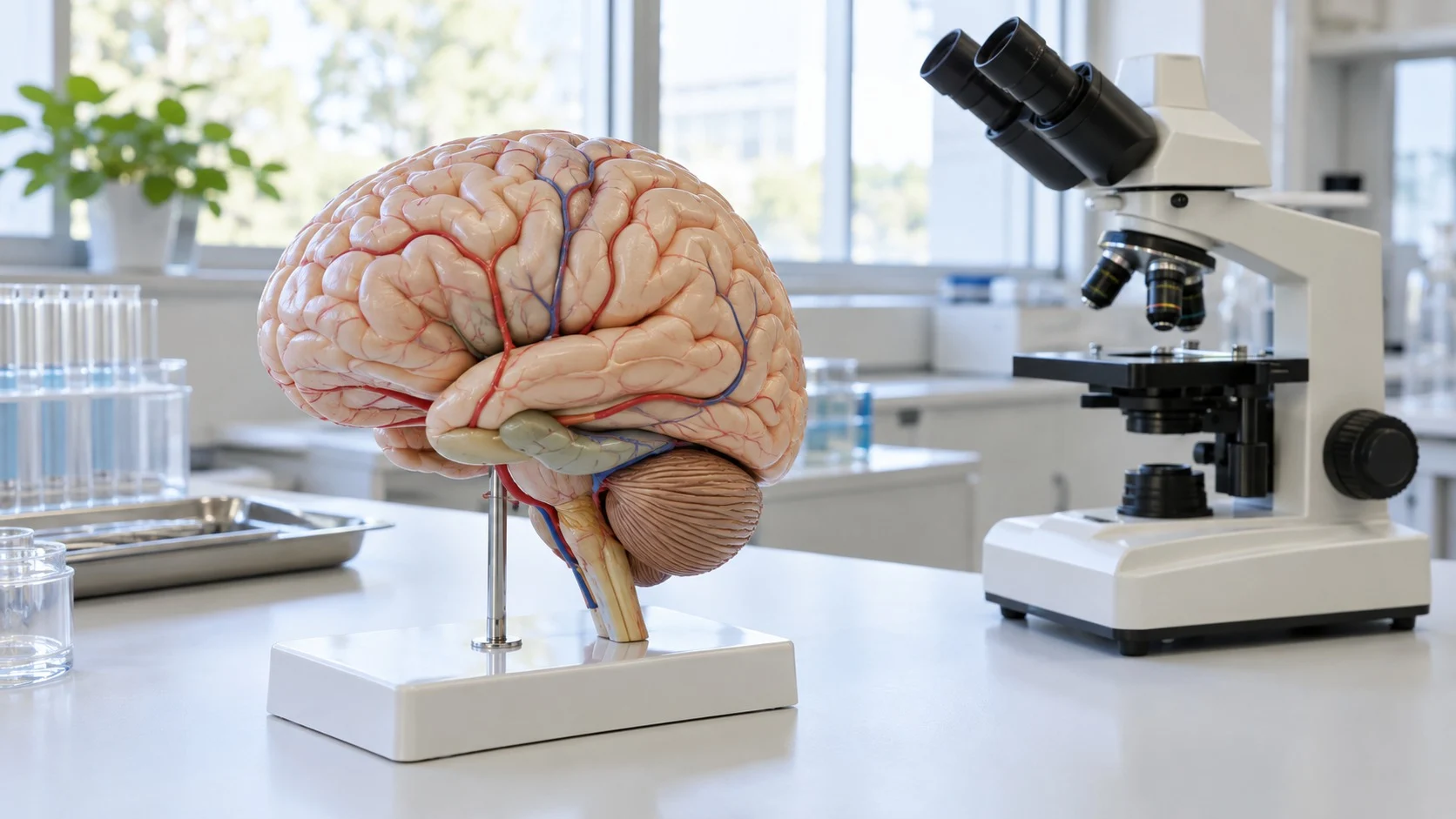
In 2016, Maier and Seligman published a paper reviewing 50 years of neuroscience findings built up through animal research (mainly in rats) since the first experiments, stating that the original theory had it backward.
When animals endure prolonged pain, holding out passively is not a learned response but the brain's default response. At such times the dorsal raphe nucleus in the brainstem becomes active, suppressing attempts to escape and heightening anxiety.
Conversely, when an animal experiences that "my actions can change the outcome," the medial prefrontal cortex, toward the front of the brain, detects that sense of control and dampens the activity of the dorsal raphe nucleus. This explanation changes how we view the experimental results. The dogs in the first experiment did not newly learn helplessness; rather, the dogs that stopped the shock by pressing the panel learned control and overcame the default response. In this research on animals, experiences of control played an important role in reducing passive responses to subsequent stress. The same explanation cannot be applied directly to humans.
Ways to break free from helplessness

Research on learned helplessness led Seligman to champion positive psychology, which focuses on human strengths and recovery. He reasoned that if helplessness can be learned, so can optimism.
Small practices for regaining a sense of control
- Small Wins: start by achieving small goals you can see through to the end, rebuilding the experience that "if I try, I can do it."
- Reframing: try explaining a failure with a temporary and specific cause, such as "I wasn't prepared enough this time."
- Choice: giving people room to make their own choices at school, at work or in care settings increases their sense of control.
- Seeking Support: if a situation is hard to change alone, finding a way forward with people around you or with professionals is also a form of control.
However, in an environment that is hard to escape on your own, such as real danger or abuse, changing the environment itself comes before changing your mindset. If feelings of depression persist for a long time, it is a good idea to seek professional counseling.
Helplessness need not be attributed solely to personality or willpower. Its causes and the process of change may differ from person to person.
Starting from Seligman and Maier's experiments, learned helplessness became a framework for explaining the human mind through attribution theory, and through neuroscience it was reborn with a new message: a sense of control is a strength gained through learning.
Taking one small step again in the face of the thought "it won't work no matter what"—that is psychology's first step toward overcoming learned helplessness.